


Court Bonds: Top 5 Essential Facts for 2024
Understanding Court Bonds: Your Financial Safeguard in Legal Proceedings
When navigating the complexities of a legal case, court bonds can serve as crucial financial safeguards. These bonds are legal agreements that protect financial assets and ensure that court-appointed tasks are properly completed. Their importance lies in providing a layer of security for all parties involved in litigation.
Quick Answer to What Are Court Bonds:
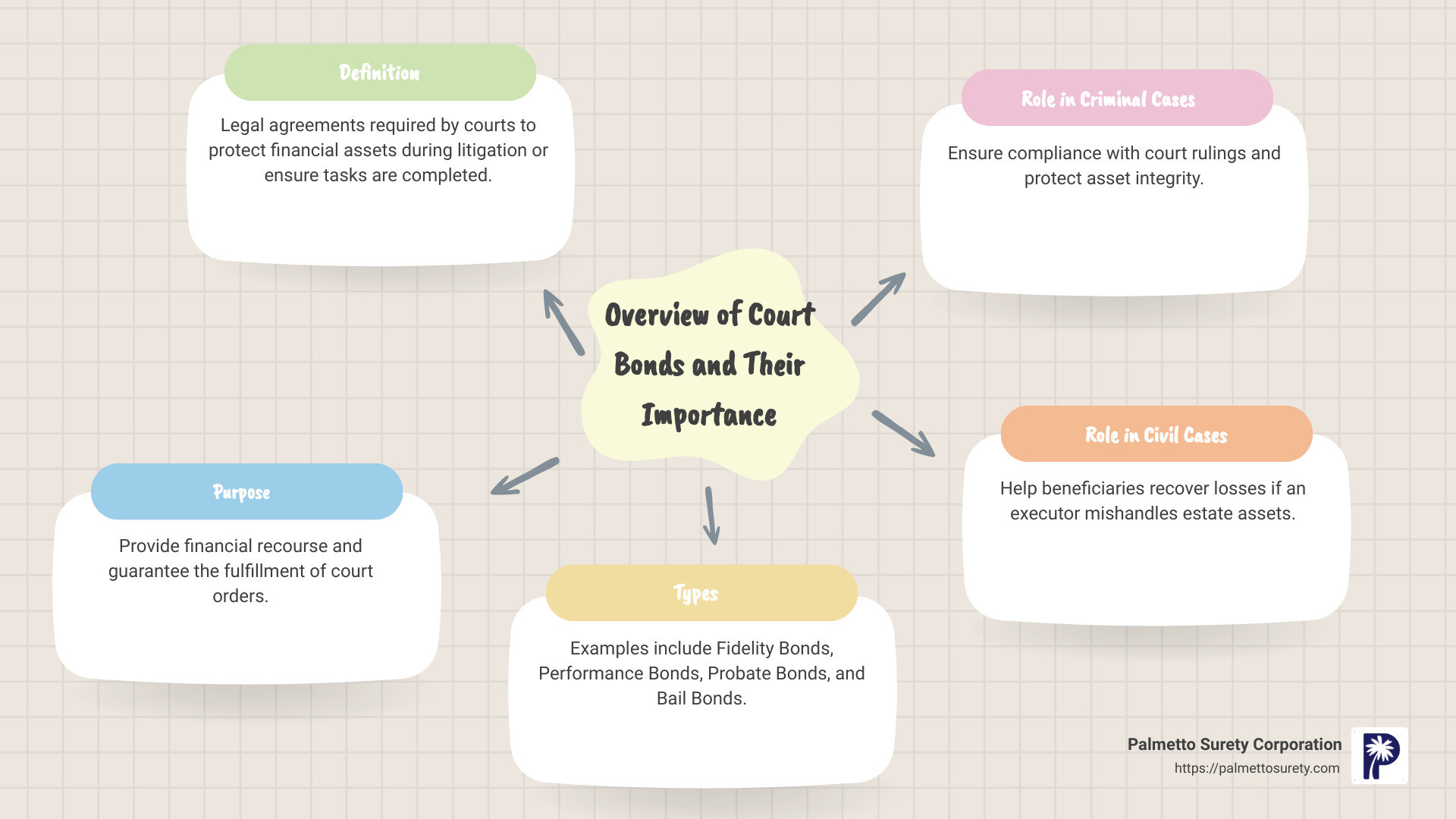
– Definition: Court bonds are legal agreements required by courts to protect financial assets during litigation or ensure tasks are completed.
– Purpose: They provide financial recourse and guarantee the fulfillment of court orders.
– Types: Examples include Fidelity Bonds, Performance Bonds, Probation Bonds, and Bail Bonds.
Court bonds play an essential role in both civil and criminal cases. They help protect asset integrity and ensure compliance with court rulings. For example, if an executor mishandles estate assets, beneficiaries can file a claim against the bond to recover their losses.
I’m Haiko de Poel Jr. With my background in surety bonds and digital change, I’ve guided companies through rebranding and legal compliance. Court bonds are integral to ensuring financial safety and legal integrity in litigation.
What Are Court Bonds?
Court bonds are legal guarantees required by courts to ensure compliance and protect against financial loss in various legal situations. They serve as a financial safeguard for individuals or entities involved in the judicial process.
Types of Court Bonds
Court bonds can be broadly categorized into two main types: fiduciary bonds and judiciary bonds. Each type serves a distinct purpose within the legal system.
Fiduciary Bonds
A fiduciary bond is required when an individual is appointed by the court to manage someone else’s assets, such as in the case of an estate. This bond ensures that the appointed person, known as the fiduciary, will act ethically and responsibly. If they fail to do so, the bond provides financial protection to those harmed by their actions.
For instance, if an executor mismanages an estate, the beneficiaries can file a claim against the bond to recover their losses. This is why fiduciary bonds are also known as probate bonds.

Judiciary Bonds
A judiciary bond is used to limit financial loss resulting from a court ruling. Given the uncertainty of court outcomes, these bonds are considered riskier. Either party in a case—plaintiff or defendant—may be required to obtain a judiciary bond, depending on the court’s stipulations.
For example, a supersedeas bond (a type of judiciary bond) is often required when a party appeals a court decision. This bond guarantees that the appellant will cover the judgment amount, court costs, and any interest if they lose the appeal.
Court bonds are essential tools in the legal system, providing a financial safety net and ensuring ethical conduct in fiduciary roles. Understanding the differences between fiduciary and judiciary bonds can help you steer legal proceedings more effectively.
Fiduciary Bonds
Fiduciary bonds are a type of court bond that ensures individuals appointed by the court manage their responsibilities ethically and responsibly. These bonds offer financial protection to those affected by the fiduciary’s actions, such as beneficiaries of an estate or individuals under guardianship.
Probate Bonds
Probate bonds, also known as fiduciary bonds, are required when handling an estate after someone passes away. The court may appoint an executor, administrator, or trustee to manage the estate’s assets and liabilities.
The primary responsibilities of an executor include:
– Paying outstanding debts: This includes settling any remaining bills and taxes.
– Distributing assets: Ensuring that the deceased’s assets are distributed according to their will or state law if no will exists.
– Ethical conduct: Acting in the best interest of the estate and its beneficiaries.
Probate bonds protect against fraud, embezzlement, or any unethical behavior by the fiduciary. If the executor fails to fulfill their duties ethically, the bond compensates those financially harmed by their actions.
Guardianship Bonds
Guardianship bonds are another type of fiduciary bond. These bonds are required when a guardian is appointed to care for a minor or an incapacitated adult. The guardian’s responsibilities include managing the individual’s financial affairs and ensuring their well-being.
Guardianship vs. Conservatorship:
– Guardianship: Typically involves caring for a minor or an incapacitated adult’s personal and financial needs.
– Conservatorship: Often focuses solely on managing the financial affairs of an incapacitated adult.
State laws vary regarding the requirements and responsibilities of guardians and conservators. However, both roles require a bond to protect the individual under care from any potential financial mismanagement or neglect by the guardian or conservator.
In summary, fiduciary bonds like probate and guardianship bonds ensure that those appointed by the court to manage estates or care for individuals do so ethically and responsibly. These bonds provide crucial financial protection, safeguarding the interests of beneficiaries and those under guardianship.
By understanding fiduciary bonds, you can better steer the responsibilities and protections involved in managing estates and caring for individuals. Next, let’s explore judiciary bonds and their role in the legal system.
Judiciary Bonds
Judiciary bonds, also known as court bonds, play a vital role in the legal system. They are designed to protect against financial loss and ensure compliance with court rulings. Let’s break down three common types of judiciary bonds: Supersedeas Bonds, Injunction Bonds, and Replevin Bonds.
Supersedeas Bonds
A supersedeas bond, also known as an appeal bond, comes into play when a defendant wants to appeal a court ruling. This bond delays the enforcement of the judgment until the appeal process is complete.
Key Points:
– Appeal Process: When a defendant appeals a court decision, they must post a supersedeas bond to stay the judgment.
– Judgment Delay: The bond prevents the plaintiff from collecting the judgment amount while the appeal is ongoing.
– Financial Safeguard: If the appeal fails, the bond ensures that the plaintiff receives the judgment amount plus interest and court costs.

Injunction Bonds
An injunction bond is necessary when a plaintiff seeks a court order to either compel or prevent specific actions by the defendant. This bond protects the defendant from financial loss if the court later finds that the injunction should not have been granted.
Key Points:
– Judicial Orders: The bond supports court orders that require or prohibit certain actions.
– Plaintiff Guarantees: The plaintiff must guarantee that they will cover any damages or court fees if the injunction is deemed unnecessary.
– Financial Protection: This bond ensures the defendant is compensated for any financial losses incurred due to the injunction.
Replevin Bonds
A replevin bond is used in cases where a plaintiff seeks to reclaim personal property that they believe is wrongfully held by the defendant. The bond ensures that the defendant will be compensated if the court rules in their favor.
Key Points:
– Property Retrieval: The bond allows the plaintiff to take possession of the disputed property during the court case.
– Plaintiff Responsibilities: The plaintiff must cover any court costs and damages if the court decides the property should remain with the defendant.
– Financial Safeguard: The bond protects the defendant from financial loss due to the temporary transfer of property.

Understanding these judiciary bonds helps you steer the complexities of court rulings and financial protections. Next, we’ll explore the differences between bail bonds and surety bonds to further clarify your legal options.
Bail Bonds vs. Surety Bonds
Understanding the difference between bail bonds and surety bonds is crucial. These bonds serve different purposes in the legal system, but both provide financial guarantees. Let’s break them down.
Bail Bonds
Bail bonds are a type of surety bond specifically for criminal cases. They ensure a defendant’s release from jail while awaiting trial.
Bail Process: When someone is arrested, they may be granted bail by the court. Bail is a sum of money that must be paid to secure the defendant’s release. If the defendant can’t pay the full amount, they can use a bail bond.
Cash Bail: This is the amount set by the court that must be paid in cash for the defendant’s release. It can be very high, making it difficult for many to afford.
Bail Agent Role: A bail agent, or bail bondsman, steps in when the defendant can’t pay the full bail amount. The agent charges a fee, often around 10% of the bail amount, and provides a bond to the court.
Defendant Release: Once the bail bond is posted, the defendant is released from jail. They must attend all court appearances as required.
Court Appearance Guarantee: The bail bond guarantees that the defendant will appear in court. If they miss a court date, the bond is forfeited, and the bail agent may seek to recover the full bail amount from the defendant or their co-signer.
Forfeiture: If the defendant fails to appear in court, the bail bond is forfeited. The bail agent may then use collateral, such as property or other assets, to cover the forfeited amount.
Surety Bonds
Surety bonds are broader and used in various contexts, not just criminal cases. They ensure that contractual obligations are met.
Contractual Obligations: Surety bonds are agreements that a principal (the party required to perform) will fulfill their obligations to the obligee (the party receiving the benefit).
Financial Guarantee: If the principal fails to meet their obligations, the surety (the bond provider) pays the obligee. The principal must then reimburse the surety.
Third-Party Involvement: Surety bonds involve three parties: the principal, the obligee, and the surety. This structure provides a financial safety net for the obligee.
Types of Surety Bonds: These bonds can be used in various situations, including construction projects, court cases, and business licensing. For example, in a construction contract, a performance bond ensures the contractor completes the project as agreed.
Court Bonds: These are a specific type of surety bond used in legal proceedings. They protect financial assets or ensure court-ordered tasks are completed. Examples include probate bonds and replevin bonds.
Risk Assessment: The surety assesses the risk of issuing the bond based on the principal’s credit history and other factors. Higher risk can mean higher premiums or the need for collateral.
Understanding these differences helps you steer legal and financial responsibilities more effectively. Next, we’ll discuss the costs associated with court bonds and what factors influence these costs.
How Much Do Court Bonds Cost?
Cost Factors
The cost of court bonds can vary widely. Several factors influence the overall cost:
- Bond Value: The judge sets the bond value, which is the maximum amount the surety will pay if a claim is made. Higher bond values typically mean higher premiums.
- Credit Status: Your credit score plays a significant role. Surety companies use your credit history to assess risk. Better credit scores usually lead to lower premiums.
- Type of Bond: Different types of court bonds come with varying risk levels. For example, a probate bond might have different costs compared to an injunction bond.
- Collateral Requirements: Some sureties require collateral for high-risk bonds. This can further affect the overall cost.
Premium Rates
Premium rates for court bonds are generally a small percentage of the total bond value. Typically, this ranges from 1% to 10% or more. Here’s a quick breakdown:
- Excellent Credit: Premiums may be as low as 1% of the bond value.
- Good Credit: Expect to pay around 2% to 4%.
- Poor Credit: Premiums can go up to 10% or higher. Some sureties might even refuse to issue a bond without collateral.
For example, if you need a $50,000 bond and have excellent credit, your premium might be around $500. With poor credit, this could rise to $5,000 or more.
Importance of Credit Status
Your credit score is a key determinant in how much you’ll pay for a court bond. Surety companies view applicants with higher credit scores as lower risk. This means they are more likely to fulfill their obligations without causing financial loss to the surety.
If your credit score improves over time, your renewal premiums might decrease. Most court bonds are written for 1-4 years, and you’ll need to renew them if the legal proceedings continue beyond the bond’s expiration date.
Additional Costs
Besides the premium, there might be other costs involved:
- Interest and Penalties: If a claim is made and the surety pays out, you must reimburse them, including interest and penalties.
- Fees: Some sureties charge additional fees for processing or collateral management.
Understanding these cost factors helps you better prepare for the financial responsibilities associated with court bonds.
Next, we’ll address common questions about court bonds to clarify any doubts you might have.
Frequently Asked Questions about Court Bonds
What is the meaning of court bond?
A court bond is a type of surety bond required by courts to ensure that a trustee or other responsible party will perform their duties as ordered. It serves as a financial safeguard, guaranteeing compliance with court decisions. For example, if a trustee is managing an estate, a court bond ensures they handle the assets responsibly and follow legal requirements.
A court bond involves three parties:
- The Principal: The person required to get the bond (e.g., a trustee).
- The Obligee: The party protected by the bond (e.g., the court).
- The Surety: The company that issues the bond and guarantees the principal’s performance.
What does a bond order mean in court?
A bond order in court typically relates to criminal cases. When a defendant is arrested, the court may set a bond amount that the defendant must pay to be released from jail while awaiting trial. This bond ensures the defendant will appear in court for future hearings.
For example, if someone is charged with a crime, the judge might issue a bond order requiring the defendant to post bail. If the defendant appears in court as required, the bond is returned. If not, the bond is forfeited, and the defendant may be arrested again.
What is a bond in a civil case example?
In civil cases, bonds are often used to ensure compliance with court orders or to protect parties from financial loss. A common example is an appeal bond. If a party loses a lawsuit and wants to appeal, they may need to post an appeal bond. This bond guarantees that if they lose the appeal, they will still pay the original judgment plus any additional costs.
For instance, let’s say a company loses a contract dispute and is ordered to pay $100,000. If the company appeals the decision, the court might require an appeal bond. This bond ensures the company will pay the $100,000 if they lose the appeal, protecting the winning party from financial loss during the appeal process.
These FAQs should help clarify some of the most common questions about court bonds. If you have more specific questions, reach out to Palmetto Surety Corporation for expert advice and assistance.
Conclusion
Understanding court bonds is crucial for anyone involved in legal processes, whether you’re an attorney, a business owner, or an individual navigating the court system. These bonds provide a financial safeguard, ensuring compliance and protecting against potential losses.
At Palmetto Surety Corporation, we specialize in making the bonding process straightforward and efficient. Our extensive experience since 2003 has positioned us as a leading provider of surety bonds, including court bonds, contractor license bonds, and more.
We pride ourselves on our quick service and client satisfaction. With our state-of-the-art underwriting platform, obtaining a court bond is hassle-free, allowing you to focus on your legal matters rather than paperwork.
If you need a court bond or have any questions about the bonding process, don’t hesitate to reach out to us. We’re here to help you steer the complexities of surety bonds with ease and confidence.
For more information, visit our website or contact our dedicated support team. We’re committed to providing you with the best service and ensuring your bonding needs are met promptly and professionally.


