


Why Do Probate Courts Require Guardianship Bonds? Top 5 Reasons
Why Probate Courts Require Guardianship Bonds
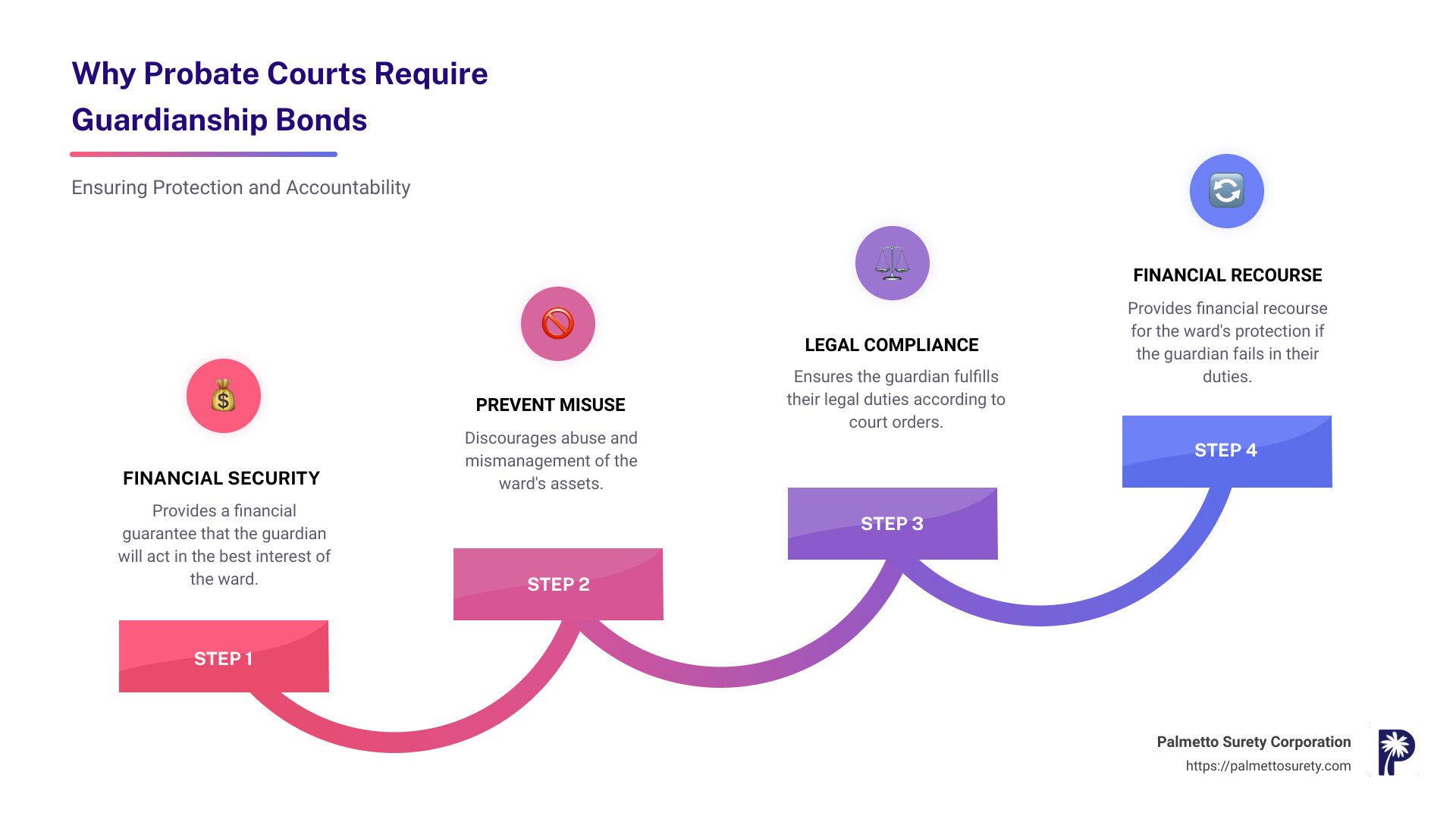
Why do probate courts require guardianship bonds? It comes down to ensuring protection and accountability when someone assumes guardianship over a minor or disabled adult. Here’s a quick answer:
- Financial Security: Provides a financial guarantee that the guardian will act in the best interest of the ward.
- Prevent Misuse: Discourages abuse and mismanagement of the ward’s assets.
- Legal Compliance: Ensures the guardian fulfills their legal duties according to court orders.
When a probate court appoints a guardian for a vulnerable individual, the guardian takes on significant legal and ethical responsibilities. Guardianship bonds act as a safety net, making sure those responsibilities are met. If a guardian fails in their duties, the bond provides financial recourse for the ward’s protection.
I’m Haiko de Poel Jr., an expert in legal and surety bonds, including why probate courts require guardianship bonds. My background in strategic branding and digital marketing at Palmetto Surety Corporation equips me to offer clear and practical information on this critical subject.
What is a Guardianship Bond?
A guardianship bond is a type of probate bond. It acts as a financial guarantee that a guardian will fulfill their legal duties to care for a minor or disabled adult. If a guardian fails to meet these responsibilities, the bond provides financial protection for the ward.
Key Terms
Principal: This is the person applying to be the guardian. They are responsible for obtaining the bond and fulfilling their duties.
Obligee: The probate court is the obligee. It requires the bond to ensure the guardian performs their duties properly.
Surety: An insurance company or surety broker that issues the bond and guarantees the guardian’s performance. If the guardian fails, the surety pays out claims.
Probate Court: This is the court that oversees the guardianship process and ensures the guardian is acting in the best interest of the ward. It is the court that requires the bond.

Insurance Company: The entity that provides the bond. They assess the risk and determine the bond premium based on various factors, including the principal’s credit score.

Financial Guarantee and Legal Duties
A guardianship bond is a surety bond that offers a financial guarantee. It ensures the guardian will perform their legal duties ethically and according to court orders. This includes managing the ward’s finances, healthcare, and overall well-being.
By requiring these bonds, probate courts aim to:
- Create stability and reliability for the ward.
- Prevent misuse of the ward’s assets.
- Protect vulnerable individuals from guardians who might take advantage of their position.
Guardianship bonds serve as a safety net, making sure that the guardian’s responsibilities are met. If a guardian fails in their duties, the bond provides financial recourse for the ward’s protection.
Next, let’s explore the various scenarios requiring guardianship bonds and why they are crucial in specific situations.
Why Do Probate Courts Require Guardianship Bonds?
Legal and Ethical Responsibilities
Probate courts require guardianship bonds to ensure guardians act responsibly and ethically. These bonds serve as a financial guarantee that the guardian will fulfill their duties according to court orders and legal standards.
Fiduciary Duties: Guardians have a fiduciary duty to act in the best interest of their wards. This means managing the ward’s assets wisely and ethically.
Ethical Standards and Legal Compliance: Courts require guardians to comply with ethical standards and legal requirements. The bond acts as a deterrent against any potential misuse or mismanagement of the ward’s assets.
Scenarios Requiring Guardianship Bonds
Guardianship bonds are especially important in certain scenarios where the risk of financial abuse or mismanagement is higher. Here are some key situations:
Considerable Assets: When a minor or incapacitated individual has significant assets, the risk of financial mismanagement increases. A guardianship bond ensures these assets are protected and used appropriately.
Disputed Guardianship: In cases where multiple parties are vying for guardianship, the bond helps ensure that the appointed guardian will act in the best interest of the ward, not for personal gain.
Non-Relative Guardians: When the court appoints someone other than a close relative as a guardian, a bond provides an additional layer of security. This helps to build trust and accountability, ensuring the guardian will perform their duties ethically and responsibly.
By requiring guardianship bonds, probate courts aim to create stability, prevent misuse of assets, and protect vulnerable individuals. These bonds act as a safety net, ensuring guardians meet their responsibilities and providing financial recourse if they fail.
Next, let’s explore the application process for obtaining a guardianship bond and how it works.
How a Guardianship Bond Works
Obtaining a Guardianship Bond
Getting a guardianship bond involves a few key steps:
-
Application Process: The person applying for guardianship, known as the principal, starts by contacting an insurance company or a surety broker. They will need to provide personal and financial information, including their credit score.
-
Surety Assessment: The surety (insurance company) evaluates the principal’s risk. They look at the principal’s credit score, financial history, and any past bond claims. This helps them determine how likely the principal is to fulfill their duties responsibly.
-
Quote: Based on the assessment, the surety provides a quote for the bond premium. This is the cost the principal will pay to obtain the bond. The premium is usually a small percentage of the total bond amount, often between 0.5% and 1%.
-
Bond Paperwork: If the principal accepts the quote, they pay the premium and receive the bond paperwork. This paperwork includes all the details of the bond agreement.
-
Filing with the Court: The principal files the bond paperwork with the probate court. This step finalizes the bond and makes it official.
Claims Against a Guardianship Bond
If a guardian fails to meet their responsibilities, the bond provides a way for the court or other parties to seek financial recourse. Here’s how that process works:
-
Investigation: If someone believes the guardian has not fulfilled their duties, they can file a claim against the bond. The surety will investigate the claim to determine its validity.
-
Valid Claims: If the investigation finds the claim to be valid, the surety will pay the claim up to the bond’s penalty sum. This ensures that the affected parties receive financial compensation.
-
Reimbursement: After paying a valid claim, the surety will seek reimbursement from the principal. The principal is legally obligated to repay the surety for any amounts paid out on the claim.
This process ensures that there is a financial safety net in place, providing stability and protection for the vulnerable individual under guardianship. It also holds the guardian accountable, ensuring they perform their duties ethically and responsibly.
Next, we’ll dive into how much a guardianship bond typically costs and what factors can influence the premium.
How Much Does a Guardianship Bond Cost?
Factors Affecting Premiums
When securing a guardianship bond, the cost or premium is typically a small percentage of the required bond coverage amount. Let’s break down the key factors that influence this premium.
1. Premium Percentage
The premium for a guardianship bond usually ranges between 0.5% to 1%** of the bond amount. For instance, if the court requires a $100,000 bond, you might pay between $500 and $1,000 annually.
2. Bond Coverage Amount**
The court sets the bond amount based on the value of the assets under guardianship. Larger estates require higher bond amounts, which directly increases the premium. For example, a $500,000 estate would need a higher bond than a $100,000 estate, leading to a higher premium.
3. State Laws**
State laws can significantly impact the cost of a guardianship bond. Some states have specific regulations that may require higher bond amounts or additional coverage, affecting the overall premium. It’s essential to understand your state’s requirements when calculating costs.
4. Assets and Liabilities**
The number and value of the assets and liabilities managed by the guardian also play a role. More assets or complex liabilities might increase the bond amount, increasing the premium.
5. Credit Score**
A guardian’s credit score is a crucial factor. Higher credit scores often result in lower premiums because they indicate lower risk. Conversely, a lower credit score can lead to higher premiums due to perceived higher risk.
6. Personal and Financial History**
The guardian’s personal and financial history, including any previous bond claims or criminal convictions, can influence the premium. A clean history usually means a lower premium, while past issues can increase costs.
In Summary:
– Premium Percentage: 0.5% to 1% of bond amount
– Bond Coverage Amount: Based on estate value
– State Laws: Vary by jurisdiction
– Assets and Liabilities: Affect bond amount
– Credit Score: Higher scores mean lower premiums
– Personal History: Clean records lower costs
Understanding these factors can help you anticipate the costs associated with a guardianship bond and budget accordingly. Next, we’ll look at the process of obtaining a guardianship bond and what steps are involved.
Frequently Asked Questions about Guardianship Bonds
What is the purpose of the heirs bond?
An heirs bond ensures that all lawful heirs participate in the estate distribution and that unpaid creditors are protected. It acts as a guarantee that the estate’s assets will be managed and distributed according to the law, providing a safeguard against financial mismanagement.
What type of bond covers Guardians?
Several types of bonds cover guardians, each with specific purposes:
- Guardianship Bond: Ensures that a guardian manages a minor’s or incapacitated person’s assets responsibly.
- Custodian Bond: Similar to a guardianship bond but typically used in less formal arrangements.
- Trustee Bond: Protects beneficiaries from mismanagement by a trustee.
- Conservatorship Bond: Required when a conservator is appointed to manage the financial affairs of someone unable to do so themselves.
These bonds protect the interests of those who cannot protect themselves, ensuring ethical and legal management of their assets.
What is the executor bond?
An executor bond is a type of surety bond required for executors of an estate to protect against fraud, negligence, theft, or misrepresentation. The executor’s duties include:
- Managing Estate Assets: Ensuring assets are accounted for and distributed according to the will.
- Paying Debts and Taxes: Settling any outstanding debts and taxes owed by the estate.
- Distributing Assets: Following the will’s instructions for asset distribution.
If an executor fails in these duties, the bond provides financial protection to the beneficiaries, ensuring they receive what they are legally entitled to.
In Summary:
– Heirs Bond: Ensures lawful participation and protects unpaid creditors.
– Guardianship Bond: Covers guardians managing assets for minors or incapacitated individuals.
– Custodian Bond: Used in less formal guardianship arrangements.
– Trustee Bond: Protects beneficiaries from trustee mismanagement.
– Conservatorship Bond: Required for conservators managing another’s financial affairs.
– Executor Bond: Protects against fraud, negligence, theft, and misrepresentation by an executor.
Understanding these bonds helps ensure that guardians, trustees, and executors fulfill their responsibilities ethically and legally, providing peace of mind to all parties involved.
Conclusion
Navigating the complexities of guardianship bonds can be daunting. At Palmetto Surety Corporation, we understand the importance of providing quick approval and efficient service to help you manage these responsibilities.
Why Choose Palmetto Surety Corporation?
-
Quick Approval: We streamline the bond application process to ensure you get the approval you need without unnecessary delays.
-
Efficient Service: Our dedicated team is committed to providing top-notch service, making sure you have the support you need every step of the way.
-
Expertise: With over twenty years of experience, we bring unparalleled expertise to the table, ensuring that you receive the best possible guidance.
-
Local Presence: Based in Charleston, SC, we are well-versed in the specific requirements of probate courts in our operating states, making the process smoother for you.
When you need a guardianship bond, trust Palmetto Surety Corporation to provide the support and expertise you need.
Contact us today to learn more about how we can help you secure a guardianship bond quickly and efficiently.


