


What Does a Bail Agent Do? Top 5 Crucial Facts in 2024
The Role of a Bail Agent: A Quick Overview
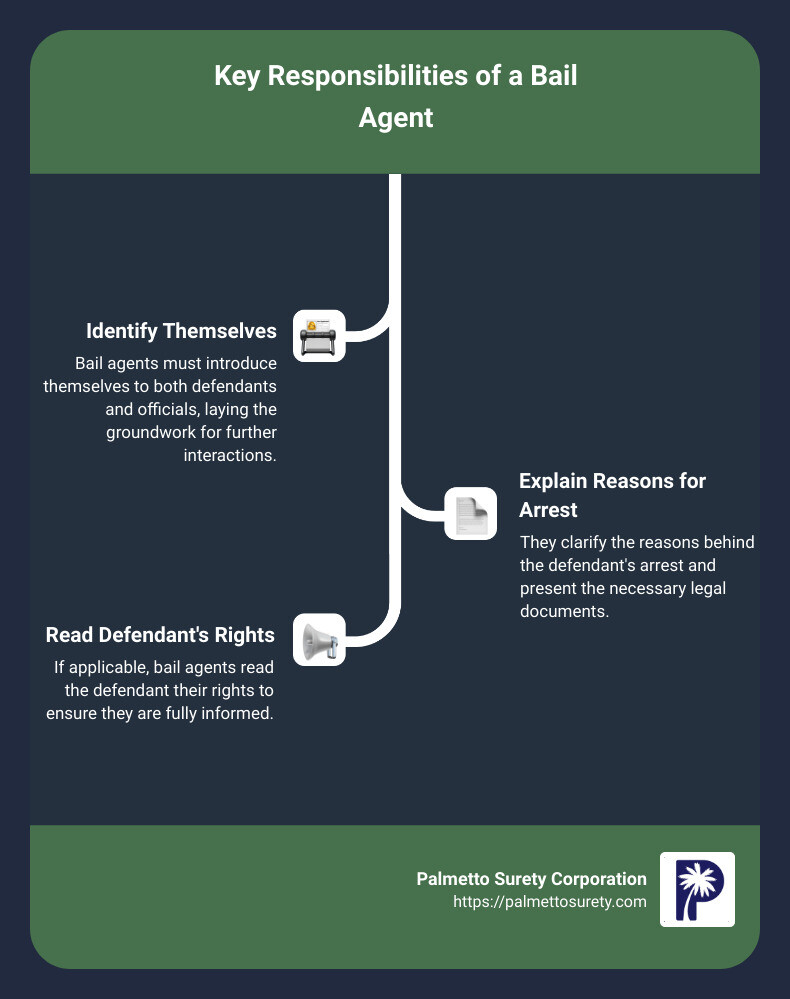
When wondering what does a bail agent do, it’s essential to understand their primary role and functions. Simply put, a bail agent helps get defendants out of jail by posting bail on their behalf. Here are the key responsibilities of a bail agent:
- Identify themselves to defendants and officials
- Explain reasons for arrest and present necessary documents
- Read the defendant’s rights if applicable
- Deliver the defendant to law enforcement authorities
A bail agent acts as a bridge between the defendant and the court system, ensuring that defendants adhere to bail conditions while awaiting trial.
Hello, I’m Haiko de Poel Jr., an expert in bail bond systems with years of experience in marketing and digital transformation at Palmetto Surety Corporation. My focus has been on streamlining processes in the bail bond industry, ensuring that services are efficient and accessible for all parties involved.
What Does a Bail Agent Do?
A bail agent acts as a bridge between the defendant and the court system, ensuring that defendants adhere to bail conditions while awaiting trial. Here’s a closer look at their key responsibilities:
Assessing Qualifications
Before posting bail, a bail agent must assess the qualifications of both the defendant and the co-signer. This involves conducting background research to evaluate any potential risks. The agent will:
- Examine work history and references to gauge financial stability.
- Review the defendant’s criminal history and past court appearances to assess flight risk.
- Determine the ability of the co-signer to make premium payments.
This step is crucial because engaging in a risky transaction could result in financial loss for the bail bond company.
Preparing and Explaining Paperwork
Once the qualifications are assessed, the bail agent prepares the necessary paperwork. This includes:
- Bail bond application: Collects details about the defendant’s case and personal information.
- Promissory note: Outlines financial terms, including interest charges, payment amounts, and consequences for non-payment.
- Bond agreement: Specifies the bond amount, premium, and obligations of all parties involved.
- Terms and conditions: Covers the defendant’s responsibilities, check-in requirements, and the consequences of violating bond conditions.
The bail agent will explain all these documents in detail to ensure you understand your responsibilities and the terms of the agreement.

Posting Bail
After the paperwork is completed and the initial payment is made, the bail agent will post the bail at the court. This involves:
- Court appearance: The agent goes to court to pay the bail amount.
- Payment: The agent pays the bail to secure the defendant’s release.
- Release process: The defendant is typically released within a few hours once everything is in order.
This step is crucial for getting the defendant out of jail quickly.
Ensuring Compliance
After the defendant is released, the bail agent continues to play an active role in ensuring compliance with bail conditions. This includes:
- Monitoring court dates: Ensuring the defendant attends all scheduled hearings.
- Regular check-ins: The defendant may need to check in regularly with the bail agent.
- Contacting references: The agent may reach out to references to ensure the defendant is adhering to terms.
If the defendant fails to comply, the bail agent may need to take further action, such as contacting a bounty hunter to locate and return the defendant to custody.
Understanding these responsibilities helps clarify the role of a bail agent and the importance of their work in the bail process. This leads us to the next section, which will delve into The Bail Bond Process and its various steps.
The Bail Bond Process
Initial Contact
The bail bond process begins with the initial contact. When a loved one is arrested, families often turn to a bail agent for help. This first step is crucial and involves gathering essential information and discussing pricing options.
Information Needed:
– Defendant’s full name and date of birth
– Jail location and booking number
– Charges and bail amount
– Personal details like employment history and references
Pricing Options:
Bail agents typically charge a non-refundable fee, usually around 10% of the bail amount. For example, if the bail is set at $10,000, the fee would be $1,000. Some states, like Illinois and Oregon, have capped this fee at 8%.

Documentation and Payment
Once the initial contact is made, the next step involves completing the necessary paperwork and making the initial payment. This step is critical for ensuring that all legal requirements are met.
Required Documents:
– Bail Bond Application: Includes details about the defendant and the case.
– Promissory Note: Outlines financial terms, including interest charges and payment amounts.
– Bond Agreement: Specifies the bond amount, premium, and obligations.
– Terms and Conditions: Lists the defendant’s responsibilities and check-in requirements.
Payment Terms:
The premium is paid upfront and is non-refundable. Payment plans may be available, but this depends on the bail bond company’s policies.
Release and Monitoring
After the paperwork is complete and the payment is made, the bail agent goes to court to post the bail. This initiates the release process, which usually takes a few hours.
Release from Jail:
The bail agent ensures all court requirements are met to facilitate the defendant’s release. The defendant is typically released within a couple of hours after the bail is posted.
Monitoring Compliance:
Once released, the defendant must comply with all court dates and check-in requirements. The bail agent will monitor this compliance closely. If the defendant fails to appear in court, the bail bond may be forfeited, and the agent could employ a bounty hunter to return the defendant to custody.

Understanding the bail bond process is essential for anyone involved. This step-by-step guide ensures that you know what to expect and how to navigate each stage effectively. Next, we will explore the legal and regulatory framework governing bail agents.
Legal and Regulatory Framework
In the United States, the legal and regulatory framework for bail agents varies significantly by state. This section delves into the state-specific regulations and licensing requirements that bail agents must adhere to.
State-Specific Regulations
California:
California has one of the most robust regulatory frameworks for bail agents. The industry is regulated by the California Department of Insurance. Bail agents must follow strict guidelines, including submitting detailed reports and maintaining accurate records. California also has unique laws regarding the use of bounty hunters, who must be licensed private investigators or work under a licensed bail agent.
New York:
New York requires bail agents to be licensed by the New York State Department of Financial Services. The state has stringent rules around the fees that can be charged and mandates that agents undergo continuous education to maintain their licenses. Additionally, New York has specific regulations around collateral and the handling of funds.
Florida:
In Florida, bail agents are regulated by the Florida Department of Financial Services. The state requires agents to complete a pre-licensing course and pass a state exam. Florida also has detailed laws governing the conduct of bail agents, including the use of force and the handling of defendants.
Licensing Requirements
To become a licensed bail agent, several steps are typically required, although these can vary by state:
- Background Check:
All prospective bail agents must undergo a thorough background check. This ensures that individuals with a criminal history or other disqualifying factors are not granted a license. - Training:
Most states require bail agents to complete a pre-licensing course. This training covers essential topics such as bail bond law, ethics, and the responsibilities of a bail agent. For example, in California, agents must complete 20 hours of pre-licensing education. - State Exam:
After completing the required training, candidates must pass a state exam. The exam tests knowledge of state-specific laws, regulations, and best practices for bail agents. - Liability Insurance:
Bail agents are typically required to carry liability insurance. This insurance protects both the agent and the public in case of errors, omissions, or misconduct. Companies like Palmetto Surety Corporation offer customized insurance solutions to meet these needs.
Understanding these regulations and requirements helps ensure that bail agents operate within the law and maintain the trust of the public. Next, we will address some frequently asked questions about the responsibilities and operations of bail agents.
Frequently Asked Questions about Bail Agents
What Are the Responsibilities of a Bail Agent?
Bail agents wear many hats. Their primary role is to assess qualifications, prepare and explain paperwork, post bail, and ensure compliance.
Assessing Qualifications:
Before posting bail, a bail agent will conduct background research on the defendant. This includes looking into their work history, references, and any previous encounters with the law. This helps the agent determine if the defendant is a flight risk.
Preparing and Explaining Paperwork:
Bail agents handle a lot of paperwork. They prepare documents like the bail bond application, promissory note, bond agreement, and terms and conditions. They also explain these documents to ensure all parties understand their responsibilities.
Posting Bail:
Once the paperwork is in order and the initial payment is made, the bail agent goes to court to post bail. This initiates the release process, which can take a few hours.
Ensuring Compliance:
After the defendant’s release, it’s the bail agent’s job to ensure they comply with court dates and other requirements. This may involve regular check-ins and contacting references.
How Do Bail Agents Make Money?
Bail agents earn their income through a non-refundable fee and a premium.
Non-Refundable Fee:
The fee is typically 10% of the bail amount. This fee is non-refundable, even if the defendant appears in court as required. It’s essentially the cost for the bail agent’s services.
Premium:
In addition to the fee, the bail agent pays a premium to an insurance company. This premium is part of the cost of underwriting the bail bond.
Can Bail Agents Search My House?
The legal rights of bail agents can be a bit complex, and they often depend on the specific situation and state laws.
Legal Rights:
In many states, bail agents have the right to search for and apprehend a defendant who is out on bail but has violated the terms of their release. This includes entering the defendant’s home without a warrant, provided they have a reasonable belief the defendant is inside.
Limitations:
However, bail agents are not above the law. They cannot use excessive force or engage in illegal activities such as stealing items from a residence. Any misconduct can lead to legal repercussions.
Bounty Hunters:
In some cases, bail agents may employ bounty hunters to track down and apprehend defendants who have skipped bail. Bounty hunters must follow strict regulations and licensing requirements, which vary by state.
Understanding these aspects helps clarify the role and responsibilities of bail agents. This knowledge can be crucial for anyone navigating the bail process.
Conclusion
About Palmetto Surety Corporation
In summary, bail agents play a crucial role in the criminal justice system. They help ensure that defendants appear in court while offering a means for individuals to be released from jail before their trial. This service is especially important for those who might not have the financial means to post bail themselves.
At Palmetto Surety Corporation, we understand the importance of this role. Our mission is to provide reliable and efficient surety bond services tailored to meet the unique needs of our clients. We have been a leading provider of surety bonds since 2003, offering a wide range of options to ensure compliance with local government obligations and guarantee performance.
Company Overview
Palmetto Surety Corporation specializes in all types of surety bonds, including contractor license bonds, court bonds, license and permit bonds, and contract surety bonds. Our cutting-edge technology simplifies the process of obtaining surety bonds, making it quick, easy, and affordable.
Services
We offer a comprehensive range of services, including:
- Surety Bonds: From business licenses and permit bonds to court and contract surety bonds, we cover a broad spectrum of needs.
- 24/7 Support: Our dedicated team is available around the clock to provide exceptional service and support.
- Expert Underwriting: Our experts handle complex bond applications with ease, ensuring a seamless experience for our clients.
Unique Selling Proposition
What sets Palmetto Surety Corporation apart is our commitment to excellence and customer satisfaction. Our platform significantly reduces underwriting times, allowing our clients to focus on their operations without the hassle of prolonged processes. We also offer customized insurance solutions to fill any gaps in your existing coverage, providing peace of mind and comprehensive protection.
For more information on how Palmetto Surety Corporation can assist you with your surety bond needs, visit our Surety Bonds page.
By understanding the responsibilities and importance of bail agents, you can better navigate the bail process. Palmetto Surety Corporation is here to support you every step of the way, ensuring a smooth and efficient experience.


