


How Much Does a Notary Bond Cost in Florida 2025?
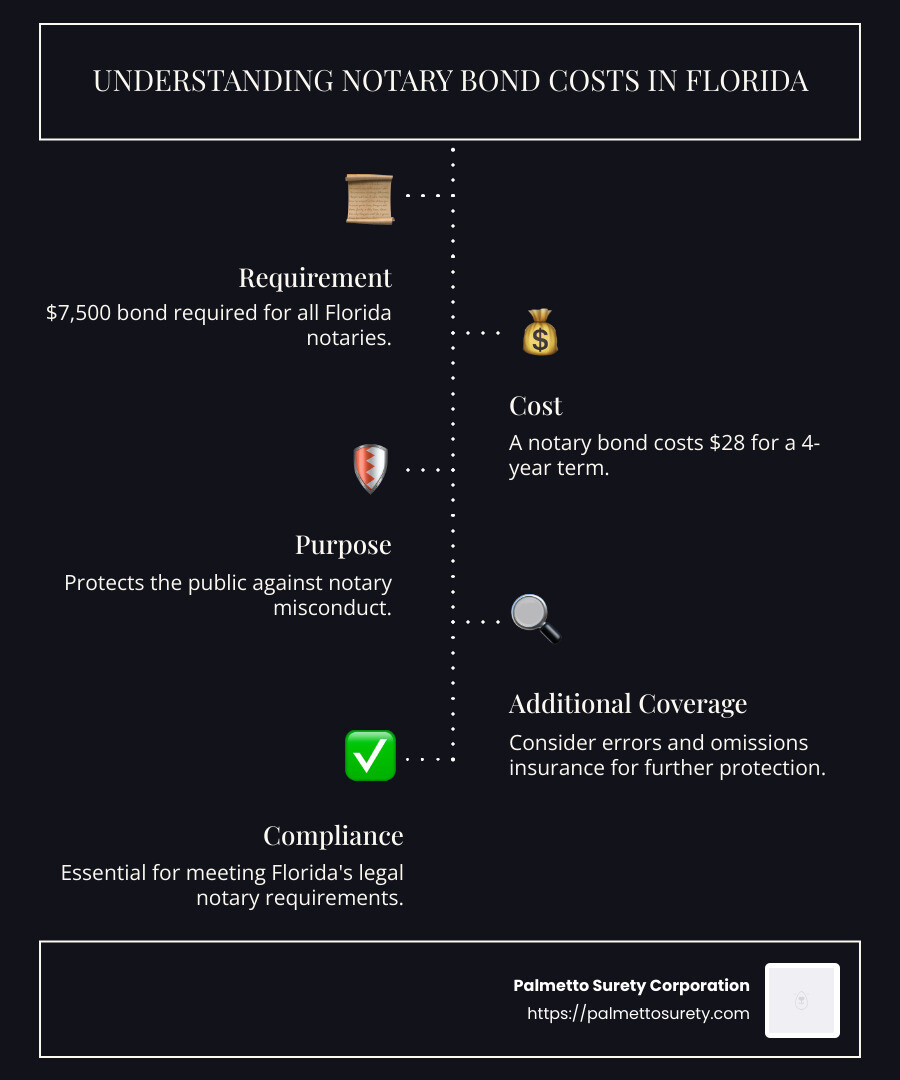
How much does a notary bond cost in Florida? This is a common question for those looking to become a notary in the Sunshine State. To answer it directly: a Florida notary bond costs $28 for a $7,500 bond that covers a 4-year term. This mandatory bond is crucial for public protection against any financial loss due to a notary’s misconduct.
In Florida, obtaining a notary bond is a necessary step in the process of becoming a notary public. This bond, valued at $7,500, protects the public from financial missteps taken by a notary. However, it does not protect the notary, which is why many professionals also consider purchasing errors and omissions insurance for added security. Notary bonds are part of the legal requirements set by the Florida legislature, emphasizing the importance of maintaining integrity and reliability in the notarial process.
As an expert in marketing and surety bonds, I have dedicated my career to helping individuals and businesses navigate the complexities of notary bonds and ensuring seamless compliance with Florida regulations. Join me as we explore the nuances of these bonds and their critical role in securing public trust.
How much does a notary bond cost in florida further reading:
– Notary Bond Cost
– how much does a notary bond cost
– notary public bond cost
Understanding Notary Bonds
Notary bonds play a crucial role in ensuring legal protection and public safety. In Florida, a notary bond is a legal requirement for anyone looking to become a notary public. But why is this bond necessary? Let’s break it down.
Legal Protection
A notary bond is a type of surety bond that serves as a financial guarantee. It protects the public from any improper conduct by a notary. If a notary makes a mistake or acts dishonestly, the bond provides a way for those affected to seek compensation. This ensures that the public has a financial safety net, reinforcing trust in notarial services.
Public Safety
The primary goal of a notary bond is to safeguard the public. It acts as a safety mechanism against financial loss due to errors or fraud committed by a notary. For example, if a notary improperly notarizes a document, causing financial harm, the bond can cover the damages up to its value. This protection is crucial in maintaining public confidence in notarial acts.
Improper Conduct
Improper conduct can range from simple errors to intentional fraud. In either case, the notary bond is there to provide recourse for those affected. If a claim is made against the bond, the surety company investigates the situation. If the claim is valid, the company will compensate the aggrieved party. However, it’s important to note that the notary is ultimately responsible for repaying any amounts paid out by the surety company.

A notary bond in Florida is a critical component in the framework of public trust and legal responsibility. By requiring this bond, Florida ensures that notaries are held accountable for their actions, providing a layer of protection for the public they serve.
How Much Does a Notary Bond Cost in Florida?
In Florida, becoming a notary public requires obtaining a $7,500 bond. This bond is not just a formality; it is a legal necessity meant to protect the public. But how much does a notary bond cost in Florida? Let’s explore the details.
Cost Details
The $7,500 bond is set for a 4-year term, aligning with the notary commission period. The cost of this bond can vary depending on several factors, but it is generally priced at a reasonable rate for the entire term. This is a one-time payment, making it a relatively affordable investment for ensuring public trust and fulfilling legal obligations.
Factors Influencing Notary Bond Costs
While the bond amount is fixed at $7,500, several factors can influence the cost of obtaining this bond:
-
Credit Score: A notary’s credit score can impact the bond premium. A higher credit score might result in a lower premium, as it indicates financial responsibility.
-
Bond Amount: In Florida, the bond amount is set by statute at $7,500, so this aspect does not vary. However, in other states, different bond amounts might apply.
-
Application Process: The ease and speed of the application process can also affect costs indirectly. Choosing a streamlined process can potentially save time and money.
How to Purchase a Notary Bond in Florida
Purchasing a notary bond in Florida is straightforward, especially with the help of a reliable bonding agency. Here’s how you can get started:
-
Select a Bonding Agency: Choose a reputable agency known for quick and efficient service.
-
Prepare Application Materials: Gather all necessary documents, including personal identification and any required forms. This will facilitate a smooth application process.
-
Complete the Application: Visit the agency’s website and follow their application process. Many agencies offer a user-friendly online platform to make this step convenient.
-
Submit and Pay: Once your application is complete, submit it along with the payment. The cost for a Florida notary bond is typically affordable for the 4-year term.
By understanding these steps and factors, you can efficiently secure your notary bond, ensuring compliance with Florida’s legal requirements and protecting the public you serve.
Next, we’ll explore the process for filing and maintaining your Florida notary bond.
Filing and Maintaining Your Florida Notary Bond
Once you’ve secured your $7,500 notary bond, the next step is to ensure it’s properly filed and maintained. This is crucial for staying compliant with Florida’s legal requirements and keeping your notary commission in good standing.
Filing Process
1. Submitting to the Secretary of State
After purchasing your bond, you must file it with the Florida Secretary of State. This step is essential, as your notary commission won’t be active until the bond is officially on file. If you choose a bonding agency like Budget Notary Services, they will often handle this process for you. They typically deliver your bond and application directly to the Secretary of State’s office within 24 hours of receiving your completed packet.
2. Required Documentation
Make sure you have all necessary documents ready, such as your completed notary application and proof of your notary bond. Double-check that all information is accurate to avoid any delays in processing.
Bond Maintenance
1. Duration and Renewal
Your Florida notary bond is valid for the entire 4-year term of your notary commission. As you approach the end of this period, it’s important to start the renewal process early. This ensures there’s no gap in your coverage, which could lead to a lapse in your commission.
2. Monitoring Claims
If a claim is made against your bond, your surety company will investigate. They may request details from your notary journal or other records related to the transaction in question. If a claim is valid and paid out, you might be responsible for reimbursing the surety company. Having notary errors & omissions insurance can help cover such costs and protect your finances.
3. Keeping Records
Maintain detailed records of all your notarial acts. This not only helps in case of any disputes but also ensures you have all the information needed if a claim arises. Good record-keeping is a key part of maintaining your bond and your notary commission.
By understanding the filing and maintenance process for your Florida notary bond, you can ensure compliance and continue serving the public effectively.
Next, we’ll address some frequently asked questions about Florida notary bonds.
Frequently Asked Questions about Florida Notary Bonds
What is the purpose of a notary bond?
A notary bond is essential for public protection. It acts as a financial safeguard for the public against any improper conduct by a notary. If a notary makes an error or acts inappropriately, the bond compensates the affected party for financial losses. The bond protects the public, not the notary. For personal protection, notaries should consider purchasing errors & omissions insurance.
How long is a Florida notary bond valid?
In Florida, a notary bond is valid for a 4-year term, which matches the duration of a notary’s commission. This means that every time you renew your notary commission, you must also renew your notary bond. Keeping track of this timeline is crucial to ensure continuous coverage and compliance with state requirements.
What happens if a claim is made against my bond?
When a claim is made against your notary bond, the surety company’s claims department steps in to investigate. They will gather information about the transaction in question, often requesting your notary journal or other relevant records. If the claim is found to be legitimate, the surety company may pay out the bond amount to the affected party.
However, as a notary, you are financially responsible for any claims paid out. This means you might have to reimburse the surety company for the amount they paid, including any defense costs. Having notary errors & omissions insurance can help mitigate these financial responsibilities and protect your personal assets.
By understanding these aspects of notary bonds, you can better protect yourself and the public while fulfilling your duties as a notary.
Conclusion
At Palmetto Surety Corporation, we pride ourselves on providing quick approval and efficient service for all your notary bond needs in Florida. Our streamlined process ensures that you can secure your notary bond swiftly, allowing you to focus on your notarial duties without unnecessary delays.
We understand the importance of protecting the public and maintaining compliance with state regulations. That’s why our experienced team is dedicated to guiding you through the notary bond process with ease. Whether you’re a new notary or renewing your commission, we’re here to help every step of the way.
By choosing Palmetto Surety Corporation, you benefit from our expertise and commitment to excellence. We offer a seamless experience, ensuring your bond is filed correctly and maintained throughout its term. Our goal is to make the process as straightforward as possible, so you can concentrate on what you do best—serving your community as a notary public.
For more information on how we can assist with your notary bond needs, visit our service page to learn more and get started today.


