


Bond Refunds: 5 Easy Steps to Master in 2025
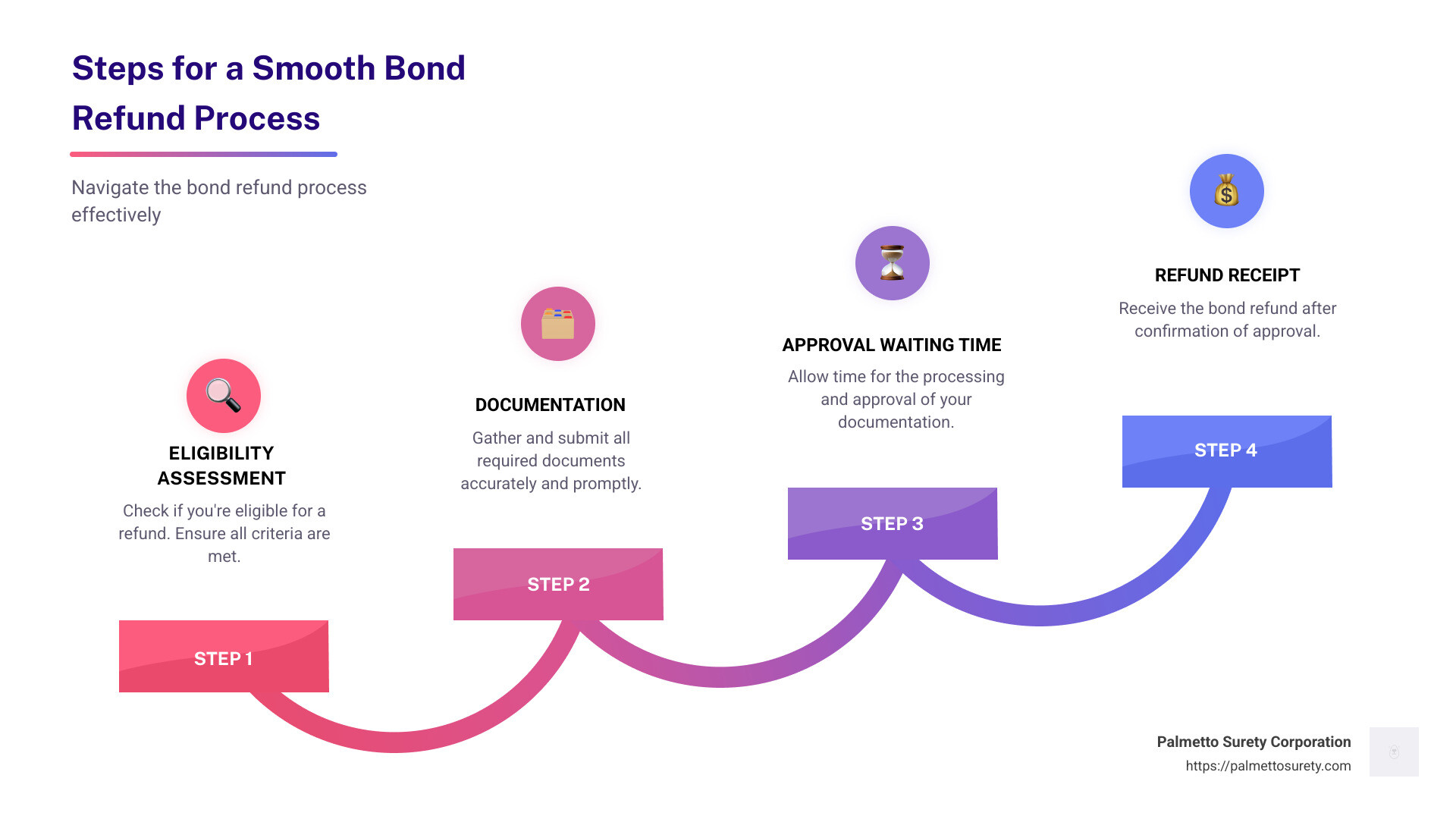
Understanding the bond refunds process is crucial for anyone involved with surety bonds, whether you’re a business owner or an individual needing a bail bond. The process typically involves several key steps: verifying eligibility, submitting necessary documentation, waiting for approval, and finally receiving the refund. Familiarity with these steps will help you navigate the system efficiently and avoid unnecessary delays.
Quick Steps for Bond Refunds:
- Eligibility Assessment: Determine if you’re eligible for a refund.
- Documentation: Collect and submit the required documents.
- Approval Waiting Time: Allow time for processing.
- Refund Receipt: Receive the bond refund.
I’m Haiko de Poel Jr, a seasoned marketer with expertise in branding, strategic growth, and specifically in the area of bond refunds. My work with Palmetto Surety Corporation involved driving innovative strategies in the surety bond sector, ensuring a seamless refund process for all stakeholders.
Glossary for bond refunds:
– bond refund contact
– bond refund form
– bond refund process
Step 1: Understanding Bond Refunds
Before diving into the bond refund process, it’s important to understand what bond refunds are and the types of bonds involved.
Definition of Bond Refunds
A bond refund is essentially the repayment or return of the principal amount of a bond to the bondholder. This usually happens when a bond reaches its maturity date or is called before maturity. In some cases, bond refunds are also issued to replace existing bonds with new ones, often at more favorable terms.
Types of Bonds
Bonds come in various forms, each with its own characteristics and purposes. Here are the main types:
- Municipal Bonds: Issued by local and state governments to finance public projects like schools and roads.
- Corporate Bonds: Issued by companies to raise capital for business operations.
- Government Bonds: Issued by the federal government, often considered low-risk.
- Callable Bonds: Bonds that can be redeemed by the issuer before their maturity date, often leading to a refund.
Refunding Bonds
Refunding bonds are used to refinance existing bonds, usually to take advantage of lower interest rates. This process involves issuing new bonds to pay off the old ones, reducing interest costs and possibly removing unwanted covenants.

For example, if a government issued a bond with a 10% interest rate and current market rates drop to 6%, they might issue refunding bonds at the lower rate. This can lead to substantial savings over time.

Refunding can be a strategic move for issuers, helping them manage debt more effectively. However, it requires careful consideration of interest rates, call protection periods, and potential tax implications.
Understanding these basics about bond refunds will help you steer the refund process more effectively, whether you’re dealing with municipal bonds or other types.
Next, we’ll explore the detailed steps involved in the bond refund process.
Step 2: The Bond Refund Process
Navigating the bond refund process can seem complex, but breaking it down into simple steps can make it manageable. Let’s explore how cash bond refunds, refunding mechanics, and escrow accounts come into play.
Cash Bond Refund
A cash bond refund occurs when the conditions of a bond are met, and the bondholder is eligible to receive their money back. This is common in criminal cases where a defendant has met all court requirements. For example, in Bexar County, Texas, once a court order authorizes the refund, the process typically takes about 15 business days, minus any administrative fees.
If you lose your original cash bond receipt, you’ll need an “Affidavit to Request Cash Bond Refund.” This varies depending on when the bond was executed, so make sure you have the correct form.
Refunding Mechanics
Refunding involves replacing an old bond with a new one, usually to take advantage of lower interest rates. This is known as refinancing in the bond world. Here’s how it works:
- Issuance of New Bonds: New bonds are issued at a lower interest rate.
- Use of Proceeds: The proceeds from these new bonds pay off the old bonds.
- Interest Savings: The issuer benefits from reduced interest payments over time.
For instance, if a city issued a bond at a 10% interest rate and rates drop to 6%, they might issue new bonds at the lower rate. This switch can lead to significant savings, making it a smart financial move.
Escrow Account
An escrow account plays a crucial role in bond refunding. It’s a secure account where the proceeds from the new bonds are held until they are used to pay off the old bonds. This ensures that funds are available when needed and adds a layer of security for investors.
The funds in the escrow account are often invested in low-risk securities like U.S. Treasuries. This setup not only safeguards the money but also generates interest, which can be used to cover interest payments on the refunded bonds until they mature.
Understanding these elements of the bond refund process is essential for a smooth experience. Whether dealing with a cash bond refund or navigating the mechanics of refunding, knowing what to expect can make the process less daunting.
Next, we’ll dig into key considerations for bond refunds, including interest rates and tax implications.
Step 3: Key Considerations for Bond Refunds
When dealing with bond refunds, there are several important factors to consider. These include the call protection period, interest rates, and tax implications. Each of these can significantly impact the refund process and the financial outcomes involved.
Call Protection Period
The call protection period is a set timeframe during which a bond cannot be redeemed by the issuer. For example, a callable bond might have a 10-year term but include a four-year call protection period. This means the bond cannot be called before the end of those four years. Understanding this period is crucial because it affects when a bond can be refunded. If interest rates drop significantly during the protection period, the issuer might miss out on potential savings from earlier refinancing.
Interest Rates
Interest rates play a pivotal role in determining the feasibility and timing of a bond refund. Lower interest rates present an opportunity to issue new bonds at a reduced cost, which can lead to substantial savings for the issuer. For example, if a bond was initially issued at a 7% interest rate, and the current rates are 4%, refunding the bond could result in significant interest savings over time. It’s essential to monitor market trends and work closely with a financial advisor to time the refunding optimally.
Tax Implications
Refunding bonds can also have tax implications. The interest earned on certain municipal bonds, for instance, is often exempt from federal income tax. However, if these bonds are refunded, the new bonds might not carry the same tax-exempt status, depending on the specifics of the issuance. This could impact the overall attractiveness of the bond for investors. It’s crucial to consult with a tax advisor to understand how refunding might affect tax liabilities and to ensure compliance with any relevant regulations.
Understanding these key considerations can help steer the complexities of the bond refund process. By being aware of the call protection period, keeping an eye on interest rate trends, and understanding the tax implications, you can make informed decisions that align with your financial goals.
Next, we’ll explore common scenarios for bond refunds, such as municipal bonds and callable bonds.
Step 4: Common Scenarios for Bond Refunds
In finance, there are several scenarios where bond refunds become relevant. Let’s explore these common situations, focusing on municipal bonds, callable bonds, and advance refunding.
Municipal Bonds
Municipal bonds are issued by state and local governments to fund public projects like schools, highways, and hospitals. These bonds often come with tax advantages, making them attractive to investors. When interest rates drop, municipalities might look to refund these bonds to reduce debt service costs. This is known as refunding municipal bonds. The process involves issuing new bonds at a lower interest rate to pay off the old ones. This allows the government to save money on interest payments, which can then be redirected to other community needs.
Callable Bonds
Callable bonds give issuers the option to repay the bond before its maturity date, usually after a specified call protection period. This feature becomes particularly useful when interest rates fall. For instance, if a bond was issued with a 6% interest rate and current rates have dropped to 3%, the issuer might call the bond. They can then issue new bonds at the lower rate, effectively reducing their interest expenses. However, this can be risky for investors, as it might end their income stream sooner than expected if the bond is called.
Advance Refunding
Advance refunding occurs when an issuer wants to refinance its debt before the call date of the existing bonds. This is often done when interest rates have dropped significantly, and the issuer wants to lock in the lower rates. The proceeds from the new bonds are placed in an escrow account to pay off the old bonds at a later date. This strategy allows issuers to manage their debt more efficiently and take advantage of favorable market conditions. However, it’s worth noting that advance refunding is less common today due to changes in tax laws.
Understanding these scenarios helps in navigating the complex landscape of bond refunds. Whether dealing with municipal bonds, callable bonds, or considering advance refunding, being informed can lead to more strategic financial decisions.
In the next section, we’ll discuss how to ensure a smooth bond refund experience, focusing on documentation, contact information, and refund timelines.
Step 5: How to Ensure a Smooth Bond Refund Experience
Navigating the bond refund process can be straightforward if you have the right tools and knowledge. Here’s how to ensure your experience is as smooth as possible.
Documentation
First and foremost, have all your documentation ready. This includes the original bond receipt, any court orders, and identification. Missing documents can delay the refund process, so double-check that everything is complete before submitting your request. If you’re unsure about what you need, contact the relevant office for guidance. They can provide a checklist or answer specific questions about required paperwork.
Contact Information
Keep a list of key contact numbers handy. This includes the courthouse or agency handling your bond, as well as any financial advisors or legal representatives you might be working with. For instance, if you are dealing with a cash bond refund in Bexar County, Texas, you might need to reach out to the Bookkeeping Department for assistance. Having these contacts readily available can save you time and help resolve issues quickly.
Refund Timeline
Understanding the refund timeline is crucial. Typically, cash bond refunds are processed within a specific timeframe, such as 15 business days. However, timelines can vary based on the type of bond and jurisdiction. Be sure to ask about the expected timeline when you submit your refund request. This way, you’ll know when to follow up if you haven’t received your refund.
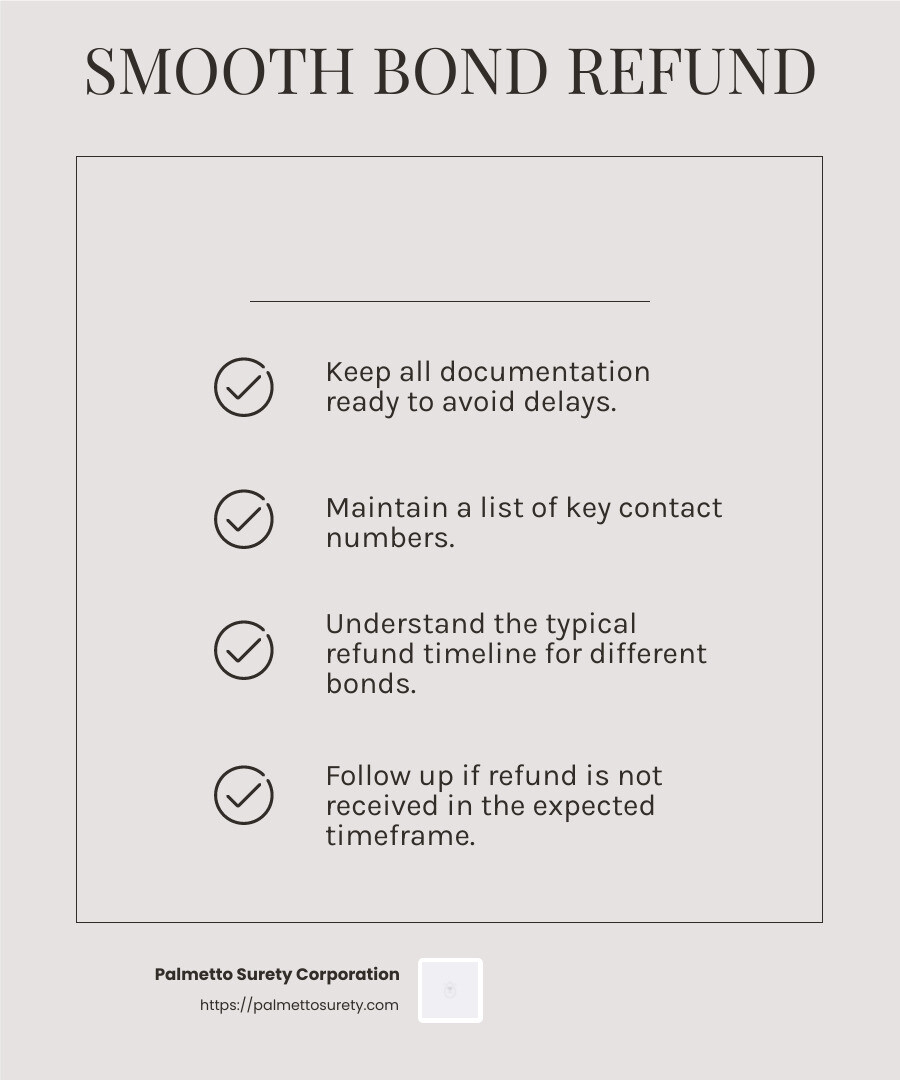
By keeping your documentation organized, maintaining good communication with relevant contacts, and being aware of the refund timeline, you can steer the bond refund process with ease. Next, we’ll address frequently asked questions about bond refunds, including what bond refunding means and how it differs from bail.
Frequently Asked Questions about Bond Refunds
What is meant by bond refunding?
Bond refunding is like refinancing a loan. An issuer replaces existing bonds with new ones, usually to save money. When interest rates drop, a city or company might issue new bonds at a lower rate to pay off old bonds with higher rates. This process helps reduce the overall cost of borrowing.
What happens when a bond is refunded?
When a bond is refunded, it’s essentially retired. The issuer uses the proceeds from the new bonds to pay off the old bonds. This often involves setting up an escrow account where funds are held until the bonds are fully paid. The original bondholders receive their principal earlier than expected, and the issuer benefits from lower interest payments on the new bonds.
Are bail and bond the same thing?
No, bail and bond are not the same, though they are related. Bail is the money a defendant pays to be released from jail while awaiting trial. It acts as a guarantee that they’ll return for their court date. A bond, on the other hand, is a financial instrument. In the context of bail, a bail bond is a promise by a bail bond agent to pay the bail amount if the defendant doesn’t show up in court. Bonds can also refer to investment products issued by entities like governments or corporations.
Understanding these distinctions can help you steer bonds and bail with greater ease. Whether you’re dealing with bond refunding or bail bonds, knowing the terms and processes involved is key.
Conclusion
Understanding the bond refund process can seem daunting, but with the right guidance, it becomes much more manageable. At Palmetto Surety Corporation, we pride ourselves on making complex financial processes simple and accessible for our clients. With over 20 years in the industry, our expertise in commercial surety and bail bonds ensures that you receive the best service possible.
Our quick and efficient service is designed to meet your needs promptly. We aim to process most bond applications within hours, so you can focus on what matters most to you. With our headquarters in Charleston, SC, and locations across Georgia, Florida, Louisiana, Mississippi, South Carolina, Tennessee, and Texas, we are well-positioned to serve the southeastern United States.
At Palmetto Surety Corporation, we understand the importance of a smooth bond refund experience. Our team is dedicated to providing you with clear information and support throughout the process. Whether you’re dealing with municipal bonds, callable bonds, or bail bonds, our goal is to help you steer the refund process with confidence.
Thank you for choosing Palmetto Surety Corporation as your trusted partner in the bond refund journey. Our commitment to excellence and customer satisfaction is unwavering, and we look forward to assisting you with all your bond-related needs.


