


Notary Public Bond Cost: Top Tips & Prices for 2025
Notary public bond cost is a crucial concern for individuals aspiring to become notaries in California. On average, a notary public bond in California costs $38 for a four-year term with a bond amount of $15,000. This bond serves as financial protection for the public, ensuring they receive compensation if a notary fails to fulfill their duties ethically and legally. By maintaining this bond, notaries provide assurance to businesses and individuals relying on their services for critical documents.
A notary public is an impartial witness who oversees the signing of important documents like real estate deeds and affidavits. The bond they must carry acts like a safety net for the public, safeguarding against potential financial harm caused by errors or fraudulent activities. This aspect of notarial work underscores its importance, demanding integrity and accuracy from those serving as notaries.
My name is Haiko de Poel Jr. With extensive expertise in marketing, I have driven growth for organizations like Palmetto Surety Corporation. My role involved strategic measures in rebranding, digital change, and understanding cost elements such as the notary public bond cost, aligning them with consumer needs for effective market presence.
Related content about notary public bond cost:
– how much does a 10 000 texas notary bond cost
– how much does a notary bond cost in alabama
What is a Notary Public Bond?
A Notary Public Bond is a type of surety bond that serves a critical role in protecting the public from financial harm. When a notary public is commissioned, they are required to obtain this bond, which acts as a financial guarantee that they will perform their duties ethically and in accordance with the law.
Purpose
The primary purpose of the notary public bond is to provide a safety net for the public. If a notary fails to perform their duties correctly—such as notarizing a document without witnessing the signature, or engaging in fraudulent activities—the bond ensures that affected parties can receive financial compensation. This protection is essential because notaries handle sensitive legal documents, and any mistakes or misconduct can lead to significant financial consequences for individuals and businesses.
Financial Harm
Mistakes happen, but when they occur in notarial acts, they can lead to severe financial harm. For example, if a notary improperly notarizes a real estate deed, it could lead to disputes over property ownership. The notary public bond covers such scenarios by compensating those who suffer losses due to the notary’s errors or misconduct. This financial safeguard is vital for maintaining trust in the notarial process.
Public Protection
Notaries play a crucial role in ensuring the authenticity and legality of important documents. By requiring notaries to hold a bond, states like California protect the public from potential errors and fraudulent acts. The bond acts as a deterrent against negligence and misconduct, promoting integrity and accountability among notaries. This public protection aspect is why states mandate notary public bonds as a condition for obtaining a notary commission.

In summary, the notary public bond is not just a formality; it is a vital component of public trust in the notarial process. It provides financial protection against errors and misconduct, ensuring that notaries fulfill their responsibilities with the utmost care and integrity.
Notary Public Bond Cost
Understanding the notary public bond cost is essential for anyone looking to become a notary. In California, the cost of a notary bond is quite straightforward. The average cost is $38 for a four-year term. This bond, which is set at $15,000, is a requirement for all notaries public in the state.
Factors Affecting Bond Cost
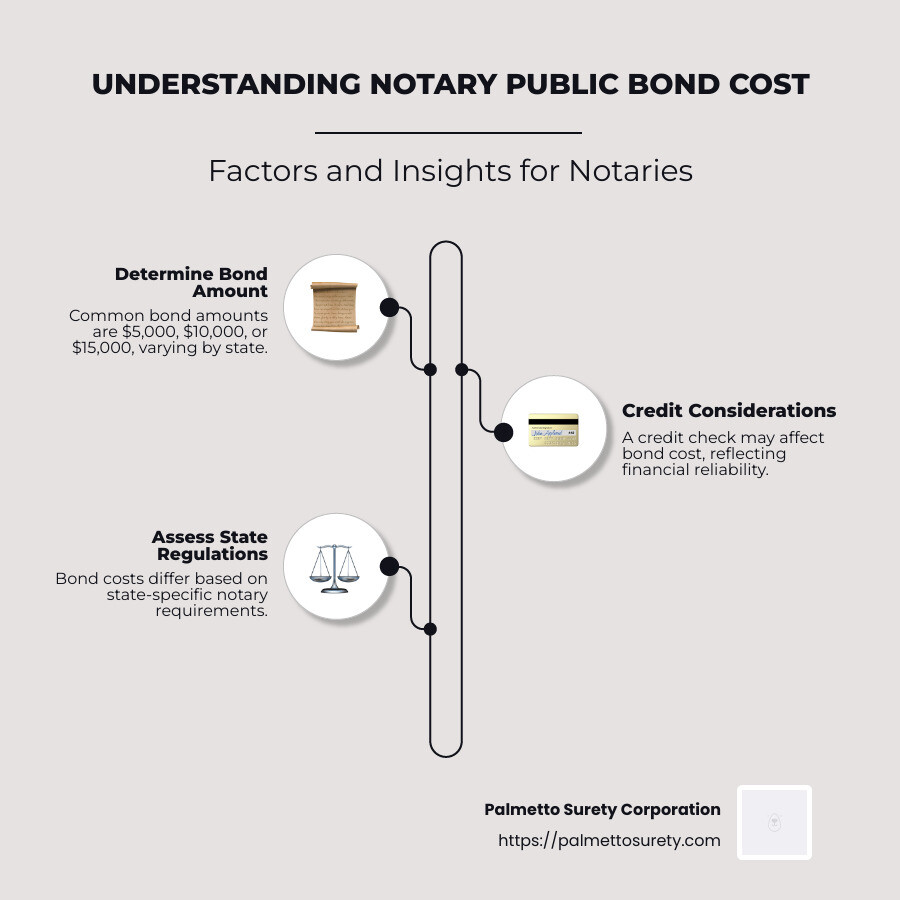
While the base cost of a notary bond is generally consistent, certain factors can influence the final price. Here are the main elements that can affect the bond cost:
-
State Regulations: Different states have varying requirements for notary bonds. For example, while California mandates a $15,000 bond, other states might require different amounts, impacting the cost.
-
Credit History: Although a credit check is not required for the California notary public bond due to its low-risk nature, in other states or for other types of bonds, credit history can play a significant role in determining the bond cost. A better credit score often means a lower premium.
-
Bond Amount: The required bond amount directly influences the cost. Higher bond amounts typically result in higher premiums. However, the standard $15,000 bond in California is designed to be affordable for most notaries.
How Much Does a $10,000 Notary Bond Cost?
The cost of a $10,000 notary bond can vary depending on several factors, including the state in which you are applying and whether a credit check is involved. Generally, the cost range for a $10,000 bond might be slightly lower than that of a $15,000 bond, given the reduced risk and coverage amount.
In some states, variations in regulations might lead to different pricing structures. It’s important to check the specific requirements and costs associated with notary bonds in your state to get an accurate estimate.
Understanding these factors can help prospective notaries budget accordingly and ensure they meet all necessary requirements to obtain their commission.
How to Obtain a Notary Public Bond
Becoming a notary public involves several steps, from meeting qualifications to filing your notary bond. Here’s a simplified guide to help you steer the process.
Steps to Become a Notary
- Meet the Qualifications:
- Be at least 18 years old.
-
Be a resident of the state where you are applying.
-
Complete a Course of Study:
-
Enroll in a state-approved notary course. In California, for instance, it’s a six-hour course for new applicants and a three-hour refresher for those renewing.
-
Pass the Exam:
-
After completing the course, you must pass a written exam. Bring your photo ID, completed application, passport photo, and proof of course completion to the exam.
-
Undergo a Background Check:
-
Submit fingerprints for a background check via Live Scan, ensuring no criminal history that would disqualify you.
-
Receive Your Commission Packet:
- Once you pass the exam and background check, you’ll receive a packet with your notary commission details.
Filing Your Notary Bond
After receiving your commission, you’ll need to file your notary bond to begin your official duties.
- Purchase a Notary Bond:
-
Obtain a $15,000 surety bond, the typical requirement in California, to protect the public from financial harm due to any errors you might make.
-
File with the County Clerk:
-
Visit the county clerk’s office where you conduct business to file your bond and oath of office. This step is crucial for validating your commission.
-
Take the Oath of Office:
-
Swear an oath to uphold the duties of a notary public. This is often done at the county clerk’s office.
-
Meet the Filing Deadline:
- Ensure all documents are filed within 30 days of your commission start date to avoid delays or penalties.
By following these steps, you’ll be well on your way to becoming a commissioned notary public, ready to serve your community with integrity and professionalism.
Frequently Asked Questions about Notary Public Bond Cost
How much does a $5,000 notary bond cost?
The cost of a $5,000 notary bond can vary depending on the state and the issuing surety company. Typically, these bonds are less expensive than the standard $15,000 bond, often costing between $30 and $50 for a four-year term.
Is a credit check required for a notary bond?
No, a credit check is generally not required for notary bonds, especially in states like California. These bonds are considered low-risk, which means the cost remains consistent regardless of the applicant’s credit history. This makes the process of obtaining a notary bond straightforward and accessible for most individuals.
What other supplies are needed for a notary?
In addition to the notary bond, you’ll need a few other essential supplies to perform your duties effectively:
- Notary Seal or Stamp: This is used to authenticate documents and is a mandatory tool for every notary.
- Notary Journal: A record book to log all notarial acts, ensuring compliance with state regulations.
- Errors and Omissions Insurance (E&O): While not required, this insurance protects you from potential claims of negligence or mistakes in your duties.

These supplies help ensure you perform your notarial duties accurately and in accordance with state laws.
Conclusion
At Palmetto Surety Corporation, we understand that obtaining a notary public bond can seem daunting, but it doesn’t have to be. Our goal is to provide quick approval and efficient service to make the process as smooth as possible for you.
With over 20 years of experience in the surety bond industry, we specialize in offering a wide range of bonds for various industries, including notary public bonds. Our expertise allows us to approve most applications within hours, ensuring that you can focus on your notarial duties without unnecessary delays.
We know that time is valuable, and that’s why we’ve streamlined our process to offer you a hassle-free experience. Whether you’re applying for a $5,000 or $15,000 bond, our team is here to guide you every step of the way.
If you’re ready to start or renew your notary commission, visit our website to learn more about our services and how we can assist you in obtaining the necessary bonds quickly and efficiently. Let us help you protect your notarial practice with the reliability and speed you deserve.


