


How Much Does a Notary Bond Cost? Top Guide 2025
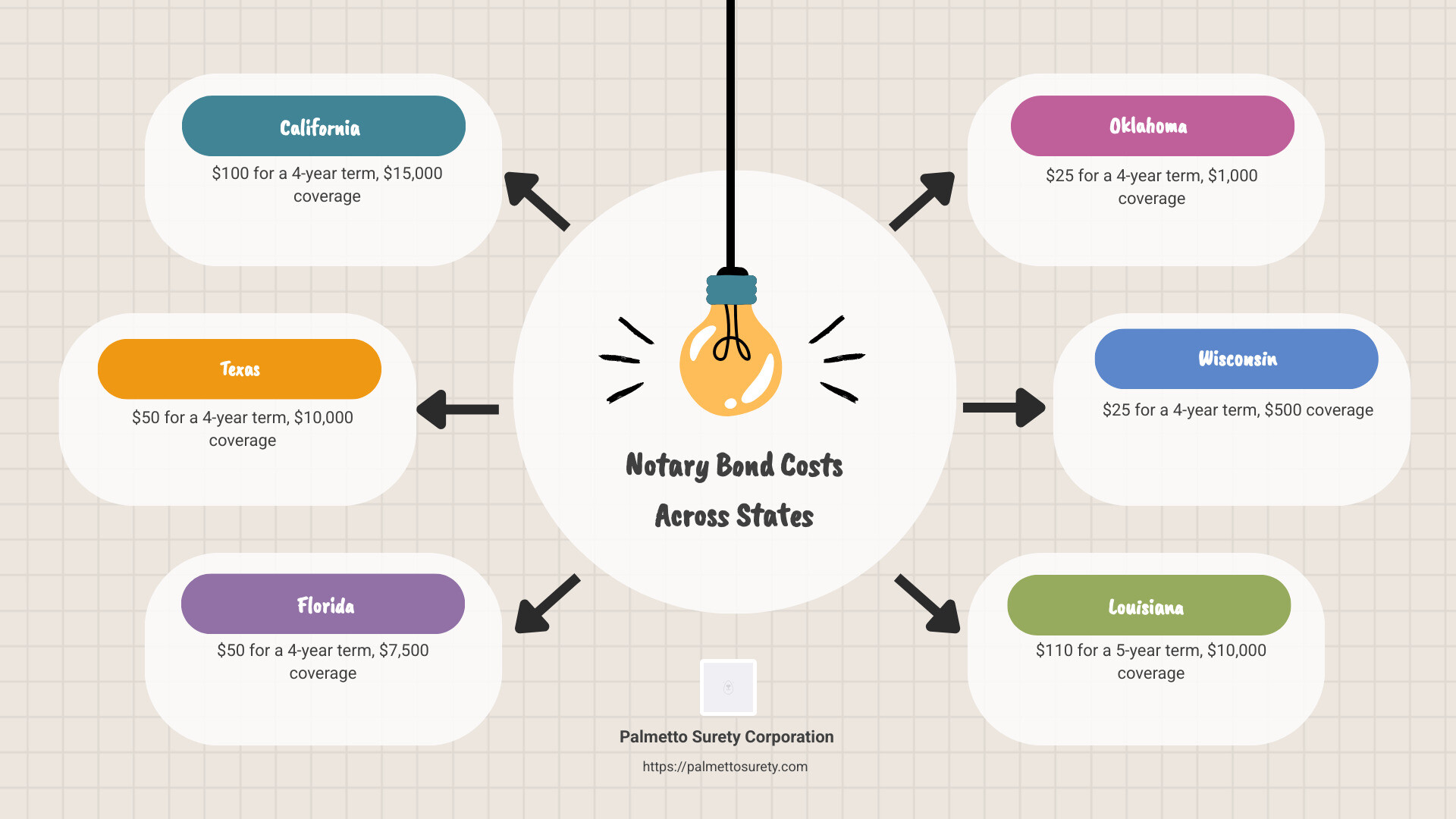
Understanding how much a notary bond costs is essential for anyone aspiring to become a notary public. The cost of a notary bond varies widely across different states, influenced by factors such as the bond amount and the term length. For instance, in states like Oklahoma and Wisconsin, the cost can be as low as $25, while in Louisiana, it can reach up to $110. Here’s a brief overview of some states:
- Alabama Notary Bond: $100 for a 4-year term, $50,000 coverage
- Alaska Notary Bond: $40 for a 4-year term, $2,500 coverage
- Texas Notary Bond: $50 for a 4-year term, $10,000 coverage
Being informed about the costs associated with a notary bond is crucial for ensuring compliance and effective financial planning.
My name is Haiko de Poel Jr. With a background in marketing and rebranding, I specialize in navigating the complexities of surety bonds. Here, I’ll provide you with clear and concise information to help you understand how much a notary bond costs, enabling you to make informed decisions and maintain compliance.
Understanding Notary Bonds
A notary bond is a type of surety bond that notaries public must obtain before they can perform their duties. It acts as a financial guarantee, protecting the public from any mistakes or misconduct by the notary. Essentially, it’s a promise that the notary will adhere to the law and perform their duties ethically. If they don’t, the bond provides a way for affected parties to claim compensation.
Definition
At its core, a notary bond is a legal agreement involving three parties:
- Principal: The notary public who buys the bond.
- Obligee: The state government requiring the bond.
- Surety: The company that issues the bond, guaranteeing the notary’s performance.
The bond ensures that the notary will fulfill their duties correctly. If they fail, the surety company compensates the affected party and then seeks reimbursement from the notary.
Duties of a Notary
Notaries serve as impartial witnesses to the signing of important documents. Their main responsibilities include:
- Verifying the identity of the signers.
- Ensuring all parties understand the document.
- Witnessing the signing.
- Applying a notarial seal to the document.
These duties help prevent fraud and ensure the integrity of transactions.

Protection Offered by Notary Bonds
A notary bond protects the public rather than the notary. If a notary makes an error or acts unethically, someone financially harmed can file a claim against the bond. For example, if a notary were to notarize a fraudulent document, the bond could cover the losses incurred by the victim.
However, it’s important to note that the bond does not protect the notary from liabilities. The notary is still responsible for any claims paid out by the surety company. This is why some notaries also opt for Errors and Omissions (E&O) insurance, which provides additional protection for the notary themselves.
Understanding these aspects of notary bonds helps ensure that notaries perform their roles responsibly and that the public remains safeguarded.
Next, we’ll dive into how much does a notary bond cost and the factors that influence these costs.
How Much Does a Notary Bond Cost?
When it comes to understanding how much does a notary bond cost, it’s important to consider that costs can vary based on several factors. Let’s break it down.
Factors Influencing Notary Bond Costs
-
State Requirements
Each state has its own rules regarding notary bonds, including the bond amount required. For example, California mandates a $15,000 bond, while Florida requires a $7,500 bond. These requirements directly impact the cost of the bond. -
Bond Amount
The bond amount is the maximum coverage the bond offers. States with higher bond requirements typically have higher bond costs. However, because notary bonds are generally low-risk, the cost remains affordable. -
Commission Period
The length of the commission period also affects cost. Most states have a four-year commission period, which is common for notary bonds. This means you’ll pay for the bond once every four years, unless you opt for a pay-as-you-go subscription. -
Credit History
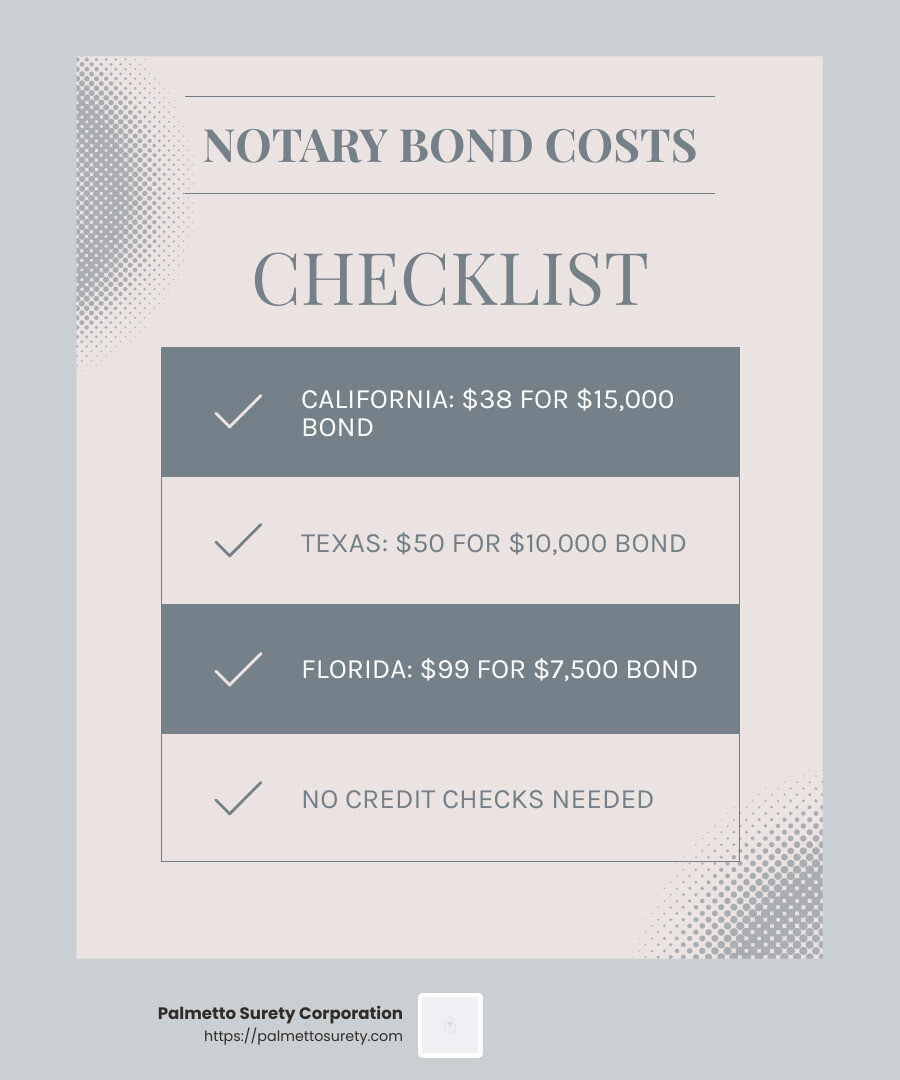
Unlike many other types of surety bonds, a notary bond does not typically require a credit check. This is because the risk associated with notary work is relatively low, allowing for a standard rate for all notaries in a given state.
Typical Costs Across States
Now, let’s explore the typical costs in some states where Palmetto Surety Corporation operates:
-
California
In California, a notary bond costs about $38 for a four-year term with a bond amount of $15,000. The state does not require a credit check, making it accessible for all notaries. -
Texas
Texas requires a $10,000 bond for a four-year term, with costs typically around $50. The process is straightforward, and like California, it does not require a credit check. -
Florida
In Florida, the bond amount is $7,500, and the cost is approximately $99 for a four-year term. This state also maintains a simple application process without a credit check.
Understanding these factors and costs helps prospective notaries prepare financially and ensures they meet their state’s requirements. Next, we’ll explore additional costs and considerations related to notary bonds.
Additional Costs and Considerations
When becoming a notary, it’s crucial to consider not just the bond itself but also other potential costs. These additional expenses can impact your budget and overall financial planning.
E&O Insurance
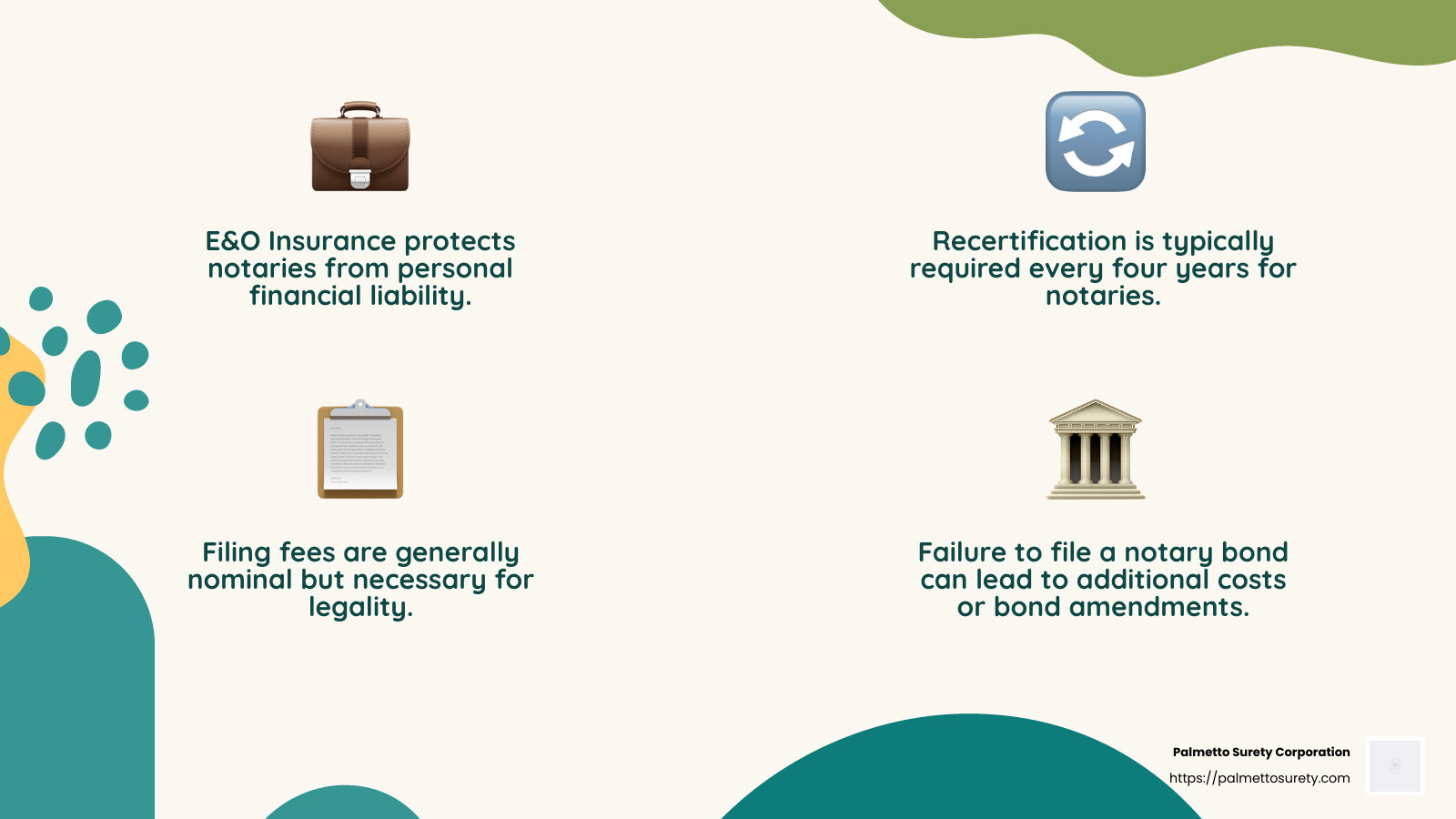
While not mandatory, Errors and Omissions (E&O) Insurance is highly recommended for notaries. Unlike a notary bond, which protects the public from your mistakes, E&O insurance protects you personally from financial liability. If a claim exceeds the bond amount, E&O insurance can cover the difference, safeguarding your assets.
Adding E&O insurance can cost more than the bond itself. However, many states, like Texas, hold notaries personally liable for errors, making this insurance a wise investment. Some providers even offer E&O insurance complimentary with a surety bond, so it’s worth exploring these options.
Recertification
Notaries must stay current with their commission, which typically lasts four years. When it’s time to renew, you’ll need to factor in the cost of recertification. This includes a refresher course, which is usually shorter and less expensive than the initial certification course. In California, for example, a three-hour refresher course is all that’s needed if you renew before your commission expires.
Filing Fees
After obtaining your notary bond, you must file it with your county clerk. Filing fees can vary but are generally nominal. It’s important to complete this step promptly, as failure to file within the required time frame could result in additional costs or even the need to amend your bond.
These additional costs and considerations are vital for notaries to understand and budget for. E&O insurance, recertification, and filing fees are all part of maintaining your notary commission effectively. Next, we’ll discuss how to purchase a notary bond.
How to Purchase a Notary Bond
Getting a notary bond is easier than you might think. Whether you prefer handling things online or working with a local agent, there are options to suit your needs. Here’s how you can secure your notary bond quickly and efficiently.
Online Options
Many people find purchasing a notary bond online to be the most convenient option. Companies like Palmetto Surety Corporation offer a streamlined process that lets you select, buy, and print your bond right from your computer. This method is fast and hassle-free, often allowing you to receive your bond within a few hours.
To purchase online, start by visiting a trusted surety bond provider’s website. You’ll typically need to fill out a short form with your personal and professional details. Once completed, you can pay securely and receive your bond via email. This method is perfect for those who need a bond quickly and want to avoid the hassle of visiting an office.
Local Agents
If you prefer a more personal touch, working with local agents can be beneficial. Agents can guide you through the process, ensuring you understand each step. They can also provide valuable advice custom to your specific needs and circumstances.
Local agents are especially useful if you’re unsure about the requirements in your state or need help choosing the right bond amount. They have the expertise to answer your questions and can often expedite the approval process, getting you bonded faster than you might on your own.
Quick Approval
Whether you choose to go online or work with an agent, quick approval is a key advantage. Companies like Palmetto Surety Corporation have state-of-the-art platforms that significantly reduce underwriting times. This means less waiting and more time for you to focus on your notary duties.
Approval times can vary depending on your credit history and the specific requirements of your state. However, most applicants receive approval and their bond within a few business hours. This efficiency ensures that you can start your notary work without unnecessary delays.
In summary, purchasing a notary bond can be a straightforward process with the right guidance and resources. Whether you opt for the convenience of online purchasing or the personalized service of a local agent, quick approval is typically within reach. Next, we’ll address some frequently asked questions about notary bonds.
Frequently Asked Questions about Notary Bonds
How much does a $10,000 notary bond cost?
The cost of a $10,000 notary bond varies by state. For example, in Texas, a $10,000 notary bond costs about $50 for a four-year term. Similarly, in Michigan, you can expect to pay $30 for a six-year term. These prices reflect a one-time payment covering the entire bond term. These costs are generally affordable, making it easier for notaries to meet state requirements.
What is the difference between a notary bond and E&O insurance?
A notary bond and Errors and Omissions (E&O) insurance serve different purposes. A notary bond protects the public by providing a financial guarantee that the notary will perform their duties ethically and legally. If a claim is made against the bond, the surety company pays the claim, and the notary is responsible for reimbursing the surety.
On the other hand, E&O insurance protects the notary against personal financial loss from errors made during notarization. Unlike a bond, E&O insurance is not required by law but can be a wise investment for additional peace of mind. It covers legal defense costs and any settlements up to the policy limit, ensuring that the notary isn’t personally liable for mistakes.
Can I get a refund on a notary bond?
Refunds on notary bonds are generally not available once the bond has been issued and filed. This is because the bond is a financial guarantee that remains in place for the term specified. However, if you cancel the bond before it has been filed with the state or county, you might be eligible for a refund, minus any processing fees. It’s best to check with your bond provider for their specific refund policy, as terms can vary. Always ensure you understand the terms before purchasing to avoid any surprises.
In the next section, we’ll wrap up with more insights into Palmetto Surety Corporation’s quick service and how they cater to notaries in the southeastern U.S.
Conclusion
Choosing the right notary bond provider is crucial, and that’s where Palmetto Surety Corporation shines. With over 20 years of experience, we specialize in offering quick and efficient service to notaries across the southeastern U.S., including South Carolina, Florida, Georgia, Louisiana, Mississippi, Tennessee, and Texas.
Our streamlined process allows for most applications to be approved within hours, ensuring you can get your bond and start your notary duties without delay. We understand the importance of speed and reliability, which is why our dedicated team is always ready to assist you.
Whether you need a bond for a new commission or a renewal, we’ve got you covered. Our expertise in the industry and commitment to customer satisfaction make us a trusted choice for notaries looking for dependable service.
Explore our services to see how we can assist you in securing a notary bond quickly and efficiently. Let us be your partner in navigating notary bonds with ease and confidence.


