


Can You Make Payments to a Bail Bondsman? 7 Powerful Facts 2025
Understanding Bail Bond Payment Options
Can you make payments to a bail bondsman? Yes, most bail bondsmen offer payment plans that allow you to pay the premium (typically 10-20% of the total bail amount) in installments rather than all at once. These payment plans usually require a down payment of around 3-10% of the bail amount, with the remaining balance paid over 6-12 months.
Here’s a quick breakdown of bail bond payment options:
| Payment Option | Typical Requirements | Advantages |
|---|---|---|
| Full premium upfront | None | No ongoing obligations |
| Payment plan | Down payment, possible co-signer | Lower initial cost |
| Collateral-backed plan | Property, jewelry, vehicles | May reduce down payment |
| Co-signed plan | Credit-worthy guarantor | Better terms for those with poor credit |
When facing an arrest, the financial burden of posting bail can be overwhelming. With over 12 million arrests made annually in the United States, many families find themselves scrambling to secure their loved one’s release without draining their savings. Payment plans offered by bail bondsmen serve as a financial lifeline, making freedom accessible even when funds are tight.
I’m Haiko de Poel Jr, and through my work with Palmetto Surety Corporation and as a fractional Chief Marketing Officer specializing in the bail industry, I’ve helped countless clients understand how they can make payments to a bail bondsman while navigating the complexities of the pretrial release system.
Glossary for can you make payments to a bail bondsman:
– can a bail bondsman make an arrest
– do bail bondsman make good money
– how do you make money as a bail bondsman
How Bail Bond Payment Plans Work
When life throws you a curveball and someone you care about is arrested, the financial shock of bail can be overwhelming. Judges set bail amounts ranging from a few thousand to hundreds of thousands of dollars based on the charges, prior history, and flight risk. This is where bail bond payment plans become a financial lifeline for many families.
Think of a bail bond payment plan as a financing arrangement that helps you breathe easier during a stressful time. Instead of coming up with the entire premium upfront (that 10-20% of the total bail amount), you can make a manageable down payment and tackle the rest through regular installments.


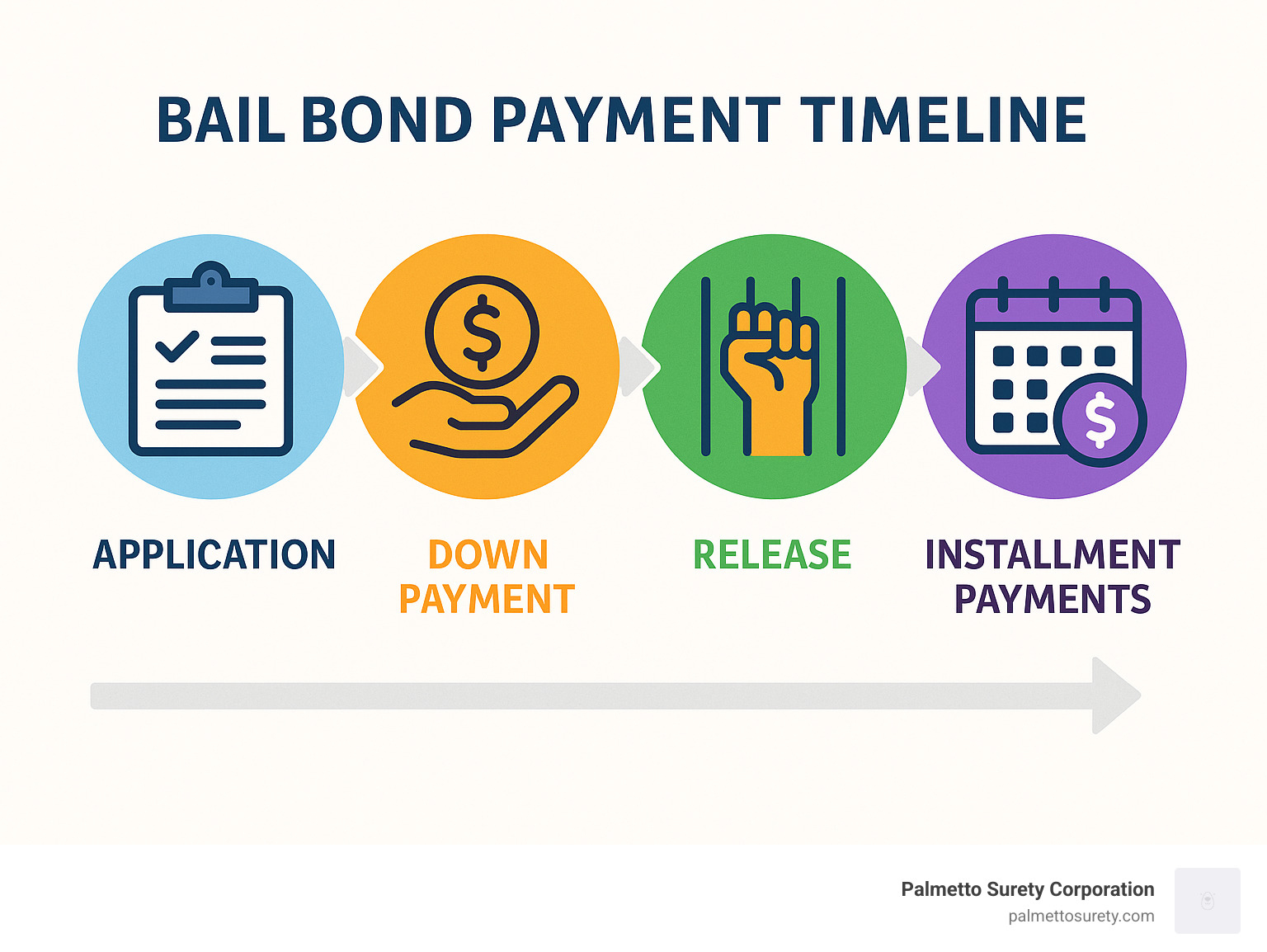
Here’s the typical journey when setting up a payment plan:
First, you’ll have an initial conversation where the bail bondsman gets to know your situation. They’ll look at the case details, bail amount, and your financial picture. Based on this chat, they’ll determine whether a payment plan makes sense and what terms might work best for you.
Next comes the down payment – usually 10-20% of the premium. After signing a contract that spells out your payment schedule, the bondsman posts the full bail amount with the court. From there, you’ll make regular payments until you’ve covered the entire premium.
Down Payment & Term Length
The initial down payment for your bail bond plan depends on several key factors:
The total bail amount set by the court plays a big role, but your personal circumstances matter too. Your credit score, job stability, local ties, and the defendant’s history all influence what a bail bondsman will require upfront.
The industry standard typically calls for about 10% of the premium as a down payment. Let’s make that concrete: If bail is set at $10,000, the standard premium would be $1,000 (10% of the bail), and your down payment might be $300-500. The remaining balance gets spread out over your payment term.
Most payment plans run for six to twelve months, though this timeline can flex based on your specific situation and the policies of the bail bond agency.
Interest & Fees Explained
When exploring payment options, it’s crucial to understand all potential costs beyond just the premium. Some bail bond payment plans come with interest, while others don’t – and the difference can significantly impact your total cost.
Interest-free plans are offered by many bail bondsmen, including many in our Palmetto Surety Corporation network. These plans simply divide your premium into equal payments without adding extra charges.
Interest-bearing plans work more like traditional loans, with interest accumulating on your unpaid balance. Rates vary widely between agencies, which is why it’s always smart to ask about this detail upfront.
Be on the lookout for additional fees that might not be immediately obvious:
– Application or setup fees when starting your plan
– Penalties for late payments
– Processing charges for certain payment methods
– Early payoff penalties (though these are uncommon)
Can You Make Payments to a Bail Bondsman?
Yes, you can make payments to a bail bondsman in most situations. This option has become a standard practice throughout the bail industry, and for good reason. When someone you care about is sitting in jail, coming up with the full premium amount can feel impossible. Payment plans bridge this gap, making freedom accessible even when finances are tight.

When considering whether to offer a payment plan, a bail bondsman’s primary concern is flight risk. Will the defendant show up for court? Since the bondsman is on the hook for the full bail amount if someone skips town, they need to balance helping families with protecting their business.
The legal framework for bail bond payment plans varies significantly from state to state. In the southeastern United States where Palmetto Surety Corporation operates – Georgia, Florida, Louisiana, Mississippi, South Carolina, Tennessee, and Texas – state regulations provide clear guidelines on maximum premium rates, payment plan structures, and disclosure requirements.
Can You Make Payments to a Bail Bondsman If You Have Bad Credit?
Yes, you can make payments to a bail bondsman even with bad credit. This is one of the biggest differences between bail bond financing and traditional loans – bail bondsmen understand that people facing criminal charges often have complicated financial situations.
Rather than focusing exclusively on your FICO score like a bank would, bail agents typically take a more holistic approach. They’ll consider:
- Whether you have steady employment and income
- How long you’ve lived in your current home
- Your family connections in the area
- Any previous criminal history (especially if you’ve ever missed court)
- If you have someone willing to co-sign who has better financial standing
A co-signer can be your financial lifeline when your own credit is shaky. This person agrees to take responsibility if you don’t make your payments or if the defendant doesn’t show up for court.
Can You Make Payments to a Bail Bondsman Without Collateral?
Yes, you can make payments to a bail bondsman without collateral in many situations, though several factors come into play. The bail amount, the defendant’s background, and the bail agency’s specific policies all influence whether collateral will be required.
Bail bond payment plans generally fall into two categories:
Secured payment plans require something of value to back the bond. This might be real estate like a home or land, vehicles including cars or boats, valuable jewelry or collectibles, or financial assets such as stocks or savings certificates.
Unsecured payment plans don’t require physical collateral but usually come with stricter requirements. You might need to make a larger down payment, have better credit (or a co-signer with good credit), provide more extensive employment verification, or make payments more frequently.
For smaller bail amounts – typically under $5,000 – many bail bondsmen in the Palmetto Surety Corporation network can offer unsecured payment plans with just a signature from a responsible co-signer.
Choosing and Using Payment Methods
When it comes to making payments to a bail bondsman, you’ll be glad to know that the industry has evolved to offer plenty of flexible options. Gone are the days when cash was your only choice – today’s bail bond agencies understand that convenience matters, especially during stressful times.

Most bail bond agencies, including those in our Palmetto Surety Corporation network, accept a variety of payment methods to fit your situation. Cash still works great and comes with no extra fees, but it does mean an in-person visit. Credit cards offer convenience at your fingertips, though they typically come with a small processing fee (around 3%). Debit cards give you the benefit of direct withdrawal without affecting your credit score.
Many clients appreciate our online portals for secure electronic payments that can be made from anywhere, anytime. Digital wallets like PayPal, Venmo, or Apple Pay have also become increasingly popular options.
Here’s how different payment methods stack up against each other:
| Payment Method | Convenience | Processing Time | Typical Fees | Privacy Level |
|---|---|---|---|---|
| Cash | Low (requires visit) | Immediate | None | High |
| Credit Card | High | Immediate | 2-3% | Medium |
| Debit Card | High | 1-2 business days | 0-1% | Medium |
| Online Portal | Very High | 1-2 business days | Varies | Medium |
| Digital Wallet | Very High | 1-3 business days | Varies | Low-Medium |
Accepted Forms of Payment
When you’re arranging payments with a bail bondsman, knowing exactly what forms of payment they’ll accept can save you valuable time. Most bail bond agencies have expanded their payment options significantly in recent years.
Almost every bail bond office will accept cash payments – they’re immediate, involve no processing fees, and have been the traditional standby for decades. If you’re more comfortable with paper methods, most agencies also accept personal checks (though these may delay release until cleared), business checks, cashier’s checks, and money orders.
The digital revolution has transformed bail payments too. Most agencies now happily process credit cards from all major providers (Visa, MasterCard, American Express, Find), as well as debit cards for direct bank account access. The world of digital wallets has opened even more doors, with services like PayPal, Venmo, Cash App, and Apple Pay/Google Pay widely accepted.
Setting Up Auto-Pay or Online Payments
Life gets busy, and remembering to make bail bond payments shouldn’t add to your stress. That’s why many bail bond agencies now offer convenient online payment systems and automatic payment options that help ensure you stay on track with your payment plan.
Most online payment portals are designed with simplicity in mind. You can typically make one-time payments whenever it’s convenient for you, view your complete payment history to keep track of your progress, receive digital receipts immediately, and update your payment information if your situation changes.
Setting up auto-pay is usually straightforward and gives you peace of mind knowing your payments will never be late. The process typically involves providing your credit or debit card details, authorizing regular charges on specific dates that work with your pay schedule, and receiving helpful notifications before and after each payment processes.
Responsibilities, Risks, and Default Consequences
When you enter into a payment plan with a bail bondsman, you’re not just signing a piece of paper – you’re accepting serious responsibilities that come with real consequences if things go sideways.

That bail bond payment agreement creates a legally binding contract between you (and your co-signer if you have one), the defendant, and the bail bond agency. The contract clearly spells out the payment schedule, what happens if payments are missed, and the defendant’s obligation to show up for every court date.
When you sign on that dotted line, you’re agreeing to several important conditions. The payment amounts and due dates must be met without fail. Consequences for missed payments can be severe. The defendant must appear in court as scheduled – no exceptions.
Breaking these agreements isn’t like missing a Netflix payment. If the defendant skips court or payments aren’t made as promised, you could face late fees and penalties that add up quickly. Your credit score might take a nosedive. That car or jewelry you put up as collateral? It could be seized faster than you can say “I forgot to pay.” In serious cases, the bond might be revoked completely, sending the defendant back to jail.
In the most extreme scenarios, bail bondsmen may even engage recovery agents – yes, that means bounty hunters – to track down defendants who’ve disappeared.
The Co-Signer’s Liability
Being a co-signer on a bail bond payment plan is a bit like being the responsible friend who holds the car keys at a party – you’re taking on the duty of making sure everything goes according to plan, even if you’re not the one in trouble.
Co-signers step up when defendants need financial backing, especially when they have limited resources or spotty credit. But this isn’t just putting your name on a form – it’s taking on serious responsibilities that could impact your financial future.
When you co-sign, you’re essentially promising to handle financial responsibility if the defendant drops the ball on payments. You’re also providing a court appearance guarantee, pledging that the defendant will show up when they’re supposed to.
Not just anyone can be a co-signer. Bail bond agencies typically look for adults (21+) with stable employment (usually at least a year at the same job), an active checking account, decent monthly income (often $2,000+), and relatively clean credit.
What Happens If You Miss a Payment?
Life happens – cars break down, unexpected bills arrive, paychecks get delayed. But when it comes to bail bond payment plans, missing a payment can create a cascade of problems that go far beyond a simple late fee.
If you miss a payment, the immediate fallout usually includes late fees (typically $25-50 per missed payment), collection calls to both you and any co-signers, and potentially a payment plan modification that might come with its own set of fees.
When payment issues continue, things get serious quickly. Your bail bondsman has the right to revoke the bond entirely – which means the defendant could be headed back to jail, regardless of how their case is progressing. Any collateral you provided might be seized faster than you’d expect.
According to the Harris County Sheriff’s Office inmate bonding process, bond revocation can result in immediate re-arrest at any point in the court proceedings. This isn’t a simple inconvenience – it’s a major disruption that can affect employment, family life, and the defendant’s ability to prepare for their case.
The golden rule if you’re facing financial troubles? Communication is key. If you see a payment problem on the horizon, don’t wait until you’ve already missed a deadline – reach out to your bail bondsman immediately.
How to Pick the Right Bail Bond Agency & Secure Fast Release
Choosing the right bail bond agency can make all the difference when you need to make payments to a bail bondsman. Not every agency offers the same level of service or payment flexibility, and making an informed choice can save you both money and stress during an already difficult time.
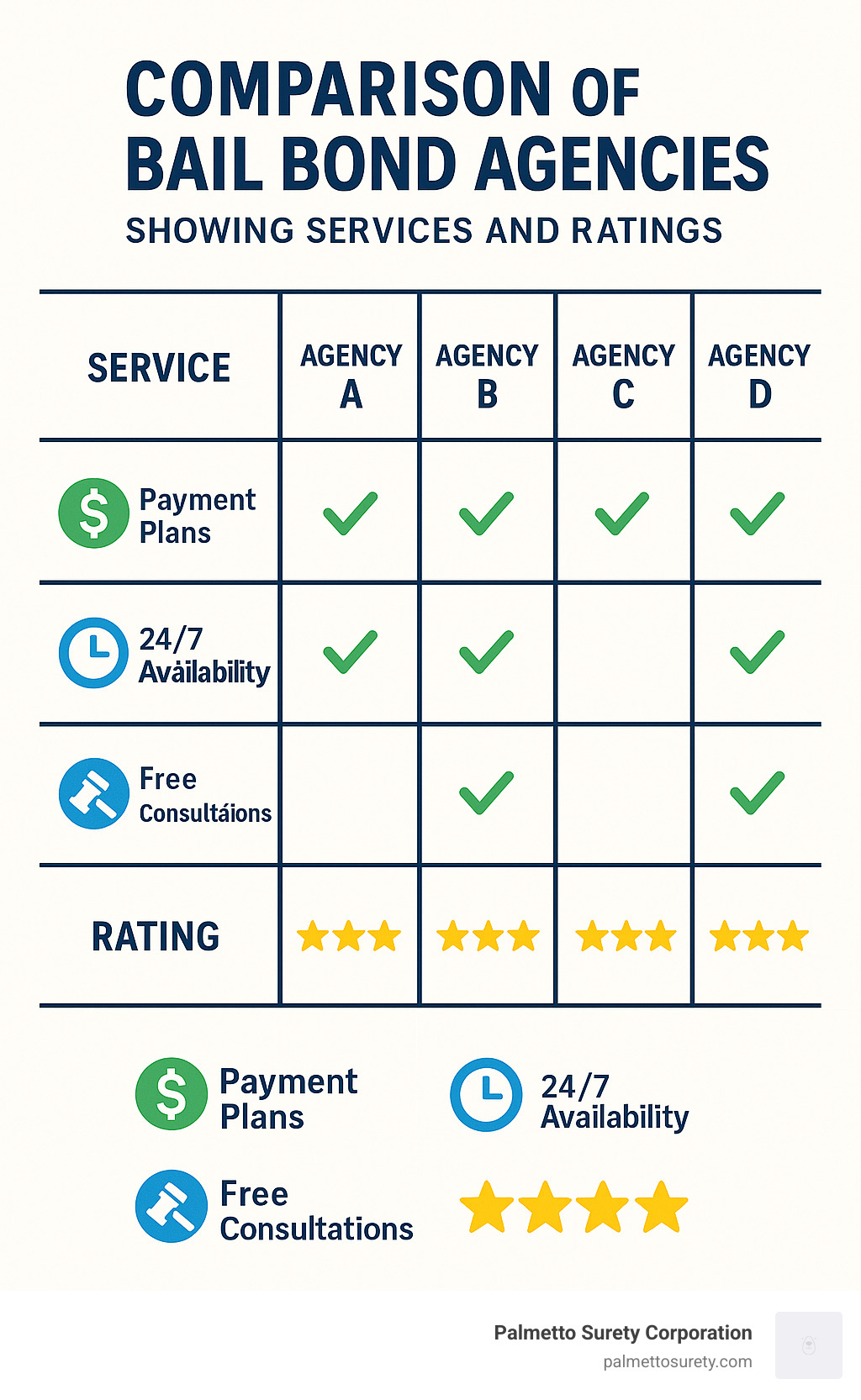
When you’re looking for a bail bond agency that offers payment plans, start by checking their credentials. Proper licensing is non-negotiable—at Palmetto Surety Corporation, every bail agent in our network is fully licensed and backed by our two decades of industry experience.
Reputation matters enormously in the bail industry. Take time to read online reviews, ask attorneys for recommendations, or seek referrals from people who’ve been through the process.
Around-the-clock availability is crucial since arrests don’t conveniently happen during business hours. Our network provides 24/7 service across major southeastern cities including Atlanta, Augusta, Columbus, Savannah, and many more—because we understand that waiting even a few hours can feel like an eternity when someone you care about is in jail.
Fee transparency should be a priority. Reputable bail bond agencies like those in our network will clearly explain all costs upfront. Be cautious of unusually low advertised rates—these often come with hidden charges that appear later.
Look for flexible payment options custom to your financial situation. The best agencies understand that each client’s circumstances are unique and offer customizable plans rather than rigid, one-size-fits-all approaches.
Key Questions to Ask Before Signing
Before committing to any bail bond payment plan, arm yourself with the right questions to ensure you fully understand what you’re signing up for.
First, ask about the total premium amount and calculation method. Understanding exactly what you’ll pay helps you evaluate whether the payment plan fits your budget. Next, inquire about the required down payment to start the process—this typically ranges from 3-10% of the total bail amount and will impact your immediate out-of-pocket costs.
Request a written payment schedule showing all amounts and due dates. Having this documentation prevents misunderstandings and helps you plan your finances accordingly. Don’t forget to ask whether the plan includes interest charges or additional fees. Some agencies offer interest-free plans, while others add financing charges—knowing this upfront prevents surprise costs later.
Confirm which payment methods are accepted for your installments. Most agencies take credit cards and cash, but availability of online payments, money orders, or digital wallet options varies.
Speeding Up the Release Process
When someone you care about is sitting in jail, every minute counts. Knowing how to steer the release process efficiently can make a significant difference in how quickly they regain their freedom.
Start by gathering the right documentation for rapid approval. You’ll need a government-issued ID for yourself as the indemnitor (the person signing for the bond), basic information about the defendant (full name, booking number, and facility), proof of income for payment plan qualification, details about potential collateral if required, and co-signer information if applicable.
Contact a bail bondsman immediately after the arrest occurs. The clock starts ticking at booking, and the sooner you initiate the bail process, the faster release can happen. This is why having access to a 24/7 bail bond service like those in our network is so valuable—night or weekend arrests shouldn’t mean extended jail time.
The typical timeframe varies by jurisdiction and facility, but generally, you can expect:
– Application and approval: 30 minutes to 2 hours
– Bond posting: 1-4 hours (varies by facility)
– Release processing: 2-8 hours (highly dependent on the jail’s procedures)
Frequently Asked Questions about Bail Bond Payments
What documents do I need to start a payment plan?
Getting started with a bail bond payment plan is simpler than you might think, though you’ll need to have some paperwork ready. Most bail bondsmen, including those in our Palmetto Surety network, will ask for basic identification and financial documentation to set up your plan.
You’ll typically need to bring your government-issued photo ID – your driver’s license, passport, or state ID card works perfectly. To verify your financial situation, we’ll ask for some proof of income like recent pay stubs or bank statements, which helps us create a payment plan you can actually manage.
We also need to know where you live, so bringing a utility bill or lease agreement with your current address saves time. And don’t forget your phone and email – staying in touch throughout this process is crucial for everyone involved.
If your financial situation requires a co-signer, they’ll need to bring their ID and financial documents too. And if you’re using property as collateral, having the deed or title handy speeds things up considerably.
Can I pay off my plan early without penalties?
Yes, you can absolutely pay off your bail bond payment plan early without facing any penalties! Unlike some financial companies that actually charge you extra for being responsible, most reputable bail bondsmen – including all those in our Palmetto Surety network – welcome and encourage early payoffs.
Paying ahead of schedule comes with several benefits that many clients appreciate. You’ll clear your financial obligation sooner, eliminate the worry of keeping track of monthly payments, and in many cases, get your collateral returned more quickly.
Are payment plans regulated by state law?
Yes, bail bond payment plans are regulated by state law, and these regulations can vary significantly depending on where you live. This state-level oversight helps protect consumers while ensuring the bail system works properly for everyone involved.
Each state has its own regulatory framework that governs important aspects of bail bond payment plans. These typically include rules about the maximum premium rates (usually capped at 10-15% of the total bail amount), what payment structures are allowed, what disclosures must be made to clients, and how collateral can be handled.
In the southeastern states where Palmetto Surety Corporation operates, regulations are particularly well-defined. In Georgia, the Department of Insurance oversees bail bond practices, with specific rules about premium rates and required payment disclosures. Florida’s Department of Financial Services enforces strict fee limitations, while South Carolina’s Department of Insurance carefully regulates how bail bondsmen structure their payment arrangements.
Conclusion
When the jail cell door closes and freedom feels out of reach, the question “can you make payments to a bail bondsman?” becomes more than just a query—it’s a lifeline. As we’ve explored throughout this guide, the answer is a resounding yes. Payment plans aren’t just available; they’re the norm in the bail bond industry, designed specifically to help families during one of life’s most stressful moments.
Think about it—few of us have thousands of dollars sitting in our checking accounts for emergencies like an unexpected arrest. Payment plans bridge this gap, changing an impossible financial hurdle into manageable monthly installments that work with your budget, not against it.
At Palmetto Surety Corporation, we’ve spent over two decades in the trenches of the bail bond industry. Our network of agents across Georgia, Florida, Louisiana, Mississippi, South Carolina, Tennessee, and Texas has helped countless families steer these choppy waters. We’ve seen how the right payment plan can be the difference between weeks in jail or returning home to prepare for court properly.
Remember these essential points about bail bond payment options:
Most bail agencies offer flexible down payments—typically starting around 10% of the premium—with the rest spread over 6-12 months. Whether you prefer the convenience of online payments or the simplicity of cash, payment methods abound to suit your comfort level. And don’t worry if your credit isn’t perfect; a reliable co-signer can often help secure better terms when you need them most.
The bail process doesn’t have to be a lonely journey. With Palmetto Surety Corporation’s network of experienced bail agents, you’ll have a trusted partner who understands both the legal landscape and your financial reality. We pride ourselves on quick approvals—often within hours, not days—because we know that every extra hour behind bars feels like an eternity.
More info about bail bond services
When the unexpected happens, you can make payments to a bail bondsman. With the right payment plan and a compassionate bail agent in your corner, you can focus on what truly matters—supporting your loved one through the legal process ahead and getting life back on track, one day at a time.


