


What Do Bounty Hunters Do: 7 Powerful Truths in 2025
The Reality Behind the Badge: What Bounty Hunters Actually Do
What do bounty hunters do? They are professional fugitive recovery agents who track down and apprehend individuals who have skipped bail, returning them to the criminal justice system in exchange for a percentage of the bail amount.
Quick Answer: Bounty Hunter Job Responsibilities
| Core Function | Description |
|---|---|
| Fugitive Recovery | Locate and apprehend individuals who failed to appear in court |
| Skip Tracing | Use investigative techniques to track people who’ve “skipped” town |
| Surveillance | Monitor locations where fugitives might appear |
| Arrest | Legally apprehend fugitives without needing a warrant in most states |
| Transport | Return apprehended individuals to the appropriate authorities |
| Reporting | Document all activities for legal compliance |
The modern bounty hunter bears little resemblance to the Wild West figures of American folklore. Today’s fugitive recovery agents are typically trained professionals operating within a complex legal framework established by the 1873 Supreme Court case Taylor v. Taintor, which grants them unique powers that even police officers don’t possess.
When someone is arrested and can’t afford their full bail amount, they often turn to a bail bondsman who posts bail for a fee (typically 10%). If that person fails to appear in court, the bondsman stands to lose the entire bail amount—unless they can bring the defendant back. That’s where bounty hunters enter the picture.
Unlike police officers, bounty hunters:
– Can cross state lines to pursue fugitives
– May enter a fugitive’s residence without a warrant
– Operate as independent contractors on a commission basis
– Typically earn 10-20% of the bail amount upon successful capture
While television shows like “Dog the Bounty Hunter” have popularized the profession, the reality involves far more paperwork, surveillance, and careful planning than dramatic kicks through doors.
As Haiko de Poel Jr, I’ve worked extensively with bail bond agents through Palmetto Surety Corporation, giving me insight into what bounty hunters do and the critical role they play in the bail bonds industry.
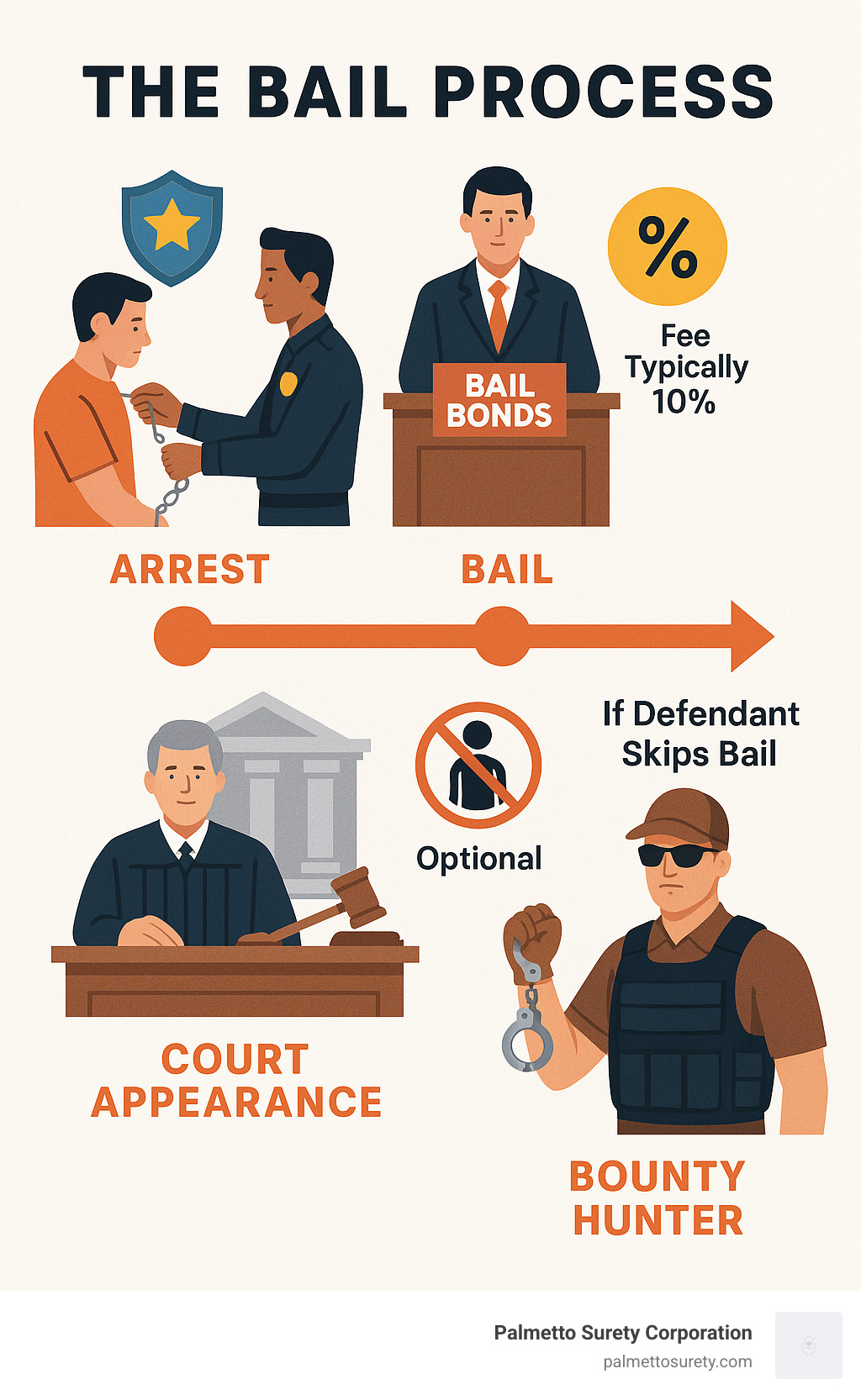

Simple guide to what do bounty hunters do:
– are bounty hunters legal
– are bounty hunters real
– how much do bounty hunters earn
What Do Bounty Hunters Do? – Core Mission & Daily Responsibilities
Behind the flashy TV portrayals lies the real world of bounty hunting – a profession built on persistence, investigative skills, and sometimes long hours of waiting. So what do bounty hunters do when they’re not dramatically kicking down doors on reality shows?
The job centers on one critical mission: finding and apprehending people who’ve skipped their court dates after being released on bail. But the daily reality involves much more detective work than high-speed chases.
A typical bounty hunter’s day might include reviewing case files over morning coffee, making dozens of phone calls to a fugitive’s contacts, scrolling through social media accounts for location clues, and sitting in a parked car for hours watching a suspect’s relative’s home. The work requires equal parts patience and quick thinking.
Unlike police officers with steady paychecks, bounty hunters operate as independent contractors on pure commission – typically earning 10-25% of the bail amount only when they successfully bring someone in. No capture, no payment – creating a powerful incentive to close cases efficiently.
| Comparison | Bounty Hunter | Police Officer | Private Investigator |
|---|---|---|---|
| Legal Authority | Can arrest bail skippers; enter homes without warrants; cross state lines | Full police powers; need warrants for searches/arrests; limited to jurisdiction | No arrest powers; cannot enter property without permission; can investigate but not apprehend |
| Compensation | 10-25% commission on bail amount | Salary with benefits | Hourly fee or case rate |
| Employer | Self-employed/bail bondsmen | Government agency | Self-employed/clients |
| Primary Focus | Fugitive recovery | Law enforcement | Information gathering |
| Training Req. | Varies by state (0-80 hours) | Police academy (21+ weeks) | Licensing requirements vary by state |
Primary Role Explained – “what do bounty hunters do”
At its heart, what do bounty hunters do is enforce a civil contract. When someone signs bail paperwork, they’re making a promise to the bail bondsman who’s putting up money for their freedom. Breaking that promise by not showing up for court triggers the bounty hunter’s involvement.
The bail bondsman faces losing the entire bail amount they guaranteed to the court. To protect this investment, they hire a bounty hunter who has unique legal powers derived from that original bail agreement. Unlike police who represent the state, bounty hunters act as private agents enforcing a contract, which explains their unusual legal authorities.
As veteran bounty hunter Bob Burton bluntly puts it: “You drive around bad neighborhoods, drinking cold coffee, talking to stupid people…it’s boring as hell.” Not exactly the adrenaline-fueled trip shows like “Dog the Bounty Hunter” might suggest.
Key Tasks at a Glance
The real work of bounty hunting revolves around investigative techniques known as “skip tracing” – finding people who’ve “skipped” town or are hiding to avoid arrest.
Interviewing contacts forms the backbone of most successful captures. Bounty hunters spend hours talking with a fugitive’s family members, friends, employers, and associates. These conversations require a delicate touch – sometimes using empathy to gain cooperation, other times applying strategic pressure to uncover information.
Database searches provide critical leads. Today’s bounty hunters are as comfortable with computer screens as handcuffs, searching public records, court documents, DMV information, and specialized databases to track movement patterns and identify likely hideouts.
Social media monitoring has become increasingly valuable. Many fugitives can’t resist posting on Facebook or Instagram, inadvertently revealing their locations through photos, check-ins, or comments from friends.
Surveillance tests a bounty hunter’s patience. Once potential locations are identified, the waiting game begins – watching known addresses, workplaces, or hangouts where the fugitive might appear, sometimes for days on end.
When the moment finally comes for apprehension, bounty hunters must act decisively but safely. This often involves teamwork, tactical planning, and restraint techniques. Despite their portrayal in media, professional bounty hunters prioritize de-escalation to avoid injuries to themselves or their targets.
The final step involves transport – returning the apprehended individual to jail or court, which may require crossing state lines. This responsibility continues until the fugitive is officially back in the system.
While the profession has evolved significantly since the Wild West days, the fundamental purpose remains unchanged: ensuring that those released on bail fulfill their obligation to face justice, while helping bail bondsmen protect their financial interests in the process.
How Bounty Hunters Track and Apprehend Fugitives

The days of wanted posters and horseback chases are long gone. When you ask what do bounty hunters do to track down fugitives today, you’re talking about a sophisticated blend of old-school detective work and cutting-edge technology that would make your favorite TV crime show look outdated.
Tools of the Trade
Modern bounty hunters aren’t running around with six-shooters and spurs. Their toolkit is much more practical and effective:
The bounty hunter’s vehicle often serves as a mobile command center, typically unmarked but equipped with everything needed for surveillance and transport. Inside, you’ll find restraint devices like handcuffs or zip ties that keep everyone safe after an apprehension.
Personal safety is paramount, so protective gear is standard—bulletproof vests, tactical clothing, and sometimes helmets for high-risk situations. Depending on state laws, many carry defensive weapons ranging from firearms to less-lethal options like tasers or pepper spray.
“I spend more on technology than I do on guns,” explains veteran bounty hunter Marcus Johnson. “Good information keeps everyone safer than good weapons ever could.”
That technology includes sophisticated communication equipment for team coordination, surveillance tools like cameras and night vision gear, and documentation devices such as body cameras that protect both the fugitive and the bounty hunter by creating an unbiased record of events.
Perhaps most valuable are the digital resources that have revolutionized the profession. According to the National Association of Fugitive Recovery Agents, bounty hunters who accept modern skip-tracing technology enjoy a 23% higher success rate and experience 35% fewer liability incidents. That’s because these tools help them work smarter, not harder.
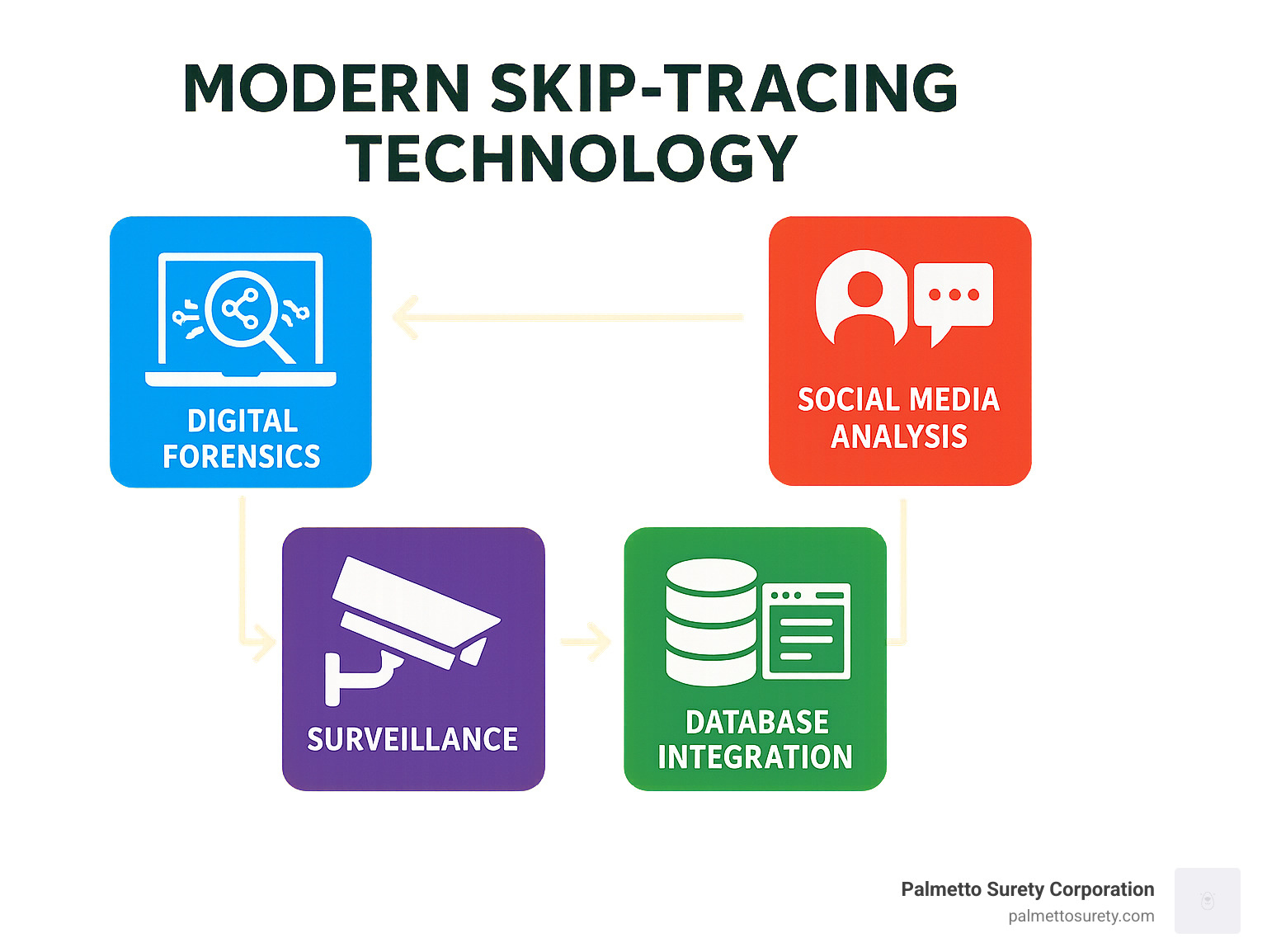
Step-by-Step Capture Scenario
Every fugitive recovery has its unique challenges, but successful bounty hunters follow a methodical approach that prioritizes safety and effectiveness:
The process begins with case acceptance and review, where the bounty hunter receives the bail jumper’s file from the bondsman. This includes critical information like the bail amount, criminal charges, last known address, and personal details that will help track them down.
Next comes the detective work—lead development. This is where bounty hunters earn their keep, piecing together the fugitive’s possible whereabouts through multiple channels. They’ll interview family members and friends, often getting valuable information from people who don’t realize they’re revealing clues. They’ll comb through social media accounts, which frequently provide a goldmine of location data. Public records and specialized databases get scrutinized for patterns and connections.
“People think we kick in doors all day,” says Michelle Gomez, a 4’11” bounty hunter who’s built a reputation for bringing in tough cases. “But 90% of this job is research and patience. I’ve taken down guys twice my size without ever throwing a punch, just by being smarter and more prepared.”
Once they’ve narrowed down potential locations, surveillance begins. This might mean hours or days of watching and waiting to confirm the fugitive’s presence. It’s tedious work—cold coffee, uncomfortable car seats, and endless patience.
The planning phase is what separates professionals from amateurs. Before making any move, experienced bounty hunters analyze the location layout, identify escape routes, assess potential threats, and coordinate with team members. They develop contingency plans for various scenarios because, as the saying goes, no plan survives first contact.
When everything aligns, it’s time for apprehension. Despite what Hollywood portrays, the safest and most common captures are low-key affairs. Professional bounty hunters identify themselves clearly, use verbal commands, and employ de-escalation techniques whenever possible. The goal is a peaceful surrender with minimal drama.
After the capture comes transport—delivering the fugitive to the appropriate authority, whether that’s the local jail or directly to court. Finally, there’s the paperwork—documentation and payment processing to receive their commission from the bail bondsman.
Throughout this process, communication with local law enforcement often proves valuable. While bounty hunters operate independently, many cultivate positive relationships with police departments, sometimes sharing information that benefits both parties.
The reality of what do bounty hunters do is far more methodical and restrained than media portrayals suggest. Their success depends not on brute force but on information gathering, strategic planning, and professional execution—skills that keep both the bounty hunter and the fugitive safer during what could otherwise be a dangerous encounter.
Legal Authority, State Regulations & Limitations
Ever wonder how bounty hunters can legally kick down doors when police need warrants? It all stems from a fascinating 1873 Supreme Court case called Taylor v. Taintor. This landmark ruling essentially created a legal superpower for bail bondsmen and their agents (bounty hunters), giving them remarkable freedoms to:
- Track fugitives across state lines without extradition paperwork
- Arrest bail skippers without obtaining warrants
- Enter a fugitive’s home without knocking or announcing themselves
- Transport captured individuals back to the original jurisdiction
These powers might seem almost too broad in our rights-conscious era, but they exist for a practical reason. When someone skips bail, they’re not just breaking the law – they’re breaking a contract with their bail bondsman, who stands to lose a substantial amount of money.
But before you picture a Wild West free-for-all, it’s important to understand that state regulations significantly impact what do bounty hunters do in practice. The legal landscape has evolved considerably, with many states imposing strict guardrails around these powers.
State-by-State Highlights – “what do bounty hunters do legally?”
The patchwork of state laws creates dramatic differences in how bounty hunting works across America:
In Kentucky, you won’t find any bounty hunters at all. They’re one of four states (along with Illinois, Oregon, and Wisconsin) that have completely banned commercial bail and bounty hunting, opting instead for different pretrial release systems.
Connecticut takes a different approach – bounty hunters can operate, but they must wear specific uniforms with visible identification badges, making them immediately recognizable. This prevents the element of surprise but adds accountability.
California bounty hunters face some of the nation’s strictest requirements, including carrying $1 million in liability insurance, completing 40 hours of professional training, and notifying local police before making arrests. That’s a far cry from the cowboy image often portrayed in media!
Texas requires its bounty hunters to wear another professional hat – they must be licensed peace officers, private investigators, or security officers before they can pursue fugitives.
Nevada sets the training bar highest, mandating a whopping 80 hours of professional education, comprehensive background checks, and passing state licensing exams.
Despite these variations, one universal limitation exists: the Fourth Amendment still matters. While bounty hunters can enter their fugitive’s home without a warrant, entering a third party’s residence without permission crosses the line into criminal trespassing. A 2017 case in Texas resulted in criminal charges against bounty hunters who raided the wrong house – a sobering reminder of these boundaries.
Bounty Hunter vs. Bail Bondsman vs. Private Investigator
These three professions often get confused in popular culture, but they play distinct roles in the justice system:

The bail bondsman is essentially a financial intermediary who posts bail for defendants who can’t afford it. Licensed by state insurance departments, they typically charge a non-refundable fee of 10% of the bail amount. If the defendant disappears, the bondsman faces losing the entire bail amount – which is why they hire bounty hunters.
The bounty hunter works as the enforcement arm of this arrangement. Their legal authority comes directly from the bail contract and Taylor v. Taintor. Unlike most professionals, they only get paid for success – typically 10-25% of the bail amount when they bring in a fugitive. No capture, no paycheck.
The private investigator gathers information but lacks special arrest powers. They work for hourly rates or flat fees regardless of what they find, focusing on information collection rather than apprehension.
This private-sector solution has evolved over centuries as a way to balance two competing interests – allowing defendants their freedom before trial while ensuring they appear for court dates. As a recent study on the U.S. bail system shows, the commercial bail industry boasts higher appearance rates than many government-run alternatives.
The legal framework for what do bounty hunters do continues to evolve, with reform advocates pushing for more standardized training and oversight while defenders point to the system’s effectiveness and cost efficiency. Whatever your perspective, understanding these legal foundations helps explain why bounty hunters operate so differently from traditional law enforcement.
Skills, Training & How Bounty Hunters Get Paid
Behind the tough exterior of every successful bounty hunter lies a unique blend of skills, training, and business savvy. This isn’t just about being physically intimidating – it’s about being smart, patient, and thoroughly professional.
Becoming a Licensed Bounty Hunter
Breaking into the bounty hunting profession requires meeting several key requirements that vary by state. Most jurisdictions require bounty hunters to be at least 21 years old and pass a comprehensive background check. If you’ve got felonies on your record, this likely isn’t the career for you.
While not always legally mandated, having a background in criminal justice, law enforcement, military service, or private security gives aspiring bounty hunters a significant advantage. As one veteran recovery agent told me, “The best bounty hunters I know were either military or law enforcement before they started chasing skips.”
What do bounty hunters do to prepare for the job? Training is crucial, though requirements range dramatically from zero hours in some states to 80+ hours in others. This training typically covers:
- Legal boundaries and authority limits
- Proper arrest and restraint techniques
- Appropriate use of force
- Surveillance methodologies
- Firearms training (where allowed)
- Self-defense tactics
- Documentation and evidence handling
“The training isn’t just about learning to kick down doors,” explains a 15-year veteran recovery agent. “It’s about learning when NOT to kick down doors, which is usually the smarter choice.”
Most states require some form of licensing, which might include a specific bounty hunter license, firearms permits if carrying, professional liability insurance, and sometimes a surety bond. Professional certification through organizations like the National Association of Fugitive Recovery Agents (NAFRA) can boost both credibility and knowledge, even when not mandatory.
The most successful bounty hunters develop sharp investigative abilities, excellent communication skills for interviewing witnesses, physical fitness for potential confrontations, tactical awareness, endless patience, technology proficiency, and meticulous documentation habits.
Compensation & Business Model
The financial reality of bounty hunting follows a straightforward but high-risk model: no capture, no pay. This commission-based structure rewards success while providing zero compensation for unsuccessful attempts.
What do bounty hunters do when they successfully bring in a fugitive? They collect their commission – typically between 10-25% of the bail amount. For example, bringing in someone who skipped on a $20,000 bail bond might earn a bounty hunter $2,000-$5,000. However, if they spend weeks searching but never find their target, they earn absolutely nothing for their time and expenses.
Bounty hunters operate as true entrepreneurs, covering all their own costs including:
- Fuel and vehicle maintenance (often thousands of miles per month)
- Surveillance equipment
- Weapons and protective gear
- Insurance premiums
- Training and licensing fees
- Communication devices
“Some weeks you might make $5,000 in a single day,” shares one recovery agent. “Other weeks, you might burn through $500 in gas money with nothing to show for it. You have to budget for the feast and famine cycles.”
While the Bureau of Labor Statistics doesn’t specifically track bounty hunter earnings, they classify them under “Private Detectives and Investigators,” with a median annual salary of $52,540 as of 2023. The reality is much more variable – top performers in high-bail states can exceed $100,000 annually, while newcomers or part-timers might earn under $30,000.
The career outlook remains stable, with the BLS projecting 6% growth for private investigators from 2022-2032, slightly faster than average across all occupations. As one veteran recovery agent bluntly put it: “As long as people keep making bad decisions, we’ll keep having work.”
With over 20 years supporting licensed bail agents across the southeastern United States, Palmetto Surety Corporation has seen how professional, well-trained bounty hunters serve as a crucial component in the bail bond system, helping to maintain the integrity of the court process while providing defendants with the opportunity to remain free until their trial date.
Risks, Ethics & The Evolving Reputation of Bounty Hunting
The profession of bounty hunting carries significant risks, both physical and legal, while also facing ongoing ethical scrutiny and evolving public perception.
Physical Risks
Bounty hunters regularly face dangerous situations, including:
- Confronting potentially armed and desperate fugitives
- Entering high-crime areas
- Working unusual hours in isolated locations
- Potential for violent resistance during apprehension
These risks explain why protective equipment, teamwork, and proper training are essential. Unlike police officers, bounty hunters don’t have backup just a radio call away and must rely on their own preparation and judgment.
Legal Liability
The legal risks can be equally serious:
- Wrongful arrest lawsuits if the wrong person is apprehended
- Excessive force claims
- Trespassing charges if entering the wrong property
- Kidnapping charges if operating in states where bounty hunting is illegal
- Impersonating law enforcement if proper identification isn’t used
In one notorious case, bounty hunter Daniel Kear faced kidnapping charges after apprehending Sidney Jaffe in Canada and bringing him back to Florida—a stark reminder that bounty hunters’ authority ends at the U.S. border.
Media Portrayal and Public Perception
Reality TV shows like “Dog the Bounty Hunter” have dramatically shaped public perception of the profession. While these shows have increased awareness, they’ve also created unrealistic expectations about the dramatic nature of the work.
The “Dog effect” has been mixed for the industry:
- Positive impacts: Increased interest in the profession, better understanding of the bail system
- Negative impacts: Unrealistic portrayal of methods, concerns about cowboy mentality and vigilantism
Industry Statistics and Success Rates
Despite controversies, the data suggests bounty hunters are effective:
- Bounty hunters claim to capture approximately 31,500 bail jumpers per year
- Their reported success rate is approximately 90% of fugitives
- This efficiency helps keep the bail bond system viable as a pretrial release mechanism
Mitigating Liability & Staying Professional
Professional bounty hunters employ several strategies to reduce risks and maintain professionalism:
- Continuing education: Staying current on laws and best practices
- Documentation: Using body cameras and detailed reports to protect against false claims
- Clear identification: Wearing clothing that identifies them as bail enforcement agents without impersonating police
- Coordination with law enforcement: Notifying local police before making arrests in their jurisdiction
- Insurance coverage: Maintaining appropriate liability insurance
- De-escalation training: Learning techniques to resolve situations peacefully
- Team approach: Working with partners to improve safety and witness interactions
The National Association of Fugitive Recovery Agents promotes these professional standards, offering training, certification, and advocacy for the industry.
As the bail system faces increasing scrutiny and reform efforts across the country, the role of bounty hunters continues to evolve. States are implementing more rigorous training requirements, oversight mechanisms, and ethical guidelines to address concerns while preserving the efficiency of the system.
Frequently Asked Questions about Bounty Hunters
How do bounty hunters find people who go completely off-grid?
Even when someone tries to vanish without a trace, experienced bounty hunters have an impressive toolkit for tracking them down. It’s almost like putting together a puzzle where the pieces are scattered across different parts of life.
The digital world makes true disappearance nearly impossible. Cell phone records might reveal approximate locations through tower pings, while credit card transactions create a breadcrumb trail of purchases. Many fugitives slip up by checking their social media accounts, or their friends and family inadvertently post clues about their whereabouts.
But the human element remains the most valuable resource in a bounty hunter’s arsenal. A casual conversation with a neighbor might reveal the fugitive recently asked someone to collect their mail. Family members often unintentionally drop hints during interviews – a mention of “he always loved the mountains” or “she was talking about moving to Florida” can provide crucial direction.
“Nobody truly disappears anymore,” explains veteran recovery agent Marcus Johnson. “Everyone leaves traces—it’s just a matter of knowing where to look and connecting the dots.”
Experienced bounty hunters also analyze patterns in a person’s life – their previous addresses, employment history, and relationships often reveal predictable behaviors. Someone with construction skills might seek work in that field, while a person with family in certain states is likely to gravitate toward familiar support networks.
Public records provide another rich source of information. Property records, court filings, vehicle registrations, and professional licenses can all help bounty hunters narrow their search and eventually locate their target.
Can a bounty hunter legally break into my house?
This question touches on one of the most misunderstood aspects of what do bounty hunters do. The answer depends entirely on whose house we’re talking about.
If you’re the fugitive who skipped bail, then yes – in most states, bounty hunters can legally enter your residence without a warrant. This authority stems from the landmark Supreme Court case Taylor v. Taintor and from the bail contract itself, which typically includes consent to such entry as part of the agreement.
However, if you’re a third party – perhaps a friend or relative of the fugitive – bounty hunters generally cannot legally enter your home without:
* Your explicit permission
* A proper search warrant
* Direct, verifiable knowledge that the fugitive is inside
Illegal entry into a third party’s home could result in serious criminal charges against the bounty hunter, including breaking and entering, trespassing, or even home invasion.
State laws create additional complexity. In Connecticut, bounty hunters must wear specific uniforms and identification. California requires notification to local law enforcement before making an arrest. Some states demand written authorization from the bail bondsman for each specific recovery.
“The best protection against unwanted bounty hunter entry is simple,” advises bail industry veteran Sarah Tompkins. “Don’t co-sign bail bonds for people you don’t trust completely, as this can make your property subject to search under many bail agreements.”
How much can a full-time bounty hunter earn per year?
When it comes to earnings, bounty hunting is one of the most unpredictable professions out there. Since payment only comes after successful captures, income can swing dramatically from month to month.
Experience level plays a huge role in consistent earnings. Newcomers often struggle to get regular case referrals from bail bondsmen, while seasoned professionals with proven track records receive steady work. Your geographic location matters too – areas with higher bail amounts (like California or New York) offer more lucrative opportunities than regions with lower bail schedules.
Smart bounty hunters are strategic about case selection, focusing on higher-value cases with reasonable recovery prospects rather than chasing every possible lead. And of course, your success rate directly impacts income – only captures generate payment.
Based on industry data and professional reports, earnings typically fall into these ranges:
Entry-level bounty hunters might earn $30,000-$45,000 annually, often supplementing with other security or investigation work.
Mid-career professionals with established relationships and proven skills can expect $45,000-$75,000.
Top performers working high-value cases in major metropolitan areas can earn $75,000-$100,000+ annually.
“I’ve had months where I made over $20,000 and others where I barely covered my gas money,” shares veteran recovery agent Dwayne Reynolds. “This isn’t a career for people who need predictable paychecks.”
It’s also worth noting that expenses significantly impact net income. Fuel for constant driving, surveillance equipment, protective gear, liability insurance, and ongoing training can consume 30-40% of gross earnings. The feast-or-famine nature of the profession requires careful financial management and planning for lean periods.
Conclusion
The profession of bounty hunting has come a long way from its Wild West origins, evolving into a more regulated and professional industry. While TV shows might have you believing it’s all dramatic arrests and door-kicking, the reality of what bounty hunters do involves far more patience, research, and legal knowledge than high-speed pursuits or standoffs.
Today’s professional bounty hunters play a crucial role in America’s justice system. They ensure defendants show up for court dates, saving taxpayers millions in court costs and administrative expenses. They provide an alternative to keeping people locked up who simply can’t afford their full bail amount. And they’re remarkably effective—achieving recovery rates around 90% for people who skip bail.
The future of bounty hunting will likely involve balancing traditional methods with modern reforms. Many states are already implementing more rigorous training requirements, clearer ethical standards, and better oversight mechanisms. These changes address legitimate concerns while preserving what works about the system.
For those considering fugitive recovery as a career path, it offers a unique combination of independence and purpose. The financial rewards can be substantial for those who excel, and there’s genuine satisfaction in helping maintain the integrity of our court system. That said, success requires significant skill development, careful risk management, and a true entrepreneurial mindset.
The bail system works best when all parts function properly—courts, defendants, bail bondsmen, and the recovery agents who step in when things go wrong. At Palmetto Surety Corporation, we’ve spent more than twenty years supporting licensed bail agents throughout the southeastern United States, witnessing how professional bounty hunters help maintain the system’s effectiveness.
For more information about court surety solutions and the bail bond process, visit Palmetto Surety Corporation.


