How Do You Make Money as a Bail Bondsman: 7 Powerful Proven Ways 2025
Why Understanding Bail Bondsman Income Matters
How do you make money as a bail bondsman is a question with multiple profitable answers that span beyond just charging fees. The bail bonds industry generates billions of dollars annually in the United States, offering entrepreneurs a chance to earn substantial income while serving an essential role in the criminal justice system.
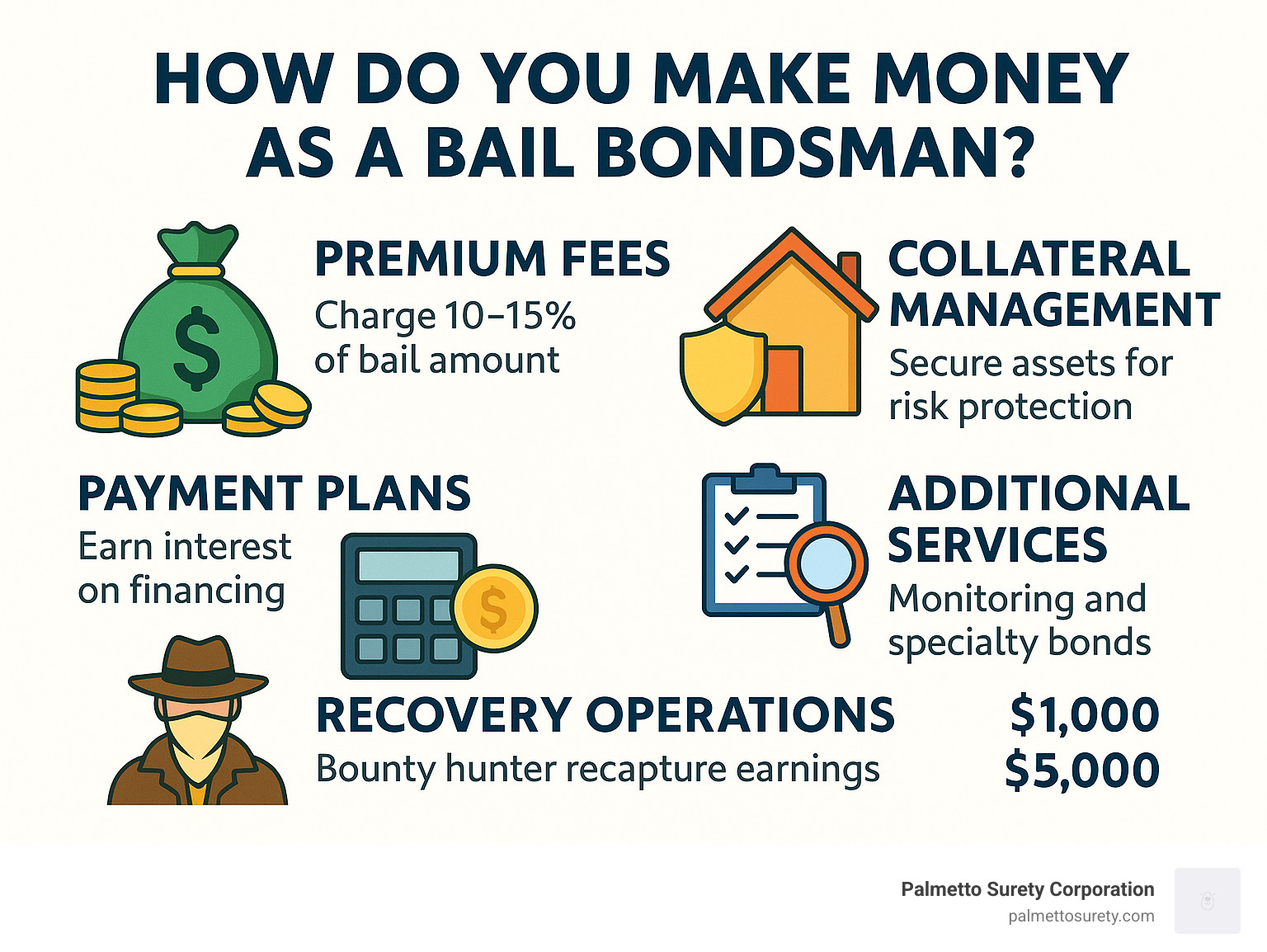
Here’s how bail bondsmen make money:
• Premium Fees – Charge 10-15% of the bail amount as a non-refundable fee
• Collateral Management – Secure and potentially liquidate valuable assets
• Payment Plans – Earn interest on financed bail premiums
• Additional Services – Generate revenue from warrant checks, monitoring, and specialty bonds
• Recovery Operations – Work with bounty hunters to recoup forfeited bonds
The bail bond business model centers on risk management and service fees. When a defendant can’t afford their full bail amount, bondsmen step in to post the bond for a premium – typically 10% of the total bail. This fee stays with the bondsman regardless of the case outcome.
But there’s more to the story. Successful bail bondsmen also profit from collateral arrangements, financing options, and specialized services. They balance earning potential against financial risk – if a defendant skips court, the bondsman owes the full bail amount to the court.
The industry serves defendants who need pretrial release but lack the cash for full bail. With 97% of defendants appearing in court when bonded, the business model proves both profitable and socially functional.
I’m Haiko de Poel Jr., and through my work with Palmetto Surety Corporation and other surety companies, I’ve gained deep insights into how do you make money as a bail bondsman and the financial mechanics that drive this industry. My experience helping bondsmen steer licensing, underwriting, and operational challenges has shown me both the opportunities and pitfalls of this business.

The Bail Bondsman’s Job & The Bail Process
How do you make money as a bail bondsman becomes clear once you understand what bail bondsmen actually do every day. Think of them as the bridge between someone sitting in jail and their freedom while waiting for trial.
When someone gets arrested, they go through booking – fingerprints, photos, paperwork. Then comes the big question: can they get out before their court date? That’s where bail bondsmen step in to help families who can’t afford the full bail amount.
A bail bondsman works as a surety – basically promising the court that the defendant will show up for trial. The bondsman puts up the full bail amount with the court but charges the defendant a non-refundable premium fee of 10-15% of the total bail. This premium is the main way bondsmen earn their living.
But it’s not as simple as just collecting fees. Smart bondsmen spend considerable time on risk screening to avoid losing money. They look at whether someone might skip town instead of appearing in court. A first-time offender with a steady job and family nearby? That’s usually a safe bet. Someone with multiple arrests and no local connections? That’s a much riskier proposition.
Collateral helps protect the bondsman’s investment. This might include real estate properties, vehicle titles, jewelry and valuables, bank accounts, or guarantees from family members who promise to pay if things go wrong.

Where Bail Amounts Come From
Judges don’t just pick random numbers when setting bail. Most courts use bail schedules – basically price lists that say “this crime typically gets this bail amount.” But judges can adjust these amounts up or down based on the specific situation.
Public safety factors play a huge role in these decisions. A judge considers how serious the crime was, whether the person has been arrested before, and if they might be dangerous to the community. Someone charged with shoplifting will get a much lower bail than someone facing armed robbery charges.
The defendant’s ties to the community matter too. Do they have a job? Family nearby? Own a home? These factors suggest they’re more likely to stick around for trial rather than disappearing.
In our experience at Palmetto Surety Corporation, we’ve seen bail amounts range from a few hundred dollars for minor charges to hundreds of thousands for serious felonies. The average bail in many states hovers around $50,000, which means a $5,000 premium for the bondsman.
Step-by-Step Bail Bond Flow
The bail bond process follows a predictable pattern that creates opportunities for bondsmen to earn money at each step:
Arrest and booking happen first – the defendant gets processed into the jail system. Then a judge sets the bail amount during arraignment, usually within 24-48 hours of arrest.
This is when families start calling bondsmen for help. The agent underwriting phase involves the bondsman evaluating the risk and deciding what collateral they need. Once everyone agrees on terms, the bond gets posted with the court – meaning the bondsman puts up the full bail amount.
Finally, when the case ends (whether through trial, plea deal, or dismissal), the court returns the bail money to the bondsman. The defendant keeps their freedom, the bondsman keeps the premium fee, and everyone hopefully shows up where they’re supposed to be.
This whole process typically takes 2-6 hours from the first phone call to walking out of jail. Many bondsmen charge extra for after-hours service, since arrests don’t stop happening at 5 PM. Speed matters when someone’s sitting in jail, and families will often pay premium rates for fast service.
| Cash Bail | Bail Bond |
|---|---|
| Pay full amount upfront | Pay 10-15% premium fee |
| Get money back after trial | Premium fee is non-refundable |
| Need entire amount in cash | Can use collateral and payment plans |
| No ongoing obligations | Must appear in court or face consequences |
How Do You Make Money as a Bail Bondsman? (Business Model Breakdown)
How do you make money as a bail bondsman comes down to mastering five distinct revenue streams that work together to create a profitable business. Think of it like a financial safety net – multiple income sources protect you when one area faces challenges.
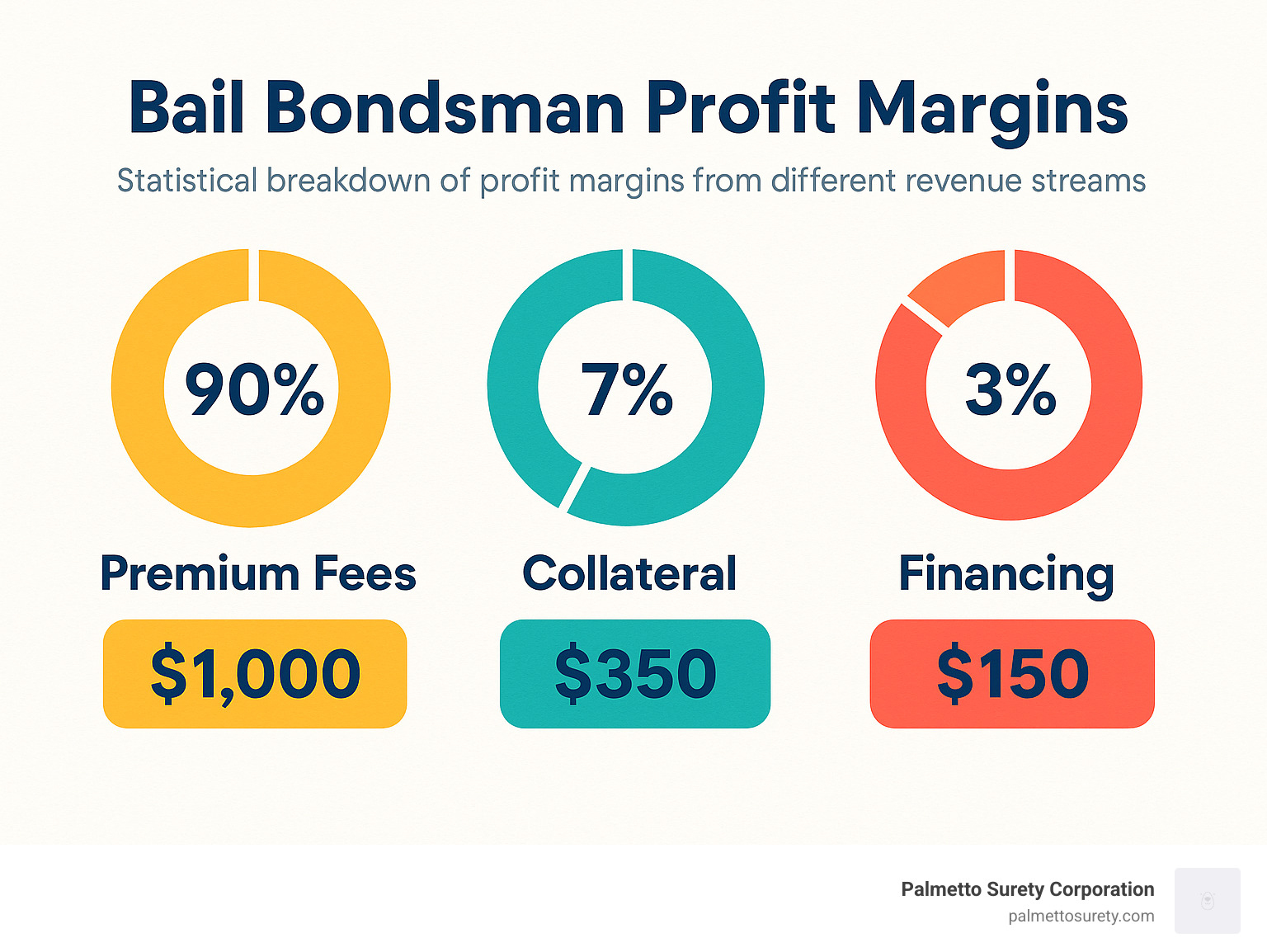
The foundation of every bail bond business is the non-refundable premium fee. This is your bread and butter – typically 10-15% of the total bail amount that goes straight into your pocket once you post the bond. Whether the defendant shows up to court or disappears, you keep this fee.
But smart bondsmen don’t stop there. Collateral leverage serves double duty as both protection and potential profit. While you’re primarily securing yourself against losses, there are legitimate opportunities to earn additional income when you need to liquidate seized assets.
Payment plans transform a one-time transaction into an ongoing relationship. Instead of collecting $5,000 upfront, you might collect $500 down and $400 monthly for a year. The interest and financing fees can nearly double your total income from each client.
Additional service fees open up entirely new revenue streams. Immigration bonds, electronic monitoring, warrant searches – these specialized services often carry higher margins than standard bail bonds.
Finally, bounty hunter recovery operations help you recoup losses while potentially generating profit. When someone skips bail, professional recovery services can save your business from devastating losses.
Premium Fees – The Core Answer to “how do you make money as a bail bondsman”
The 10% rule dominates most states, but there’s more flexibility than many people realize. California strictly caps fees at 10% of the bail amount, while Colorado allows up to 15%. Some states let you adjust pricing based on risk levels.
Underwriting guidelines give you the framework for setting rates. A first-time offender with steady employment and strong family ties might qualify for your standard 10% rate. Someone with multiple failures to appear or facing serious charges could justify 15% or higher fees.
The math is straightforward but powerful. A $10,000 bail generates $1,000 in premium income. Scale that up to a $100,000 bail at 15%, and you’re looking at $15,000 for a single transaction. The key is balancing volume with risk – sometimes it’s better to write ten smaller bonds than chase one massive high-risk case.
Your risk assessment skills directly impact profitability. The better you get at identifying reliable clients, the more you can focus on volume rather than constantly chasing down defendants who skip court.
Collateral & Repossession – Second Line of Profit & Protection
Collateral requirements typically equal the full bail amount, creating substantial asset backing for each bond. Real estate tops the list for good reason – property values are relatively stable, and homeowners rarely walk away from their equity.
Vehicle titles offer the perfect balance of value and liquidity. Cars are easy to appraise, simple to repossess, and quick to sell if needed. Plus, most people need their vehicles for work, creating strong incentives for compliance.
Jewelry and valuables work well for smaller bonds or as supplementary collateral. High-end watches, precious metals, and family heirlooms carry both financial and emotional value that encourages defendants to meet their obligations.
The seizure process follows strict legal protocols, but it can generate additional profit when seized assets sell for more than the forfeited bond amount. Ethical bondsmen typically return excess proceeds to the original owners after covering their losses and reasonable expenses.
Liquidation gains happen more often than you might expect. Real estate markets rise, classic cars appreciate, and sometimes quick estate sales exceed your recovery expectations. These windfalls can turn a potential loss into an unexpected profit.
Payment Plans, Financing & Interest Upsell
1% down options dramatically expand your potential client base while creating extended payment relationships. Instead of turning away clients who can’t afford the full premium upfront, you collect what they can pay and finance the rest.
Monthly installments generate interest income that can significantly boost your effective premium rate. A $5,000 premium financed over 12 months at 15% annual interest yields approximately $5,750 in total revenue – that’s an extra $750 for offering flexibility.
Credit card processing through specialized merchant accounts enables immediate payment collection while charging processing fees of 3-5%. These systems also facilitate automatic recurring payments for financed premiums, reducing your collection headaches.
Working with high-risk merchant accounts is essential for bail bond businesses due to industry classification. At Palmetto Surety Corporation, we help bondsmen establish reliable payment processing that supports both one-time and recurring transactions.
The beauty of offering financing is that it can double or triple your revenue compared to cash-only operations. You’re not just expanding your customer base – you’re creating ongoing relationships that generate steady monthly income.
Add-On Revenue Streams & Cost Offsets
Warrant checks provide immediate revenue for simple database searches, typically generating $25-50 per search. These services help clients understand their legal status before traveling or applying for employment – it’s a win-win situation.
Electronic monitoring services create monthly recurring revenue of $200-400 per client. GPS ankle monitors and check-in systems provide additional supervision while generating steady income streams that continue for months.
Immigration bonds command higher fees due to increased complexity and federal jurisdiction issues. These specialized bonds often carry 15-20% premiums plus additional administrative fees, making them particularly profitable for experienced agents.
Consulting fees for legal advice, court preparation, and case strategy provide professional service revenue. Many experienced bondsmen leverage their knowledge into consulting income of $100-200 per hour – it’s a natural extension of your expertise.
When a Defendant Skips – Risk, Forfeiture & Bounty Hunters
The bond forfeiture clock typically provides 90-180 days to locate and return defendants before full forfeiture occurs. This grace period allows time for recovery operations while maintaining positive relationships with court officials.
Professional bounty hunters achieve about a 90% recovery rate, making recovery operations financially viable. Successful recoveries avoid total loss while often costing only 10-20% of the bond amount in fees.
Bounty hunter fees typically range from 10-20% of the bond amount. A $50,000 recovery might cost $5,000-10,000 in fees, but that’s minimal compared to losing the entire $50,000 bond. It’s essentially insurance against catastrophic loss.
Indemnitor liability transfers ultimate responsibility to co-signers and collateral providers. This legal structure protects your business while ensuring multiple parties have strong incentives to secure defendant compliance.
The Scientific research on racial bias in bail decisions highlights important considerations for ethical bonding practices that protect both profitability and fairness in the system. Building a reputation for fair treatment ultimately drives long-term profitability through referrals and repeat business.
Compliance, Licensing & Risk Management
Running a profitable bail bond business means staying on the right side of complex regulations that change from state to state. Think of state licensing as your ticket to operate legally – without it, there’s no legitimate way to answer how do you make money as a bail bondsman.
Most states treat bail bonding seriously, requiring extensive background checks, education, and ongoing oversight. The good news? Once you understand the requirements, compliance becomes routine business practice rather than a constant headache.
Surety insurer backing provides the financial muscle that lets you post bonds worth hundreds of thousands of dollars. At Palmetto Surety Corporation, we’ve been providing this essential backing to bail agents across the Southeast for over 20 years. Without surety backing, you’d need to deposit the full bail amount with courts for every single bond – an impossible financial burden for most agents.
The agent bond requirement varies by location but typically runs around $25,000 per county where you operate. In Alabama, for example, you’ll need a $25,000 surety bond for each county (except Cullman County, which requires only $10,000). These bonds usually cost about $250 annually per county – a small price for the ability to operate legally.
Continuing education keeps you sharp and compliant. Most states require 8-16 hours of annual training covering legal updates, ethics, and industry best practices. While it might feel like homework, this education often reveals new profit opportunities and helps you avoid costly mistakes.
Record-keeping extends far beyond simple transaction logs. You’ll need detailed client files, court correspondence, and financial records that can withstand regulatory scrutiny. Modern data tools make this easier while providing valuable business insights that improve your bottom line.
Ethics rules aren’t just feel-good guidelines – they’re enforceable regulations that can shut down your business if violated. These cover everything from advertising claims to fee structures to client treatment. The Assessing the Impact of Bail on California’s Jail Population shows how policy changes affect the entire industry, making compliance knowledge essential for long-term success.
Legal Must-Haves for Earning Money as a Bail Bondsman
Getting licensed requires jumping through several hoops, but each one protects both you and your future clients. Fingerprint checks and background investigations verify that you’re fit to handle other people’s freedom and money. Most states require both FBI and state criminal history checks, updated every 2-3 years.
Pre-licensing courses typically demand 12-40 hours of education covering bail law, ethics, business practices, and state-specific regulations. These courses must come from approved providers and usually end with proctored examinations. The investment in quality education pays dividends when you’re making real-world decisions about risk and liability.
State exams test your knowledge of bail procedures, legal requirements, and ethical standards. Pass rates vary, but thorough preparation through quality programs ensures success. Think of the exam as your final checkpoint before entering a profitable but regulated industry.
Annual renewal keeps your license active and current. This process often requires proof of continuing education, updated background checks, and renewal fees ranging from $125-500 per year. It’s a small ongoing cost compared to the earning potential of an active license.
Protecting Your Bottom Line
Smart risk management separates profitable bondsmen from those who struggle or fail. Client screening software helps evaluate risk factors before you post bonds, analyzing criminal history, employment records, and financial stability. These systems cost money upfront but prevent much larger losses down the road.
Co-signer agreements create additional liability layers and recovery options. Well-written agreements clearly define responsibilities and provide legal recourse when defendants disappear. The strongest agreements make co-signers equally responsible for ensuring court appearances.
Regular check-ins maintain contact with defendants throughout the pretrial period. Many successful agencies require weekly or bi-weekly contact, treating it as customer service rather than surveillance. These conversations often reveal problems early, when they’re still manageable.
GPS tracking provides real-time location monitoring for high-risk defendants. These systems typically cost $200-400 per month but can prevent costly forfeitures on large bonds. The key is using tracking selectively – reserve it for cases where the monitoring cost is justified by the risk level.

Steps to Become — and Stay — Profitable
Building a profitable bail bond business requires strategic planning beyond simply obtaining a license. Market analysis helps identify underserved areas and optimal pricing strategies for local conditions.
Startup capital requirements vary significantly by location and business model. Most new agencies need $50,000-200,000 in working capital to cover initial bonds, licensing costs, and operating expenses during the first year.
Agency-agent commission splits typically range from 50-70% to the writing agent, with the remainder covering overhead, insurance, and administrative costs. New agents often start at lower splits that increase with experience and production volume.
Networking with attorneys creates referral relationships that drive consistent business. Criminal defense lawyers represent natural partnership opportunities for mutual client referrals.
Digital marketing strategies help capture online searches from defendants and their families. Local SEO, Google Ads, and social media presence are essential for modern bail bond marketing.
Brand trust develops through consistent service delivery, transparent pricing, and ethical business practices. Reputation in the legal community often determines long-term success more than pricing alone.
Community outreach through civic organizations, legal associations, and educational programs builds relationships while demonstrating commitment to public service.
Technology adoption streamlines operations while improving client service. Modern bond management software, mobile apps, and electronic monitoring systems provide competitive advantages.
Building a Reputation That Drives Revenue
24/7 availability represents a fundamental service expectation in the bail bond industry. Arrests happen at all hours, making round-the-clock response capability essential for capturing business.
Fast approvals within 2-4 hours from initial contact to defendant release create competitive advantages. Speed often matters more than small price differences when families need immediate help.
Customer education about the bail process, court requirements, and consequences of non-compliance builds trust while reducing risk. Informed clients are more likely to comply with conditions and refer others.
Scaling Income Beyond One County
Multi-county licensing expands market reach but requires additional surety bonds and compliance monitoring. Each new county typically requires separate licensing fees and local relationship building.
Remote bonding capabilities allow agents to serve clients across wider geographic areas. Electronic signatures, online payments, and digital document management enable distance transactions.
Partnering with out-of-state agents creates referral networks for clients with cases in multiple jurisdictions. These relationships often involve reciprocal referral agreements and shared commission structures.
Frequently Asked Questions about Making Money as a Bail Bondsman
How much can a bail bondsman earn in a year?
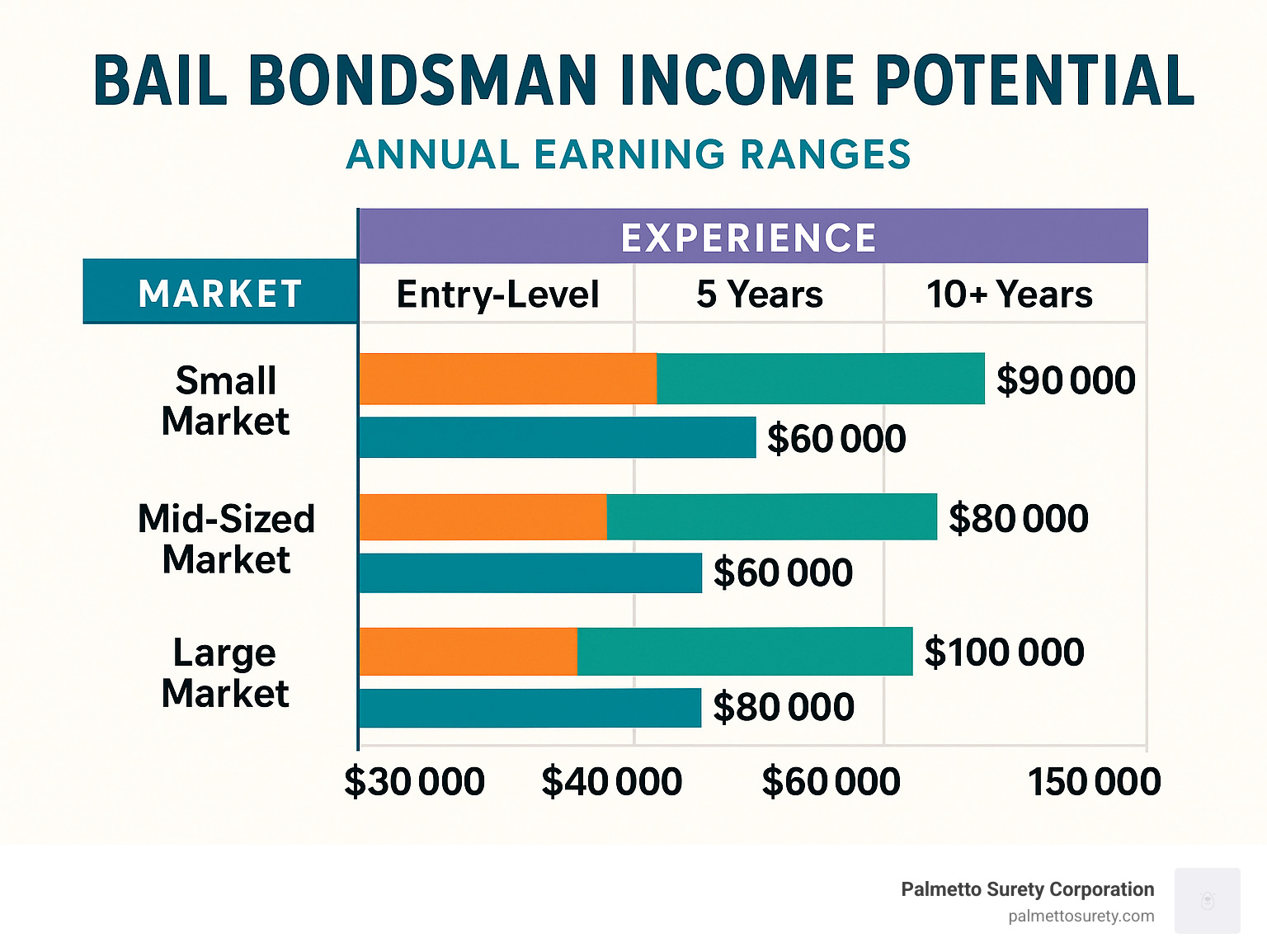
When people ask how do you make money as a bail bondsman, they’re often wondering about the actual dollar amounts. The honest answer is that annual earnings vary wildly based on where you work, how many clients you serve, and the size of bonds in your area.
If you’re just starting out in a smaller town, you might earn around $30,000-50,000 in your first year. That’s not bad for learning the ropes, but it’s definitely on the lower end. However, experienced agents working in busy metropolitan areas can easily clear $200,000 annually – sometimes much more.
The magic happens when you understand the math behind the business. Let’s say you’re writing 10-15 bonds per month with an average premium of $3,000 each. That puts your gross revenue somewhere between $360,000-540,000 for the year. Of course, that’s before expenses, commissions to your agency, and the occasional loss from a defendant who skips town.
Most successful agents end up keeping about 15-25% of their gross revenue as actual income after all expenses. So on that $400,000 in premiums, you might take home $60,000-100,000. Not too shabby for helping people get out of jail and back to their families.
Your earning potential depends on several key factors:
The average bail amounts in your area make a huge difference. Working in a jurisdiction where typical bails run $50,000-100,000 versus $5,000-10,000 can multiply your income by ten times. The number of bonds you write each month obviously matters too – some agents handle 5 bonds monthly while others process 30 or more.
State premium rates also affect your bottom line. That 10% in California versus 15% in Colorado might not sound like much, but on a $100,000 bond, it’s the difference between $10,000 and $15,000 in your pocket.
Is the 10% premium ever refundable?
This is probably the most common question we hear, and the answer is crystal clear: the bail bond premium is never refundable. Not if the charges get dropped. Not if your cousin turns out to be innocent. Not if the case gets dismissed on a technicality.
That non-refundable premium is exactly how bail bondsmen earn their living. Think of it like paying for insurance – you don’t get your car insurance premiums back just because you didn’t have an accident this year.
When someone pays that 10% fee, they’re purchasing a service. The bondsman immediately puts the full bail amount at risk with the court. If it’s a $50,000 bond, the bondsman is guaranteeing that entire amount to the judge. That’s a serious financial commitment that deserves compensation.
The premium covers several important services: the risk assumption of potentially losing the full bail amount, administrative costs for paperwork and court filings, ongoing monitoring to make sure the defendant shows up for court, and the court appearance guarantee that keeps the defendant out of jail.
Every bond agreement clearly explains this policy upfront. It’s industry standard across all states, and it’s what makes the business model work. Without that guaranteed income, bondsmen couldn’t afford to take the financial risks involved in posting bail.
What happens to my income if bail reform eliminates cash bail?
Bail reform is definitely changing the landscape, but it’s not necessarily the income killer that many people fear. Some states have eliminated cash bail for certain minor offenses, while others have made the system more restrictive. The key is adapting your business model rather than fighting the changes.
Interestingly, some reform efforts have actually increased business for smart bondsmen. When courts require more supervision and monitoring instead of simple cash bail, that creates opportunities for professional services.
Successful agents are diversifying into new revenue streams like pretrial services contracts with local courts, electronic monitoring programs that generate monthly recurring income, and immigration bond specialization since federal courts still use traditional bail systems.
Commercial surety bonds represent another growth area. The same licensing and bonding skills transfer perfectly to construction bonds, business licenses, and professional bonds. Many bail agents find these markets less stressful and more predictable than criminal bonds.
Consulting services for attorneys, courts, and other legal professionals can provide steady income of $100-200 per hour. Your experience navigating the bail system becomes valuable expertise that others will pay for.
The reality is that serious felonies, domestic violence cases, and repeat offenders still require cash bail even in reform-minded states. Federal courts continue using traditional bail systems entirely. And even where cash bail is eliminated for some offenses, courts often require supervision services that create new business opportunities.
At Palmetto Surety Corporation, we’ve worked with agents who’ve successfully transitioned parts of their business to adapt to changing regulations. The agents who thrive are those who see reform as an opportunity to expand their services rather than a threat to their income.
Conclusion
Building a successful bail bond business requires understanding that how do you make money as a bail bondsman goes far beyond simply collecting premium fees. The most profitable agents master multiple revenue streams while maintaining the ethical standards that build lasting success.
The profit pillars we’ve explored throughout this guide work together to create sustainable income. Your foundation starts with premium fee optimization through smart risk-based pricing, but the real money comes from layering additional services. Collateral management protects your investments while creating potential gains. Payment plan financing opens doors to clients who couldn’t otherwise afford your services. Specialty services like immigration bonds and electronic monitoring generate recurring revenue that keeps money flowing even during slow periods.
Professional recovery operations might seem like a cost center, but they’re actually profit protection tools. When you can recover 90% of skipped defendants while only paying 10-20% in bounty hunter fees, you’re preserving the bulk of your investment. That’s smart business.
Ethical balance isn’t just good karma – it’s good business sense. Agents who prioritize client education, fair treatment, and genuine community service build reputations that generate referrals for decades. Word travels fast in the legal community, and judges, attorneys, and law enforcement remember who treats people right during their worst moments.
The future outlook for bail bonding remains bright despite ongoing reform discussions. Yes, some states have modified their bail systems, but the fundamental need for pretrial release services continues. Smart agents adapt by expanding into pretrial supervision, electronic monitoring, and other services that courts still need. The key is staying flexible while maintaining your core competencies.
At Palmetto Surety Corporation, we’ve watched agents build million-dollar businesses over our 20+ years in the Southeast. The ones who succeed long-term understand that this business is about serving people in crisis while managing financial risk responsibly. Our More info about surety bond solutions includes comprehensive support for agents who want to build sustainable, profitable operations.
Whether you’re just starting out or looking to grow an existing business, how do you make money as a bail bondsman comes down to providing excellent service while protecting your bottom line. Master those fundamentals, and you’ll build a business that serves your community while supporting your family for years to come.