


Do Bail Bondsman Make Good Money? 7 Powerful Truths 2025
Understanding the Earning Potential of Bail Bondsmen
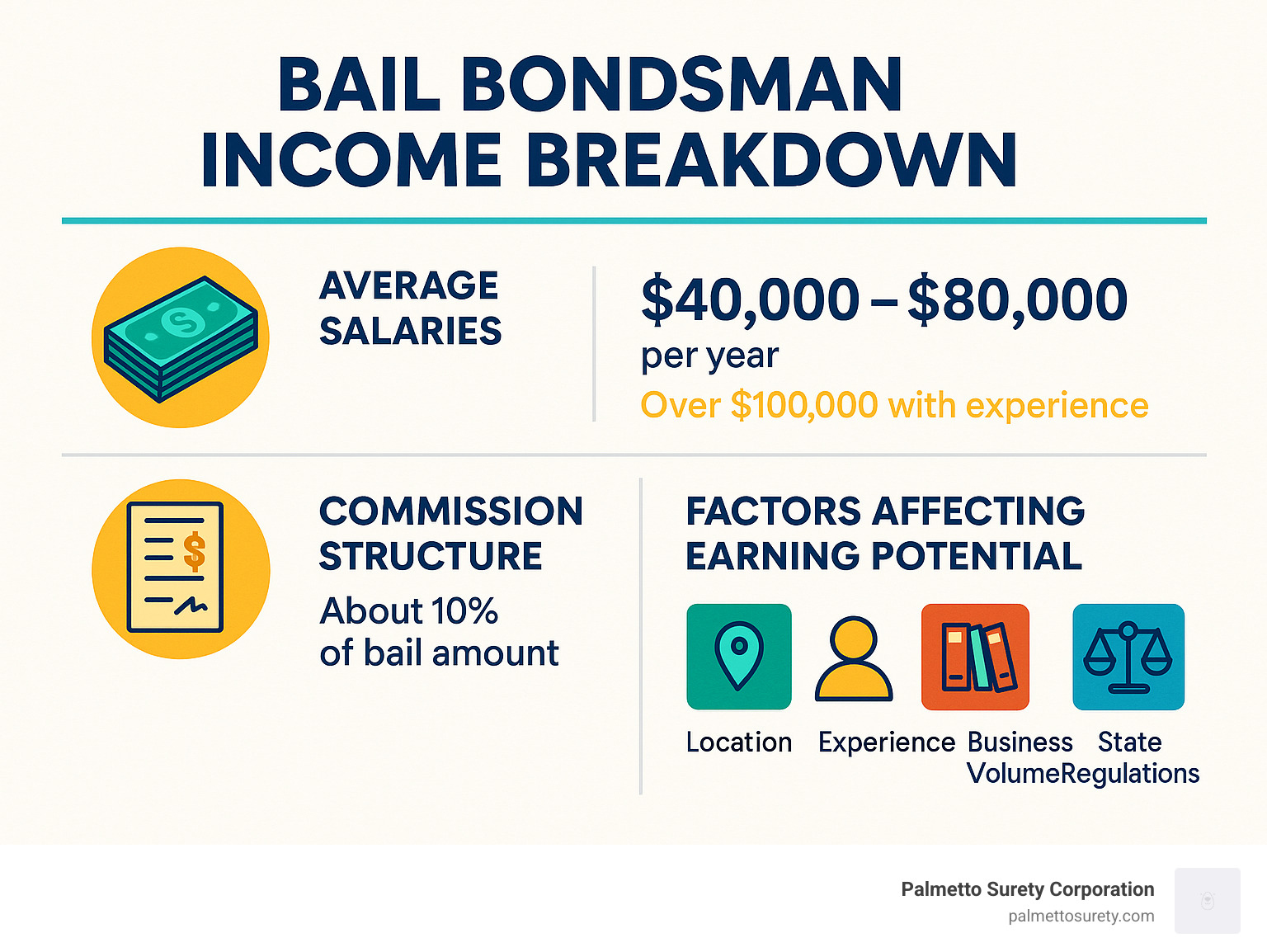
Do bail bondsman make good money? Yes, they can earn between $40,000 and $80,000 annually on average, with experienced agents in high-demand areas potentially earning six-figure incomes exceeding $100,000. Income varies widely based on:
- Location: Urban areas with higher arrest rates offer greater earning potential
- Experience: Seasoned bondsmen with strong networks earn more
- Business volume: The number of bonds written directly impacts income
- State regulations: Fee caps range from 6.5% to 15% depending on the state
- Risk management: Successful agents maintain client appearance rates above 95%
Bail bondsmen earn money primarily through a non-refundable fee of approximately 10% of the total bail amount. For example, on a $10,000 bail, a bondsman earns $1,000 regardless of case outcome.
As a bail bonds expert and fractional CMO for Palmetto Surety Corporation, I’ve analyzed the bail bonds industry extensively and observed how do bail bondsman make good money through strategic positioning, client management, and risk assessment practices.
Do Bail Bondsman Make Good Money?

Let’s talk dollars and cents – the question on everyone’s mind: do bail bondsman make good money? The short answer is yes, they can – but like most careers, your earnings depend on several key factors.
Most bail agents earn between $40,000 and $80,000 annually, though the Professional Bail Agents Body of the US (PBUS) cites a slightly lower range of $25,000 to $50,000. What’s exciting is the upper potential – experienced bondsmen in busy urban areas often break into six-figure territory.
I recently spoke with a bondsman in Charleston who shared, “I make about $55,000 per year, which is decent money considering the flexibility I have. Some months are crazy busy, others quieter, but it balances out nicely over the year.”

The earning structure typically follows a natural progression:
| Experience Level | Annual Income Range | Key Income Factors |
|---|---|---|
| Rookie (0-2 years) | $20,000-$40,000 | Hourly base ($10-15/hr) plus small commissions |
| Mid-Career (3-7 years) | $40,000-$80,000 | Full commission structure, established client base |
| Top Earner (8+ years) | $80,000-$150,000+ | High volume, premium clients, own agency |
The bread and butter of a bail bondsman’s income is the non-refundable premium – typically 10% of the total bail amount. Picture this: when someone needs a $50,000 bail bond, you collect $5,000. That fee is yours to keep regardless of how the case turns out.
Many agents work on commission splits with their bail agencies. A typical arrangement might be 50/50, meaning you’d pocket $2,500 from that $5,000 premium while your agency takes the other half. As you build experience and reputation, these splits often become more favorable.
National Salary Snapshot
The Bureau of Labor Statistics doesn’t track bail bondsmen specifically (they’re lumped under “Financial Specialists, All Other” with an average salary of $76,230), which doesn’t give us the clearest picture.
Industry surveys paint a more accurate portrait, showing a median income of approximately $36,044 nationwide. But here’s where it gets interesting – the range stretches from as low as $10,076 to as high as $237,811 annually. That’s quite a spread!
As one veteran agent with Palmetto Surety told me, “Some bondsmen in Miami or Atlanta are making hundreds of thousands a year, while others in the same cities might struggle to clear twenty thousand. Location matters, but so does hustle and how you build your network.”
Why “Do Bail Bondsman Make Good Money” Depends on Volume
When considering whether do bail bondsman make good money, it all boils down to volume – both in the number of bonds you write and their amounts.
Let me break this down with a real-world example: A bail agent in a busy area like Charleston might write three $20,000 bonds weekly. At the standard 10% fee, that’s $6,000 in weekly revenue. Even after splitting with their agency, they could earn $156,000 annually before expenses.
Compare that to a bondsman in a quiet rural county who might only write 3-4 bonds monthly at similar amounts, and you’ll see why location can make or break your income potential.
A seasoned bail agent in Columbia put it perfectly: “A part-time agent writing just a few good bonds a month can sometimes match what others make working full-time elsewhere. It’s all about where you’re based, who you know, and how well you market yourself when those late-night calls come in.”
The bottom line? Yes, bail bondsmen can make good money – sometimes very good money – but it takes strategic positioning, solid relationships with attorneys and law enforcement, and the willingness to answer your phone at 3 AM when opportunity calls.
How Bail Bondsmen Make Money: Fees, Collateral & Side Income
The money-making side of the bail bonds business is both straightforward and fascinating. Most people don’t realize just how bail agents earn their living until they or someone they know needs bail services.
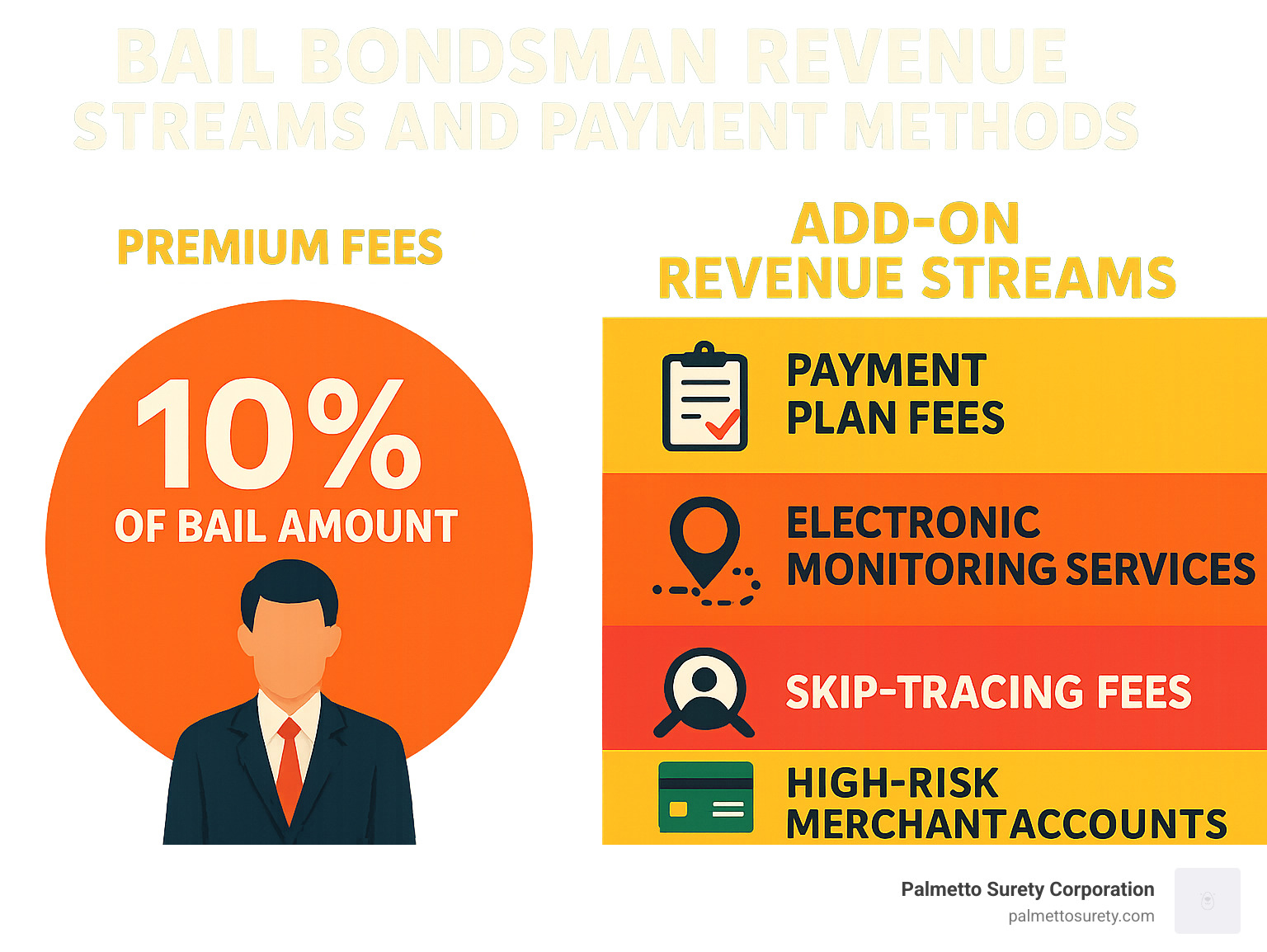
At its core, bail bondsmen earn through the standard 10% fee charged on the total bail amount. Think of this like your insurance premium – you’re paying for the service of having someone else take on the financial risk of your release. If a court sets bail at $10,000, you pay the bondsman $1,000, and they guarantee the full amount to the court.
“I explain it to clients like this,” says one veteran bail agent. “You’re not buying your freedom – you’re renting our money and our guarantee to the court that you’ll show up.”
This premium is non-refundable, even if you make every court date and the case gets dismissed. It’s payment for the service provided, not a deposit.
Beyond this primary income source, bail agents can secure their business through collateral – items of value that protect them if a defendant skips town. This might include property deeds, vehicle titles, jewelry, or electronics. If the defendant disappears, the bondsman can legally claim and sell these items to recover their losses.
Standard 10% Fee Explained
While 10% is the industry benchmark, the actual percentage varies by state due to regulations:
In Colorado, bondsmen can charge $50 or 15% of the bail amount (whichever is higher). Ohio keeps it lower at 6.5%, while Pennsylvania uses a sliding scale: 10% on the first $100, then dropping to 5% thereafter.
New York employs perhaps the most complex system, with a $10 flat fee for bails under $200, up to 10% for amounts under $3,000, then 8% for bails between $3,000-$10,000, and 6% for anything higher.
One bail agent from a busy urban market told me, “The percentage might seem high to some clients, but they don’t see the back end – the risk we take, the paperwork, the late-night calls, and the occasional losses when someone skips town.”
This fee structure works similarly to how insurance operates. The bondsman, backed by a surety company like Palmetto Surety Corporation, puts up the entire bail amount with the court. The premium compensates them for this service and the risk they assume.
Beyond Premiums: Add-On Revenue Streams
Smart bail bondsmen don’t rely solely on premiums. The most successful ones have developed additional income sources:
Payment plans create additional revenue through financing charges. Many clients simply can’t afford the full premium upfront, so bondsmen offer installment options – often with additional fees or interest charges that boost their bottom line.
“About 70% of my clients need payment plans,” explains one bondsman. “It’s a win-win – they get out of jail, and I get a steady income stream rather than turning them away.”
Electronic monitoring has become a significant side business for bondsmen working with higher-risk clients. For an additional daily fee, they provide GPS monitoring services that give courts extra assurance while generating consistent revenue.
Skip-tracing fees come into play when defendants miss court dates. Bondsmen charge for the investigative work needed to locate fugitives – sometimes handling this themselves or partnering with recovery specialists.
Many successful bail agents also implement financing charges for payment processing. “Accepting credit cards through a high-risk merchant account completely transformed my business,” shares one agent. “Yes, I pay higher processing fees, but my volume increased by 60% the first year alone.”
The most profitable bail agents understand that in this business, accessibility matters. Being available 24/7, accepting multiple payment methods, and offering flexible terms can dramatically increase how much money a bail bondsman makes while providing an essential service to those in need.
Factors Shaping Bail Bondsman Earnings, Risks & Rewards
When exploring whether do bail bondsman make good money, it’s important to understand the unique blend of factors that can make this profession either lucrative or challenging. Like real estate, success in the bail bonds industry depends heavily on three key elements.
Location, Location, Location
Your geographic setting might be the single most powerful predictor of your earning potential as a bail bondsman.
Think about it – a bail agent positioned across from a busy metropolitan detention center might write several bonds daily, while their rural counterpart might wait days between clients. The most profitable locations typically feature high arrest volumes, creating a steady stream of potential clients walking through your door.
“I set up shop just two blocks from the county jail,” shares Marcus, a bail bondsman with Palmetto Surety’s network in Atlanta. “Some days I’ll write five or six bonds before lunch. Location makes all the difference.”
Beyond sheer numbers, areas with more serious criminal activity often have higher bail schedules, meaning each bond you write generates more substantial revenue. A single felony bond in Miami might earn you the same commission as ten misdemeanor bonds in a small town.
Proximity to jails and courthouses isn’t just convenient—it’s essential. Being physically close to where clients are processed allows for faster response times and helps build relationships with jail staff who might refer families your way.
Some savvy agents have found success by targeting areas with limited competition. While major cities offer volume, rural counties with few or no bail agencies can provide a captive market for the enterprising bondsman willing to serve these communities.
Experience & Reputation
In the bail bonds world, your reputation is quite literally your fortune. Experience doesn’t just help you work more efficiently—it fundamentally transforms your earning potential.
Referral networks become the lifeblood of established agents. A single defense attorney who trusts your service might send dozens of clients your way annually. These relationships don’t develop overnight—they’re built through years of reliability and professional courtesy.
“My first year, I spent hours cold-calling attorneys and sitting in court hallways introducing myself,” remembers Tasha, a top-earning bondsman in Louisiana. “Now, ten years later, my phone rings all day with referrals. I haven’t done ‘traditional marketing’ in years.”
With experience comes refined risk assessment skills. Veteran bondsmen develop an almost sixth sense about which clients might skip court, allowing them to request appropriate collateral and minimize losses that can devastate profitability.
The most successful agents also develop community trust that generates powerful word-of-mouth marketing. When families have a positive experience during a stressful time, they remember—and they tell others.
Legal Caps & State Reform
Perhaps no other factor creates such dramatic differences in earning potential as the regulatory environment in which you operate.
Some states have effectively closed the door on commercial bail entirely. Illinois, Kentucky, Oregon, and Wisconsin have banned private bail bonds, making this career impossible in these regions.
Most states impose fee caps that limit what bondsmen can charge. These vary widely—from Colorado’s generous 15% maximum to Ohio’s tight 6.5% cap. This difference alone could mean earning $1,500 versus $650 on an identical $10,000 bond.
The bail industry also faces ongoing challenges from reform-minded jurisdictions moving away from cash bail systems. Recent reforms in California, New York, and New Jersey have reduced reliance on cash bail for certain offenses, potentially shrinking the market for bail services.
Despite these challenges, many bail professionals remain optimistic about the industry’s future. As one veteran bondsman notes, “This business tends to be recession-proof. When the economy struggles, crime rates often rise, creating more demand for our services.”
The profession also offers unique lifestyle benefits that many find valuable. The flexible schedule allows for family time or pursuing other interests, though it does come with the trade-off of occasional late-night jail calls.
For those connected with established surety companies like Palmetto Surety Corporation, there’s additional stability. Their network of bail agents across Georgia, Florida, Louisiana, Mississippi, South Carolina, Tennessee, and Texas benefits from regional expertise and institutional support that can help steer these complex factors successfully.
How to Become and Stay a High-Earning Bail Bondsman

So you’ve been wondering if do bail bondsman make good money and now you’re thinking about getting into the business yourself? You’re not alone. The path to becoming a successful bail bondsman is clear-cut, though it does require some upfront investment and dedication.
Licensing & Start-Up Costs
Breaking into the bail bonds industry isn’t as complicated as you might think, but there are specific requirements you’ll need to meet. Most states require you to be at least 21 years old with a high school diploma and a clean criminal record. Your reputation matters in this business—courts need to trust that you’re responsible enough to guarantee defendants will show up.
“When I started, I was surprised how straightforward the licensing process was,” shares Michael, a bail agent with Palmetto Surety. “The hardest part wasn’t the exam—it was building those initial relationships.”
The pre-licensing education typically runs between 8-20 hours and costs about $300-$500. This coursework covers everything from state-specific bail laws to ethical practices. After completing your education, you’ll need to pass the state licensing exam, which usually costs around $56.50.
Perhaps the most critical step is securing surety sponsorship from an established insurance company like Palmetto Surety Corporation. They’ll conduct thorough background and credit checks because, at the end of the day, they’re putting their financial trust in you.
You’ll also need to establish a Build-Up Fund (BUF)—think of it as your safety net. This reserve account, typically 10-15% of your bond writing capacity, covers potential forfeitures if defendants skip court. All told, expect startup costs between $5,000 and $10,000, not including office space and initial marketing expenses.
Scaling to Six Figures: Proven Strategies
If you’re serious about making top-tier money in this business, the question isn’t just do bail bondsman make good money—it’s how to be among those who earn six figures. The difference between average earners and top performers often comes down to strategy and commitment.
Round-the-clock availability can set you apart immediately. Arrests don’t follow a 9-to-5 schedule, and being the only bondsman answering calls at 2 AM can quickly build your client base. As one successful agent put it, “My phone never goes off. Ever. That’s how I built my business—I was always the one who answered when others were sleeping.”
Specializing in high-bail cases might seem intimidating, but with proper risk assessment and solid collateral requirements, these premium bonds can significantly boost your income. A single $100,000 bond yields a $10,000 premium—equivalent to ten smaller bonds but requiring less administrative work.
Strong client tracking systems protect your investment. Regular check-ins with defendants, court date reminders, and maintaining contact with family members can reduce your failure-to-appear rates dramatically. Some of the most successful bondsmen maintain appearance rates above 98%.
Digital marketing prowess has become increasingly important. When families are searching for bail help at 3 AM, they’re turning to Google, not the Yellow Pages. A well-optimized website that clearly answers questions about the bail process can generate leads while you sleep.
Attorney relationships might be your most valuable asset. Defense lawyers refer clients daily, and becoming their go-to bondsman takes reliability and professionalism. “I bring coffee to the public defender’s office every Monday morning,” shares one six-figure earner. “It’s a small gesture, but it keeps me top of mind.”
Payment plan options expand your potential client base significantly. Many families simply can’t afford the full 10% premium upfront. By offering financing options (with proper documentation and perhaps a slightly higher total fee), you can help more people while increasing your business volume.
Once established, opening satellite offices near other detention facilities can multiply your revenue streams without proportionally increasing overhead. Many successful bail agency owners started with one location and strategically expanded to create a regional presence.
As one veteran bail agent who earns well over $150,000 annually told us: “This business rewards hustle and smart risk management. I’ve seen people fail because they took on too much risk or weren’t willing to answer that midnight call. The ones who succeed find that balance—and they sleep with their phone by their bed.”
Frequently Asked Questions about Bail Bondsman Income
What percentage do bail bondsmen charge?
The million-dollar question for many clients is how much this service will cost them. Typically, bail bondsmen charge a non-refundable fee of 10% of the total bail amount – but this isn’t set in stone across the country.
State regulations create quite a patchwork of fee structures:
- Colorado takes a different approach, requiring either $50 or 15% of the bail amount (whichever hits higher)
- Ohio keeps things more affordable with a 6.5% cap
- Pennsylvania uses a sliding scale: 10% on the first $100, then 5% on each additional $100
- New York employs a tiered system that adjusts based on the bail amount itself
In states without specific regulations on the books, you’ll generally find the standard 10% rate applies. To put this in perspective, if a judge sets bail at $20,000, you’d pay your bail bondsman $2,000 for their services – regardless of your case outcome.
Is the bail bondsman’s fee refundable?
I wish I could tell you otherwise, but the answer is a firm no. The bail bondsman’s fee is never refundable under any circumstances. Think of it like the cost of a service already provided – getting someone released from jail without paying the full bail amount.
Even in these scenarios, you won’t see that money again:
– Your charges get completely dropped
– The court dismisses your case
– You faithfully attend every single court appearance
– You’re found not guilty at trial
The fee remains with the bail bondsman as compensation for their service and the financial risk they shouldered on your behalf. It works similarly to how you don’t get your insurance premiums back if you don’t file a claim, or how loan origination fees aren’t returned if you pay off your loan early.
Can bail bondsmen really earn six-figure incomes?
Do bail bondsman make good money at the highest levels? Absolutely – six-figure incomes are definitely achievable in this profession, though not everyone reaches these heights.
The path to the upper income brackets typically involves:
Location matters enormously. Working in major metropolitan areas with high arrest rates and substantial bail amounts creates far more opportunity than small towns.
Relationships are golden. Experienced agents with strong connections to defense attorneys receive a steady stream of referrals, which is often the difference between struggling and thriving.
Ownership has its privileges. Running your own bail bond agency rather than working as an agent for someone else means keeping more of what you earn.
Volume is crucial. The most successful agents write multiple bonds daily or weekly, keeping cash flow consistent.
Specialization pays off. Focusing on cases with larger bail amounts (though requiring careful risk assessment) can significantly boost income.
As one veteran bail bondsman with 15 years in the business told me: “For those willing to answer calls at 3 AM, maintain meticulous records, and develop a sixth sense about flight risks, the six-figure income isn’t just possible – it’s expected.”
The Professional Bail Agents Body of the US confirms that while average earnings fall between $25,000 and $50,000, top performers in major markets routinely clear $100,000 annually by mastering the business fundamentals and building strong professional networks.
Conclusion
So, do bail bondsman make good money? The answer is yes—they certainly can, though success in this field is never guaranteed. The bail bonds industry offers a unique blend of opportunity and challenge, where earnings can range from modest to impressive depending on how you approach the business.
One of the most appealing aspects of this career is its stability. Even when the economy takes a downturn, the bail bonds industry tends to remain steady, providing a level of job security that’s hard to find elsewhere. Many bail agents also appreciate the flexible scheduling and the entrepreneurial nature of the work—you can build something that’s truly your own.
If you’re considering this career path, it’s important to understand what success requires. You’ll need a solid understanding of the legal system, strong people skills, and good judgment when assessing risk. Business savvy is essential, as is the willingness to work when others are sleeping—those late-night calls can be where you make your best income. And of course, you need to be comfortable with financial risk, as every bond you write carries the potential for loss.
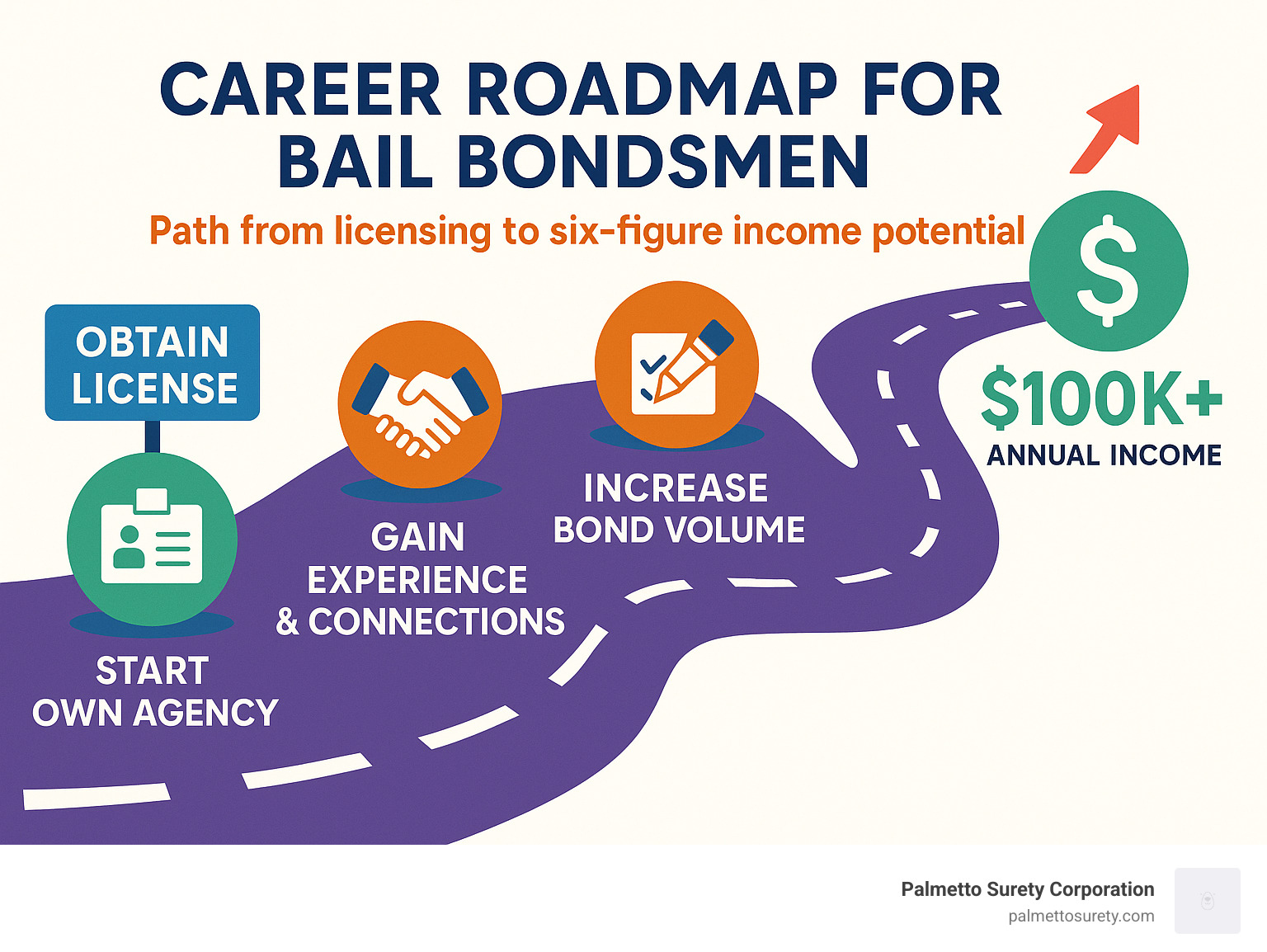
With proper training, licensing, and partnership with an established surety company like Palmetto Surety Corporation, you can build a rewarding and profitable career while providing a vital service within our justice system. For over 20 years, Palmetto Surety has been supporting bail agents across the southeastern United States, helping countless professionals establish and grow thriving bail bond businesses.
The path to success in this industry isn’t always straightforward, but with determination and the right support, the financial rewards can be substantial. Whether you’re looking to earn a comfortable living with flexible hours or aiming to build a six-figure business with multiple locations, the bail bonds industry offers room to grow.
For more information about becoming a bail agent or securing surety services, visit Palmetto Surety Corporation to learn how their expertise can support your career goals in the bail bonds industry. Their team understands the challenges and opportunities unique to this field and can provide the guidance needed to maximize your earning potential.


