


Can a Bail Bonds Agent Arrest You? 7 Shocking Facts 2025
Understanding Your Rights When Facing a Bail Agent
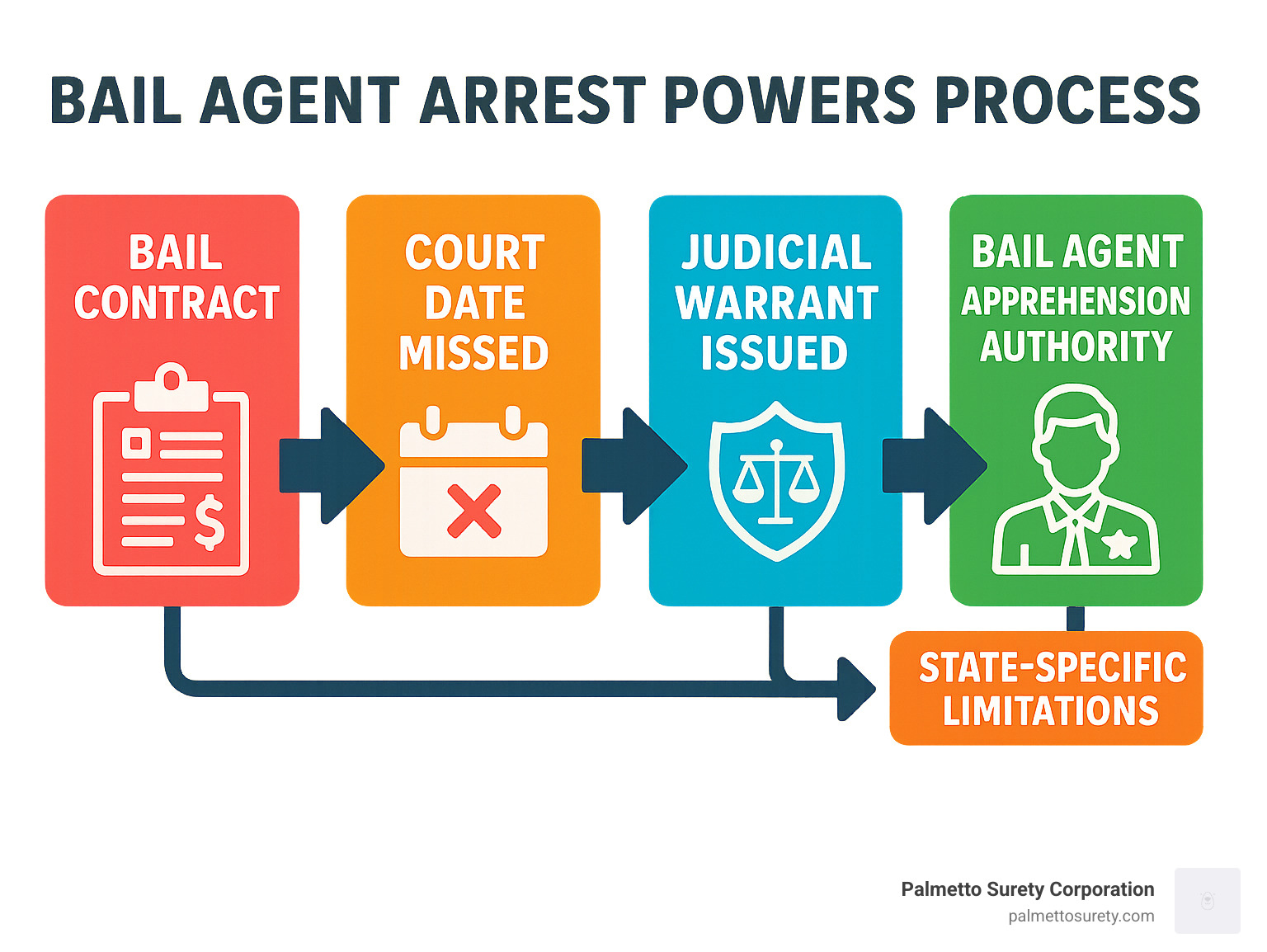
Can a bail bonds agent arrest you? The short answer is yes, but only under specific circumstances and with important limitations. Here’s what you need to know:
Quick Answer: Bail Agent Arrest Powers
- Bail agents can arrest defendants who have skipped bail (failed to appear in court)
- In most states, they must have a warrant issued by a judge
- They cannot arrest someone who is not the defendant on the bail bond
- Their powers vary significantly by state
- They have more limited authority than police officers
- They must follow specific procedures during an arrest
Television shows like “Dog the Bounty Hunter” often dramatize bail agents tracking down fugitives, but the reality is more complex and regulated. Bail bonds agents, also called bail bondsmen, are private individuals who post bail for defendants in exchange for a fee (typically 10-15% of the bail amount). When a defendant fails to appear in court, the bail agent becomes financially responsible for the full bail amount.
This financial liability is what gives bail agents a limited authority to locate and return defendants who have skipped bail. However, they must operate within strict legal boundaries.
Unlike police officers, bail agents are private citizens with limited powers. They cannot investigate crimes, enforce traffic laws, or make arrests for new offenses. Their authority extends only to the specific defendant who signed a contract with them.
I’m Haiko de Poel Jr, and as a marketing executive at Palmetto Surety Corporation, one of the fastest-growing surety bond companies in the US, I’ve worked extensively with bail agents and understand the complexities surrounding the question “can a bail bonds agent arrest you” through our partnerships with bail professionals across the Southeast.
Can a bail bonds agent arrest you terms to learn:
– Experienced bail bondsman
– are bail bonds agents cops
– bail bonds agent jobs

Can a Bail Bonds Agent Arrest You? The Law in Plain English
The question “can a bail bonds agent arrest you?” finds its answer in a landmark Supreme Court case from 1872: Taylor v. Taintor. This pivotal ruling established something many defendants don’t realize when signing bail paperwork—by accepting a bail bond, you essentially waive certain rights and grant your bail agent authority to bring you back into custody if you skip court.
This might sound alarming, but there’s a reason behind this arrangement. According to U.S. Department of Justice statistics, about one in four felony defendants released before trial fail to show up for court. However, those released through surety bonds (what we commonly call bail bonds) have significantly better appearance rates. This practical reality is why our legal system grants bail agents certain powers.
When you sign that bail bond contract, you’re not just getting out of jail—you’re entering into a serious legal agreement. You promise to appear at all required court dates, stay within the jurisdiction unless permitted to leave, maintain contact with your bail agent, and—most importantly for our discussion—you grant the bail agent the right to apprehend you if you break these promises.
This creates what lawyers call a “principal-agent” relationship. Your bail agent becomes your surety, taking financial responsibility for your court appearance. If you fail to show up, they’re on the hook for the entire bail amount—which explains why they have the authority to bring you back.

Bail agents aren’t law enforcement officers—they’re private citizens whose arrest powers come from your contract, not from governmental authority. The Supreme Court explained it clearly in Taylor v. Taintor:
“When bail is given, the principal is regarded as delivered to the custody of his sureties. Their dominion is a continuance of the original imprisonment. Whenever they choose to do so, they may seize him and deliver him up in their discharge.”
In everyday language, this means that by accepting a bail bond, you’ve essentially agreed to remain in the “custody” of your bail agent until your case concludes. If you skip bail, they have the legal right to reclaim that custody.
Think of it this way: the court has temporarily transferred its custody of you to the bail agent. If you violate the terms, the agent can bring you back to fulfill the contract’s obligations. This arrangement has stood the test of time in our legal system for over 150 years, balancing defendants’ freedom with the need to ensure court appearances.
What Bail Agents Can and Cannot Do: Powers, Limits, and Comparisons
When you hear “can a bail bonds agent arrest you,” it’s important to understand that while they do have certain powers, they’re not the same as police officers. Think of bail agents as having a specific set of tools in a very limited toolbox.
Bail agents can absolutely arrest defendants who’ve skipped court dates. They can typically enter the defendant’s home (with some important restrictions we’ll cover later), use reasonable force to detain someone, and transport them back to the proper jurisdiction. In states where it’s legal, they can even hire bounty hunters to track down defendants who’ve disappeared.
But there’s a clear line they cannot cross. Bail agents can’t arrest anyone who isn’t named in the bail bond agreement. They can’t use excessive force, enter a third party’s home without permission or a warrant, or pretend to be law enforcement. They also can’t make arrests for new crimes or harass defendants and their families.
The differences between bail agents, police officers, and bounty hunters are significant, and understanding these distinctions can help protect your rights:
| Authority | Bail Agents | Police Officers | Bounty Hunters |
|---|---|---|---|
| Can make arrests for new crimes | No | Yes | No |
| Need a warrant to arrest | Usually yes | Not always | Usually yes |
| Can enter defendant’s home | Yes, with limitations | With warrant or probable cause | Yes, with limitations |
| Can enter third-party homes | No, without permission or warrant | With warrant or probable cause | No, without permission or warrant |
| Required training | Varies by state (20 hours in CA) | Extensive academy training | Varies by state |
| Can use force | Reasonable force only | Reasonable force only | Reasonable force only |
| Can carry firearms | As private citizens | Yes, as officers | As private citizens |
| Subject to Fourth Amendment | No | Yes | No |
In California, for example, the Department of Insurance has established clear guidelines. Bail agents must complete at least 20 hours of pre-licensing training, pass an exam, undergo a background check, and post a $1,000 surety bond before getting licensed. These requirements aren’t just bureaucratic hoops—they ensure agents understand their legal boundaries.
According to the California Department of Insurance guidelines, bail agents must use only “reasonable force” when apprehending defendants. Cross the line into harassment or intimidation, and they risk losing their license or even facing criminal charges.

Arrest Procedures Step-by-Step
When a bail agent needs to apprehend someone who’s skipped bail, they can’t just wing it. There’s a process they must follow:
First, identification and documentation are essential. The agent must carry proper ID and their “bail piece”—a certified copy of the bond that proves they have authority to make the arrest.
Before making a move, many jurisdictions require notification of local law enforcement. This isn’t just a courtesy—it prevents dangerous misunderstandings between bail agents and police officers who might otherwise respond to reports of someone being forcibly detained.
During the apprehension, the agent must clearly identify themselves and explain why they’re making the arrest. They can only use reasonable force—just enough to safely detain the person, nothing more.
Unlike police, bail agents generally don’t need to read Miranda rights unless they’re working directly with law enforcement. That said, some states have specific requirements about what agents must tell defendants during an arrest.
After making the arrest, the agent must deliver the defendant to proper authorities without unnecessary delay. They can’t just hold someone indefinitely in a private location.
Finally, the agent needs to get documentation of surrender proving they’ve handed the defendant over to authorities. This paperwork releases them from their bond obligation.
When bail agents skip these steps, they’re asking for trouble—civil lawsuits, criminal charges, and disciplinary action from regulators. At Palmetto Surety Corporation, we make sure our partner bail agents understand these requirements inside and out, because operating within the law protects everyone involved.
Crossing State Lines & Entering Homes: Detailed Rules by Jurisdiction
When defendants skip town, the rules of the game change dramatically. The authority of bail agents becomes a complex patchwork of state laws, especially when state lines are crossed or when agents need to enter someone’s home. Let’s break this down in a way that makes sense.
Interstate Pursuit and Extradition
Imagine this scenario: you’ve skipped bail in Florida and fled to Tennessee. Can your bail agent follow you there? The answer isn’t simple.
Most states have adopted the Uniform Criminal Extradition Act, which provides some guidelines, but the devil is in the details. Each state has its own rules about how bail agents can operate within their borders.
It’s worth knowing that four states have completely banned commercial bail bonding: Illinois, Kentucky, Oregon, and Wisconsin. If you flee to one of these states, bail agents have zero authority to arrest you there, and bounty hunting is flat-out illegal.
In states where commercial bail is legal, agents need to steer a maze of regulations. Some require bail agents to get special permission or partner with local law enforcement when operating outside their home turf.
For example, if you skip bail in Georgia (where Palmetto Surety Corporation operates) and head to Florida, your bail agent would need to follow Florida’s rules for out-of-state agents. This might mean teaming up with a Florida-licensed agent before they can come looking for you.

Can a Bail Bonds Agent Arrest You in Another State?
Can a bail bonds agent arrest you if you’ve crossed state lines? Generally yes, but there are important hoops they need to jump through first:
First, they must carry proper paperwork, including your bail bond contract and, in many states, a certified copy of the bail undertaking (sometimes called a “bail piece”).
Second, they must follow the laws of the state where they’re trying to arrest you. This isn’t as simple as it sounds. In Tennessee, for instance, bail agents can make arrests with a certified copy of the undertaking, but they need both a warrant and police presence to enter private property unless they have the owner’s permission.
Third, many states require agents to notify local law enforcement before making an arrest. Some states even require out-of-state bail agents to obtain special “fugitive recovery” licenses.
One interesting fact: bounty hunting is illegal in almost every developed country outside the United States (except the Philippines). So if you’re thinking of fleeing to Canada or Europe, bail agents have no authority to chase you there. Of course, you’ll still be wanted by law enforcement, which brings its own problems!
Can a Bail Bonds Agent Arrest You Inside Your Home?
This is where things get particularly tricky. Can a bail bonds agent arrest you inside your own home? The answer depends on whose home it is and where you live.
If it’s your primary residence, in many states, bail agents can legally enter to arrest you even without a warrant. This stems from the principle in Taylor v. Taintor that you’re considered to be in the “custody” of the bail agent after signing the bond agreement.
However, if you’re staying at someone else’s home, bail agents generally cannot enter without:
– Getting permission from the homeowner
– Having a valid warrant
– Facing “exigent circumstances” (rare emergency situations)
Many homeowners are protected by “Castle Doctrine” laws that allow them to defend their property against unlawful intrusion. If a bail agent barges into a third party’s home without permission or a warrant, the homeowner may have legal grounds to defend themselves.
The rules vary significantly by state. California, for example, requires bail agents to obtain a warrant before entering private property for an arrest. This is much more restrictive than some other states.
A common myth is that bail agents can kick down any door, anytime, to find a defendant. This simply isn’t true. While they have more authority than the average citizen to enter a defendant’s own residence, they don’t have carte blanche to enter other properties.
If a bail agent oversteps these boundaries by entering a third party’s home without permission, they could face serious consequences: civil lawsuits for trespass, criminal charges for breaking and entering, loss of their license, and liability for any injuries that occur.

Know Your Rights: How to Respond If an Agent Shows Up
Picture this: It’s late evening, and there’s an unexpected knock at your door. Someone claims to be a bail agent with the authority to arrest you or someone in your home. What do you do? Knowing your rights in this situation isn’t just helpful—it could be crucial for your safety and legal protection.
If you find yourself face-to-face with someone claiming to be a bail bonds agent, here’s how to handle the situation calmly and legally:
If You Are the Defendant:
Take a deep breath first. Panic won’t help you make good decisions. Instead, follow these steps:
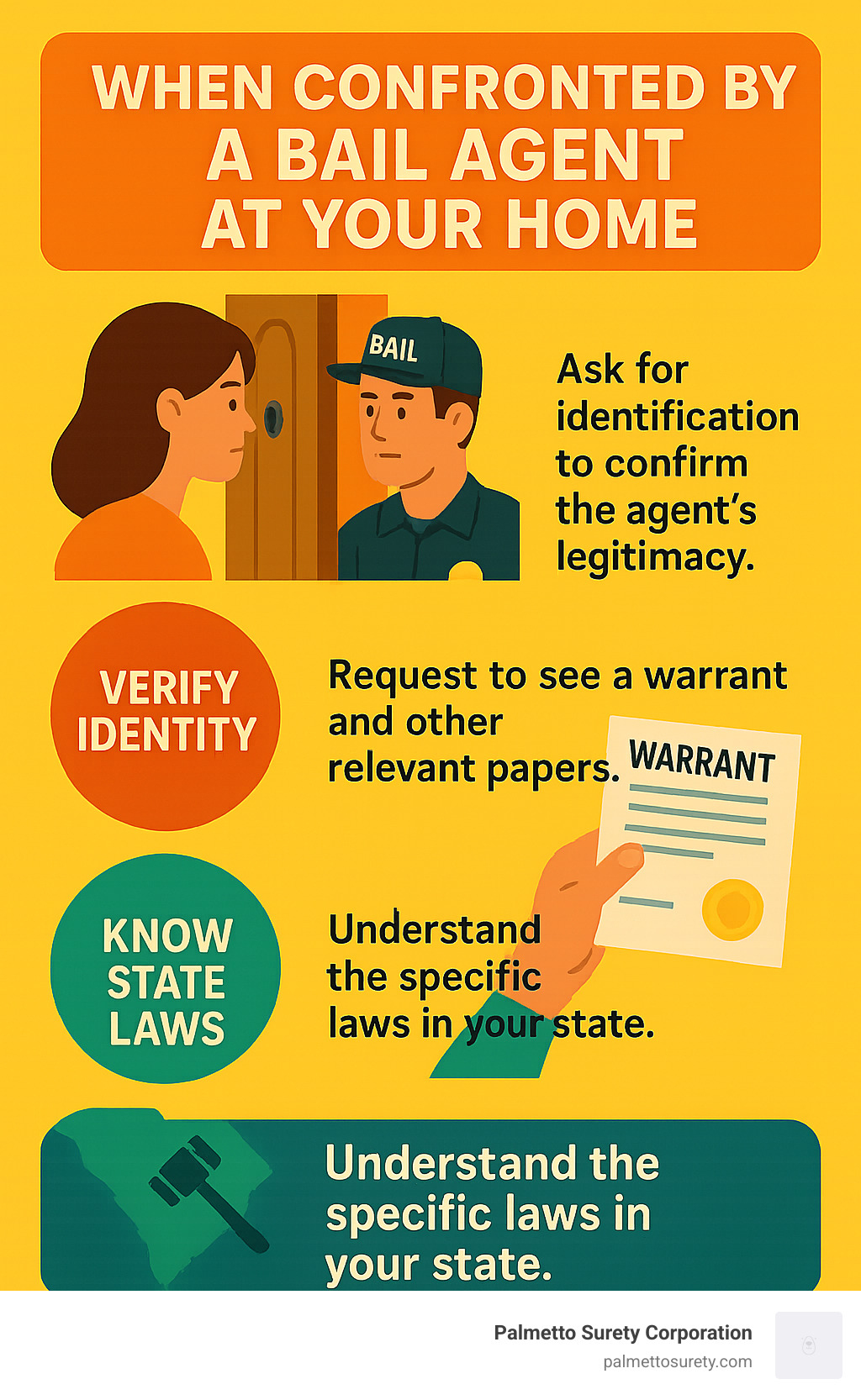
Ask for identification right away. Any legitimate bail agent should readily show you their bail license and professional ID. This isn’t optional—it’s standard procedure they should expect.
Request to see the “bail piece” or certified copy of the bond. This document is what legally grants them the authority to apprehend you. Without it, they’re just a person at your door making claims.
Verify any warrant they claim to have. In many states, bail agents need an actual warrant to make an arrest. You have every right to see this paperwork before allowing them to take you anywhere.
If you know you’ve missed court dates, consider voluntary surrender. This approach is often safer than resistance and may look better to the court. You can politely say, “I’d like to call my attorney before surrendering,” which is a reasonable request.
If You Are NOT the Defendant:
Your position is even stronger if you’re not the person named in the bond:
Do not open your door to a bail agent if you’re not the defendant. You have no obligation to do so, and keeping that barrier between you can prevent escalation.
If they’re persistent or threatening to enter without permission, call 911 immediately. Explain that bail agents are attempting to enter your home without proper authority.
Whenever possible, record the interaction with your phone or other device. This documentation could be invaluable if you need to prove misconduct later.
Make your position clear: “I do not consent to you entering my property. You need a warrant or the defendant’s presence to legally enter.” Being direct and calm helps establish boundaries.

For Everyone:
Whether you’re the defendant or not, these principles apply to everyone:
Stay calm and composed. Raising your voice or becoming aggressive can turn a tense situation dangerous. Speak clearly and firmly without escalating emotions.
Familiarize yourself with local laws regarding bail agent authority. These vary considerably by state, and knowing your specific state’s regulations gives you confidence in asserting your rights.
When in doubt, contact an attorney as soon as possible. Legal guidance specific to your situation is invaluable, especially if you believe a bail agent has overstepped their authority.
Legal Recourse if Rights Are Violated
If a bail agent crosses legal boundaries during an attempted arrest, you’re not without options:
File a formal complaint with your state’s department of insurance or the regulatory agency overseeing bail agents. These agencies take misconduct seriously and have the power to impose penalties.
Consider a civil lawsuit if appropriate. Depending on what happened, you might have grounds for claims like false imprisonment, assault, battery, or trespass.
In serious cases of misconduct, criminal charges might be warranted against bail agents who break the law. Local prosecutors can pursue these cases when evidence supports it.
As an absolute last resort, most jurisdictions recognize some form of self-defense rights against unlawful force. However, this should never be your first option, as physical confrontation can lead to injuries or worse for everyone involved.
At Palmetto Surety Corporation, we believe that knowing the answer to “can a bail bonds agent arrest you” means also understanding the proper conduct of bail professionals. We expect our partner bail agents to operate with the highest ethical standards and strict adherence to the law. We believe proper training and education are essential for bail agents to understand both their authority and its limits.
Knowledge is your best protection. Understanding your rights doesn’t make confrontation more likely—it makes resolution more peaceful.
Frequently Asked Questions about “Can a Bail Bonds Agent Arrest You”
What happens if the bail agent doesn’t follow the rules?
When bail agents step beyond their legal boundaries, they face a world of trouble. Think of it as crossing a line that comes with serious consequences—both professionally and personally.
First and foremost, state regulatory agencies don’t take violations lightly. A bail agent who breaks the rules might find their license suspended or completely revoked. This effectively ends their career in the bail industry, often permanently.
The financial consequences can be devastating too. Bail agents who overstep their authority open themselves up to civil lawsuits. Imagine being sued for false imprisonment, excessive force, or trespassing—these lawsuits often result in significant financial damages that can bankrupt an agent.
In more serious cases, the consequences go beyond professional penalties. Bail agents who severely violate the law may face criminal charges including assault, battery, breaking and entering, or impersonating a police officer. These charges can lead to jail time.
The courts themselves might even step in. If a judge determines that a bail agent has engaged in misconduct, they might release defendants from their bail obligations entirely—meaning the bail company loses their investment completely.
A sobering example of this came to light during the FBI’s “Operation Wrinkled Robe” investigation, where several bail agents were prosecuted for bribing judges and other serious misconduct related to their bail activities.
Do agents have to read Miranda rights?
Unlike what we see in TV shows, bail agents typically don’t need to read you Miranda rights when making an arrest. This surprises many people, but there’s good legal reasoning behind it.
Miranda warnings are specifically required when two conditions are met: law enforcement officers are conducting custodial interrogations that might lead to self-incriminating statements used in court. Since bail agents are private citizens—not law enforcement officers—and aren’t gathering evidence for prosecution, this requirement doesn’t apply to them.
A bail agent’s primary goal is simply to return you to court, not to question you about crimes or gather evidence. Their job ends once they deliver you to jail or court.
That said, some states have created specific requirements about what bail agents must tell defendants during an arrest. They might need to clearly identify themselves as bail agents and explain exactly why they’re arresting you.
There’s an interesting gray area worth noting: if a bail agent is working directly with law enforcement in a coordinated effort, Miranda warnings might become necessary. This is one reason why professional bail agents typically notify local police before making an arrest but conduct the actual apprehension independently.
Can a bail bonds agent arrest someone who is not the defendant?
No, absolutely not. A bail agent’s authority is strictly limited to the specific person who signed the bail contract. Can a bail bonds agent arrest you if you’re not the defendant named in the paperwork? The answer is a firm no.
If an agent attempts to detain or arrest anyone other than the actual defendant, they’re crossing into dangerous legal territory. The person being wrongfully detained has every right to refuse, and the agent opens themselves up to serious liability for false imprisonment. Beyond civil liability, the agent might face criminal charges and almost certainly will have their professional license suspended or revoked.
This limitation is fundamental to understanding bail agent authority. They don’t possess general arrest powers like police officers. They cannot apprehend friends or family members of the defendant, even if they believe these individuals know where the defendant is hiding.
There’s one narrow exception that varies by jurisdiction: if someone is actively interfering with the lawful arrest of a defendant (physically preventing the arrest, for example), this might potentially constitute obstruction of justice. Even in these situations, the bail agent’s authority to detain that person remains questionable at best.
At Palmetto Surety Corporation, we emphasize to our partner agents that their authority extends only to the specific defendant who has skipped court—and no one else. We believe that clear understanding of these boundaries protects everyone involved in the bail process.
Conclusion & Next Steps
So, can a bail bonds agent arrest you? Yes, but only under specific circumstances and with important limitations. It’s essential to understand that their powers aren’t unlimited – they must follow strict legal guidelines.
First and foremost, you must be the actual defendant named in the bail bond agreement. Bail agents have no authority to arrest friends, family members, or anyone else who wasn’t a party to the original bond contract. Additionally, you must have failed to appear in court or violated other conditions of your bail agreement. Simply put, they can’t arrest you for new offenses or on a whim.
In most states, the agent needs to have proper documentation, often including a warrant or court order. This isn’t TV – legitimate bail recovery requires paperwork. During any apprehension, agents must follow proper procedures and can only use reasonable force necessary for the arrest. Excessive force can lead to serious legal consequences for the agent.
The authority of bail agents varies dramatically depending on where you live. Some states have created strict regulatory frameworks, while others grant broader powers to bail recovery agents. It’s worth noting that four states – Illinois, Kentucky, Oregon, and Wisconsin – have banned commercial bail bonds entirely.
Whether you’re someone who has used a bail bond service or simply a homeowner concerned about bail agents showing up at your door, knowing your rights is your best protection. If you believe a bail agent has overstepped their authority, don’t hesitate to contact law enforcement immediately, file a complaint with your state’s regulatory authorities, and consult with an attorney about possible legal action.
At Palmetto Surety Corporation, we’ve built our reputation over 20+ years serving communities throughout the southeastern United States including Georgia, Florida, Louisiana, Mississippi, South Carolina, Tennessee, and Texas. We partner only with professional, ethical bail agents who understand and respect the legal boundaries of their authority.
The bail system, despite its complexities, serves an important role in our justice system by allowing defendants to remain free while awaiting trial while providing financial incentives to ensure their appearance in court. When operated ethically and legally, it creates a balance that benefits defendants, the courts, and society as a whole.
For more information about bail bonds, surety bonds, and related topics, please visit our website or contact one of our offices in Atlanta, Augusta, Columbus, Savannah, or other locations throughout the Southeast. We’re committed to helping you steer the bail system with integrity and professionalism.


