


Bond Insurance Cost: Top Factors & Tips for 2025
Bond insurance cost is a crucial consideration for businesses and individuals aiming to safeguard their investments and ensure financial stability. Bond insurance is essentially a policy that bond issuers purchase to guarantee the repayment of the bond’s principal and interest in the event of a default. This assurance not only enhances the credit ratings of bonds, making them more appealing to investors, but also reduces borrowing costs for issuers.
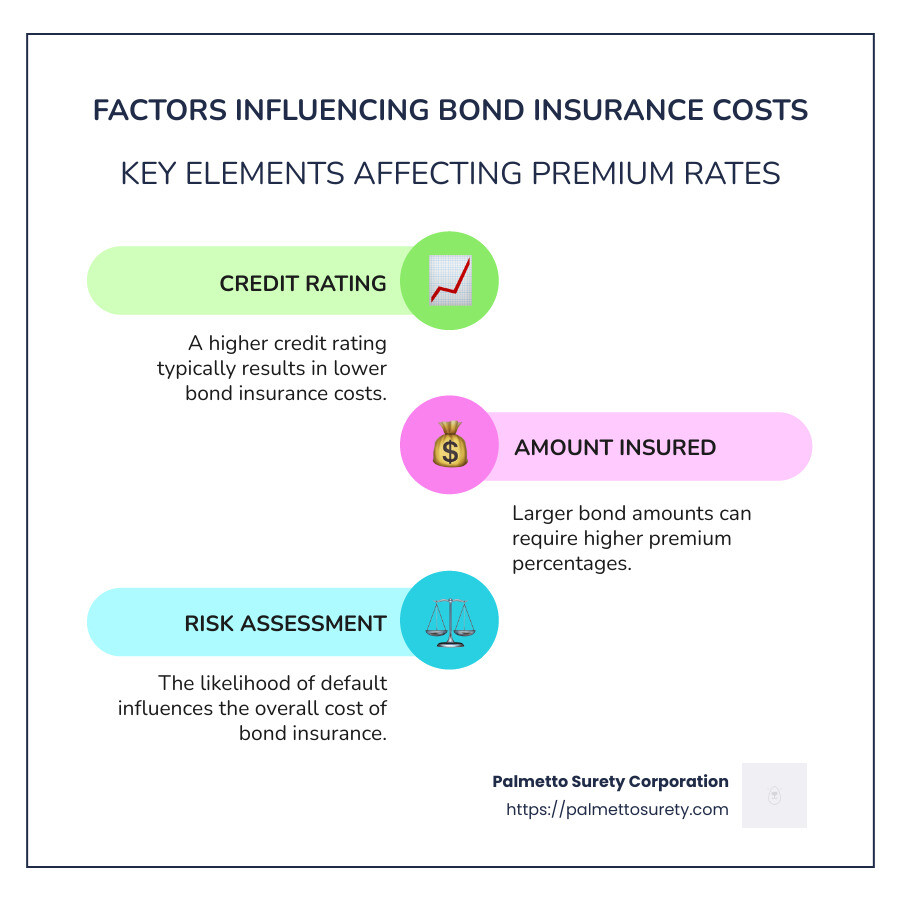
Several factors influence the bond insurance cost:
- Credit Rating: Higher ratings typically lead to lower costs.
- Amount Insured: Larger bonds may necessitate a higher premium percentage.
- Risk Assessment: The probability of default significantly impacts the cost.
I’m Haiko de Poel Jr, an expert in simplifying complex topics like bond insurance cost to provide clear, actionable insights. With experience working with leading firms, I have been involved in redesigning and rebranding projects, including those related to bond insurance cost, guiding companies toward growth with strategic marketing solutions. Stay tuned as we delve deeper into the complexities of bond insurance cost, uncovering key insights to support your decision-making.
Explore more about bond insurance cost:
Understanding Bond Insurance Costs
The bond insurance cost is influenced by several key factors, each of which can significantly impact the premium rates you might pay.
-
Credit Score: Your credit score is a major player in determining your premium rate. A higher credit score usually means lower premiums, while a lower score can lead to higher costs. This is because a good credit score suggests you are less risky to insure.
-
Bond Amount: The size of the bond you are insuring also affects the cost. Larger bonds often require a higher premium percentage because they represent a greater risk to the insurer.
-
Risk Assessment: Insurers carefully assess the risk associated with the bond. This involves evaluating the likelihood of a claim being made against the bond. Higher risk can lead to higher premiums.

Typical Cost Ranges
When it comes to surety bonds, the premium typically ranges from 0.5% to 10% of the bond amount. This wide range reflects the varying levels of risk and creditworthiness among applicants.
Let’s break down a few examples to see how this works in practice:
-
Low-Risk Scenario: Suppose you need a $10,000 bond and have a strong credit score. Your premium might be as low as 0.5% of the bond amount, costing you just $50.
-
Moderate-Risk Scenario: If your credit score is average, the premium might be around 3%, meaning you would pay $300 for the same $10,000 bond.
-
High-Risk Scenario: For those with poor credit scores, premiums could reach up to 10%, resulting in a $1,000 cost for the $10,000 bond.
These examples illustrate how various factors can influence bond insurance cost. It’s crucial to understand these elements to better estimate your potential costs and make informed decisions.
Next up, we’ll explore how to estimate your bond insurance costs using tools and calculators that consider these factors.
How to Estimate Your Bond Insurance Cost
Estimating your bond insurance cost doesn’t have to be complicated. With the right tools and understanding of the factors involved, you can get a clear picture of what to expect.
Using a Cost Calculator
A cost calculator is a handy tool for estimating your bond insurance cost. These calculators consider several factors, such as the bond amount and your credit score, to provide an estimate of the premium you might pay.
Here’s how you can use a cost calculator effectively:
-
Input Your Bond Amount: Start by entering the total amount of the bond you need. This is crucial as it directly impacts your premium rate.
-
Provide Your Credit Score: Your credit score is a key factor in determining your premium. A higher score often results in a lower premium, while a lower score may increase costs.
-
Review the Estimate: The calculator will use this information to give you an estimated range for your premium. This range can help you budget and plan for the cost.
Many surety companies offer online applications with built-in cost calculators. These tools make it easy to get an estimate without any obligation.
Importance of Credit Score
Your credit score plays a significant role in the underwriting process for bond insurance. Here’s why it matters:
-
Financial Trustworthiness: A higher credit score indicates financial stability and reliability. It suggests you’re less likely to default, which can lower your premium.
-
Credit Report Insights: Underwriters will review your credit report to assess your financial history. They look for factors such as timely bill payments and low debt-to-income ratios.
-
Impact on Premiums: A strong credit history can significantly reduce your premium percentage. Conversely, a poor credit score may increase your costs, potentially reaching the higher end of the 0.5% to 10% range.
To improve your credit score and potentially lower your bond insurance costs, focus on paying bills on time, reducing debt, and regularly checking your credit report for errors.
By understanding these elements and using estimation tools, you can better steer the costs associated with bond insurance. This knowledge empowers you to make informed decisions and find the best rates available.
Next, let’s dig into the different types of bonds and how their costs vary.
Types of Bonds and Their Costs
When it comes to bond insurance cost, understanding the types of bonds and how their costs are calculated is crucial. Let’s explore performance bonds, payment bonds, and contract bonds, focusing on their contract price, percentage rates, and fee structures.
Performance Bonds
Performance bonds are a type of surety bond that ensure a contractor completes a project according to the contract terms. They are commonly used in construction and large-scale projects.
-
Contract Price and Percentage Rates: The cost of a performance bond is typically calculated as a percentage of the contract price. This percentage can range from 1% to 4%, depending on factors such as the contractor’s creditworthiness and the project’s complexity.
-
Example: For a $500,000 construction contract, with a bond rate of 2%, the performance bond premium would be $10,000.
Performance bonds provide peace of mind to project owners, ensuring that the project will be completed even if the contractor defaults.
Payment Bonds
Payment bonds guarantee that contractors and subcontractors will be paid for their work and materials. They are often required alongside performance bonds in construction projects.
-
Contract Obligations and Fee Structure: Like performance bonds, payment bonds are based on the contract value. The premium rates can also range from 1% to 4%, depending on the contractor’s financial stability and project risk.
-
Fee Structure: Payment bond premiums are usually bundled with performance bond premiums, meaning the cost is often the same whether one or both bonds are required.
These bonds protect subcontractors and suppliers, ensuring they receive payment even if the principal contractor fails to pay.
Contract Bonds
Contract bonds encompass both performance and payment bonds and are essential for ensuring project completion and financial security.
- Cost Considerations: The overall bond insurance cost for contract bonds depends on the total contract value and the risk assessment of the contractor. The combined premium for both performance and payment bonds usually falls within the same percentage range of 1% to 4%.
Understanding these bonds and their costs can help contractors and project owners prepare financially and ensure compliance with contract obligations. By considering the contract price and percentage rates, you can better estimate your bond insurance costs and manage your project’s financial risks effectively.
Next, let’s address some frequently asked questions about bond insurance costs to further clarify this topic.
Frequently Asked Questions about Bond Insurance Cost
How much does a $25,000 surety bond cost?
The cost of a $25,000 surety bond varies based on several factors, primarily your credit score. Generally, bond insurance cost is calculated as a percentage of the bond amount. For a $25,000 bond, you might pay anywhere from 1% to 15% of the bond amount, translating to $250 to $3,750.
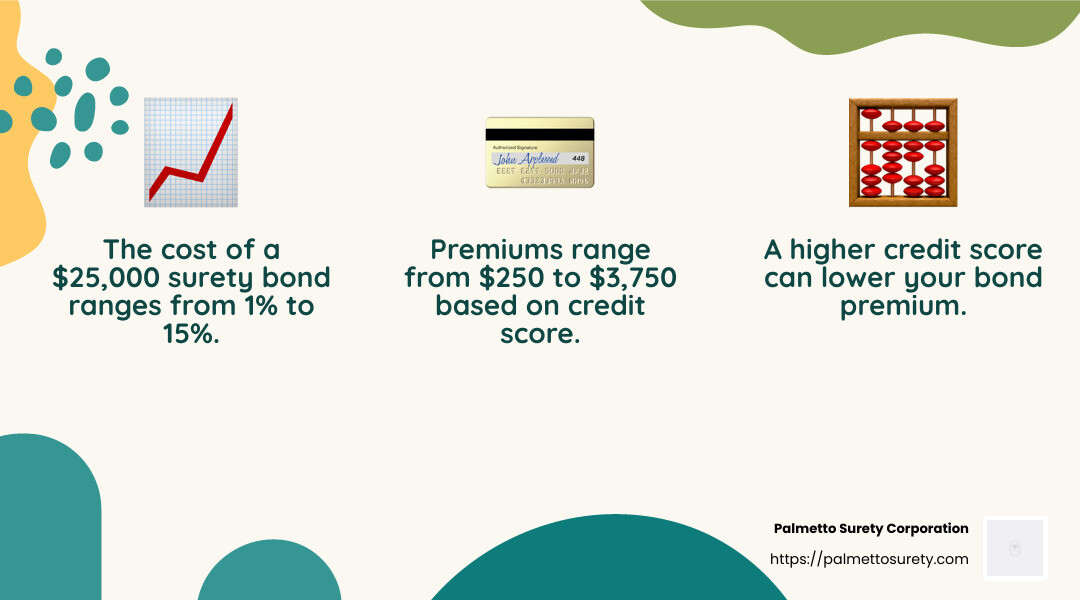
Your credit score plays a significant role in determining the premium. A higher credit score often results in lower premiums, while a lower score could push you towards the upper end of the cost range.
Can I get a bond with bad credit?
Yes, you can still get a surety bond even if you have bad credit. However, be prepared to face higher premiums. Surety companies consider applicants with poor credit as higher risk, which means you might pay a premium as high as 20% of the bond amount.
Despite this, many surety providers, like Palmetto Surety Corporation, have high approval rates, even for those with bad credit. They work to get you bonded at the best possible rate, ensuring you can meet your business obligations.
Are bond premiums refundable?
Once a surety bond is issued, the premium is generally nonrefundable. The premium is considered earned by the surety company at the time of issuance, regardless of whether any claims are made against the bond during its term. This policy is standard across the industry, so be sure of your bond requirements before purchasing.
Understanding these aspects of bond insurance cost can help you make informed decisions about your bonding needs and financial planning. If you have more questions or need guidance, Palmetto Surety Corporation is here to assist with expert advice and efficient service.
Conclusion
At Palmetto Surety Corporation, we pride ourselves on providing quick approval and efficient service for all your bonding needs. With over 20 years of experience in the industry, we understand the importance of securing the right surety bond promptly and at the best possible rate.
Our team is dedicated to simplifying the bonding process, ensuring that you can focus on your business without unnecessary delays. Whether you’re in construction, healthcare, or any other industry requiring surety bonds, we offer a seamless experience from application to approval.
We recognize that navigating bond insurance costs can be complex. That’s why our experts are always ready to guide you through the process, offering personalized advice and support. We work diligently to provide you with the most competitive rates, even if you have a challenging credit history.
A surety bond is more than just a financial requirement—it’s a commitment to your clients and partners. With Palmetto Surety Corporation, you can be confident in your ability to meet those commitments with ease and professionalism.
For more information or to start your bond application, visit our service page. Let us help you secure your business’s future today.


