


How to Get Bonded and Insured: Top 3 Proven Benefits
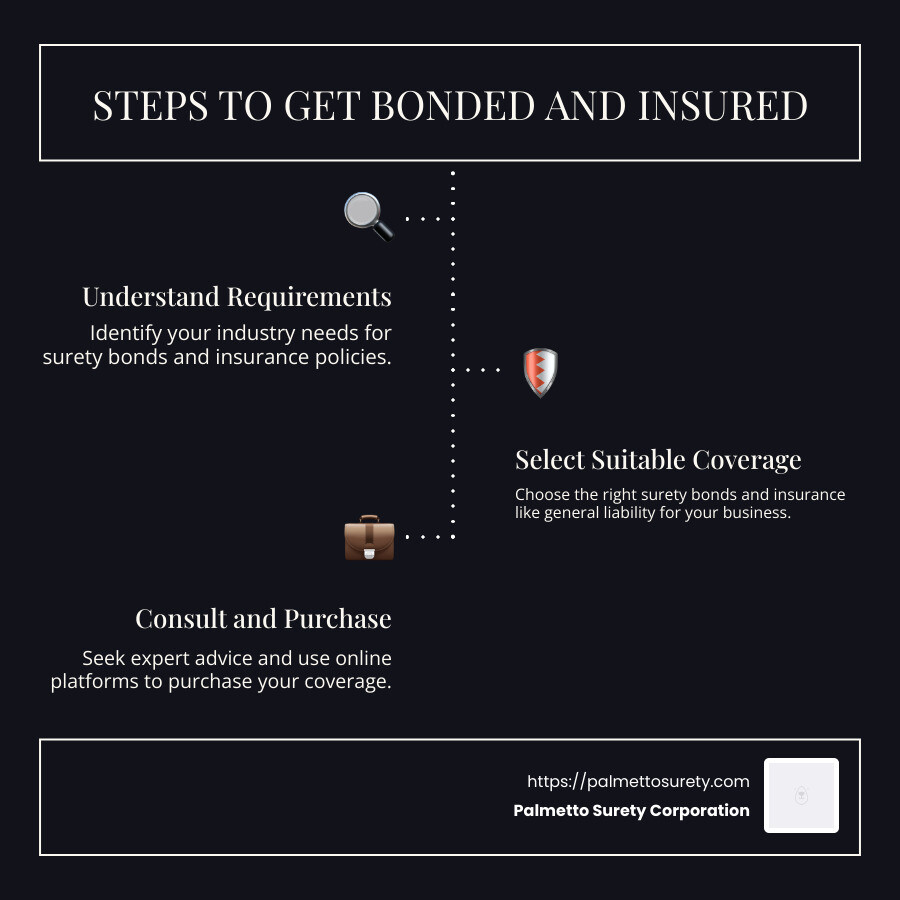
How to get bonded and insured for your small business is a crucial step for entrepreneurs aiming to protect themselves and their customers. To navigate this process effectively:
- Understand the Requirements: Determine the specific needs of your industry, such as surety bonds or insurance policies.
- Select Suitable Coverage: Choose the appropriate surety bonds (like license and permit bonds) and insurance (such as general liability) tailored to your business needs.
- Consult Professionals: Get advice from experts or companies like Palmetto Surety Corporation.
- Purchase Coverage: Utilize online platforms for a quick and seamless experience to secure your bond or insurance.
Getting bonded and insured is vital for safeguarding your business. It provides financial protection and builds trust with customers by demonstrating that you are a responsible and reliable entity. Even for small operations, this financial security is crucial for navigating legal obligations and unexpected events.
I am Haiko de Poel Jr., a specialist in marketing and digital change, committed to helping you understand how to get bonded and insured. My role with Palmetto Surety Corporation involves upholding our brand’s standards and ensuring you have easy access to bonding solutions. Now, let’s explore how these protective measures can enhance your business operations.
Understanding Bonding and Insurance
When it comes to protecting your business, understanding the concepts of bonding and insurance is crucial. These terms are often used together but serve different purposes. Let’s break them down:
What is a Bond?
A bond is a financial guarantee. It involves a three-party agreement between the principal (your business), the obligee (usually a government agency or client requiring the bond), and the surety (the company guaranteeing the obligation). If your business fails to meet its obligations, the surety steps in to cover the costs.
Surety Bonds are a type of bond often required for businesses involved in construction or government contracts. They act as a promise that your business will complete a project as agreed. If not, the surety covers the costs to the obligee.
Fidelity Bonds, on the other hand, protect your business from employee theft or dishonesty. They are like insurance for your business against internal risks.
Insurance Coverage Explained
Insurance is a contract between your business and an insurance company. It protects your business from financial losses due to unforeseen events, such as accidents or natural disasters.

-
General Liability Insurance covers claims for bodily injuries or property damage caused by your business operations.
-
Workers’ Compensation provides coverage for employee injuries at work.
-
Property Insurance protects your business’s physical assets, like buildings and equipment.

Key Differences
While both bonds and insurance provide protection, they serve distinct roles:
-
Bonds protect the client or obligee by guaranteeing your business’s performance.
-
Insurance protects your business from various risks and potential financial losses.
Understanding these differences helps you choose the right protection for your business. Making informed decisions about how to get bonded and insured ensures your business is prepared for any challenges it might face.
Now, let’s explore the different types of bonds and insurance available for small businesses and how they can benefit you.
How to Get Bonded and Insured
Getting your business bonded and insured is a critical step in safeguarding your operations and building trust with your clients. Here’s a simple guide on how to get bonded and insured.
Finding a Surety Company
The first step to getting bonded is to find a reliable surety company. A surety company issues bonds, acting as a guarantor that your business will fulfill its obligations. Palmetto Surety Corporation is a leading provider in this field, offering a wide range of surety bonds custom to meet the needs of small businesses.
The Bond Application Process
Once you’ve chosen a surety company, the next step is the bond application process. This is similar to applying for a loan. You’ll need to provide:
- Background Information: Details about your business and its owners.
- Financial Information: This includes business financial statements and personal credit scores.
- Experience and References: Your experience in the industry and references from past clients or partners.
The surety company will review this information to determine your eligibility. They assess your business’s character, capacity, and credit to ensure you can meet your bond obligations.
Choosing an Insurance Provider
In addition to bonding, selecting a reputable insurance provider is essential. Insurance protects your business from various risks, such as accidents, property damage, or employee injuries. Look for companies that understand the unique needs of small businesses and offer comprehensive coverage options.
Partnering with Palmetto Surety Corporation
Palmetto Surety Corporation simplifies the bonding process, providing expert guidance and support. Their platform makes it easy to apply for and obtain the bonds you need. With locations in Florida, Georgia, Louisiana, Mississippi, South Carolina, Tennessee, and Texas, they are well-positioned to assist businesses across these regions.
Steps to Get Started
- Contact Palmetto Surety Corporation: Reach out to discuss your bonding needs and get guidance on the application process.
- Gather Required Information: Prepare the necessary documents for your bond application.
- Submit Your Application: Complete the application with the surety company.
- Review and Approval: Wait for the surety company to review your application and provide approval.
- Secure Insurance Coverage: Work with an insurance provider to cover other business risks.
By following these steps, you ensure that your business is both bonded and insured, providing peace of mind and protection against potential liabilities. Let’s now explore the types of bonds and insurance available for small businesses.
Types of Bonds and Insurance for Small Businesses
In small business, being bonded and insured is not just a formality—it’s a necessity. Different types of bonds and insurance serve distinct purposes, safeguarding your business from various risks and ensuring compliance with legal requirements. Here’s a breakdown of some key options:
License and Permit Bonds
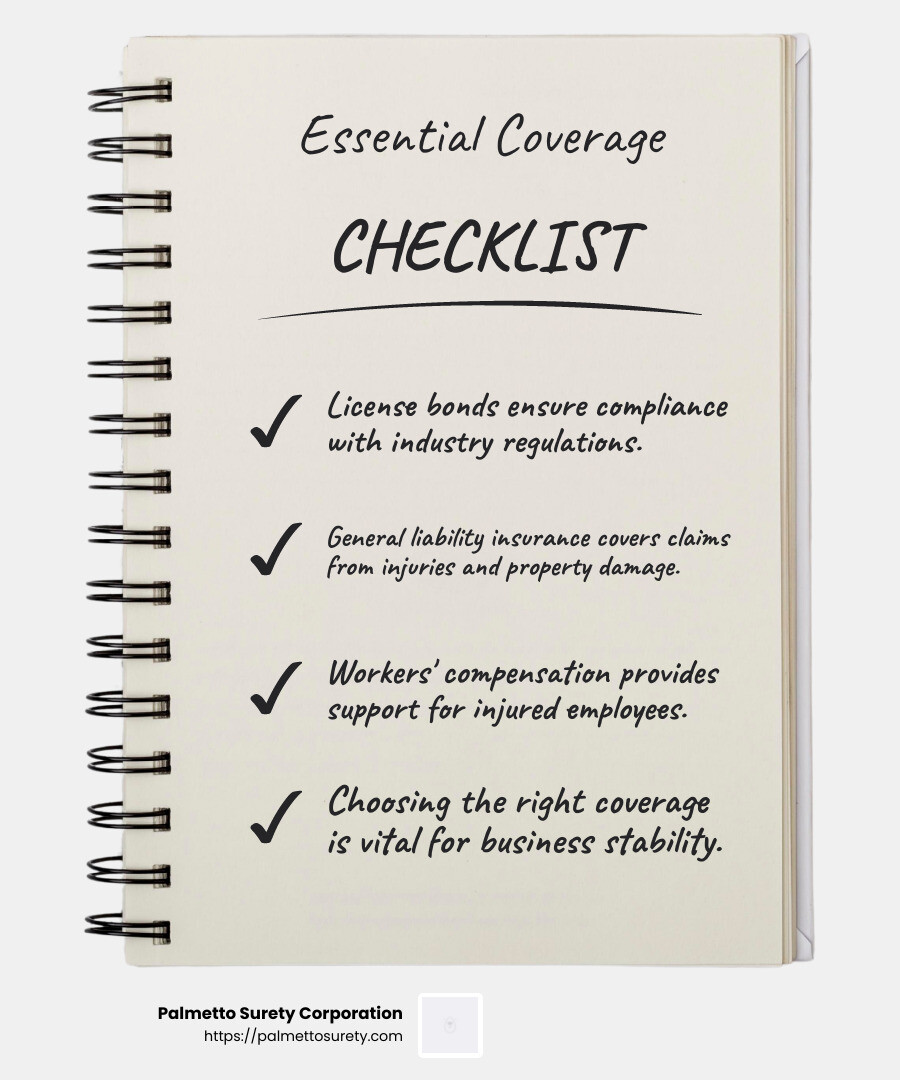
License bonds and permit bonds are essential for businesses that need to demonstrate compliance with local regulations. These bonds ensure that your business will adhere to laws and regulations specific to your industry. For instance, a contractor might need a license bond to guarantee they follow building codes.
- Who Needs Them?: Contractors, auto dealers, and businesses requiring specific permits.
- Purpose: Protects the public by ensuring the business complies with laws.
General Liability Insurance
General liability insurance is a must-have for any small business. It covers claims related to bodily injuries, property damage, and personal injuries that occur during regular business operations. This type of insurance is crucial for protecting your business assets against costly lawsuits.
- Key Benefits:
- Covers legal fees and settlements.
- Protects against claims of negligence or harm.
Workers’ Compensation
For businesses with employees, workers’ compensation insurance is often legally required. This insurance covers medical expenses and lost wages for employees who get injured or fall ill due to their job. It’s a vital protection for both your employees and your business.
- Why It Matters:
- Provides financial support to injured employees.
- Helps businesses comply with state laws.
Choosing the Right Coverage
Selecting the right mix of bonds and insurance can feel overwhelming, but it’s crucial for the stability and growth of your business. Palmetto Surety Corporation offers guidance and support to help you steer these choices, ensuring you have the protection you need.
By understanding and securing the appropriate bonds and insurance, you can protect your business from unforeseen risks and build trust with your clients and partners. Next, we’ll dive into the benefits of being bonded and insured, highlighting how these protections can lead to greater customer trust and legal compliance.
Benefits of Being Bonded and Insured
Being bonded and insured offers several compelling advantages for your small business. Let’s break down these benefits into three key areas: customer trust, legal compliance, and financial protection.
Customer Trust
Building trust with your customers is crucial for any business. When potential clients see that you are bonded and insured, it signals that you are a reliable and professional entity. This assurance can be a deciding factor for customers choosing between you and a competitor.
- Why It Matters: Customers feel more confident knowing they are protected against any mishaps or fraud.
- Example: A cleaning company that is bonded and insured is more likely to secure contracts with high-profile clients who demand accountability and professionalism.
Legal Compliance
In many industries, being bonded and insured is not just recommended—it’s often a legal requirement. Ensuring compliance with these requirements helps you avoid penalties and keeps your business running smoothly.
- Key Points:
- License and Permit Bonds: These are often required to legally operate in certain sectors, such as construction or auto sales.
- Workers’ Compensation: Mandatory in most states if you have employees, protecting both your business and your workforce.
Financial Protection
Financial protection is another critical benefit of being bonded and insured. Accidents, lawsuits, or employee misconduct can result in significant financial losses. Insurance and bonds provide a safety net that can prevent these events from crippling your business.
- Insurance Coverage: Protects your assets from liabilities, such as injury claims or property damage.
- Surety Bonds: Safeguard your clients and ensure you fulfill contractual obligations, minimizing the risk of financial loss due to non-performance.
By being both bonded and insured, your business not only meets legal standards but also gains a competitive edge. It shows clients that you are committed to quality and accountability, fostering trust and opening doors to new opportunities.
Next, we’ll address some frequently asked questions about bonding and insurance, including costs and industry requirements.
Frequently Asked Questions about Bonding and Insurance
How much does it cost to be bonded and insured?
The cost of being bonded and insured can vary widely based on several factors. For bonds, you’ll typically pay a premium, which is a small percentage of the total bond amount. This can range from 0.5% to 15%, depending on your credit score, financial stability, and claims history.
- Example: If you need a $10,000 bond and your premium rate is 1%, you’ll pay $100 annually.
Insurance premiums are calculated based on the type of coverage, the size of your business, and the risks involved. For instance, general liability insurance might cost a few hundred dollars annually, while workers’ compensation could be significantly more, especially if you have many employees or operate in a high-risk industry.
Is it better to be bonded or insured?
Both bonding and insurance serve different purposes, and the right choice depends on your business needs.
-
Bonding: Provides a guarantee to your clients that you will fulfill contractual obligations. It’s crucial for businesses that require trust and accountability, like construction or janitorial services.
-
Insurance: Protects your business from unforeseen events like accidents, injuries, or property damage. It’s essential for any business to safeguard against potential liabilities.
In many cases, being both bonded and insured is the best approach. This combination offers comprehensive protection for your business and reassures clients of your reliability.
Do all businesses need to be bonded and insured?
Not all businesses are legally required to be bonded and insured, but many industries have specific mandates.
-
Industry Requirements: Certain sectors, such as construction or auto sales, often require specific bonds, like license and permit bonds, to operate legally.
-
Legal Obligations: Most states require businesses with employees to carry workers’ compensation insurance. Additionally, if you own vehicles for business use, commercial auto insurance is usually mandatory.
Even if it’s not a legal requirement, being bonded and insured can provide significant benefits. It improves your business’s credibility and offers protection against potential risks, making it a wise investment for long-term success.
Next, we’ll explore how Palmetto Surety Corporation can support your business growth and provide peace of mind.
Conclusion
At Palmetto Surety Corporation, we believe that being bonded and insured is more than just a legal requirement or a business formality—it’s a strategic move that can significantly contribute to your business growth and peace of mind.
Business Growth
Being bonded and insured opens doors to new opportunities. It assures potential clients and partners that your business is reliable and trustworthy. In industries like construction and transportation, having the right bonds can be the difference between winning or losing a contract. Our quick approval process ensures that you never miss out on a job due to bonding delays. By choosing Palmetto Surety, you’re not just meeting requirements—you’re positioning your business for success and expansion.
Peace of Mind
Running a business comes with its share of uncertainties. With our comprehensive bonding and insurance solutions, you can focus on what you do best—growing your business. Knowing that you’re protected against financial risks and legal liabilities allows you to operate with confidence. Whether it’s a fidelity bond to safeguard against employee theft or a general liability policy to cover accidents, we’ve got you covered.
Palmetto Surety Corporation stands out with over 20 years of experience in the industry. Our expertise and commitment to fast, efficient service ensure that your bonding and insurance needs are met with the utmost care and professionalism.
For more information on how we can help your business thrive, visit our Palmetto Surety Corporation service page.
Being bonded and insured is not just about compliance—it’s about building a solid foundation for your business’s future. Let us help you achieve that with our custom solutions and exceptional service.


