


Motor Vehicle Surety Bond: Top 2025 Essential Guide
A motor vehicle surety bond is an essential component in the automotive industry, providing a financial safety net that ensures accountability and trust between car dealers, consumers, and state agencies.
Quick Facts:
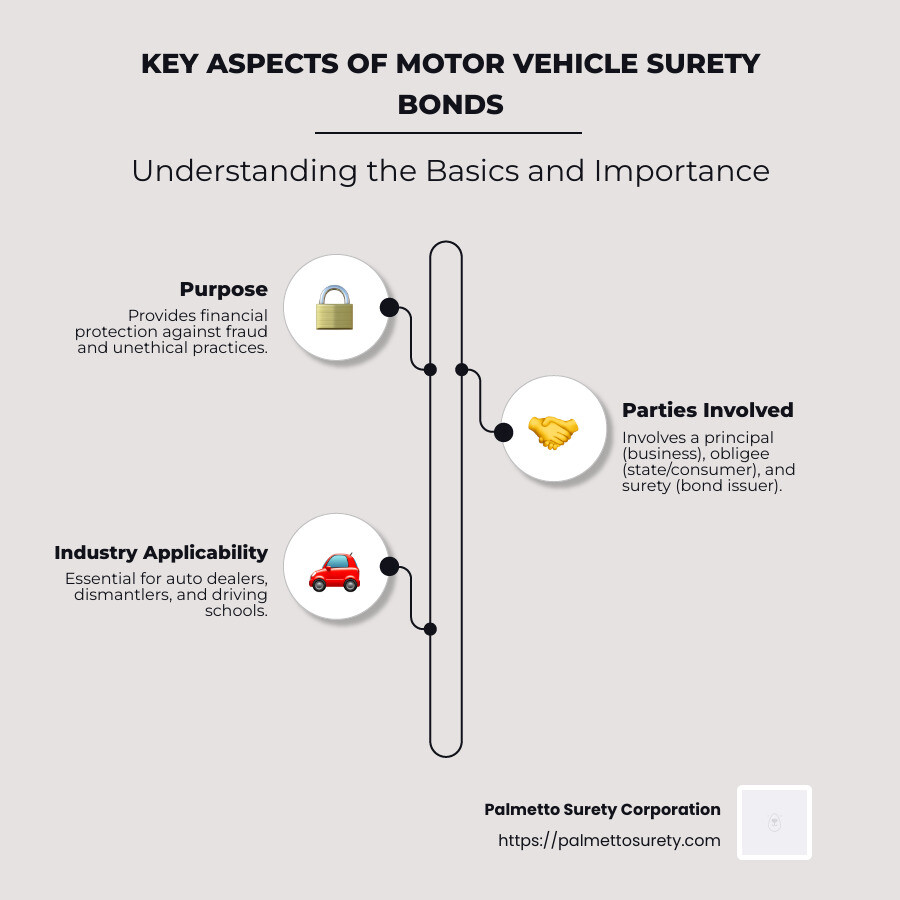
– Purpose: Provides financial protection to consumers and state entities against fraud or unethical practices.
– Who Needs It: Auto dealers, dismantlers, driving schools, and others connected to the motor vehicle industry.
– How It Works: Involves a principal (the business), an obligee (the state or consumer), and a surety (the bond issuer).
Motor vehicle surety bonds are required to ensure compliance with a range of regulations and protect against unforeseen business risks. They are not only a licensure prerequisite for car sellers but also an ethical shield for consumers.
I’m Haiko de Poel Jr., with extensive experience in marketing and digital transformations for Palmetto Surety Corporation. My expertise lies in optimizing processes and safeguarding stakeholders’ interests through solutions like motor vehicle surety bonds.
Understanding Motor Vehicle Surety Bonds
A motor vehicle surety bond is like a promise backed by money. It’s a special type of agreement that helps protect people involved in the motor vehicle industry, like car buyers and state agencies, from fraud or other dishonest actions.
Definition and Purpose
At its core, a motor vehicle surety bond is a contract among three parties:
- Principal: This is usually the business, like a car dealer, that needs the bond.
- Obligee: This is the party that requires the bond, often a state agency or consumer.
- Surety: This is the company that issues the bond, like Palmetto Surety Corporation.
The main purpose of these bonds is to ensure that businesses comply with laws and regulations. They act as a safeguard, making sure that if a business doesn’t follow the rules, there’s a financial safety net in place to cover any damages.
Financial Guarantee and Protection
When a business, such as a car dealer, gets a motor vehicle surety bond, it’s essentially guaranteeing that it will operate ethically and lawfully. If the business fails to meet its obligations, the surety company steps in to cover the costs, up to the bond amount. This doesn’t mean the business is off the hook. The business must repay the surety company for any claims paid out.

This financial guarantee protects consumers and state agencies from losses due to:
- Misrepresentation of a vehicle’s condition
- Failure to provide a valid car title
- Unpaid taxes on sold vehicles
Why Are They Important?
Motor vehicle surety bonds are crucial because they build trust. They assure consumers that the businesses they deal with are legitimate and responsible. For businesses, having a bond is often a requirement to get licensed and operate legally.
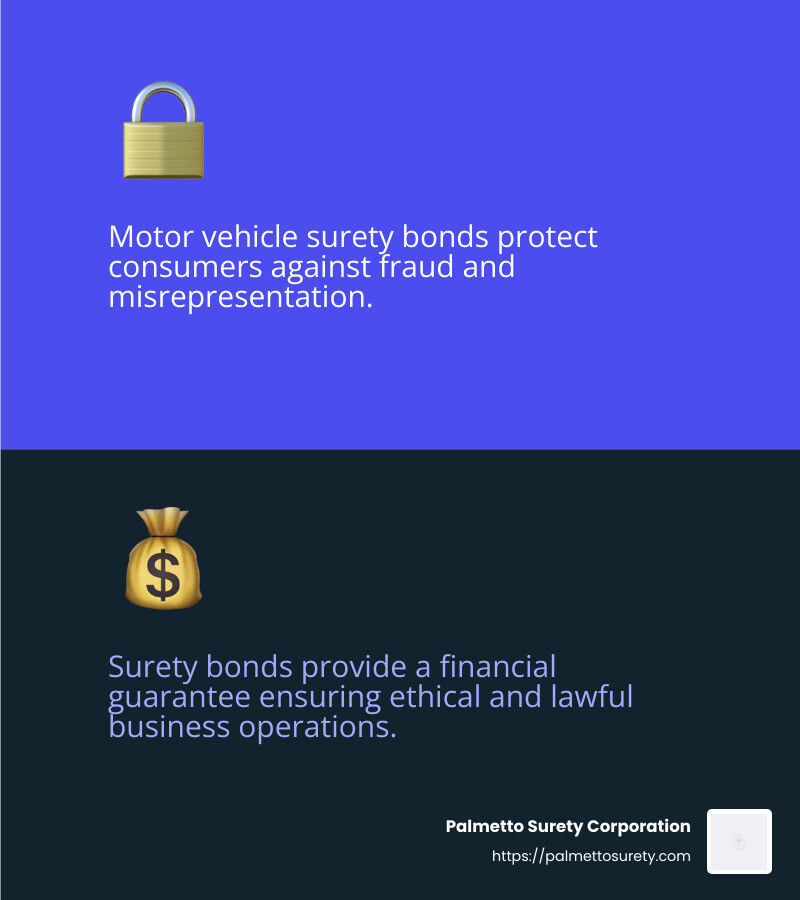
In the busy automotive industry, where transactions are frequent and complex, these bonds provide peace of mind. They ensure that all parties involved have a level of protection, making it easier to resolve disputes and maintain fair practices.
By understanding these bonds, businesses can better steer the regulations and consumers can feel more secure in their transactions.
Types of Motor Vehicle Surety Bonds
In motor vehicles, there are several types of motor vehicle surety bonds designed to protect different parties and ensure lawful operations. Let’s explore some of the most common types:
Auto Dealer Bonds
Auto dealer bonds are essential for anyone selling cars or other motor vehicles. These bonds are required by most states to ensure that dealers follow all applicable laws and ethical standards. If a dealer engages in fraud or unethical practices, the bond provides financial protection to consumers and state agencies.
For example, if a dealer fails to deliver a valid car title or misrepresents a vehicle’s condition, the bond can cover the resulting damages.
Bonded Title (Certificate of Title Surety Bonds)
A bonded title is an alternative to a traditional vehicle title. It’s often used when the original title is lost or when there’s uncertainty about ownership. This bond protects against any claims that might arise from previous owners during the bond’s term, typically 3-5 years.
Dealers might encounter bonded titles when purchasing or trading in used cars, ensuring no other claims to the vehicle’s title can be made.
Dismantlers or Parts Recyclers Bonds
Auto dismantlers and parts recyclers deal with vehicles’ end-of-life processes, which involve handling potentially hazardous materials. These businesses must secure a surety bond to ensure they dispose of materials responsibly and comply with environmental regulations.
The bond also protects against the misuse of parts, like license plates, that could be used for illegal activities.
Title Company Bonds
Title companies assist in the transfer of vehicle titles, carrying significant legal responsibility. A title company bond ensures these businesses operate with integrity and comply with all legal requirements. This bond protects consumers and other businesses by ensuring that title transfers are handled correctly and ethically.
Driving School Bonds
Driving schools, especially those offering commercial driver’s license training, need surety bonds to operate. These bonds protect students by ensuring they receive their tuition back if the school closes unexpectedly before they complete their courses. They also ensure that the driving school adheres to ethical practices and provides quality education.
These motor vehicle surety bonds are crucial for maintaining trust and accountability in the automotive industry. By requiring these bonds, states ensure that businesses operate within the law, providing consumers with peace of mind and financial protection.
How Motor Vehicle Surety Bonds Work
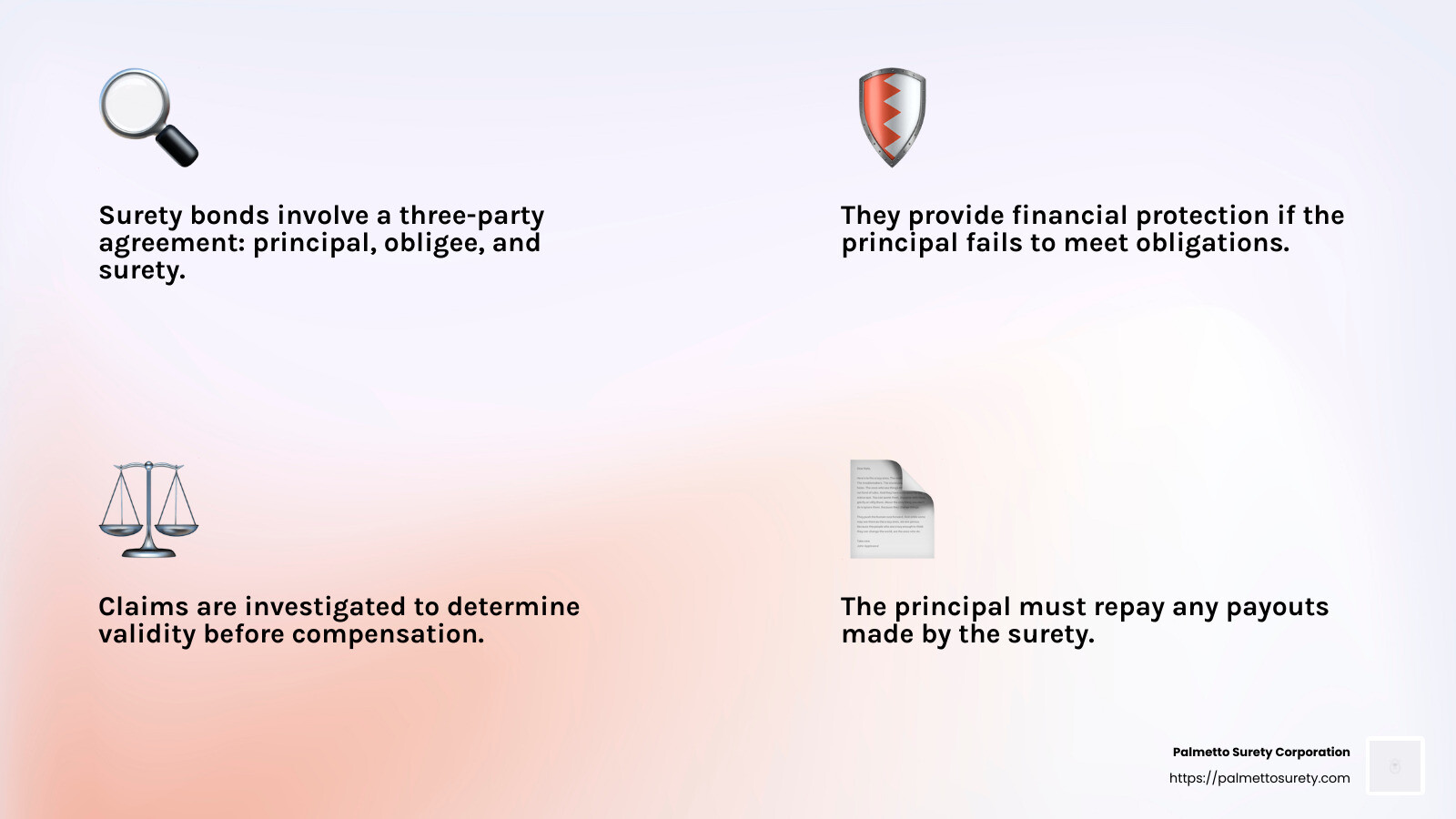
Motor vehicle surety bonds are vital in ensuring trust and accountability in the automotive industry. They are based on a three-party agreement involving the principal, the obligee, and the surety. Let’s break down how these bonds function and the process involved.
The Three-Party Agreement
-
Principal: This is the business or individual required to obtain the bond. For example, an auto dealer who needs a bond to sell cars legally.
-
Obligee: Typically, the obligee is a state or local government agency that requires the bond. They mandate the bond to protect the public and ensure that the principal adheres to regulations.
-
Surety: The surety is the company that provides the bond. They guarantee to the obligee that the principal will fulfill their obligations. If the principal fails, the surety steps in to cover losses, up to the bond amount.
Claim Process
The claim process is a crucial aspect of how motor vehicle surety bonds work. Here’s how it unfolds:
-
Filing a Claim: If a principal fails to meet their obligations, such as misrepresenting a vehicle’s condition or failing to deliver a valid title, affected parties (like consumers or vendors) can file a claim against the bond.
-
Investigation: Once a claim is filed, the surety investigates its validity. They gather information from both the claimant and the principal to determine if the claim is legitimate.
-
Resolution: If the claim is found to be valid, the surety compensates the claimant for losses, up to the bond’s limit. However, the principal is ultimately responsible for repaying the surety for any payouts made.
Why It Matters
This structured approach ensures that businesses in the automotive industry operate ethically and comply with legal standards. It also provides consumers and other stakeholders with a safety net against potential misconduct or financial loss.
Understanding the mechanics of motor vehicle surety bonds is essential for anyone involved in the automotive business. It highlights the importance of maintaining integrity and accountability in every transaction.
Let’s dig into the costs and factors affecting these bonds, which can vary depending on several elements such as credit score and state requirements.
Costs and Factors Affecting Motor Vehicle Surety Bonds
When it comes to motor vehicle surety bonds, understanding the costs and factors that influence them is crucial. Several key elements determine the premium you’ll pay for these bonds. Let’s break down the primary factors:
Premium Calculation
The premium for a motor vehicle surety bond is the amount you pay to obtain the bond. It’s typically a small percentage of the total bond amount, often ranging from 1% to 3%. However, this can vary based on individual circumstances.
Credit Score
Your credit score is a significant factor in determining the cost of your bond. A higher credit score can lead to a lower premium because it indicates to the surety that you are financially responsible and less likely to default on obligations. For instance, a dealer with a credit score above 625 might pay a lower premium compared to someone with a score below 625.
Bond Amount
The bond amount, also known as the “bond penalty,” is the maximum amount the surety will pay in case of a valid claim. This amount is set by the state and varies depending on the type of bond and the specific requirements of the business. For example, a standard auto dealer bond might require a bond amount of $25,000 in some states.
State Requirements
Each state has its own regulations and requirements for motor vehicle surety bonds. These requirements dictate the bond amount and the conditions under which a bond is necessary. For instance, in Florida, an auto dealer must purchase a $25,000 surety bond as part of the licensing process. It’s essential to check the specific requirements for the state where you plan to operate.
Other Influencing Factors
-
Business Experience: Businesses with a long history of operating without claims may benefit from lower premiums.
-
Industry Type: Different types of motor vehicle businesses (e.g., auto dealers, title companies) may have varying bond requirements and costs.
Understanding these factors can help you better steer the process of obtaining a motor vehicle surety bond. It’s important to assess your financial situation and research state-specific requirements to ensure you meet all obligations efficiently.
Next, we’ll address some frequently asked questions about motor vehicle surety bonds to further clarify any uncertainties you might have.
Frequently Asked Questions about Motor Vehicle Surety Bonds
What is the purpose of a surety bond?
A surety bond serves as a financial guarantee that a business will fulfill its contractual obligations. In the context of motor vehicle operations, these bonds ensure that businesses like auto dealers adhere to state regulations and ethical practices. If a business fails to meet these obligations, the bond provides compensation to affected parties, such as customers or the state.
Imagine an auto dealer who doesn’t transfer a car title properly. If a customer files a valid claim, the surety bond can cover the financial loss. This helps maintain trust in the industry and ensures that businesses operate responsibly.
How much does a $40,000 surety bond cost?
The cost of a $40,000 surety bond depends on several factors, primarily your credit score. Typically, the premium ranges from 1% to 3% of the bond amount. So, for a $40,000 bond, you might pay between $400 and $1,200.
Your credit score plays a significant role here. A higher credit score often means a lower premium. For instance, if your credit score is above 700, you might secure a rate closer to 1%. Conversely, a lower score could push your premium towards the higher end of the range.
What does it mean when a vehicle needs to be bonded?
When a vehicle needs to be bonded, it usually involves obtaining a bonded title. This happens when the original proof of ownership is missing or unavailable. A bonded title acts as a temporary title, allowing you to register and use the vehicle legally.
To get a bonded title, you must purchase a surety bond for a specific amount, often based on the vehicle’s value. This bond protects any rightful owner who might claim the vehicle later. If someone proves ownership, they can file a claim against the bond to recover their loss.
A bonded title is a solution for resolving ownership disputes while ensuring you can still drive and register the vehicle. It’s a common practice in cases like lost titles or vehicles purchased without proper documentation.
By understanding these aspects of motor vehicle surety bonds, you can steer your obligations with confidence and clarity. Now, let’s explore how Palmetto Surety Corporation can simplify the bonding process for you.
Conclusion
At Palmetto Surety Corporation, we understand that navigating motor vehicle surety bonds can be complex. That’s why we specialize in making the process as smooth and efficient as possible for our clients.
Quick Approval: Our streamlined process ensures that most applications are approved within hours. This means you can focus on your business without unnecessary delays. Whether you’re an auto dealer or need a bonded title, our quick turnaround time is designed to get you bonded and back in business fast.
Efficient Service: We pride ourselves on offering a hassle-free experience. Our dedicated team is available to guide you through every step, providing clear answers and support whenever you need it. From understanding state requirements to calculating premiums, we’re here to help.
Industry Expertise: With over 20 years of experience in the surety bond industry, we have the knowledge and expertise to handle a wide range of bonding needs. Whether it’s for auto dealers, dismantlers, or driving schools, our industry-specific insights ensure that you get the right bond for your situation.
Choosing Palmetto Surety Corporation means partnering with a team committed to your success. Our focus on quick approval, efficient service, and deep industry expertise makes us the ideal choice for all your motor vehicle surety bond needs. Contact us today to see how we can help you secure your business’s future.


