


The Role of Notary Bonds in Building Public Trust: Top 5 Essential Impacts
The role of notary bonds in building public trust is crucial for ensuring the integrity and dependability of legal documents. Notary services serve as an essential link in legal and business transactions, and notary bonds are vital in maintaining public trust. These bonds act as a financial safeguard, ensuring that notaries perform their duties ethically and in compliance with the law. This additional layer of protection reassures the public that notarized documents are trustworthy.
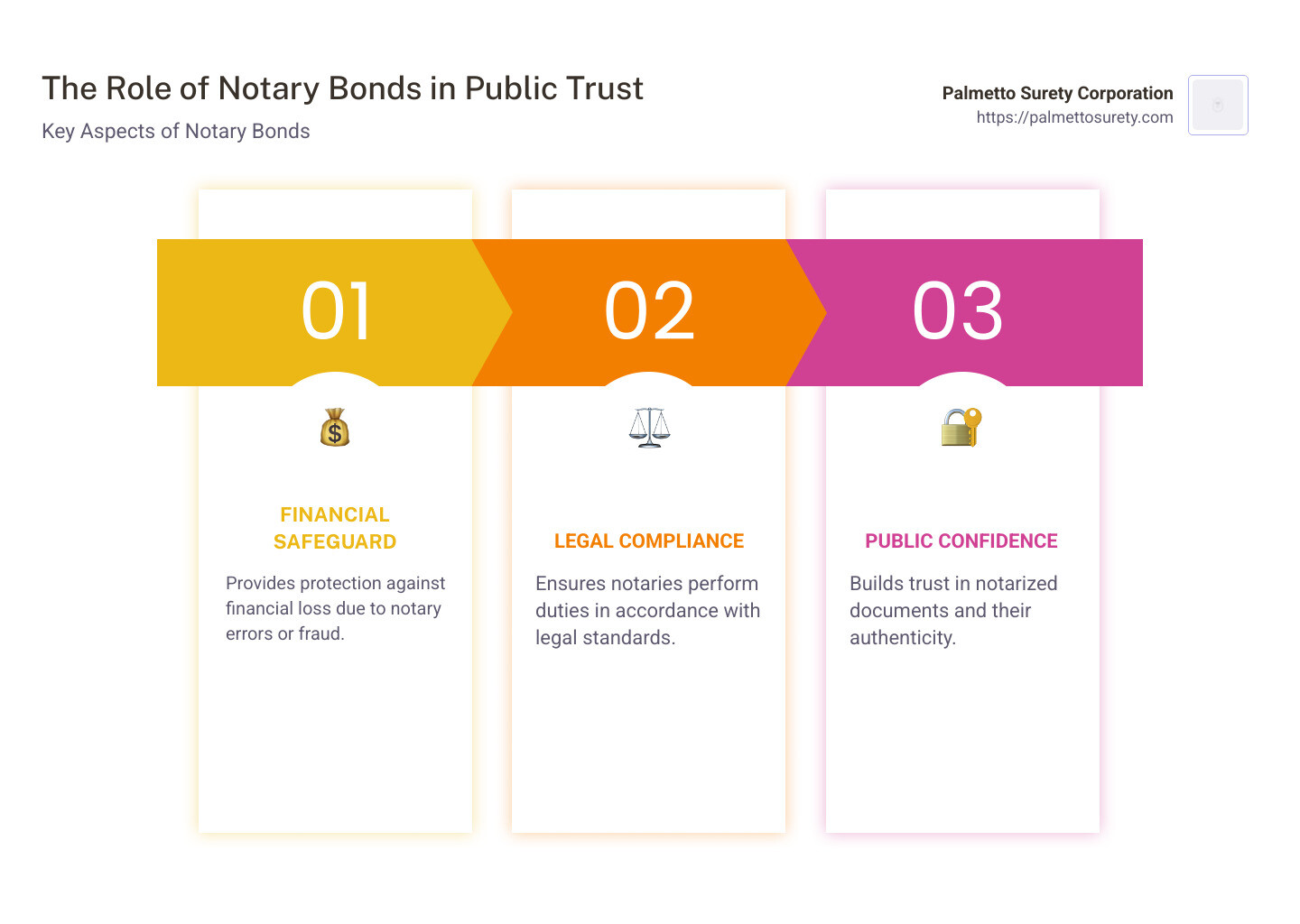
- Financial Safeguard: Protects the public from notary errors or fraud.
- Legal Compliance: Ensures notaries adhere to legal standards.
- Public Confidence: Builds trust in notarized documents.
As Haiko de Poel Jr, a seasoned expert in digital change and branding, my extensive involvement with the surety bond market enhances my understanding of the role of notary bonds in building public trust. My work, including the rebranding efforts at Palmetto Surety Corporation, underscores my dedication to boosting public confidence in notarial services and ensuring transparent legal processes.
Basic the role of notary bonds in building public trust vocab:
– how to choose a notary bond
– notary bond vs. insurance
– what is notary bond fraud
The Role of Notary Bonds in Building Public Trust
Protecting the Public
Notary bonds are a crucial element in the notarial process, serving as a financial safeguard for the public. These bonds ensure that if a notary makes an error or commits fraud, there is a compensation mechanism in place for those affected. The bond provides a financial guarantee that helps cover losses incurred due to the notary’s actions.
Imagine a scenario where a notary mistakenly notarizes a document with incorrect information. Without a notary bond, the affected party might have no recourse. However, with a bond in place, they can file a claim and potentially receive compensation for their losses. This process not only protects individuals but also improves trust in the notarization system as a whole.
Ensuring Accountability
Notary bonds also play a key role in ensuring ethical performance and accountability. By requiring notaries to be bonded, states enforce a standard of conduct that notaries must adhere to. If a notary fails to meet these ethical standards, the bond can be used to hold them financially liable for their actions.
The financial liability associated with notary bonds acts as a deterrent against misconduct. Notaries are aware that any valid claims paid out by the bond must eventually be reimbursed by them. This encourages notaries to perform their duties diligently and ethically, knowing there are consequences for negligence or misconduct.
In summary, the role of notary bonds in building public trust is significant. They provide a safety net for the public and ensure that notaries are held to high ethical standards. This dual function of protection and accountability helps maintain the integrity of notarized documents and fosters confidence in legal transactions.

How Notary Bonds Work
Understanding how notary bonds work is crucial to appreciating their role in protecting the public and ensuring accountability. Let’s explore the essentials of bond terms and the claim process.
Bond Terms and Conditions
Notary bonds are governed by state laws. Each state sets specific requirements regarding the bond amount and the commission term. For example, California requires a $15,000 bond, while Florida mandates a $7,500 bond. These amounts reflect the maximum compensation available to claimants if a notary is found liable for misconduct or negligence.
The commission term typically lasts four years, aligning with the notary’s term of service. This ensures continuous protection for the public throughout the notary’s active period. Notaries must renew their bonds before expiration to avoid any lapses in coverage.
Surety companies play a vital role in this process. They evaluate the notary’s risk profile and issue the bond, providing a financial guarantee that the notary will adhere to ethical standards. Notaries are responsible for purchasing these bonds from reputable providers, ensuring they meet all state requirements.
Claim Process
The claim process is a critical component of how notary bonds function. When a notary’s actions result in financial harm, affected parties can file a claim against the bond. The surety company then conducts a thorough investigation to determine the validity of the claim.
If the investigation confirms the notary’s misconduct or error, the surety company compensates the claimant up to the bond’s limit. This compensation process is designed to provide financial recourse for those harmed by notarial actions, reinforcing public trust in notarial services.
However, the notary remains accountable. After a payout, they must reimburse the surety company for the amount disbursed. This financial responsibility encourages notaries to perform their duties diligently and ethically, knowing there are significant consequences for negligence or misconduct.
Notary bonds are a safeguard mechanism, ensuring that notaries are held accountable while providing a safety net for the public. This dual function of protection and accountability is central to maintaining trust in the notarial system.
Importance of Notary Bonds
Notary bonds are more than just a legal requirement; they are vital to maintaining integrity, public trust, and accountability in notarial services. Let’s explore how these bonds protect the public and ensure accountability.
Protecting the Public
At the heart of notary bonds is the financial safeguard they provide. When a notary makes an error or engages in misconduct, it can lead to significant financial harm. Notary bonds act as a compensation mechanism, offering financial recourse to those affected. This ensures that individuals and businesses can trust notarial services, knowing there’s a safety net if things go wrong.
The reliability of notarial services is crucial. Notary bonds help build this reliability by ensuring that any financial damages caused by a notary’s actions are covered up to the bond’s limit. This financial recourse reinforces public confidence in using notarial services for legal transactions.
Ensuring Accountability
Notary bonds also play a key role in ensuring ethical compliance and professional conduct. By requiring notaries to be bonded, states enforce a standard of ethical performance. Notaries know they are financially liable for any misconduct, which promotes diligence and adherence to legal standards.
This financial liability is an incentive for notaries to maintain high standards in their work. If a claim is made against a bond, the notary must reimburse the surety company for any payouts. This responsibility ensures that notaries remain accountable for their actions, fostering a culture of integrity and accountability.
In summary, notary bonds are essential for safeguarding public interests and ensuring that notaries uphold ethical standards. They provide a dual layer of protection—financial recourse for the public and a mechanism for holding notaries accountable. This is how notary bonds build trust and reliability in notarial services.
Obtaining a Notary Bond
Getting a notary bond is a key step for anyone starting as a notary. It’s not just about meeting state requirements; it’s about finding a reputable provider and managing costs effectively.
Finding a Bond Provider
Choosing the right bond provider is crucial. Notaries should look for authorized surety companies with a good reputation. State insurance departments often have lists of authorized providers to help you make an informed decision.
Customer service is a big deal. A provider with excellent support can make the process of obtaining and renewing your bond much smoother. Look for providers who offer clear communication and quick responses to your questions.
Pro Tip: Check online reviews and ask other notaries for recommendations. This can give you insight into a provider’s reliability and service quality.
Cost and Renewal
The cost of a notary bond varies. Typically, premiums range from $50 to $150, depending on your state and the bond amount. Some states have specific bond amounts; for example, California requires a $15,000 bond.
When considering costs, the bond’s commission term usually matches your notary commission term, often four years. This means you’ll need to budget for renewal as your term ends.
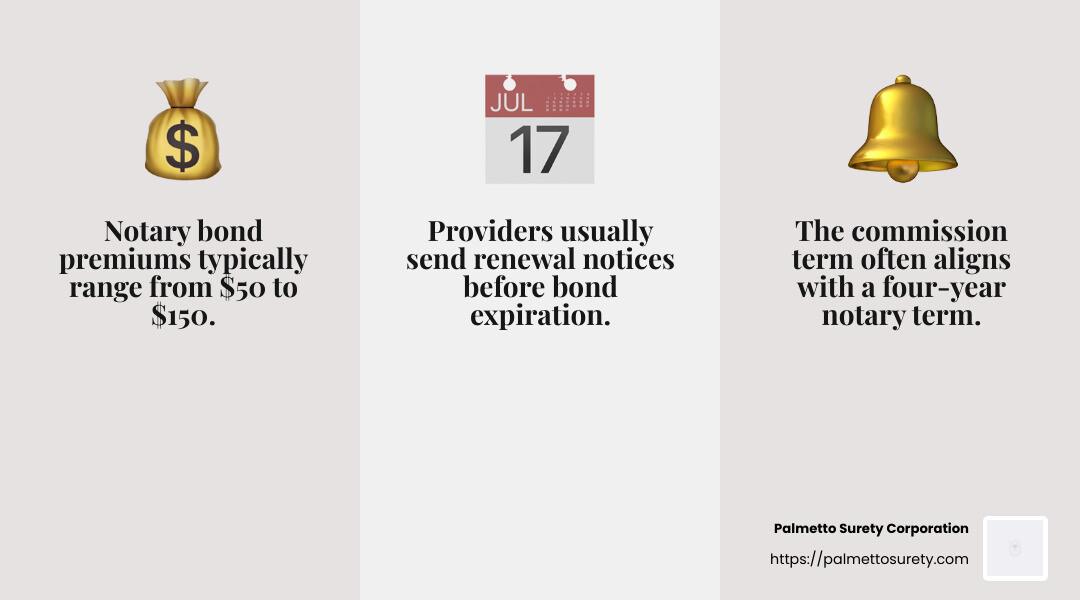
Renewal Process: Providers usually send renewal notices before your bond expires. This is your cue to reassess your bonding needs and check for any changes in state requirements or premiums. Renewing on time is crucial to avoid gaps in coverage, which could leave you unable to perform notarial duties.
In summary, obtaining and maintaining a notary bond involves careful selection of a provider and understanding the costs involved. By focusing on these elements, notaries can ensure compliance with state laws and maintain the trust of those who rely on their services.
Frequently Asked Questions about Notary Bonds
What is a notary bond?
A notary bond is a financial guarantee that ensures notaries perform their duties according to legal and ethical standards. It acts as a safety net for the public, protecting them from errors or misconduct by a notary. Essentially, it’s a promise that notaries will adhere to the rules and regulations of their profession.
How do notary bonds protect the public?
Notary bonds play a crucial role in building public trust by offering financial recourse in case of notarial errors or unethical behavior. If someone suffers a financial loss due to a notary’s mistake, they can file a claim against the bond to seek compensation. This process ensures that the public has a reliable way to recover damages, reinforcing confidence in notarial services.
What are the typical costs associated with a notary bond?
The cost of a notary bond—often referred to as the premium—varies based on several factors. Typically, premiums range from $50 to $150. However, this range can differ depending on state requirements and the bond amount. For instance, certain states may mandate higher bond amounts, which can affect the premium. It’s important for notaries to understand these costs and plan accordingly, as they are a necessary part of maintaining their professional obligations.
Conclusion
Notary bonds are essential for maintaining professional integrity and public confidence in notarial services. By acting as a financial safeguard, these bonds ensure that notaries adhere to ethical and legal standards, protecting the public from potential errors or misconduct.
At Palmetto Surety Corporation, we understand the significance of notary bonds in fostering trust and accountability. With over 20 years of experience, we specialize in providing quick and efficient surety bond services custom to meet the needs of various industries. Our expertise ensures that notaries can secure their bonds swiftly, enabling them to focus on delivering reliable services to their clients.
By choosing Palmetto Surety Corporation, notaries can rest assured that they are backed by a reputable provider committed to upholding the highest standards of integrity and professionalism. As the demand for notarial services continues to grow, notary bonds will remain a cornerstone of public trust, ensuring that legal transactions are conducted with confidence and transparency.
For more information on how we can assist you with your notary bond needs, visit our service page.


