


How to Check if a Company is Licensed and Bonded: Top Tips
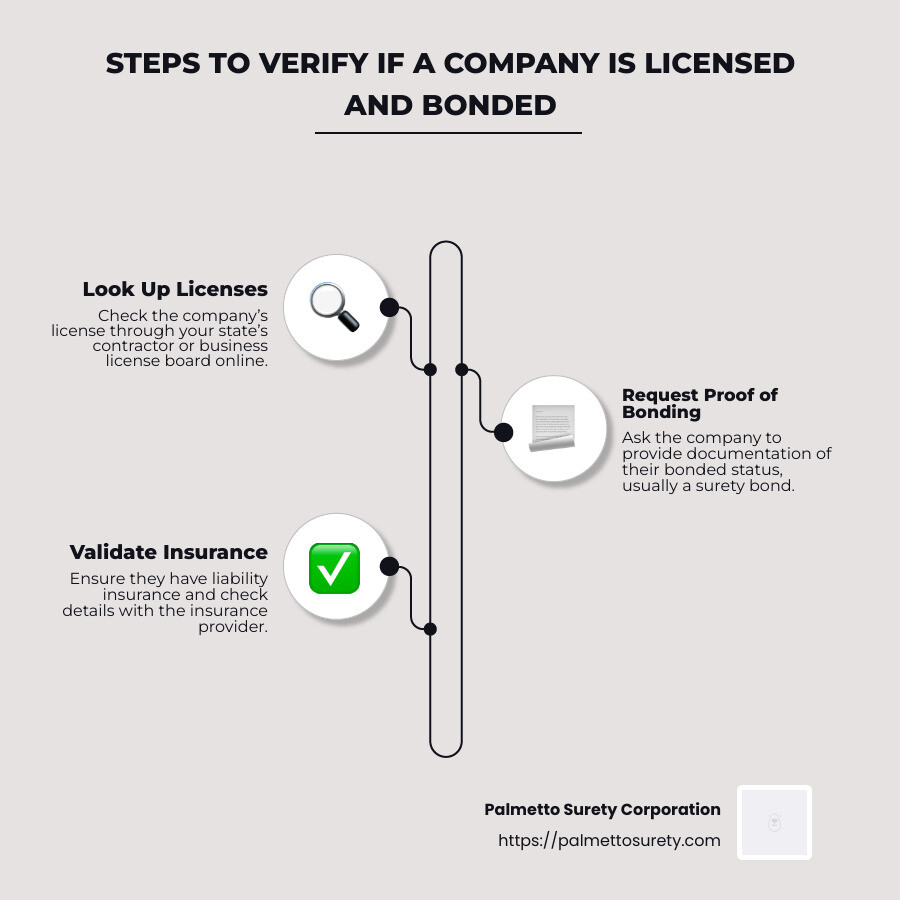
Ensuring a company is licensed and bonded is crucial for peace of mind and protection. Here’s a straightforward guide to help you verify:
- Look Up Licenses: Use your state’s contractor or business license board online to verify the company’s license.
- Request Proof of Bonding: Ask the company for documentation of their bonded status, which usually involves a surety bond.
- Validate Insurance: Confirm they have liability insurance and verify the policy details with the insurance provider.
- Check References: Investigate the company’s reputation through platforms like the Better Business Bureau.
Verifying that a company is both licensed and bonded is essential for building trust and safeguarding against potential issues. At Palmetto Surety Corporation, we focus on simplifying the verification process, drawing on our expertise to make it easier for businesses to ensure compliance and avoid financial pitfalls.
Essential how to check if a company is licensed and bonded terms:
– how to check if a contractor is bonded
– how to check if someone is licensed and bonded
Understanding Licensing and Bonding
When you’re hiring a company, especially for significant projects like construction, know if they’re licensed and bonded. This isn’t just a formality; it’s about protecting yourself and your investment.
What Does “Licensed” Mean?
A licensed company has met specific requirements set by local or state authorities. These requirements often include passing exams and proving competence in their field. Licensing ensures that the company adheres to industry standards and regulations, providing you with a basic level of assurance about their qualifications.
What Does “Bonded” Mean?
Being bonded means a company has secured a surety bond. This bond is a financial agreement involving three parties: the principal (the company), the obligee (you, the client), and the surety (the bond provider). If the company fails to fulfill its obligations, the surety compensates you, the obligee.
This setup provides financial protection and peace of mind. If a project goes south, you have a safety net.
The Role of Surety Bonds
A surety bond is like a promise backed by a financial guarantee. It’s crucial in industries where work quality and reliability are paramount. For instance, in construction, a surety bond ensures that if a contractor fails to complete a job, the project won’t stall indefinitely. The bond covers the costs to hire another contractor to finish the work.

Why Licensing and Bonding Matter
-
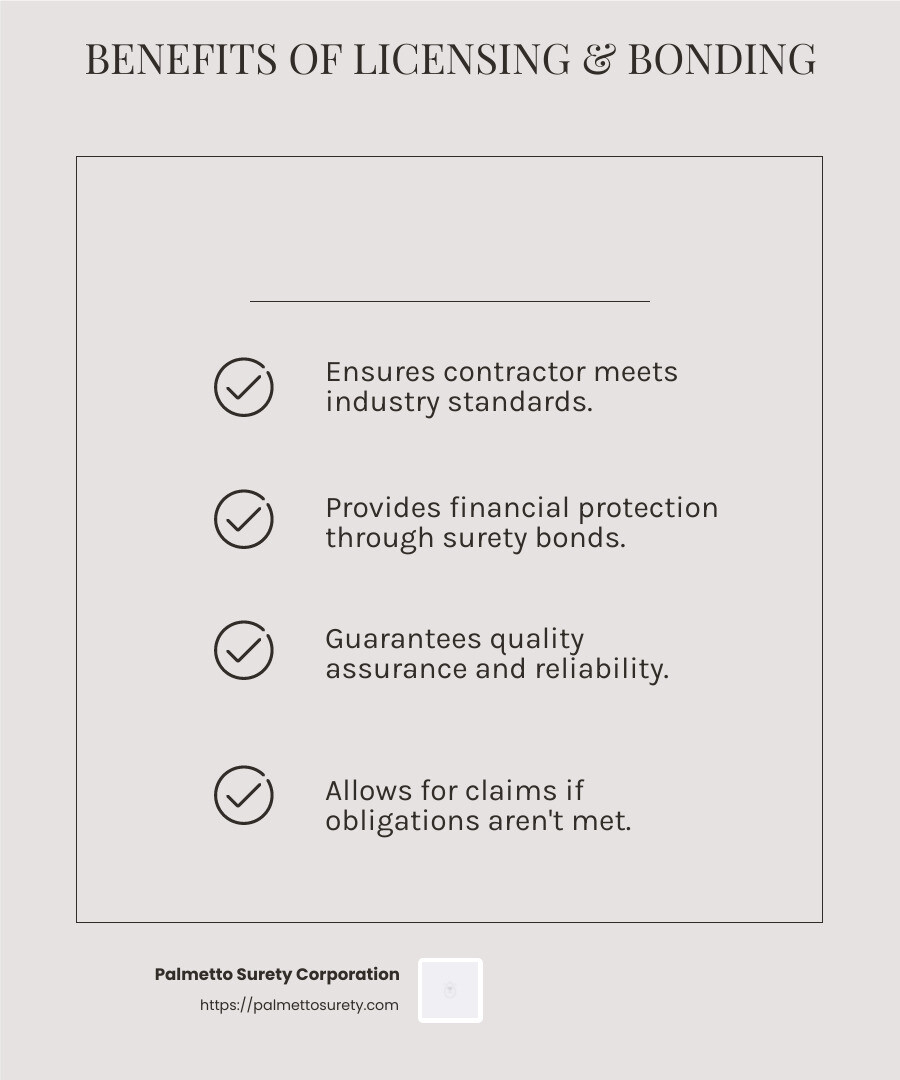
Financial Protection: Both licensing and bonding protect you from financial loss. If a company is bonded, you can file a claim if they don’t meet their contractual obligations.
-
Quality Assurance: Licensed companies have proven their expertise, reducing the risk of poor workmanship.
-
Legal Compliance: Many states require contractors to be licensed and bonded to operate legally. Hiring such a company helps you stay compliant with local laws.
In conclusion, understanding the importance of being licensed and bonded helps you make informed decisions. This knowledge not only protects your financial interests but also ensures that you’re working with reputable professionals.
How to Check if a Company is Licensed and Bonded
When you’re considering hiring a company, especially for crucial tasks like construction or renovation, verify their credentials. This means checking both their license and their bond status. Here’s how you can do it effectively:
Using Online Resources
One of the easiest ways to start is by using online databases. Most states have dedicated websites where you can perform a license check. These sites allow you to enter the company’s name or license number to see if they are officially recognized.
-
State Databases: Each state has its own licensing board. By visiting their website, you can access up-to-date information about a company’s licensing status. This is particularly useful for confirming that a business meets all local regulations.
-
Insurance Lookup: Some states also offer online tools to verify a company’s insurance status. This ensures that the company has the necessary coverage to protect you from potential liabilities.
A quick online search can save you a lot of trouble later. It’s a straightforward step that confirms the company’s legitimacy and your peace of mind.
Contacting Surety Companies
If you want to go a step further in your verification process, consider reaching out to surety companies. These are the entities that provide the bonds, and they can offer additional insights into a company’s bond status.
-
Surety Bond Companies: Contacting the surety company directly can help you verify if a bond is active and in good standing. This ensures that the company is financially backed to complete its obligations.
-
Bond Verification: When you contact a surety company, ask for details about the bond. They can confirm whether the bond is valid and if there have been any claims against it. This information is crucial for understanding the company’s reliability.
These steps might seem like extra work, but they are essential. Verifying a company’s license and bond status protects you from potential scams and ensures that you’re working with qualified professionals. Plus, it gives you the confidence to move forward with your project, knowing you’re in safe hands.
Importance of Hiring Licensed and Bonded Contractors
Hiring a contractor who is both licensed and bonded isn’t just a good idea—it’s essential. It offers financial protection, ensures quality assurance, and guarantees legal compliance. Here’s why you should be cautious about unlicensed contractors:
Risks of Unlicensed Contractors
1. Financial Liability
Unlicensed contractors often lack the financial backing to cover mistakes. Without a surety bond, you might be left paying for repairs or unfinished work. Imagine hiring someone to redo your kitchen, only to find out they skipped town with your deposit. You’d be on the hook for any financial losses.
2. Property Damage
Licensed contractors are usually insured, meaning if they accidentally damage your property, their insurance covers the repairs. Unlicensed contractors might not have this coverage, leaving you to foot the bill if something goes wrong.
3. Legal Issues
Working with unlicensed contractors can lead to legal headaches. Without the proper licenses, their work might not meet local building codes. This could result in fines or even having to redo the work. Plus, if an unlicensed worker gets injured on your property, you could face legal action.
4. Quality Assurance
Licensed and bonded contractors have to meet certain standards. They are held accountable by the licensing board and surety companies. This ensures they do the job right. Unlicensed contractors may lack the skills or motivation to maintain high standards, leading to subpar work.
5. Peace of Mind
When a contractor is licensed and bonded, you know they are serious about their business. This commitment to professionalism gives you peace of mind, knowing that your project is in capable hands.
In short, hiring unlicensed contractors can be a gamble. It might seem like a way to save money upfront, but the risks far outweigh the potential savings. Always opt for contractors who are both licensed and bonded to protect yourself from unnecessary complications.
Steps to Verify a Contractor’s Credentials
When you’re ready to hire a contractor, verifying their credentials is crucial. This ensures you’re working with a qualified professional who will complete your project safely and effectively. Here’s how you can confirm licenses and insurance, and check references and reviews to make an informed decision.
Confirming Licenses and Insurance
- Research Licenses
Start by checking if the contractor holds a valid trade license. This license is proof that they have met the necessary local regulations and standards. Each state has different requirements, so it’s essential to verify their license through your state’s contractor licensing board. Many states offer online databases where you can quickly look up a contractor’s licensing information.
- Verify Insurance
Ask the contractor to provide a certificate of insurance. This document should detail their coverage, including liability insurance, which protects you if they cause property damage. Also, confirm they have workers’ compensation insurance to cover any on-site injuries. To ensure the insurance is current, you can contact the insurance provider directly.
A bonded contractor offers you an extra layer of protection. A surety bond guarantees that the contractor will complete the work as agreed. If they fail to do so, the bond covers any financial losses. Contact the contractor’s surety company to verify that their bond is active and sufficient for your project.
Checking References and Reviews
- Reach Out to the Better Business Bureau (BBB)
The BBB is a valuable resource for checking a contractor’s reputation. Look up the contractor to see if there have been any complaints filed against them. A clean record with the BBB can indicate a trustworthy contractor.
- Contact Past Clients
Ask the contractor for references from at least three previous clients who had similar work done. When contacting these clients, inquire about their satisfaction with the project’s timeline, budget, and overall quality. This feedback can be invaluable.
- Read Online Reviews
Online reviews can provide insight into a contractor’s reliability and work quality. Look for patterns in reviews—consistent praise or complaints can tell you a lot about what to expect. That no contractor is perfect, but a majority of positive reviews are a good sign.
By thoroughly checking a contractor’s licenses, insurance, and references, you reduce the risk of encountering problems during your project. This diligence ensures you hire a professional who is both capable and reliable.
Frequently Asked Questions about Licensing and Bonding
Navigating contractor licensing and bonding can be confusing. Here are some common questions to help clarify these essential topics.
How do I verify a company’s bond?
Verifying a company’s bond is straightforward. A surety bond acts as a safety net, ensuring the contractor completes the job as agreed. To verify it:
-
Ask for the Bond Number: Start by requesting the bond number and the name of the surety company from the contractor.
-
Contact the Surety Company: Reach out to the surety company directly. They can confirm if the bond is active and if it covers the scope of your project.
-
Check Online Resources: Some surety companies offer online verification tools. Use these to quickly check the status of a bond.
Being proactive in verifying a bond protects you from potential financial losses if the contractor fails to meet their obligations.
What is the difference between licensed and bonded?
Understanding the difference between licensed and bonded is crucial when hiring a contractor:
-
Licensed: This means the contractor has met the necessary requirements set by state or local authorities to perform specific types of work. They typically have passed tests and proven their expertise in their trade.
-
Bonded: A bonded contractor has secured a surety bond, which provides a financial guarantee that they will perform according to the contract terms. If they fail, the bond compensates the client.
Both licensing and bonding are critical. Licensing ensures competence, while bonding offers financial protection.
Why is it important for a contractor to be insured?
Insurance is a vital aspect of hiring a contractor for several reasons:
-
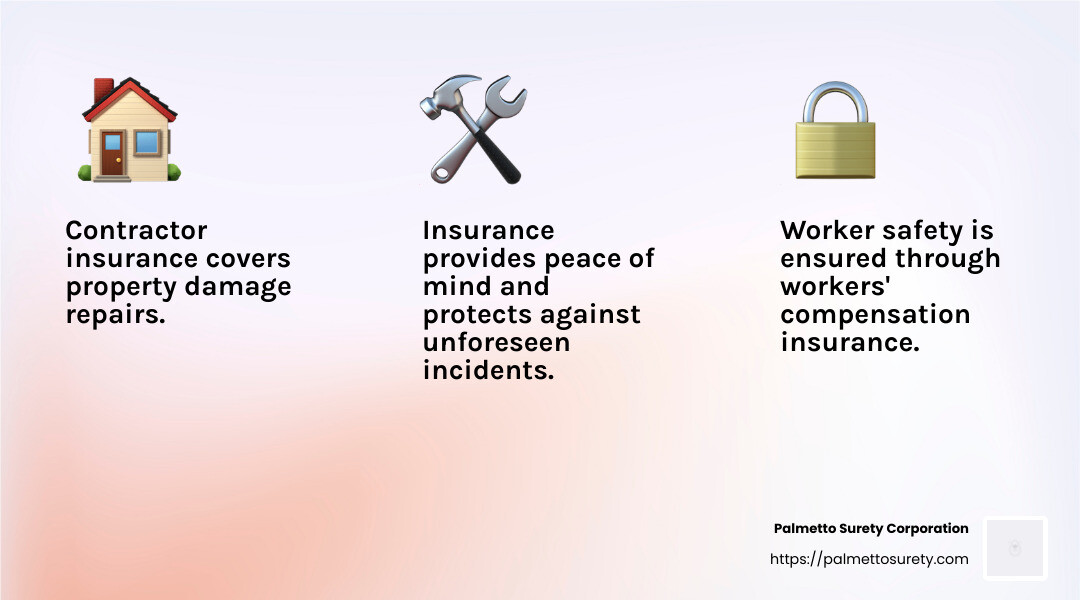
Property Protection: If a contractor damages your property, their liability insurance covers the repair costs.
-
Worker Safety: Workers’ compensation insurance protects you from liability if a worker gets injured on your property. Without it, you might be responsible for medical expenses.
-
Peace of Mind: Knowing your contractor is insured gives you confidence that unforeseen incidents won’t lead to financial burdens.
Always ask for proof of insurance and verify it with the insurance provider to ensure you’re fully protected.
These FAQs should help you understand the essentials of licensing and bonding, enabling you to make informed decisions when hiring contractors.
Conclusion
Choosing a licensed and bonded contractor is crucial for ensuring the quality and reliability of your projects. At Palmetto Surety Corporation, we understand the importance of quick and efficient service in surety bonds. Our expertise, built over 20 years, allows us to provide seamless bonding solutions for various industries, including construction, manufacturing, and healthcare.
With our state-of-the-art underwriting platform, we can approve most applications within hours, helping you secure the bonds you need without unnecessary delays. This efficiency not only saves you time but also provides peace of mind, knowing that your contractor is backed by a reliable surety bond.
For more information on obtaining surety bonds and ensuring your contractors are licensed and bonded, visit Palmetto Surety Corporation. Let us help you steer the complexities of surety bonds with confidence and ease.


