


What is Notary Bond Fraud? Top 2025 Crucial Facts
What is notary bond fraud?
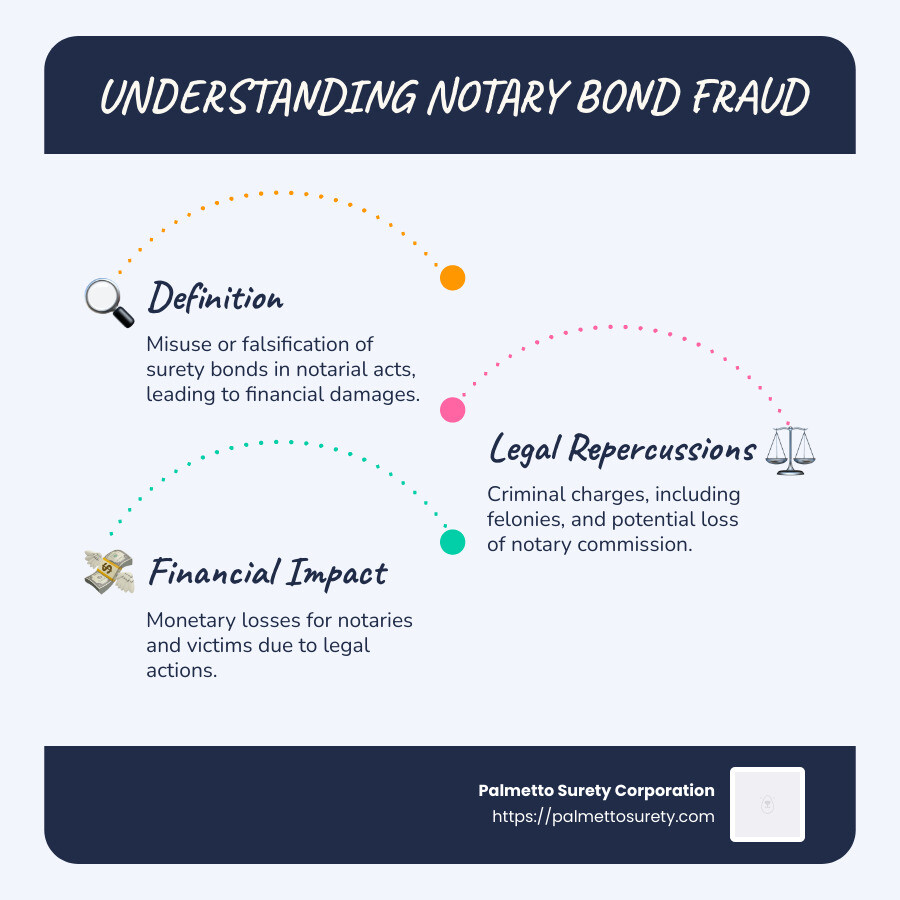
Notary bond fraud occurs when surety bonds, which are intended to protect the public from financial harm due to a notary’s misconduct, are misused or falsified. This type of fraud can have serious legal and financial consequences for everyone involved, making it essential to understand its implications.
- Legal Repercussions: Notaries found guilty of fraud may face criminal charges, including felonies, which can result in jail time, fines, and the loss of their notary commission.
- Financial Impact: Both notaries and victims can experience financial losses from legal defenses or efforts to correct the fraud.
I’m Haiko de Poel Jr, an expert in notary bond fraud and digital marketing, with extensive experience in rebranding and business consulting at Palmetto Surety Corporation. In this guide, I’ll provide insights into notary bond fraud and its significant impact on trust and integrity in legal transactions.
What is notary bond fraud vocab explained:
Understanding Notary Bond Fraud
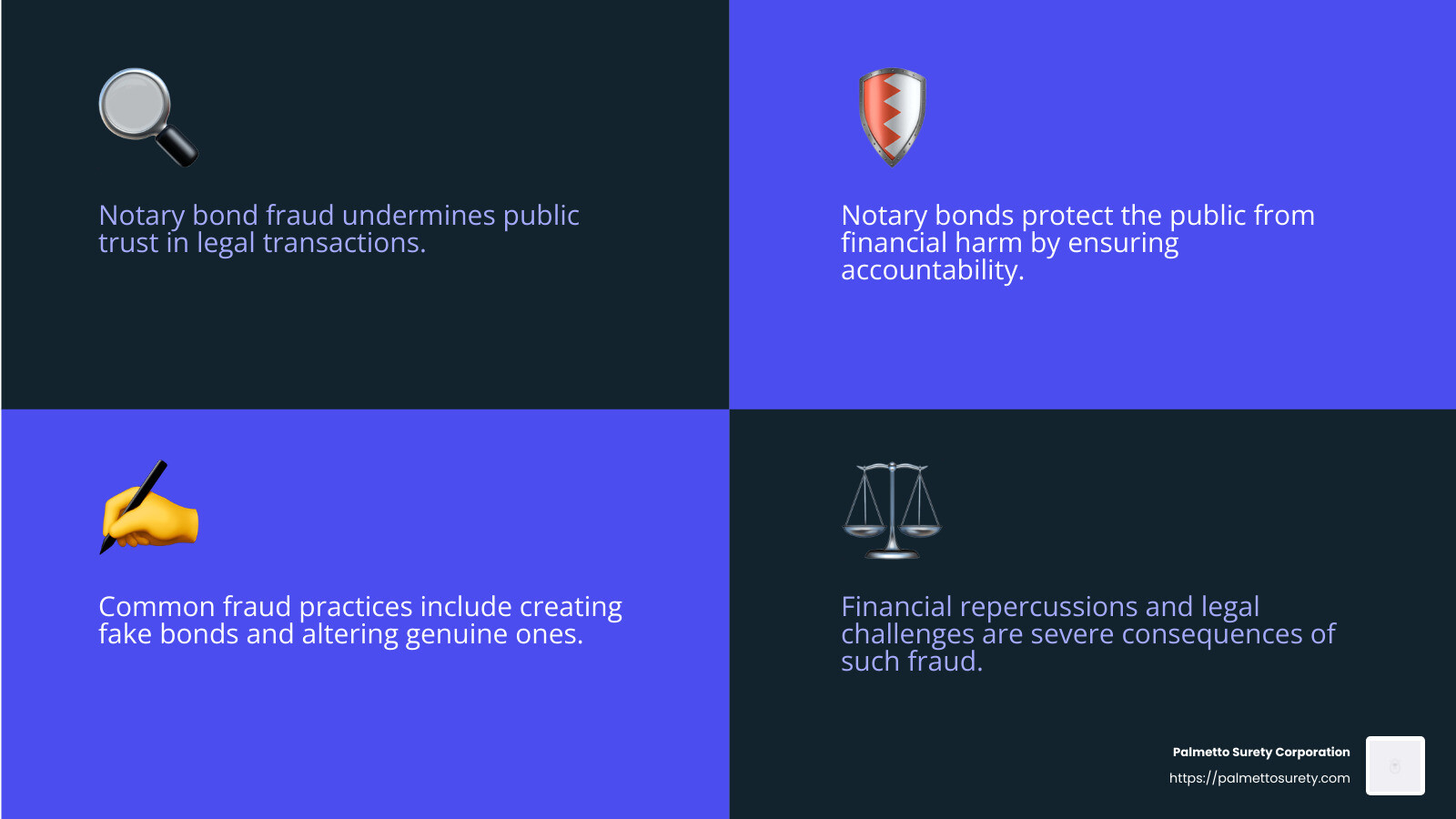
Notary bond fraud is a significant issue that can shake the foundations of trust in legal transactions. It involves the misuse or falsification of notary bonds, which are essential for maintaining public trust and ensuring that notaries are held accountable for their actions.
Definition of Notary Bond Fraud
At its core, notary bond fraud encompasses a range of deceptive practices aimed at exploiting or manipulating the notary bond system. These practices include:
-
Creating Fake Bonds: Fraudsters might produce counterfeit notary bonds to deceive individuals or businesses into believing a notary is legitimate when they are not.
-
Altering Legitimate Bonds: Some individuals may alter the details of a genuine bond to misrepresent the bond’s validity or the notary’s credentials.

-
Misuse of the Notary Seal: Unauthorized use of a notary’s seal can give fraudulent documents an appearance of legitimacy, undermining the very purpose of notarization.
The consequences of such fraud are severe, leading to legal challenges, loss of trust, and significant financial repercussions for all involved parties.
Importance of Notary Bonds
Notary bonds play a pivotal role in the notarization process, serving multiple critical functions:
-
Public Protection: These bonds safeguard the public from financial harm caused by a notary’s errors or misconduct. They act as a financial guarantee that the notary will perform their duties ethically and in accordance with the law.
-
Financial Accountability: By requiring notaries to obtain a bond, the system ensures that notaries are financially accountable for their actions. If a notary fails in their duties, the bond provides a way for affected parties to seek compensation for their losses.
-
Trust in Notarization: Notary bonds help build and maintain trust in the notarization process. They reassure individuals and businesses that the documents they rely on are legitimate and have been handled by a responsible and accountable notary.
Understanding the role and significance of notary bonds is crucial for recognizing the risks associated with notary bond fraud. It underscores the need for vigilance and integrity in all notarization processes.
Common Types of Notary Bond Fraud
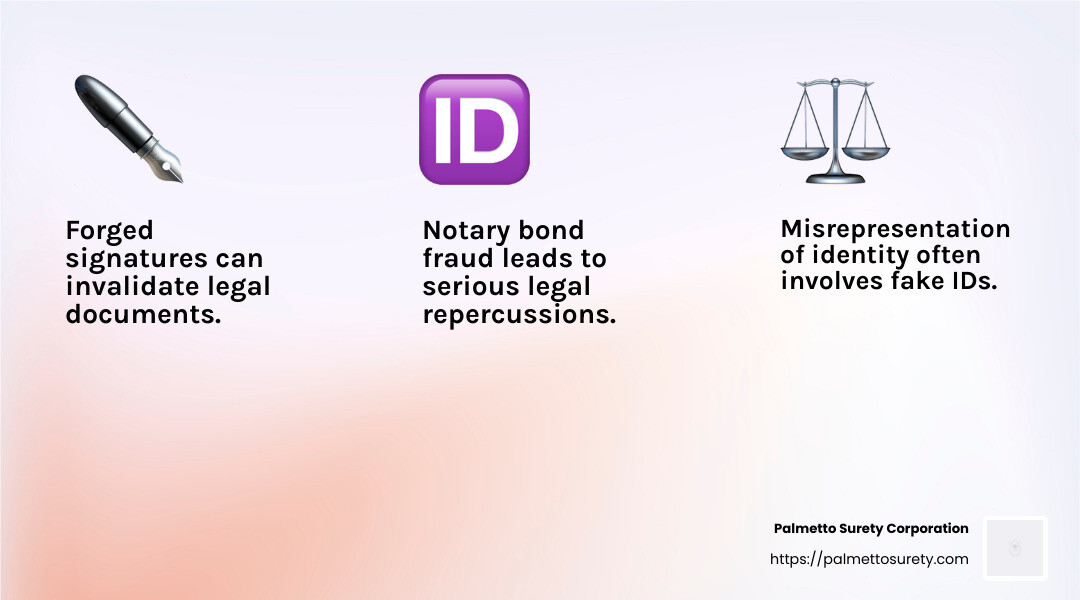
Notary bond fraud can take many forms, but two of the most common types are forged signatures and misrepresentation of identity. These fraudulent activities can have serious legal consequences and undermine trust in notarized documents.
Forged Signatures
Forged signatures occur when someone illegally replicates another person’s signature on a document. This unauthorized replication can lead to the invalidation of important legal documents, such as contracts or deeds.
Imagine a scenario where a fraudster forges a signature to transfer ownership of a property. The original owner may not even realize the transaction occurred until it’s too late, resulting in a complex legal battle to reclaim their property.
Legal Ramifications: Forging signatures is a criminal offense. Notaries who fail to detect such fraud can face severe legal consequences, including fines and imprisonment.
Misrepresentation of Identity
Misrepresentation of identity involves someone pretending to be another person, often using stolen identification or a fake ID, to deceive a notary. This type of fraud can lead to the notarization of fraudulent documents, which can have far-reaching consequences.
For instance, a fraudster might use a fake ID to notarize a power of attorney document, granting them control over someone else’s financial affairs. The victim might not find the fraud until significant financial damage has been done.
Legal Ramifications: Notaries who fail to verify identities properly can be held liable for any resulting fraud. This can lead to criminal charges and civil lawsuits, further emphasizing the importance of diligent identity verification.
In both cases, the impact of notary bond fraud extends beyond immediate financial losses. It can damage reputations, lead to costly legal battles, and erode public trust in the notarization process.
Consequences of Notary Bond Fraud
Notary bond fraud has significant consequences that affect notaries and the victims involved. These consequences are primarily legal and financial, but they also undermine public trust in the notary system.
Legal Repercussions
Notaries involved in fraudulent activities may face severe legal repercussions. These can include criminal charges, such as felonies, which carry heavy penalties. Convictions can lead to jail time, substantial fines, and the permanent loss of notary commissions.
Victims of notary bond fraud often pursue civil litigation against the notaries or other parties involved. This can result in court orders for restitution and compensatory damages. The legal landscape becomes even more complex when multiple parties are involved, each seeking different forms of legal redress.
Financial Losses
The financial losses from notary bond fraud can be extensive. Notaries may have to cover legal defense costs, which can be quite high. They might also face increased insurance premiums as a result of their involvement in fraudulent activities.
Victims, on the other hand, may suffer monetary damages from lost transactions or invalidated documents. The costs associated with rectifying these fraudulent situations can be significant. For example, if a property deed is fraudulently notarized, the rightful owner may have to engage in lengthy and costly legal battles to reclaim their property.
The ripple effect of notary bond fraud can be far-reaching, impacting multiple parties and spreading distrust throughout the legal and financial systems.
Trust Undermined
Beyond the immediate legal and financial consequences, trust is severely undermined by notary bond fraud. The notary system relies heavily on public confidence, and any breach of this trust can have long-lasting effects.
When fraudulent activities are exposed, it can lead to a loss of faith in the integrity of notarized documents. This can affect not only the individuals directly involved but also the broader community that relies on these documents for various legal and financial transactions.
In summary, notary bond fraud poses significant threats, not only in terms of legal and financial consequences but also in eroding the foundational trust that supports the notary profession.
How to Prevent Notary Bond Fraud
Preventing notary bond fraud is crucial to maintaining the integrity and trust of the notary system. Here are some best practices and strategies to help notaries safeguard their work and protect the public.
Best Practices for Notaries
-
Verify Signatures
Always compare the signature on the document to a known authentic one. This can prevent unauthorized replication, which is a common type of fraud. If there is any doubt, do not proceed with the notarization.
-
Inspect Identification
Thoroughly check the identification provided by the signer. Use government-issued IDs and ensure they are valid and match the person in front of you. Be wary of stolen or fake IDs, which are often used in identity misrepresentation.
-
Secure Notary Tools
Keep your notary seal and journal in a safe place. Unauthorized access to these tools can lead to fraudulent activities. Consider using a lockable case or a secure location to store them when not in use.
-
Maintain Accurate Records
Document every notarization in your notary journal. Include details such as the date, type of document, and identification used. This not only helps in preventing fraud but also provides a clear record if any issues arise later.
Stay Informed and Trained
-
Understand Notary Laws
Familiarize yourself with the notary laws in your state. These can vary, and staying informed ensures you are compliant with the latest regulations and practices.
-
Fraud Prevention
Engage in regular training and workshops focused on fraud prevention. These can provide valuable insights into new fraud tactics and how to counter them effectively.
-
Ongoing Education
Continuous learning is key. Join professional organizations like the National Notary Association (NNA) to access resources and updates. This helps you stay ahead of any changes in the notary field and improves your ability to prevent fraudulent activities.
By implementing these proactive measures and maintaining diligent practices, notaries can significantly reduce the risk of fraud. This not only protects their own reputation but also upholds the trust and reliability of the notary system as a whole.
Frequently Asked Questions about Notary Bond Fraud
What is notary bond fraud?
Notary bond fraud occurs when someone engages in deceitful practices related to notary bonds. This can involve creating fake bonds, altering legitimate ones, or misusing a notary’s seal. Such actions can lead to significant financial losses and undermine trust in the legal system. Notary bonds are essential because they protect the public from financial harm if a notary fails to perform their duties correctly. Fraud in this area can expose the public to risks that the bonds are meant to prevent.
What are common types of notary bond fraud?
There are several common types of notary bond fraud:
-
Forged Signatures: This involves replicating another person’s signature without their permission. It’s a serious offense that can invalidate legal documents and create legal complications.
-
Misrepresentation of Identity: Fraudsters often use stolen or fake IDs to deceive notaries. This type of fraud can lead to unauthorized transactions and significant financial harm.
-
Fraudulent Documents: Notaries may unknowingly notarize documents that are false or have been tampered with. This can occur when notaries fail to verify the authenticity of the documents or the identities of the signers.
These types of fraud not only cause financial damage but also erode trust in the notarial process, which is meant to provide assurance of authenticity and legality.
What are the legal consequences of notary bond fraud?
The legal repercussions of notary bond fraud can be severe:
-
Criminal Charges: Notaries involved in fraud can face felony charges. This could lead to imprisonment, depending on the severity of the offense.
-
Civil Litigation: Victims of notary bond fraud may file lawsuits seeking financial compensation for damages incurred. This can result in significant legal defense costs for the accused notary.
-
Financial Losses: Beyond legal fees, notaries may be liable for monetary damages awarded to victims. This can have a ripple effect, impacting their professional reputation and financial stability.
Engaging in notary bond fraud not only risks legal action but also damages the trust and integrity of the notarial profession. Maintaining vigilance and adhering to best practices are crucial to preventing such fraudulent activities.
Conclusion
In notarization, vigilance is key. As we’ve explored, notary bond fraud can have severe consequences, both legally and financially. This is why it’s crucial for notaries to adhere to best practices and for individuals to be aware of the potential risks involved.
At Palmetto Surety Corporation, we understand the importance of protecting your interests. With over 20 years of experience in the surety bond industry, we are committed to providing reliable and efficient services to safeguard against fraud. Our expertise in commercial surety bonds ensures that individuals and businesses can operate with confidence, knowing they have a robust layer of protection.
We believe that protection of interests is not just about financial security—it’s about maintaining trust in the notarial process. By choosing a reputable partner like Palmetto Surety Corporation, you can ensure that your notary bonds are handled with the highest level of integrity and professionalism.
To learn more about our services and how we can assist you in safeguarding your interests, visit our Palmetto Surety Corporation service page. Let us help you stay protected and informed, so you can focus on what matters most.


