


How Much Does a Surety Bond Cost in South Carolina? 2024
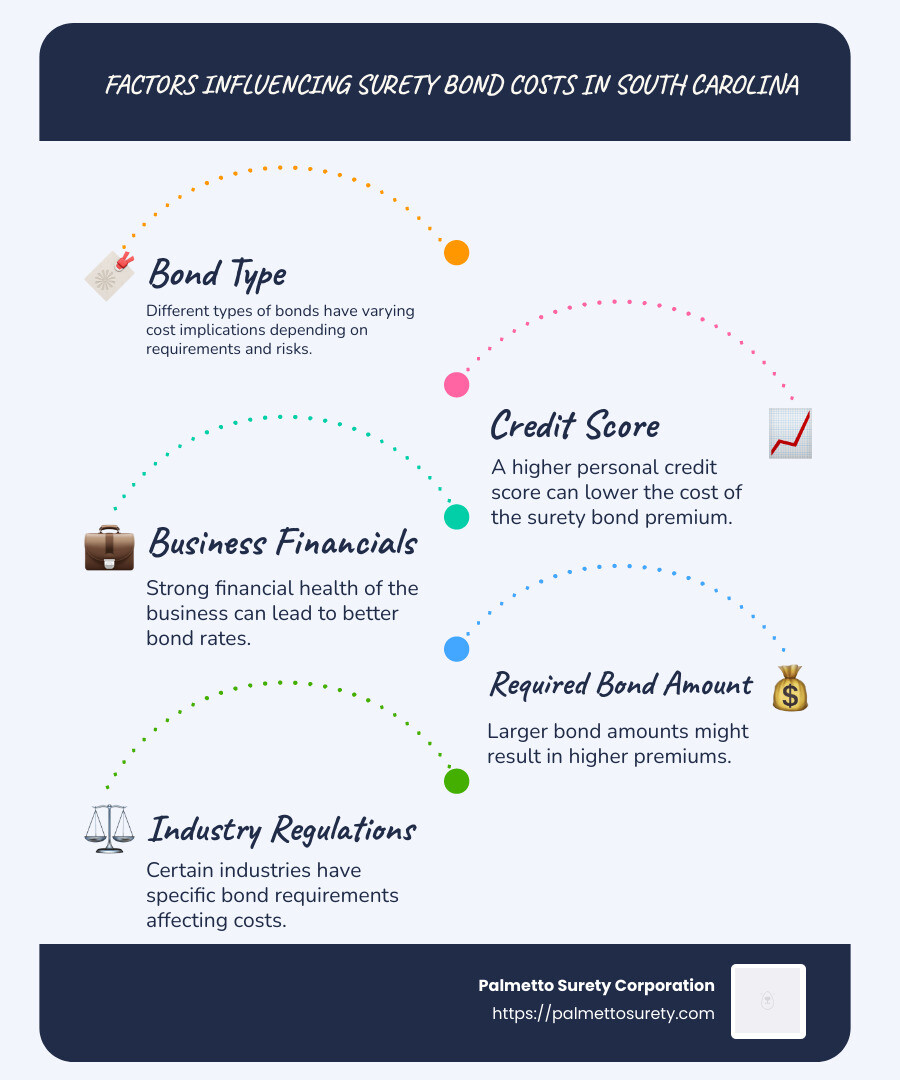
How much does a surety bond cost in South Carolina? The cost of securing a surety bond in South Carolina can vary significantly based on several factors. Typically, prices range from 1% to 10% of the bond amount. Key elements that influence this cost include the type of bond, your personal credit score, and your business’s financial standing. Understanding these factors can help you prepare for the financial commitment involved in obtaining a surety bond.
Surety bonds are crucial for ensuring that businesses and individuals meet specific contractual obligations and regulations in South Carolina. They act as a guarantee that certain tasks will be completed as agreed, providing assurance to both consumers and government entities. Whether you’re a contractor, business owner, or professional service provider, understanding the costs associated with surety bonds in this state is essential for effective budget planning.
I’m Haiko de Poel Jr, and I bring extensive experience in the marketing and change sectors. At Palmetto Surety Corporation, I led efforts to simplify and refine the process of securing surety bonds, ensuring that clients easily understand how much does a surety bond cost in South Carolina and the factors that influence these costs.
Important how much does a surety bond cost in south carolina terms:
– how much is the surety bond for south carolina license
– what is a surety bond in south carolina
Understanding Surety Bonds
Surety bonds are like a safety net. They provide financial protection for clients and government entities when businesses or individuals fail to meet their contractual obligations. Think of them as a promise that a job will be done right. If not, there’s a backup plan in place.
How Do Surety Bonds Work?
A surety bond is a three-party agreement:
- Principal: The person or business required to get the bond.
- Obligee: The entity that requires the bond (often a government agency).
- Surety: The company that backs the bond and provides compensation if the principal fails to fulfill the contract.
If the principal doesn’t meet their obligations, the surety steps in to compensate the obligee. This compensation ensures that the obligee doesn’t suffer financial loss due to the principal’s failure.
Why Are Surety Bonds Important?
Surety bonds are crucial because they:

- Protect Consumers and Government Entities: They ensure that businesses meet legal and ethical standards.
- Provide Financial Security: If a business doesn’t deliver, the surety bond ensures compensation, protecting the obligee from financial loss.
- Build Trust: Having a surety bond shows that a business is reliable and committed to fulfilling its obligations.
Real-World Example
Imagine a construction company in South Carolina. They’re hired to build a new community center. The city requires them to have a surety bond. If the company doesn’t complete the project as promised, the surety bond ensures the city gets compensated. This compensation could be used to hire another contractor to finish the job.

Surety bonds are a vital part of doing business in South Carolina. They provide a layer of protection and assurance that projects will be completed as agreed. Understanding these bonds can help businesses plan better and meet their obligations with confidence.
How Much Does a Surety Bond Cost in South Carolina?
When you’re looking to get a surety bond in South Carolina, the big question is often, “How much does a surety bond cost?” Let’s break it down.
Factors Influencing Surety Bond Costs
The cost of a surety bond is not a one-size-fits-all. It varies based on several factors:
-
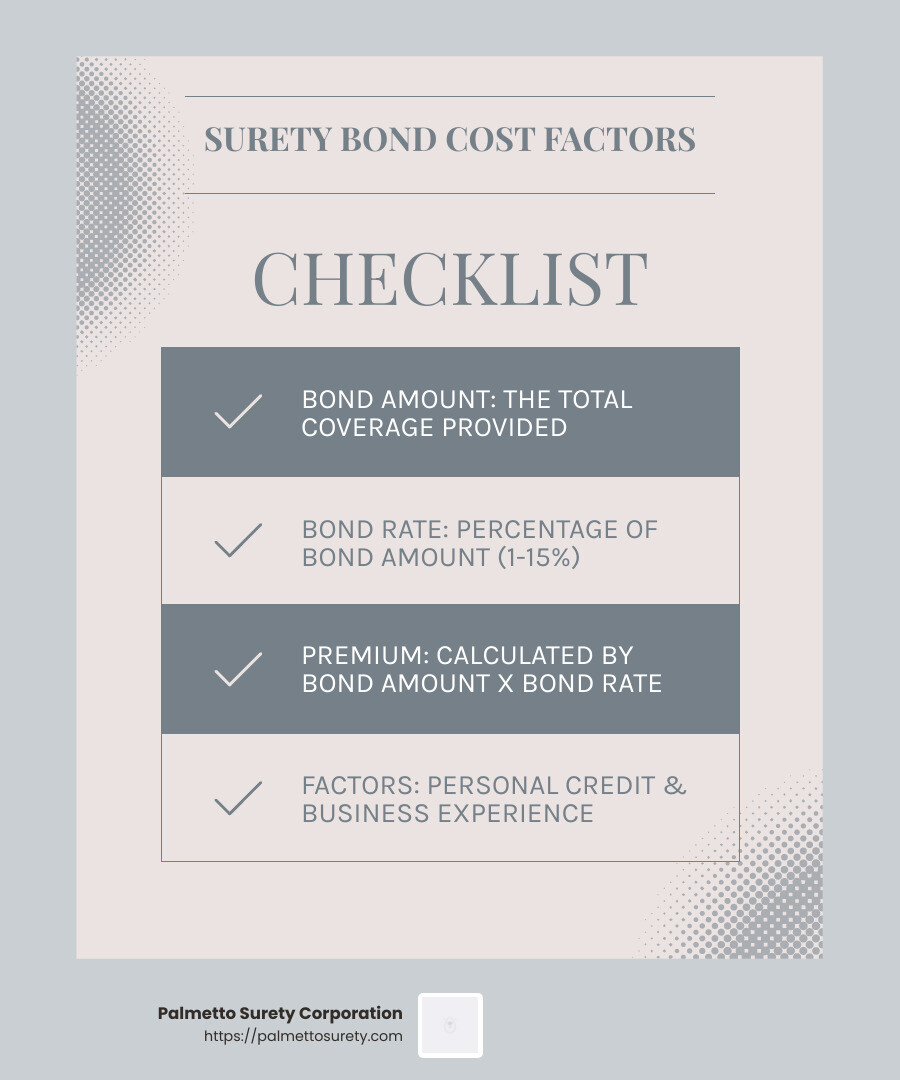
Bond Amount: This is the total amount of financial coverage provided by the bond. It’s the maximum amount the surety will pay if the principal fails to fulfill their obligations. For example, if you need a $50,000 bond, that’s the coverage amount.
-
Bond Rate: This is a percentage of the bond amount that you, the principal, will pay as a premium. This rate typically ranges from 1% to 15% of the bond amount.
-
Premium: This is the actual cost you pay for the bond. It’s calculated by multiplying the bond amount by the bond rate. For instance, a $50,000 bond with a 2% rate would cost $1,000.
-
Personal and Business Factors: Your personal credit score, business experience, and financial history can influence the bond rate. A higher credit score or a strong business track record can lead to a lower rate.
Examples of Surety Bond Costs
Let’s look at some examples to see how these factors come into play:
-
$5,000 Bond: If the bond rate is 3%, the premium would be $150. This is a typical scenario for smaller bonds, where the risk is lower, and the bond amount is modest.
-
$50,000 Bond: With a bond rate of 2%, you’d pay a $1,000 premium. This is common for mid-sized projects, where a solid credit score can help you secure a good rate.
-
$500,000 Bond: For larger bonds like this, let’s say the rate is 1.5%. The premium would be $7,500. High-value bonds often require detailed underwriting, especially if the principal has a complex financial history.
These examples illustrate how the bond amount and bond rate work together to determine the cost of a surety bond in South Carolina. The key takeaway is that while the bond amount is fixed based on the obligation, the bond rate is flexible and influenced by various factors.
Understanding these elements can help you budget effectively and ensure you get the best possible rate for your surety bond needs. Now, let’s dig into the different types of surety bonds available in South Carolina and the industries that commonly require them.
Types of Surety Bonds in South Carolina
Surety bonds are essential in South Carolina, helping various industries operate smoothly and securely. Let’s explore the different types of surety bonds and the industries that rely on them.
Commercial Surety Bonds
Commercial surety bonds are a broad category that includes various bonds required for businesses to comply with state regulations. They ensure that companies fulfill their obligations to clients and adhere to laws.
-
License and Permit Bonds: These are often required for businesses such as contractors and auto dealers to legally operate in South Carolina.
-
Fidelity Bonds: These protect businesses from losses due to employee theft or fraud.
Court Surety Bonds
Court surety bonds are used in legal settings to ensure compliance with court rulings. They can be required for various reasons:
-
Appeal Bonds: Needed when a party wants to appeal a court decision, ensuring that the appeal is pursued responsibly.
-
Executor Bonds: Required for individuals managing the estates of deceased persons, guaranteeing they handle the estate according to legal requirements.
Bail Bonds
Bail bonds are a specific type of surety bond used in the criminal justice system. They allow defendants to be released from custody while awaiting trial, ensuring they appear in court as required.
Common Industries Requiring Surety Bonds
Several industries in South Carolina depend heavily on surety bonds to conduct their business legally and ethically:
-
Construction: This industry frequently uses performance bonds and payment bonds to guarantee project completion and payment to subcontractors and suppliers.
-
Manufacturing: Manufacturers might need surety bonds to ensure compliance with environmental regulations and safety standards.
-
Transportation: Companies in this sector often require bonds to guarantee vehicle registration and compliance with transportation laws.
-
Healthcare: Healthcare providers may need bonds to ensure they adhere to licensing requirements and protect patient funds.
These bonds are crucial for maintaining trust and compliance across industries, allowing businesses to operate effectively while safeguarding public interests. Understanding the specific bond requirements for your industry can help ensure your business remains compliant and trustworthy.
Frequently Asked Questions about Surety Bonds in South Carolina
How are surety bonds calculated?
Surety bonds are financial tools designed to protect parties involved in a contract. The cost of a surety bond in South Carolina is typically calculated based on a few key factors. The bond amount is the maximum amount the surety will pay if a claim is made. The bond rate is a percentage of the bond amount and is determined by assessing the applicant’s credit score, financial history, and business experience.
For instance, the cost can range from 1% to 15% of the bond amount. So, if you need a $50,000 bond, you might pay anywhere from $500 to $7,500, depending on your financial profile and the bond’s risk level.
Is a surety bond worth it?
Absolutely. Surety bonds offer significant financial protection and security for both businesses and their clients. They act as a safety net, ensuring that businesses fulfill their obligations. If a business fails to meet its contractual duties, the bond provides compensation to the affected party, reducing financial loss.
For businesses, having a surety bond can improve credibility and trustworthiness, as it shows a commitment to ethical and legal compliance. For clients, it offers peace of mind, knowing there is a financial guarantee in place.
How to obtain a surety bond in South Carolina?
Getting a surety bond in South Carolina is a straightforward process:
-
Identify the Bond Type: Determine the specific bond required by contacting the obligee (the entity requiring the bond).
-
Submit an Application: Complete an application with a surety bond provider. This involves providing financial documents and other relevant information.
-
Receive a Quote: The provider will evaluate your application and offer a quote based on the bond amount and your financial profile.
-
Pay the Premium: Once you agree to the terms, pay the bond premium.
-
Receive Your Bond: After payment, you will receive the bond, which you can then submit to the obligee.
Working with an experienced surety bond provider like Palmetto Surety Corporation can streamline this process, ensuring quick bond approval and issuance to meet your needs efficiently.
Conclusion
In surety bonds, speed and reliability are key. At Palmetto Surety Corporation, we pride ourselves on delivering quick service that meets the demands of businesses across South Carolina and beyond. Based in Charleston, SC, our team is dedicated to providing efficient solutions that help you secure the necessary bonds without hassle.
With over 20 years of experience, we understand the intricacies of the surety bond market. Our expertise allows us to approve most applications within hours, ensuring you get the protection you need without delay. Whether you’re in construction, manufacturing, transportation, or healthcare, our custom services are designed to support your industry-specific needs.
Choosing Palmetto Surety Corporation means partnering with a company that values transparency, reliability, and customer satisfaction. Our commitment to excellence ensures that you receive not just a bond, but a comprehensive service that supports your business goals.
Ready to secure your surety bond? Contact us today to experience our fast and efficient service, and let us help you protect your business with confidence.


