


How Much is the Surety Bond for South Carolina License: Top 3 Essential Facts 2024
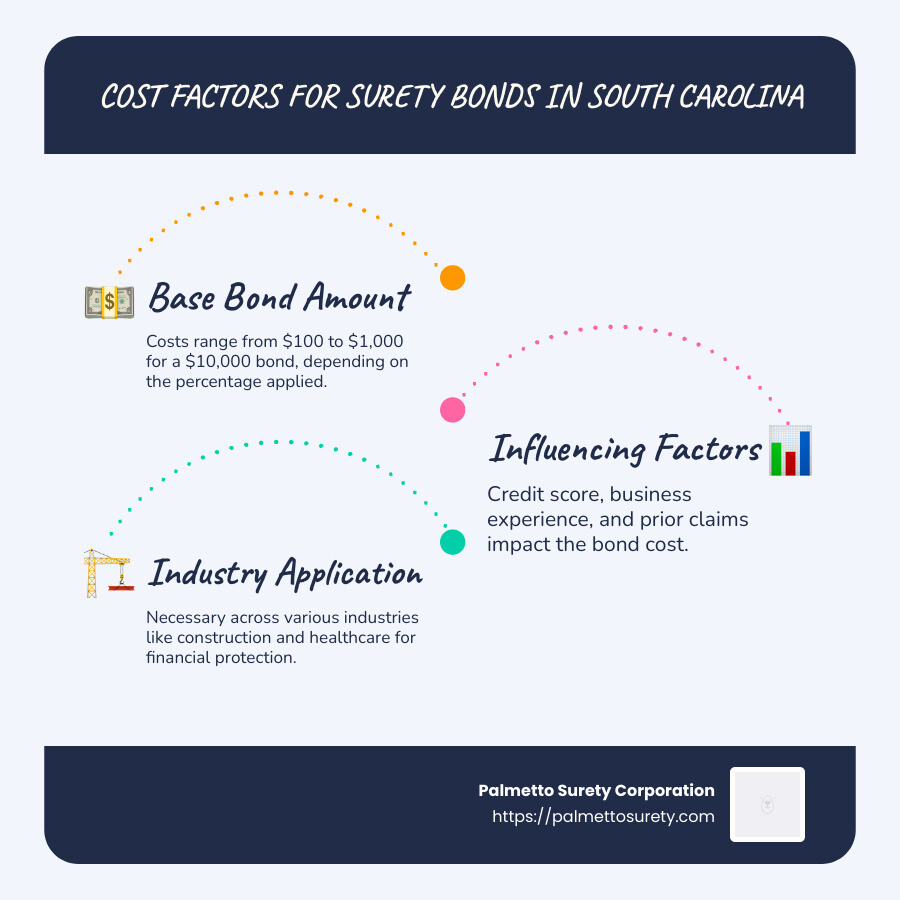
How much is the surety bond for a South Carolina license? This is a common question for professionals and businesses aiming to operate within the state. In South Carolina, the cost of surety bonds generally ranges from 1% to 10% of the bond amount. This cost is influenced by factors such as credit score and business experience. For example, if you require a $10,000 bond, your payment could range from $100 to $1,000. Understanding these costs is crucial to ensure you have the necessary financial protection without overspending.
Surety bonds are vital tools that provide financial security for both businesses and consumers in South Carolina. They serve as a guarantee that contractual obligations will be fulfilled, protecting against potential damages or non-compliance. This is particularly important for businesses that want to build trust and demonstrate reliability in their operations.
I’m Haiko de Poel Jr, a marketing and digital change expert with experience in understanding the intricacies of surety bonds and assisting businesses in navigating the process. With a background in rebranding and strategic growth, I’ve helped some of the fastest-growing surety bond companies in the U.S. achieve new milestones. In the sections that follow, we’ll delve into everything you need to know about securing the right bond for your needs.
Understanding Surety Bonds
Surety bonds might seem complex, but they are quite straightforward once you break them down. At their core, surety bonds are a three-party agreement designed to ensure that obligations are met.
The Three Parties
-
Principal: This is the person or business that needs the bond. In the context of South Carolina, it could be a contractor, a vehicle dealer, or any other professional required by law to hold a bond. The principal’s role is to fulfill the obligations outlined in the bond agreement.
-
Obligee: This is usually a government entity or agency that requires the bond. The obligee’s job is to ensure that the principal adheres to the laws and regulations. In South Carolina, obligees could be the Department of Labor, Licensing, and Regulation or the DMV, among others.
-
Surety: The surety is the insurance company or bond provider that backs the bond. They guarantee that the principal will meet their obligations. If the principal fails to do so, the surety steps in to compensate the obligee for any losses incurred, up to the bond amount.
How It Works
When a bond is issued, the surety assesses the risk of the principal not fulfilling their obligations. This assessment influences the cost of the bond, which typically ranges from 1% to 10% of the total bond amount. If a claim is made against the bond, the surety investigates and, if valid, compensates the obligee. However, the principal must repay the surety, as surety bonds are not insurance but a form of credit.


Surety bonds play a crucial role in protecting the public and ensuring that professionals and businesses operate ethically and responsibly. By understanding the roles of the principal, obligee, and surety, you can better appreciate the value and purpose of surety bonds in South Carolina.
How Much is the Surety Bond for South Carolina License?
When it comes to obtaining a surety bond in South Carolina, the cost is a key consideration. The price of a surety bond isn’t set in stone; it varies based on several factors. Generally, the cost of a surety bond ranges from 1% to 10% of the total bond amount. This means if you’re required to secure a $10,000 bond, you could be looking at a cost anywhere from $100 to $1,000.
Factors Affecting Bond Cost
Several factors can influence how much you pay for your surety bond:
-
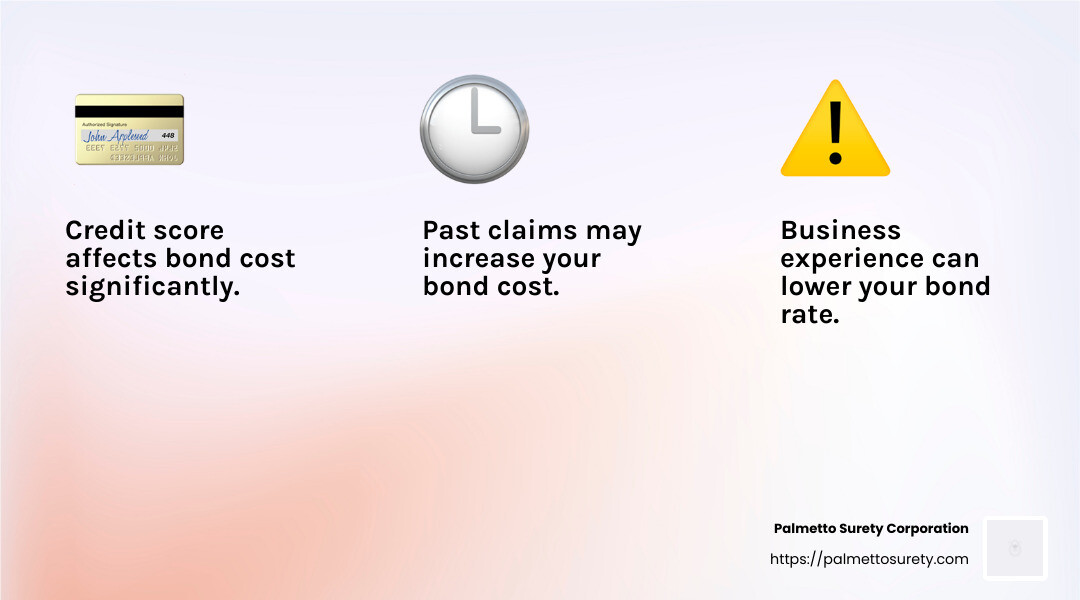
Credit Score: Your credit score is one of the most significant factors. A higher credit score usually means a lower bond cost, as it indicates to the surety that you’re less of a risk.
-
Business Experience: If you’ve been in business for a while and have a good track record, you might get a better rate. Experience can signal reliability and stability.
-
Prior Claims: If there have been claims against your bonds in the past, this might increase the cost. Sureties see prior claims as a red flag, indicating potential risk.
Example Costs
Let’s break it down with an example. Suppose you need a $10,000 bond. If your credit is excellent, you might only pay 1% of the bond amount, which is $100. However, if your credit isn’t as strong, the cost could rise to 10%, making it $1,000.
These costs are just examples, and actual prices may vary based on the specifics of your situation. It’s always a good idea to shop around and get quotes from different sureties to find the best rate.
Understanding these factors can help you better prepare for the cost of a surety bond in South Carolina. With this knowledge, you’re one step closer to securing the bond you need to operate legally and ethically in the state.
Types of Surety Bonds in South Carolina
Surety bonds in South Carolina come in various types, each serving a specific purpose. Let’s explore the details of contractor license bonds, residential builder bonds, and specialty contractor bonds.
Contractor License Bonds
In South Carolina, contractor license bonds are essential for anyone looking to work as a general or mechanical contractor. These bonds act as a safety net for clients, ensuring contractors adhere to the state’s building codes and regulations.
-
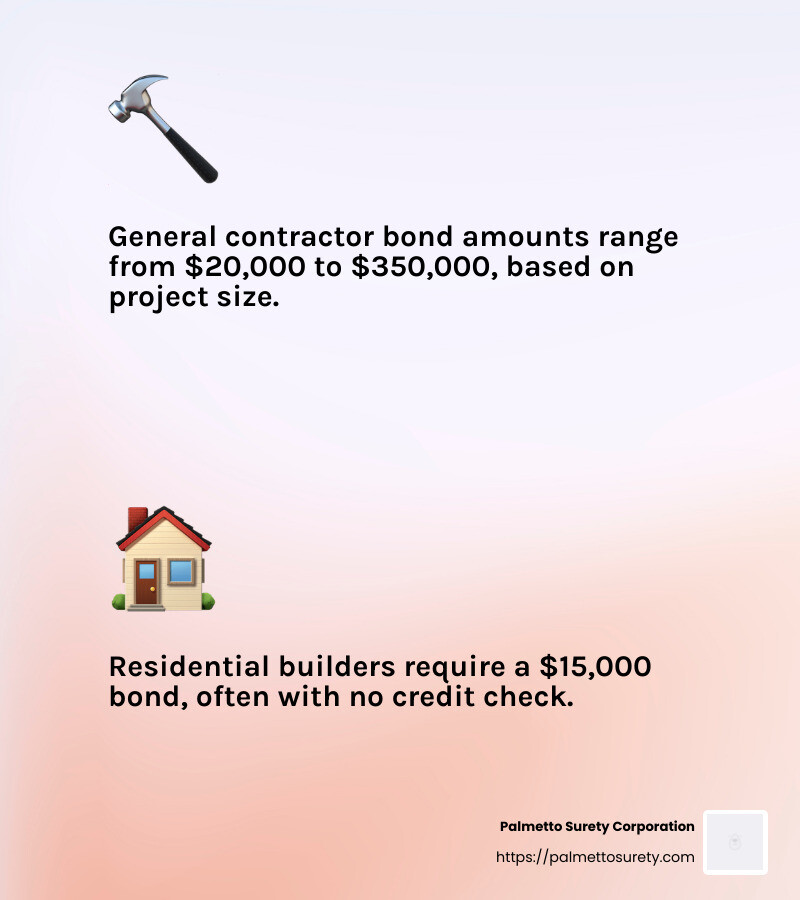
General Contractors: The bond amounts for general contractors vary based on the project size, ranging from $20,000 to $350,000. These bonds are crucial for large projects, providing financial protection to customers.
-
Mechanical Contractors: Similar to general contractors, mechanical contractors must also secure bonds. The required bond amount depends on the contract size, ensuring compliance and protection.
These bonds are often preferred over financial statements due to their simplicity and efficiency.
Residential Builder Bonds
For those in the residential construction sector, residential builder bonds are a must. These bonds ensure that builders meet the necessary standards and protect homeowners from potential financial harm.
-
$15,000 Bond: Residential builders are typically required to secure a $15,000 bond. This amount provides adequate coverage for most residential projects.
-
Fixed Prices and No Credit Check: One of the significant advantages of these bonds is their fixed pricing structure, often available without a credit check. This makes it easier for builders to obtain the necessary bonds without financial problems.
Specialty Contractor Bonds
Specialty contractor bonds cater to trades like electrical, HVAC, and plumbing. These bonds are custom to the specific needs and risks associated with each trade.
-
Bond Amounts: For specialty contractors, the bond amounts can be lower, typically starting at $5,000. This amount is determined by the trade’s risk level and the potential impact on clients.
-
Ease of Access: Like residential builder bonds, these are often available at fixed prices and without the need for a credit check, streamlining the process for contractors.
In summary, understanding the different types of surety bonds in South Carolina is crucial for contractors and builders. Whether you’re a general contractor or specialize in a specific trade, securing the right bond ensures compliance and protects your clients. Next, we’ll explore how to obtain these bonds and the steps involved in the licensing process.
How to Obtain a Surety Bond in South Carolina
Getting a surety bond in South Carolina involves a few straightforward steps. If you’re aiming to become a licensed contractor, understanding this process is key.
Steps to Get Licensed and Bonded
- Form Your Business Entity
First, decide on the structure of your business. Whether it’s a sole proprietorship, partnership, or corporation, you’ll need to register it with the South Carolina Secretary of State. This step is crucial for establishing your business legally.
- Complete the License Application
Next, fill out the relevant license application forms. For general and mechanical contractors, this means completing the General & Mechanical Contractor’s License Initial Application (Document #165). Make sure to provide accurate information, including your business name, physical address, and the type of license you’re applying for.
- Gather Required Documents
You’ll need a few documents to complete your application:
- Proof of business registration
- Any necessary exam certifications
- The completed application form
- Financial statements if required
Having these documents ready will help streamline the process.
- Pass the Required Examinations
Depending on the type of license you’re seeking, you may need to pass certain examinations. These exams ensure you have the technical and business knowledge required for your field. Study the LLR application instructions to understand which exams apply to your situation.
- Purchase Your Surety Bond
Once your application is ready, it’s time to get your surety bond. The bond amount varies by your license type. For instance, residential builders typically need a $15,000 bond, while specialty contractors might require less.
You can purchase these bonds online, often with fixed prices and no credit check required. SuretyBonds.com and other providers offer quick digital delivery, making the process fast and convenient.
- Submit Your Application
With everything in place, submit your application to the South Carolina Contractor’s Licensing Board. You can do this via email or mail, using the contact details provided in the application instructions.
- Await Bond Issuance
After submission, your bond will be issued with the necessary signatures, seals, and a power of attorney. The South Carolina Department of Labor, Licensing, and Regulation allows bonds to be emailed, so keep an eye on your inbox.
Once you’ve completed these steps, you’re well on your way to becoming a licensed and bonded contractor in South Carolina. The process may seem detailed, but each step is essential to ensure compliance and protect your business and clients.
Next, we’ll address some frequently asked questions about surety bonds in South Carolina.
Frequently Asked Questions about Surety Bonds in South Carolina
What is a Cost Surety Bond?
A cost surety bond is a type of financial guarantee. It’s often used in legal settings to ensure that court expenses will be covered. This bond acts as a promise that the principal will pay any court-ordered costs if they lose a case.
It’s a safety net for the court, ensuring that legal fees and other expenses are not left unpaid. The bond amount can vary, but it typically ranges from 1% to 10% of the total bond amount, depending on factors like credit score and business experience.
Why is a Contractor License Bond Required?
A contractor license bond is crucial for several reasons. First and foremost, it protects customers. If a contractor fails to complete a project or does substandard work, the bond provides a financial remedy for the affected parties. This means customers can file a claim against the bond to recover their losses.
Secondly, it safeguards subcontractors and suppliers. If a contractor doesn’t pay for materials or services, those parties can also make a claim. This ensures that everyone involved in a project is fairly compensated for their work and resources.
What Happens After Purchasing a Bond?
Once you purchase a bond, the bond issuance process begins. This involves preparing the bond with the correct signatures, seals, and a power of attorney. For most bonds, this can be done digitally, making it a quick and efficient process.
After the bond is issued, you must submit it as part of your license application. This is a critical step in the submission process. Without the bond, your application for a contractor’s license won’t be complete.
A surety bond is not just a formality. It’s a crucial part of securing trust and compliance in the industry. Once the bond is in place, you’re not only meeting legal requirements but also building confidence with clients and partners.
Next, we’ll explore the different types of surety bonds available in South Carolina and how they apply to various contractor roles.
Conclusion
Choosing the right partner for your surety bond needs can make all the difference. At Palmetto Surety Corporation, we pride ourselves on our ability to provide quick approval and efficient service. With over 20 years of experience in the industry, we understand the importance of getting your bond in place without delay.
Our streamlined process means you can expect most applications to be approved within hours. This ensures you can focus on what you do best—running your business—without the stress of lengthy waiting times.
We offer a wide range of surety bonds custom to meet the needs of various industries, including construction, transportation, and healthcare. Our team is dedicated to providing personalized service to help you find the right bond for your specific requirements.
Whether you’re a contractor seeking a license bond or a business needing a commercial bond, our expertise and commitment to excellence make us the ideal choice.
For more information on how we can assist you with your surety bond needs, visit our Palmetto Surety Corporation service page. Let us help you secure your business with confidence and ease.


