


What is a Surety Bond in South Carolina: 2024 Ultimate Guide
What is a surety bond in South Carolina? It’s a financial guarantee involving a promise made by a company (the surety) to pay a specified amount if a business or individual (the principal) fails to fulfill their obligations to another party (the obligee). In South Carolina, surety bonds are crucial across various industries, from construction to healthcare, ensuring projects and contracts are met with reliability and trust. They protect clients from negligence and breach of contract and help grow businesses by extending credit to principals.
If you’re wondering why you need one, consider this: Surety bonds can:
- Protect customers against contractor failures
- Ensure adherence to state regulations
- Help secure business contracts and projects
I’m Haiko de Poel Jr, a seasoned expert in marketing and branding. With my extensive experience at the Carolina-based Palmetto Surety Corporation, I have honed my skills in explaining what is a surety bond in South Carolina, helping businesses and individuals secure the bonds they need to succeed.
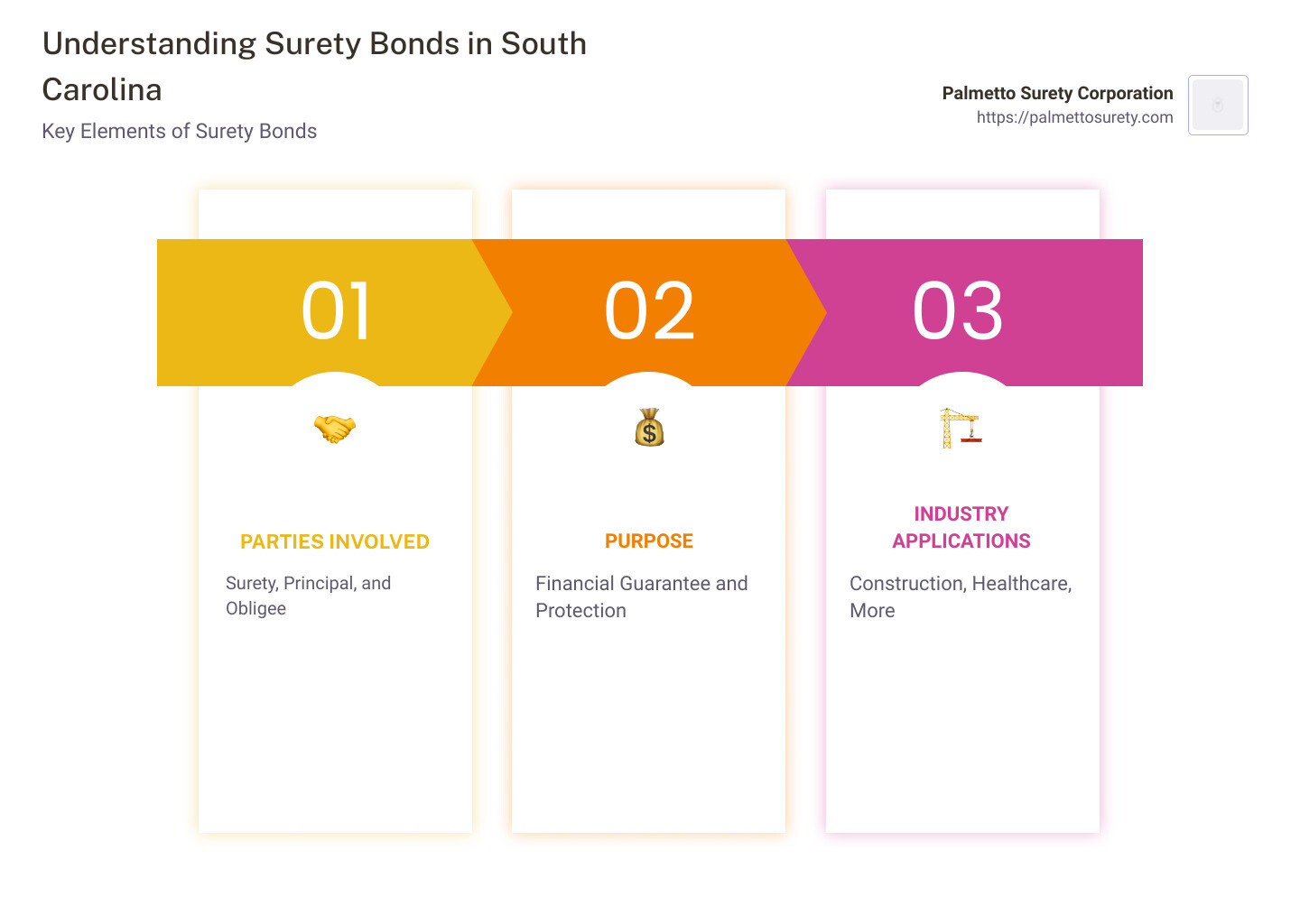
What is a Surety Bond in South Carolina?
Types of Surety Bonds in South Carolina
In South Carolina, surety bonds are essential financial instruments that foster security and trust in various business transactions. They involve three key parties:
- Principal: The business or individual required to obtain the bond.
- Obligee: The party that requires the bond as a guarantee.
- Surety: The company that backs the bond financially.
Let’s explore some common types of surety bonds in South Carolina, each serving different purposes:
Business Service Bonds
Business service bonds are designed to protect businesses and their clients from potential losses due to employee dishonesty. For example, a cleaning company in South Carolina might use this bond to assure clients that they are protected if an employee steals or damages property during service. This bond builds trust with customers and enhances the company’s reputation.
Contractor License Bonds
In the construction industry, contractor license bonds are crucial. They ensure that contractors comply with state regulations and complete projects according to contractual terms. If a contractor in South Carolina fails to meet these obligations, the bond provides financial compensation to the harmed party. This bond is often a requirement for obtaining a contractor’s license in the state, highlighting its importance in maintaining industry standards.
Insurance Broker Bonds
Insurance broker bonds are required for individuals or businesses that sell insurance products in South Carolina. These bonds protect clients from fraudulent practices by ensuring that brokers adhere to state laws and ethical standards. If a broker violates these terms, the bond compensates the affected parties, maintaining trust in the insurance market.


Each of these bonds plays a vital role in different sectors, ensuring that businesses operate with integrity and clients receive the services they expect. Understanding the specific bond requirements and benefits can help businesses in South Carolina thrive while protecting their interests and those of their clients.
Next, we’ll discuss how much a surety bond costs in South Carolina and the factors that influence these costs.
How Much Does a Surety Bond Cost in South Carolina?
When it comes to surety bonds in South Carolina, the cost can vary widely. Typically, the price ranges from 1% to 10% of the total bond amount. This percentage is known as the bond premium.
Factors Affecting Surety Bond Costs
Several factors can influence the cost of a surety bond:
-
Bond Amount: The larger the bond amount required by the obligee, the higher the premium will be. For example, a $50,000 bond will generally cost more than a $10,000 bond.
-
Credit Score: A principal’s credit score is a significant factor in determining the premium. Those with higher credit scores usually pay lower premiums because they are seen as lower risk. Conversely, those with lower credit scores may face higher costs.
-
Professional Experience: Experience in your industry can also impact the bond cost. A seasoned professional with a proven track record might secure a bond at a lower rate compared to someone new to the field.
-
Business Financials: Financial stability and liquidity of a business can affect the premium. Companies with strong financials are deemed less risky, potentially leading to lower bond costs.
To get the most accurate quote for a surety bond, it’s best to request an online quote. This will consider all the relevant factors and provide a custom cost estimate.
Understanding these factors can help businesses and individuals in South Carolina budget for their bonding needs and ensure they get the best possible rate.
Next, we’ll explore the process of obtaining a surety bond in South Carolina and the steps involved.
How to Obtain a Surety Bond in South Carolina
Getting a surety bond in South Carolina is straightforward if you follow the right steps. Here’s a simple guide to help you steer the process:
Steps to Get Bonded
-
Contact the Obligee:
Begin by reaching out to the obligee, the entity requiring the bond. They will inform you of the specific bond type and amount needed for your situation. This step ensures you meet all their requirements right from the start. -
Submit an Application:
Once you know what you need, the next step is to fill out a bond application. Many companies, like Palmetto Surety Corporation, offer user-friendly online applications that make this process quick and easy. You’ll need to provide information about your financial history, credit score, and business details. -
Receive a Quote:
After submitting your application, you’ll receive a bond quote. This quote outlines the bond premium, which is the cost you’ll pay to secure the bond. This is typically a percentage of the total bond amount, influenced by factors like your credit score and business financials. -
Pay the Bond Premium:
If the quote fits your budget, you can proceed by paying the bond premium. This payment activates the bond and ensures that you’re covered. -
Receive the Bond:
Once the premium is paid, you’ll receive the bond document. This is a crucial piece of paperwork, as it serves as proof of your bond coverage. -
File the Bond with the Obligee:
The final step is to file your bond with the obligee. This officially fulfills your bonding requirement and allows you to proceed with your business operations or project.
By following these steps, you can secure a surety bond efficiently, ensuring you meet all legal and contractual obligations in South Carolina.
Frequently Asked Questions about Surety Bonds in South Carolina
What is the purpose of a surety bond?
A surety bond serves as a financial security tool. It guarantees that a principal (such as a contractor) will fulfill their obligations to the obligee (like a project owner). If the principal fails to meet these obligations, the surety company steps in to cover the losses.
In construction, surety bonds are crucial. They assure project owners that contractors will complete their work according to the contract. This assurance is vital for public construction projects in South Carolina, where taxpayer money is at stake.
What are the disadvantages of a surety bond?
While surety bonds provide significant benefits, they also come with some disadvantages. The primary drawback is the premium cost. This is a percentage of the bond amount, typically between 1-15%, depending on factors like credit score and business history.
Another limitation is the coverage. Surety bonds only cover specific obligations outlined in the contract. They do not cover all potential risks, leaving some areas exposed.
What is the difference between a surety bond and a regular bond?
A surety bond involves three parties: the principal, the obligee, and the surety. The principal is the party required to perform a task, the obligee is the recipient of the performance, and the surety guarantees the principal’s obligations.
In contrast, a regular bond, sometimes called a cash bond, typically involves only two parties. It is a direct financial investment or loan, such as a government or corporate bond, where the bond issuer promises to pay back the bondholder with interest.
Understanding these differences helps businesses in South Carolina choose the right type of bond for their needs.
Conclusion
At Palmetto Surety Corporation, we pride ourselves on offering quick and efficient services for obtaining surety bonds in South Carolina. Our expertise spans over 20 years in the industry, making us a trusted partner for businesses across various sectors, including construction, manufacturing, transportation, and healthcare.
What sets us apart is our ability to approve most applications within hours, allowing you to focus on your core business activities without unnecessary delays. Our streamlined process ensures that you get the bond you need swiftly and effortlessly.
Choosing Palmetto Surety Corporation means choosing a team that understands the unique requirements of the South Carolina market. Our deep industry knowledge and commitment to customer satisfaction make us the go-to source for all your surety bond needs.
Ready to get started? Contact us today and experience our exceptional service firsthand.


