


Bail Bond and Insurance Companies: Top 3 Picks 2024
Bail bond and insurance companies play an essential role in the justice system and financial industry by providing immediate solutions for defendants who cannot afford to post bail on their own and ensuring financial responsibility is met. These companies bridge the gap between the defendant’s need for temporary freedom and the court’s requirement for assurance that the defendant will appear for their trial. This is critical for individuals awaiting trial, as it facilitates their release while maintaining the integrity of the judicial process.
- Immediate bail assistance: Offer defendants a way out of jail when they can’t afford bail.
- Court assurance: Ensure defendants will attend all court dates mandated.
- Financial security: Support bail bond agents in meeting their financial obligations.
- Market leaders: Palmetto Surety Corporation.
Bail bond insurance is vital for agents, enabling them to cover defendants’ bail without using personal assets. This type of insurance protects both the agent and the court, ensuring everyone meets their obligations effectively and efficiently.
I’m Haiko de Poel Jr, an expert in navigating the complexities of bail bond and insurance companies with experience in innovation and strategy. My focus has been on optimizing processes and steering growth in companies like Palmetto Surety Corporation. I’ve helped transform businesses in the surety bonds industry, making them more efficient and user-friendly.
Simple bail bond and insurance companies glossary:
– agent bail enforcement
– how do bail bonds work
– insurance companies that underwrite bail bonds
What is a Bail Bond?
A bail bond is a written agreement that allows a defendant to be released from jail while awaiting trial. It serves as a guarantee to the court that the defendant will appear at all required court dates. If the defendant doesn’t show up, the bail bond ensures the court will receive the full bail amount.
Role of a Bail Bond Agent
A bail bond agent acts as a middleman between the defendant and the court. They post the bail bond on behalf of the defendant. In return, the defendant pays the agent an upfront fee—usually a percentage of the bail amount—and provides collateral. This collateral can be anything of value, like a car or property, to cover the bail if the defendant fails to appear in court.
The agent’s main job isn’t just to post bail. They also work to ensure the defendant attends all court appearances. If the defendant skips a court date, the agent is responsible for the full bail amount and may use the collateral to cover this cost.
Types of Bail Bonds
There are several types of bail bonds, each serving a specific purpose:
-
Surety Bond: This is the most common type of bail bond. It involves three parties—the defendant (principal), the court (obligee), and the bail bond agent (surety). The agent guarantees the defendant’s appearance in court.

-
Cash Bond: In this type, the full bail amount is paid in cash. This is straightforward but requires the defendant or their family to have the full amount available upfront.
-
Property Bond: Here, the defendant uses real estate as collateral for bail. If the defendant fails to appear in court, the property can be seized.
-
Collateral: While not a type of bond, collateral is crucial in the bail bond process. It acts as a safety net for the bail bond agent, ensuring they can recover the bail amount if the defendant doesn’t fulfill their court obligations.

This structure of bail bond and insurance companies ensures that defendants have a way to secure their release, while also holding them accountable to the court system. By understanding these elements, you can see how critical they are in balancing the needs of the justice system with the rights of individuals.
How Bail Bond Insurance Works
Bail bond insurance is a crucial safety net for bail bond agents, helping them manage risks and meet financial obligations. Here’s a closer look at why it’s necessary and how it functions.
Why Agents Need Bail Bond Insurance
Bail bond agents take on significant financial risk whenever they post bail for a defendant. If the defendant fails to appear in court, the agent is liable for the full bail amount. This is where bail bond insurance comes in, offering protection and ensuring that agents can cover these liabilities without jeopardizing their personal assets.
-
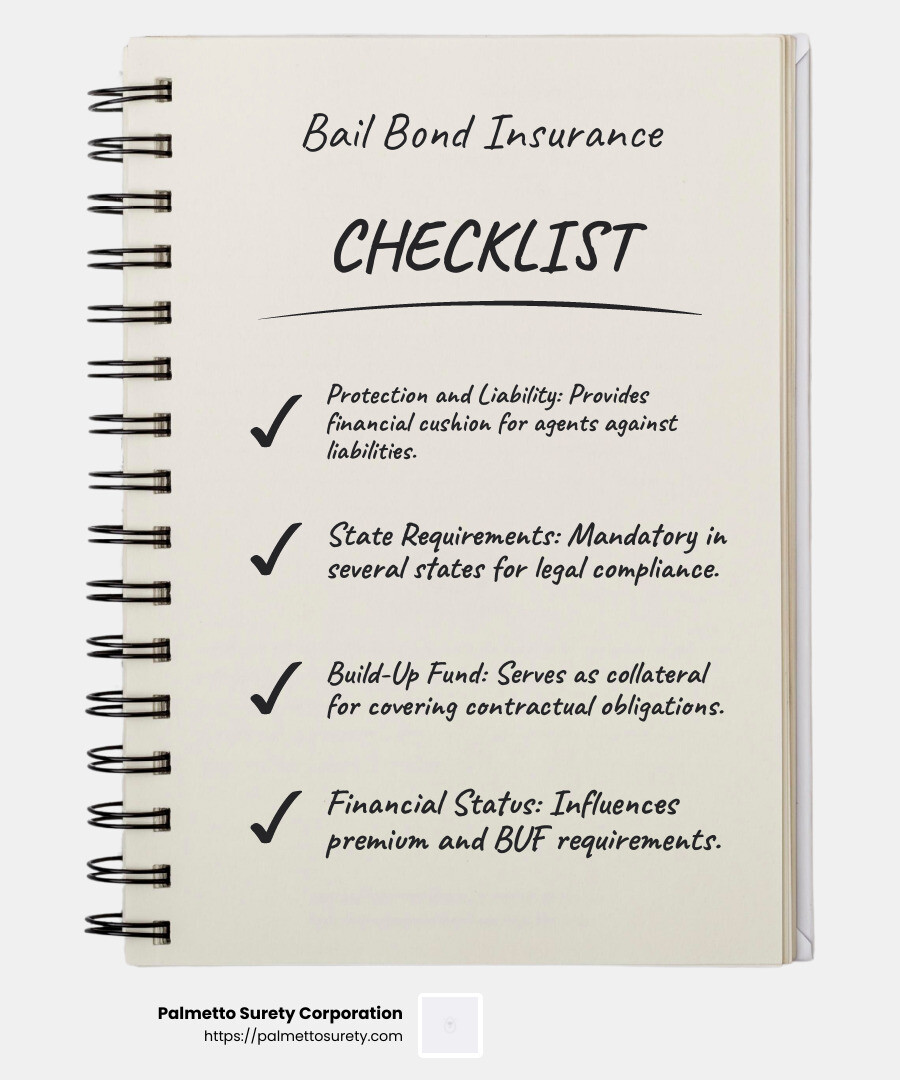
Protection and Liability: Bail bond insurance acts as a financial cushion. It covers the agent’s liability, ensuring they don’t have to pay out of pocket if a defendant skips bail. This protection is essential, as it allows agents to operate without risking their personal or business assets.
-
State Requirements: In some states, agents are required by law to have bail bond insurance. For example, South Carolina mandates that agents must be appointed by an insurance company to issue bail bonds. This requirement ensures that agents have the necessary financial backing to meet their obligations.
-
Assets and Obligations: Having bail bond insurance helps agents build their business. With insurance, they can post more bonds and take on more clients, knowing they have the financial support to meet their obligations.
How to Obtain Bail Bond Insurance
Securing bail bond insurance involves several steps, each focusing on the agent’s financial status and ability to meet their obligations.
-
Premium: Agents pay a premium to the insurance company, which varies based on their financial stability, credit rating, and experience. This premium is a small price for the peace of mind and security it provides.
-
Build-Up Fund (BUF): Agents also need to set up a build-up fund with the insurance company. This fund acts as collateral, ensuring they can fulfill their contractual obligations. If an agent fails to meet these obligations, the insurance company can use the BUF to cover costs like recovery fees and legal expenses.
-
Financial Status: An agent’s financial status plays a significant role in determining the premium and BUF requirements. Companies assess factors like income stability and creditworthiness to ensure the agent can reliably meet their insurance obligations.
Bail bond insurance is not just a requirement but a strategic tool for agents. It allows them to expand their operations, manage risks effectively, and ensure they can continue providing services to defendants in need. By understanding the intricacies of bail bond insurance, agents can make informed decisions that support their business growth and stability.
Top Bail Bond and Insurance Companies
When it comes to bail bond and insurance companies, choosing the right partner is crucial for agents and defendants alike. Here, we spotlight Palmetto Surety Corporation, an industry leader renowned for its reliability and exceptional service.
Palmetto Surety Corporation
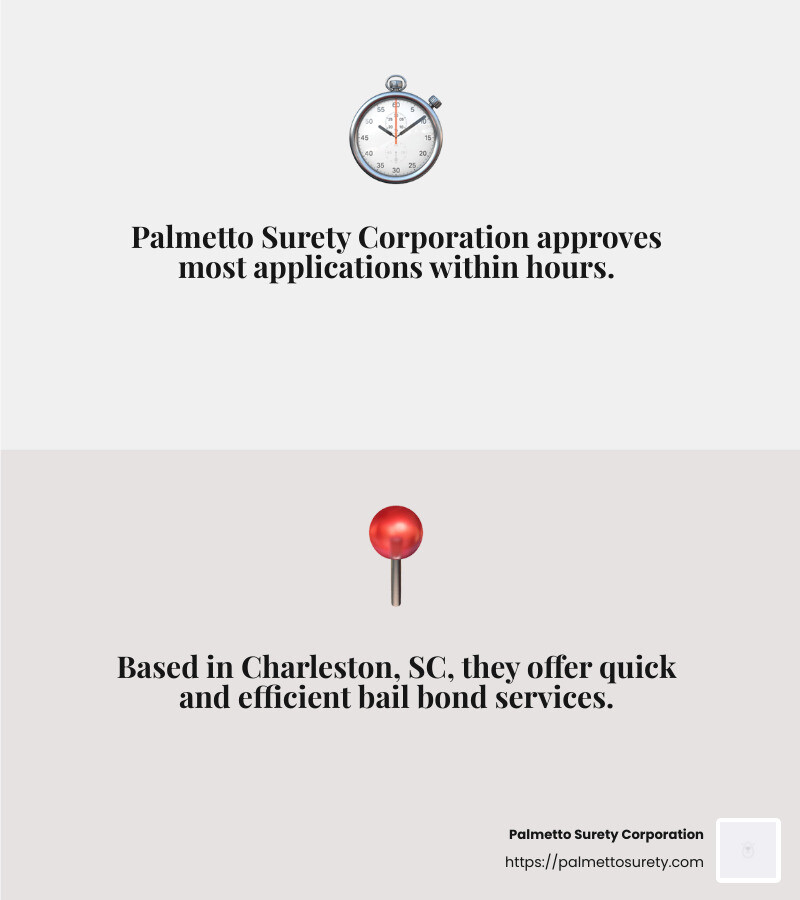
Palmetto Surety Corporation stands out for its quick and efficient service. Based in Charleston, SC, this company has built a reputation as an industry leader in the bail bond sector. With over two decades of experience, they offer a wide range of surety bonds, backed by a commitment to ethical business practices. Their focus on traditional values like accountability and integrity ensures that clients receive reliable support and protection against financial risks.
Palmetto Surety Corporation’s use of cutting-edge technology simplifies the bond acquisition process. Agents can easily purchase, print, and manage surety bonds, making it a seamless experience. Their dedicated 24/7 support team is always ready to assist, ensuring agents and clients get the best possible service.
In summary, choosing the right bail bond and insurance company can make a significant difference in managing risks and ensuring smooth operations. Whether you prioritize quick service or comprehensive insurance solutions, Palmetto Surety Corporation offers the expertise and reliability you need.
Frequently Asked Questions about Bail Bond and Insurance Companies
How do insurance companies use bonds?
Insurance companies often use fidelity bonds to protect against losses caused by dishonest acts, like employee theft. These bonds are crucial for security firms and other businesses where trust is paramount. Essentially, a fidelity bond acts as a safety net, ensuring that companies are compensated if an employee commits fraud or theft.
By providing this financial guarantee, insurance companies help businesses maintain trust with their clients and stakeholders. A fidelity bond is a written promise that the insurer will cover losses up to a specified amount, offering peace of mind and financial security.
Are surety bonds guarantees backed by an insurance company?
Yes, surety bonds are indeed guarantees backed by an insurance company. They function as a financial guarantee that a specific obligation will be fulfilled. If the principal (the party with the obligation) fails to meet their responsibilities, the surety (the insurance company) steps in to compensate the obligee (the party to whom the obligation is owed).
This written promise ensures that the obligee is protected from financial loss, making surety bonds a vital tool in industries that require performance assurance, such as construction and legal services. The insurance company evaluates the risk and sets the terms, providing a safety net for all parties involved.
Is a bond the same as an insurance policy?
While bonds and insurance policies both provide protection, they serve different purposes. A bond is a guarantee that a specific obligation will be fulfilled, often involving three parties: the principal, the obligee, and the surety. It ensures that the obligee is compensated if the principal fails to meet their obligations.
On the other hand, an insurance policy is a contract between an insurer and the insured, providing coverage for specific risks or losses. It typically involves two parties and covers a wide range of services and products, from health insurance to property insurance.
In summary, while both bonds and insurance policies offer protection, they cater to different needs and structures. Bonds focus on guaranteeing obligations, while insurance policies cover potential risks and losses.
Conclusion
In bail bond and insurance companies, having a reliable partner is critical. Palmetto Surety Corporation stands out as a leader in this field, offering quick and efficient services from their headquarters in Charleston, SC. With over 20 years of experience, they have built a reputation for delivering trustworthy and fast solutions for bail bonds and surety needs.
Palmetto Surety Corporation specializes in providing surety bonds across various industries, ensuring that obligations are met and financial risks are minimized. Their ability to approve most applications within hours sets them apart, making them a go-to choice for bail agents and businesses alike.
For those seeking a dependable partner in the southeastern United States, Palmetto Surety Corporation offers a comprehensive suite of services custom to meet the diverse needs of their clients. Whether you’re a bail agent or a business owner, their commitment to quick service and industry expertise ensures you’re in capable hands.
To learn more about how Palmetto Surety Corporation can assist you, visit their service page for detailed information and support.


