


In Bond Court Is Probable Cause Required: Top 10 Secrets
In bond court is probable cause required for bond conditions? The answer is no, probable cause is not always required specifically for setting bond conditions. However, probable cause is necessary when making initial arrest decisions and for certain procedural aspects, such as determining whether to file charges. During a bond hearing, a judge assesses various factors including flight risk, community safety, and the defendant’s criminal history to decide on bond conditions without focusing solely on probable cause.
Understanding how probable cause and bond conditions intersect is crucial, especially given the complexities involved in legal proceedings. Legal determinations around bond conditions are essential because they influence whether defendants can remain free while awaiting trial. The case of Gerstein v. Pugh is a cornerstone in evaluating these factors as it involves judicial determinations tied to probable cause. Various types of bonds such as I-Bond, D-Bond, and C-Bond each come with distinct requirements and conditions, and this article will further explore how these are applied within the Illinois legal framework.
As Haiko de Poel Jr, I bring a wealth of knowledge and expertise to this discussion. My extensive experience includes understanding the complexities of legal obligations, which positions me well to explore the question of in bond court is probable cause required for bond conditions, ensuring you have the insight needed to steer this aspect of the legal system seamlessly.
In bond court is probable cause required for bond conditions glossary:
– is a fiduciary bond required in ohio probate court
– requirement to file appeal bond jp court texas
– why does a court require a probate bond
Understanding Probable Cause
Probable cause is a legal standard that plays a critical role in the criminal justice system. It is the foundation for making arrests, conducting searches, and seizing property. Let’s break it down to understand how it works.
Definition and Legal Requirements
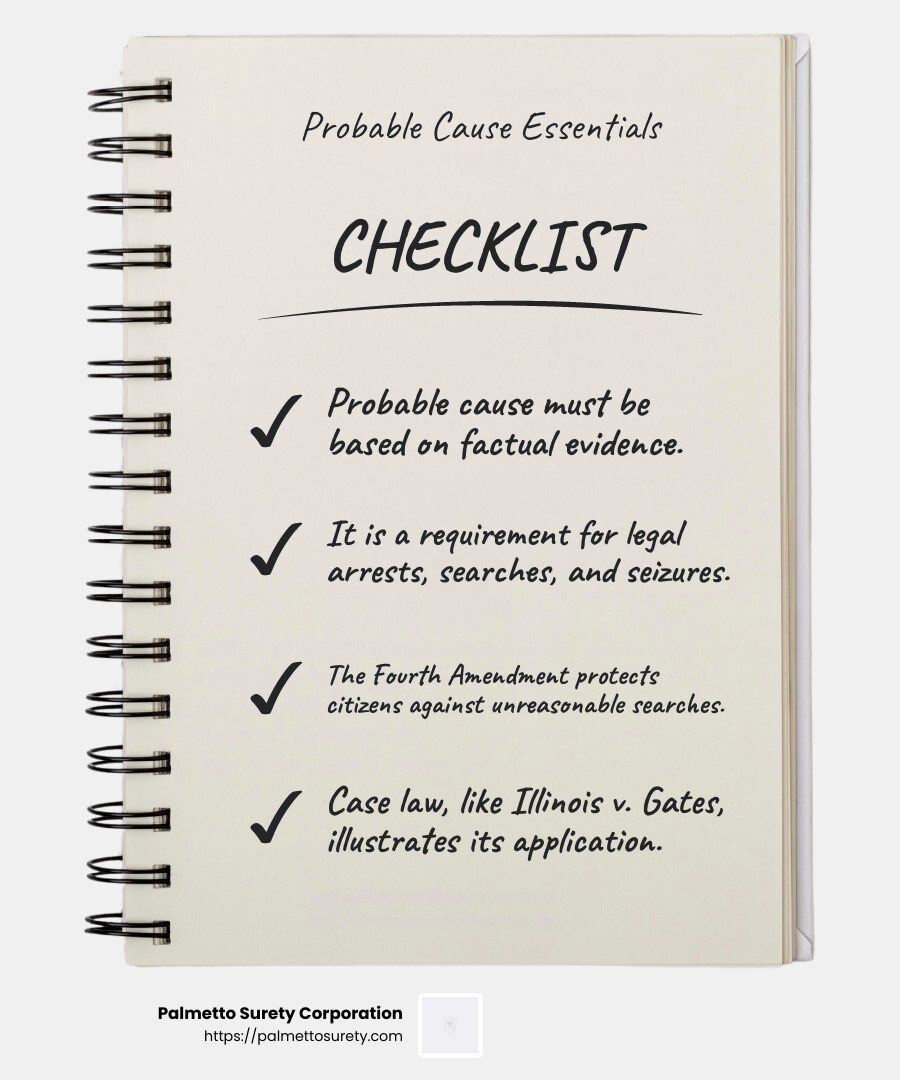
Probable cause means that there is a reasonable basis to believe that a crime has been committed and that the person accused of the crime is responsible. It’s more than just a hunch or suspicion; it requires some factual evidence or circumstances that justify the belief in the person’s involvement in a crime. This standard is crucial in ensuring that individuals are not subject to arbitrary or unjustified actions by law enforcement.
The Fourth Amendment
The requirement for probable cause is rooted in the Fourth Amendment of the U.S. Constitution. This amendment protects citizens from unreasonable searches and seizures, ensuring that any government intrusion into private life is justified and lawful. The Fourth Amendment is a cornerstone of American civil liberties, safeguarding personal privacy and property.
Arrest, Search, and Seizure
Probable cause is necessary at various stages of the criminal process:

-
Arrest: Before law enforcement can arrest someone, they must have probable cause to believe the individual committed a crime. This prevents unwarranted arrests and protects individuals’ freedom.
-
Search: For a search to be legal, police must have probable cause to believe they will find evidence of a crime in the place they want to search. This ensures that searches are not conducted randomly or without justification.
-
Seizure: Probable cause is also required for the seizure of property, meaning law enforcement must have a valid reason to believe the property is connected to criminal activity.
Case Study: Illinois v. Gates
The case of Illinois v. Gates is a landmark decision that illustrates the application of probable cause. In this case, the police acted on an anonymous tip to obtain a search warrant. Initially, the lower courts found the search unlawful due to insufficient probable cause. However, the U.S. Supreme Court later overturned this decision, emphasizing the “totality of the circumstances” approach. This means that all factors should be considered to determine whether probable cause exists, making it a flexible standard that adapts to different situations.
Understanding probable cause is essential for anyone navigating the legal system. It ensures that law enforcement actions are justified and that individuals’ rights are protected. With this foundation, we can better explore how probable cause interacts with bond conditions in the next section.
In Bond Court: Is Probable Cause Required for Bond Conditions?
When a defendant is brought to bond court, one might wonder if probable cause is necessary for setting bond conditions. While probable cause is crucial for arrest and initial detention, its role in bond conditions is more nuanced.
Judicial Determination and Bond Conditions
In bond court, the judge plays a key role in determining the conditions of a defendant’s release. This process involves evaluating various factors to ensure that the defendant will appear in court and not pose a risk to the community. The conditions set can range from simple requirements like attending court dates to more restrictive measures like electronic monitoring.
The Influence of Gerstein v. Pugh
The landmark case of Gerstein v. Pugh established that a judicial determination of probable cause is required for detaining an individual after an arrest. However, once probable cause is established, the focus shifts to assessing the appropriate bond conditions. This means that while probable cause is a prerequisite for holding a defendant, it is not directly required for setting bond conditions themselves.
Illinois Law and Bond Hearings
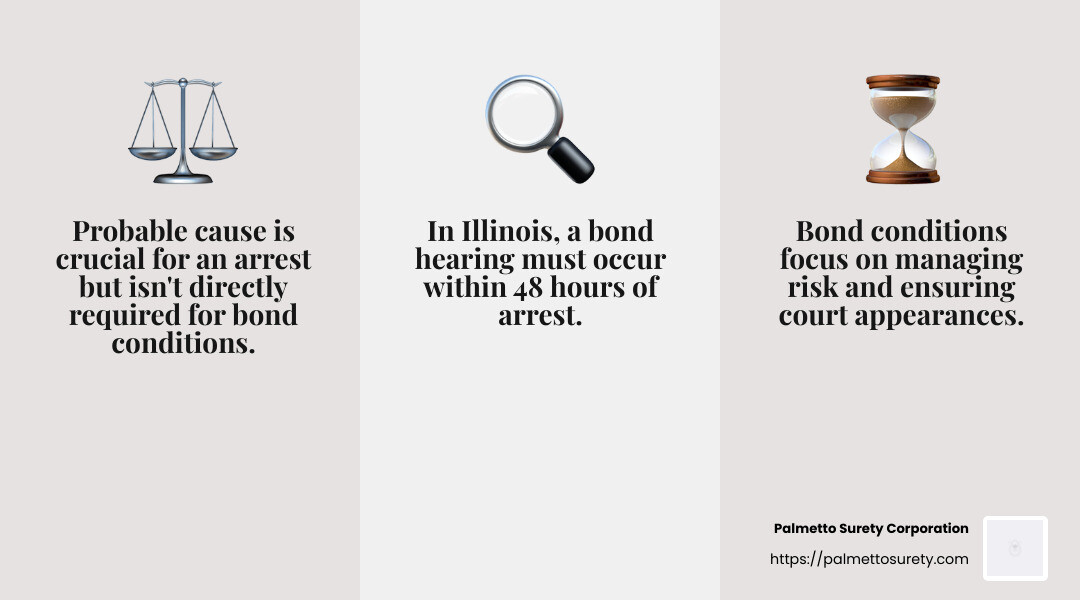
Under Illinois law, a bond hearing, often referred to as a “Gerstein hearing,” must occur within 48 hours of arrest. During this hearing, the judge assesses whether the bail amount and conditions are sufficient to ensure compliance with court orders. Illinois law emphasizes that bail should not be oppressive and should consider the defendant’s financial ability.
The goal is to balance the need for public safety and the defendant’s right to freedom. Judges may use risk assessment tools to aid their decision-making, ensuring that conditions are fair and custom to the individual’s circumstances.
Probable Cause vs. Bond Conditions
While probable cause is essential for initial arrest and detention, bond conditions are more about managing risk and ensuring court appearances. The two are related but serve different purposes in the legal process.
In summary, while probable cause is needed to justify an arrest, it is not directly required for setting bond conditions. Instead, bond conditions focus on the defendant’s behavior and the likelihood of appearing in court. Understanding this distinction helps clarify the roles that probable cause and bond conditions play in the criminal justice system.
In the next section, we’ll explore the factors judges consider when setting bond conditions, providing further insight into this critical aspect of the legal process.
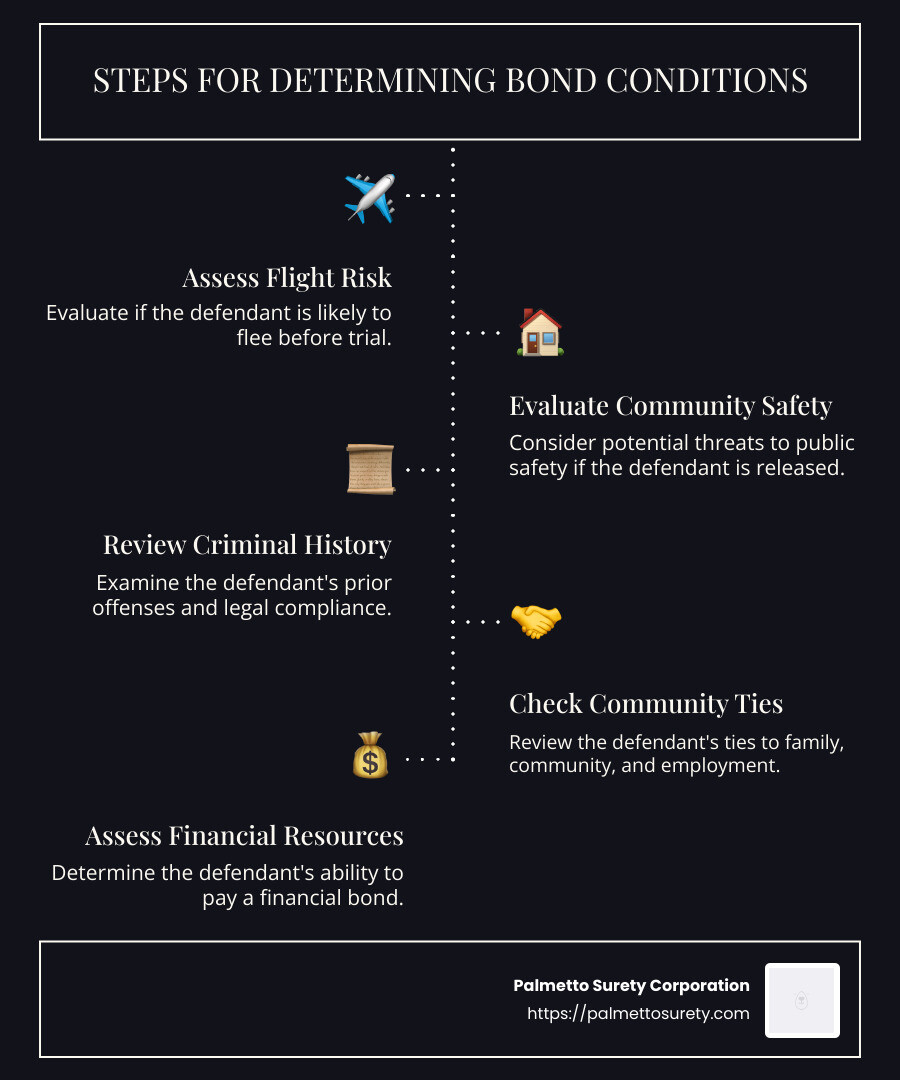
Factors Judges Consider When Setting Bond
When a judge sets bond, they weigh several factors to decide the best conditions for release. These factors help ensure the defendant appears in court and does not endanger the community.
Flight Risk
A major concern is whether the defendant might flee to avoid trial. Judges look at past behavior, such as missed court dates or attempts to leave the area, to assess this risk. They might also consider if the defendant has strong ties to the community that would discourage them from running.
Criminal History
A defendant’s past criminal record plays a big role in deciding bond. If someone has a history of violent crimes or repeated offenses, the judge might set stricter conditions. A clean record, on the other hand, could lead to more lenient terms.
Severity of Crime
The nature of the alleged crime is crucial. Serious crimes, like those involving violence or weapons, often result in higher bond amounts or stricter conditions. Less severe charges might lead to more relaxed terms.
Community Ties
Connections to the community can indicate a lower flight risk. Judges consider factors like family, long-term residence, and community involvement. Strong ties can lead to more favorable bond conditions.
Employment Status
Being employed can suggest stability and responsibility. If a defendant has a steady job, it might work in their favor when bond conditions are set. Unemployment may raise concerns about a defendant’s stability and increase the risk of flight.
Financial Resources
The judge assesses the defendant’s financial situation to ensure bond is not oppressive. Wealthier defendants might face higher bond amounts to ensure compliance, while those with fewer resources may receive lower amounts or alternative conditions.
Mental Health
Mental health is another important factor. If a defendant has known mental health issues, the court might require treatment or counseling as part of the bond conditions. This helps address underlying issues and reduce risk.
Substance Abuse
Substance abuse problems can affect bond decisions. If a defendant struggles with drugs or alcohol, the court might impose conditions like regular testing or participation in a treatment program to mitigate risk.
These factors help judges tailor bond conditions to each defendant, balancing the need for public safety with the defendant’s right to freedom. By considering these elements, the court aims to set fair and effective conditions that support the legal process.
Next, we’ll dive into the common bond conditions in Illinois, exploring what defendants might expect if released on bond.
Common Bond Conditions in South Carolina
In South Carolina, when someone is released on bond, they must follow certain rules, known as bond conditions. These conditions help make sure the defendant appears in court and stays out of trouble while waiting for trial. Let’s explore some common bond conditions in South Carolina.
Court Appearances
The most important condition is showing up for all court dates. Missing a court appearance can lead to more charges and forfeiting the bond. Defendants must keep track of their court schedule and be present every time.
State Residency
Defendants might be required to stay within South Carolina. This ensures they are close enough to attend court and reduces the risk of fleeing the state. Leaving the state without permission can be considered a violation of bond conditions.
Obeying Laws
While out on bond, defendants must not break any laws. Committing another offense can lead to arrest and stricter conditions—or even staying in jail until trial.
Surrendering Firearms
In some cases, especially involving violence or threats, defendants must give up any firearms. This condition helps protect the public and reduces the risk of further violence.
Psychological Evaluations
If a defendant’s mental health is a concern, the court might order a psychological evaluation. This helps determine if the defendant needs treatment or counseling as part of their bond conditions.
Medical Treatment
Some defendants might need to continue medical treatment or start a new program. This can include therapy or rehabilitation, especially if there are mental health or substance abuse issues.
Reporting to Agencies
Defendants might have to regularly check in with a pretrial services agency or another designated office. These check-ins help ensure the defendant is following bond conditions and staying on track.
Avoiding Certain People or Places
To prevent further conflict or harm, defendants may be ordered to stay away from specific people or locations. This is common in domestic violence cases, where the defendant must avoid contact with the alleged victim.
Drug and Alcohol Restrictions
If substance abuse is a concern, the court might ban the use of drugs or alcohol. Defendants could also be required to undergo regular testing to ensure compliance.
Curfew
A curfew might be set to limit the defendant’s activities at night. This reduces the chance of getting into trouble or missing court dates.
Supervision
Some defendants might be placed under supervision, such as wearing an electronic monitoring device. This helps track their movements and ensures they follow the rules.
Monitoring Devices
In some cases, electronic monitoring devices are used to keep an eye on the defendant’s location. These devices alert authorities if the defendant leaves a specified area or violates curfew.
These bond conditions are designed to keep the community safe and ensure the defendant returns to court. By following these rules, defendants can maintain their freedom while awaiting trial.
Next, we’ll look at the different types of bonds available in South Carolina and how they work.
Types of Bonds in South Carolina
In South Carolina, there are several types of bonds that a defendant might encounter. Understanding these bonds is essential for anyone navigating the legal system. Let’s break down each type:
I-Bond (Individual Bond)
An I-Bond allows a defendant to be released on their own recognizance. This means they promise to follow court orders and show up for all court dates without paying any money upfront. However, if they fail to appear, the court can collect the bond amount as a judgment.
D-Bond (Demand Bond)
A D-Bond requires the defendant to pay 10% of the bail amount to the court. This type of bond includes a “bail bond” document detailing the amount posted, conditions, and potential uses for the money, like paying fines or attorney fees. If the defendant doesn’t comply with the conditions, the bond can be forfeited.
C-Bond (Cash Bond)
For certain serious charges, such as Class X drug offenses or making a terrorist threat, a C-Bond is required. This bond demands the entire bail amount to be paid in cash before release. Alternatively, defendants might use other assets, like stocks or unencumbered real estate, to cover the bond.
Cash Bond
A Cash Bond involves paying the full bail amount in cash. This is often required for serious offenses, where the court wants to ensure the defendant has a strong incentive to return for trial.
Assets as Bond
In some situations, defendants can use assets like stocks, bonds, or real estate to secure their release. The assets must be equal to or greater than the bail amount. This option provides flexibility for those who might not have cash readily available.
Driver’s License as Bond
For specific traffic offenses, a defendant’s driver’s license can be used as a bond. This means the license is held by the court as a guarantee that the defendant will appear for their court dates.
These different types of bonds offer various ways for defendants to secure their release while awaiting trial. Each type has specific requirements and conditions, so understanding them is crucial.
Next, we’ll dive into bail/bond hearings and the procedures involved.
Bail/Bond Hearings and Procedures
In the legal system, bail/bond hearings play a crucial role in determining whether a defendant can be released from custody while awaiting trial. Let’s explore the key elements of these hearings.
Gerstein Hearing
A Gerstein hearing is named after the landmark case Gerstein v. Pugh. It’s a judicial process required by the Fourth Amendment to ensure that there is probable cause for detaining someone after an arrest. This hearing must be conducted promptly to avoid an “extended restraint of liberty” without judicial oversight.
48-Hour Rule
Under Illinois law, the 48-hour rule mandates that a defendant must have a bond hearing within 48 hours of their arrest. This ensures that the court reviews the charges and the circumstances of the arrest without unreasonable delay. During this time, the judge assesses the necessity and appropriateness of bail.
Bail Sufficiency
When setting bail, the court considers bail sufficiency to ensure that the amount is enough to guarantee the defendant’s compliance with the terms of release. The bail should not be so high as to be oppressive, but it must be adequate to serve its purpose.
Financial Ability
A defendant’s financial ability is taken into account when determining bail. The Eighth Amendment protects against excessive bail, ensuring that it is set at a level the defendant can reasonably afford. This consideration prevents the bail from becoming a punishment in itself.
Source of Funds
The source of funds used to post bail may be scrutinized by the court. The state can request a hearing to verify that the bail money comes from legitimate sources. This step is especially important to prevent funds obtained through illegal activities from being used for bail.
Bail Reduction
If the initial bail set by the court is too high, the defendant can request a bail reduction. This request involves presenting evidence of their financial situation and any other relevant factors to argue for a lower bail amount. The court then decides whether to grant the reduction.
Eighth Amendment
The Eighth Amendment to the U.S. Constitution plays a pivotal role in bail hearings. It ensures that no defendant is subjected to excessive bail, safeguarding their right to a fair and just legal process.
Bail and bond hearings are essential for balancing the rights of the defendant with the interests of public safety. Next, we’ll explore special considerations for domestic violence cases.
Special Considerations for Domestic Violence Cases
When it comes to domestic violence cases, the legal system takes a unique approach to ensure the safety of all parties involved. Let’s explore the specific considerations.
72-Hour Cooling-Off Period
One of the most critical components in domestic violence cases is the 72-hour cooling-off period. This rule requires that a person charged with domestic violence must avoid any contact with the alleged victim for a minimum of 72 hours following their release. This period aims to prevent immediate retaliation or further conflict.
No-Contact Orders
In addition to the cooling-off period, no-contact orders are often imposed. These orders prohibit the defendant from contacting the victim directly or indirectly. This includes physical contact, phone calls, text messages, or any form of electronic communication. Violating a no-contact order can result in additional charges and potential jail time.
Impact on Living Arrangements
For many defendants, these conditions can significantly affect their living arrangements. In some cases, the defendant may be effectively evicted from their own home if it is shared with the alleged victim. This can lead to a host of challenges, such as finding temporary housing and managing personal belongings. The court’s aim is to protect the victim, but it can also create hardships for the defendant.
Potential Violations
The conditions set in domestic violence cases are strict, and violations can have severe consequences. For instance, if a defendant inadvertently returns home to gather personal items, they risk violating the no-contact order. Such violations can lead to additional criminal charges, increased bail amounts, and even longer jail terms upon conviction.
These special conditions are designed to protect victims while balancing the rights of the accused. However, they can create complex situations for defendants, highlighting the importance of understanding and adhering to all bond conditions. Next, we’ll discuss how these bond conditions can be modified if necessary.
Modifying Bail/Bond Conditions
Sometimes, the bail or bond conditions set by the court might not be suitable for the defendant. The good news is that these conditions can be changed. Let’s explore how this process works.
Petitioning the Court
To change bail or bond conditions, a defendant or their attorney must petition the court. This means formally asking the court to review and adjust the conditions. The petition should clearly explain why the current conditions are not appropriate and how they could be changed to better fit the situation.
Experienced Attorney
Having an experienced attorney is crucial when petitioning the court to modify bond conditions. An attorney who knows the ins and outs of the legal system can effectively present the case to the judge. They understand the legal arguments that work best and can help avoid potential pitfalls.
Modification Process
Once the petition is filed, the court will schedule a hearing. During this hearing, both the defense and the prosecution can present their arguments. The judge will consider various factors, like the defendant’s behavior since their release, any new evidence, and whether the current conditions are too strict or unnecessary.
If the judge agrees that changes are needed, they will issue an order modifying the conditions. This could mean reducing the bail amount, removing certain restrictions, or even adding new conditions if deemed necessary.
Understanding and navigating the process of modifying bail or bond conditions can make a significant difference for defendants. With the right approach and legal support, it’s possible to adjust these conditions to better suit individual circumstances.
Frequently Asked Questions about Probable Cause and Bond Conditions
What is the difference between reasonable suspicion and probable cause?
Reasonable suspicion and probable cause are legal terms used in criminal law, but they serve different purposes.
-
Reasonable suspicion is a lower standard. It allows police to stop and briefly detain a person if they suspect that person is involved in criminal activity. Think of it as a hunch backed by some facts. For example, if an officer sees someone loitering near a closed store at night, they might have reasonable suspicion to question them.
-
Probable cause is a higher standard. It is required for arrests, searches, and obtaining warrants. Probable cause means there are enough facts or evidence to believe a crime has been committed. For instance, if an officer finds stolen goods in a person’s bag, that’s probable cause for an arrest.
How does a judge determine the amount of bail?
Judges consider several factors when setting bail to ensure the defendant appears in court and the community remains safe.
-
Flight risk: If the defendant is likely to flee, the bail amount may be higher. Judges look at factors like travel history and connections to other areas.
-
Criminal history: A past record of failing to appear in court or committing crimes can lead to higher bail.
-
Severity of the crime: More serious charges usually mean higher bail amounts.
-
Community ties: Strong local connections, like family and employment, may result in lower bail.
-
Financial resources: The defendant’s ability to pay is considered to ensure the bail is not punitive.
-
Mental health and substance abuse: These factors might influence the conditions of bail, like requiring treatment.
Can bond conditions be changed after they are set?
Yes, bond conditions can be changed. This is important if the initial conditions are too harsh or no longer suitable.
-
Petitioning the court: The defendant or their attorney can ask the court to review and adjust the conditions.
-
Court hearing: A judge will hold a hearing to decide if changes are necessary, considering the defendant’s behavior and any new evidence.
-
Legal support: Having an experienced attorney can help steer this process effectively, ensuring that the conditions are fair and reasonable.
Understanding these aspects of probable cause and bond conditions can help defendants and their families steer the legal system more effectively.
Conclusion
In summary, understanding bond conditions and the role of probable cause is essential for anyone navigating the legal system. Bond conditions are not just about securing release from custody; they ensure that defendants appear in court and maintain public safety. Probable cause is a critical legal standard that influences whether a person can be detained or searched, impacting how bond conditions are set.
At Palmetto Surety Corporation, we recognize the importance of a swift and efficient process for obtaining surety bonds. With over 20 years of experience, our dedicated team is committed to providing fast approvals, often within hours, to help our clients meet their legal obligations without delay. Located in Charleston, SC, we pride ourselves on our ability to offer personalized service and expert advice to ensure that individuals and businesses can focus on what truly matters.
If you need assistance with surety bonds, or have questions about the bond process, reach out to us today for quick and reliable service.


