


Bond Insurance for Construction: Top Key Facts in 2024
Importance of Bond Insurance for Construction
When it comes to construction projects, trust and financial security are paramount. Bond insurance for construction plays a crucial role in safeguarding both the contractors and the project owners. Here’s a quick snapshot of what you need to know:
- Guarantees Project Completion: Ensures contractors fulfill their contractual obligations.
- Protects Against Financial Loss: Shields project owners if contractors fail to meet terms.
- Builds Trust: Demonstrates a contractor’s financial reliability.
Bond insurance for construction safeguards your project and ensures peace of mind, whether you’re a contractor or a project owner.
I’m Haiko de Poel Jr, and with years of experience in marketing and digital change at Palmetto Surety Corporation, I’ve seen how bond insurance for construction mitigates risks, improves trust, and secures payments in various industries.
Key terms for bond insurance for construction:
– construction bid bond
– performance bond for construction project
What is Construction Insurance?
Construction insurance is a safety net for business owners in the construction industry. It protects against financial losses from unexpected events, like accidents or lawsuits. This type of insurance helps ensure that your business can survive and continue operating even when things go wrong.
Types of Construction Insurance
There are several types of construction insurance policies that you might need, depending on your business’s specific risks and needs. Here are the most common ones:
General Liability Insurance
This is one of the most important types of insurance for construction businesses. It covers third-party property damage and bodily injuries. For example, if a visitor trips over a tool at your job site and gets hurt, general liability insurance will cover their medical expenses and any legal fees if they decide to sue.
Commercial Property Insurance
This insurance covers your business property, such as tools, equipment, and buildings. If a fire or theft occurs, commercial property insurance will help you replace or repair your assets. This is crucial for keeping your business running smoothly after an unexpected event.
Inland Marine Insurance
Despite its name, inland marine insurance has nothing to do with the sea. It covers tools, equipment, and materials while they are being transported or temporarily stored. This is especially useful if your tools are often moved between job sites.

Workers’ Compensation Insurance
Workers’ compensation insurance covers medical expenses and lost wages for employees who get injured or sick on the job. In most states, this insurance is required if you have employees. It helps protect your business from costly lawsuits and ensures that your workers are taken care of.
Builder’s Risk Insurance
Builder’s risk insurance, also known as course of construction insurance, covers buildings and materials while they are under construction. It protects against damage from events like fires, windstorms, and theft. This insurance is essential for any construction project, as it ensures that you won’t be left out of pocket if something goes wrong during the build.

Each of these insurance types provides a layer of protection for your construction business. By having the right coverage, you can focus on completing projects and growing your business, knowing that you’re financially protected against various risks.
What is a Surety Bond?
A surety bond is a promise by a surety company to pay the project owner (obligee) a certain amount if the contractor (principal) fails to meet their obligations. It acts as a form of financial protection, ensuring that the project will be completed according to the contract terms.
Surety bonds protect the project owner from financial loss and ensure that the contractor fulfills their duties. They also provide peace of mind for the contractor, knowing that they have a financial backstop if something goes wrong.
Types of Surety Bonds
There are several types of surety bonds, each serving a specific purpose in the construction industry:
Performance Bond
A performance bond guarantees that the contractor will complete the project according to the contract terms. If the contractor fails to do so, the surety company will either hire a new contractor to finish the job or compensate the project owner for any financial losses.
Payment Bond
A payment bond ensures that the contractor will pay all subcontractors, suppliers, and laborers involved in the project. This bond protects these parties from non-payment and ensures that the project owner won’t face any liens or claims.
Bid Bond
A bid bond is submitted during the bidding process. It guarantees that the contractor will enter into the contract at the bid price and provide the required performance and payment bonds. If the contractor backs out, the surety company compensates the project owner for the difference between the defaulting contractor’s bid and the next lowest bid.
Maintenance Bond
A maintenance bond protects the project owner from defects in workmanship or materials for a specified period after the project is completed. It’s similar to a warranty, ensuring that any issues will be addressed without additional cost to the owner.
Subdivision Bond
A subdivision bond is used when a contractor is required to make improvements to public property, such as streets, sidewalks, or storm drains. This bond ensures that the work will be completed according to local government standards.
Supply Bond
A supply bond guarantees that the supplier will provide the necessary materials for the project. If the supplier fails to deliver, the surety company compensates the project owner for any resulting losses.
Completion Bond
A completion bond ensures that the entire project will be completed on time, within budget, and free of liens. It covers the completion of the project as a whole, not just specific contracts, providing comprehensive protection for the project owner.
Retention Bond
A retention bond replaces the withholding of retainage on a construction project. It guarantees that all work will be completed at the end of the project, allowing the contractor to receive their full progress payment without waiting for retainage.
Each type of surety bond serves a unique purpose, providing different levels of protection for the project owner and ensuring that the construction process runs smoothly from start to finish.
How Construction Insurance Works
Construction insurance is a contract between your business and an insurance company. It provides financial protection against various risks that could potentially harm your business operations.
Contract
The insurance contract is a formal agreement where you, the policyholder, agree to pay a premium, and in return, the insurance company agrees to cover specific risks outlined in the policy. This contract lays out the terms, coverage limits, and exclusions.
Insurance Company
The insurance company is the entity that provides the coverage. They assess the risks associated with your business and determine the premium you need to pay. If an incident occurs that is covered under your policy, the insurance company will handle the claim process and pay for the damages or losses, up to the policy limits.
Premium
The premium is the amount you pay, usually on a monthly or annual basis, to keep your insurance policy active. The cost of the premium depends on several factors, including:
- Location of your business
- Coverage limits
- Types of policies chosen
- Number of employees
- Company revenue
- Services provided
Claims Process
When a covered incident occurs, such as theft of equipment or an injury on the job site, you need to file a claim with your insurance company. Here’s how the process typically works:
- Report the Incident: Notify your insurance company about the incident as soon as possible.
- Submit Documentation: Provide any necessary documentation, such as police reports, medical bills, or repair estimates.
- Assessment: The insurance company will assess the claim to determine its validity and the extent of the damages.
- Approval or Denial: The insurance company will either approve or deny the claim based on their assessment.
- Payment: If approved, the insurance company will issue a payment to cover the damages, legal fees, or settlements as per the policy terms.
With construction insurance, the contractor receives compensation for their legal fees and/or settlement or judgment with the third party. The policyholder is not required to pay anything back to the insurance company after the claim is settled. However, insurance claims can impact future premiums.
Example: If a contractor files a claim for stolen equipment, the insurance company will cover the cost of replacing the equipment. The contractor does not have to repay this amount, but their future premiums may increase.

In summary, construction insurance provides a safety net for your business, allowing you to manage risks without facing financial ruin. By understanding how it works, you can better protect your business and ensure smooth operations in the face of unexpected events.
How Surety Bonds Work
Surety bonds are essential in the construction industry, providing a safety net for project owners. They involve three key parties and function differently than insurance.
Three Parties
- Principal: This is you or your business. You are responsible for purchasing the bond and fulfilling the contract.
- Obligee: This is typically the project owner, such as a local, state, or federal authority, or a private client. They require the bond to ensure the project is completed as agreed.
- Surety Provider: This is the company that underwrites the bond. They guarantee to the obligee that the principal will meet their contractual obligations.
Bond Premium
You don’t need to pay the full bond amount upfront. Instead, you pay a bond premium, which is a fraction of the bond’s total value. This premium typically ranges from 1% to 5% of the bond amount, depending on your credit score and financial stability. If you have bad credit, premiums can go as high as 20% of the bond value.
Claims Process
The claims process for surety bonds involves several steps:
- Claim Filing: If the project owner (obligee) believes you (the principal) have failed to meet contractual obligations, they file a claim with the surety provider.
- Investigation: The surety provider investigates the claim to determine its validity.
- Initial Coverage: If the claim is valid, the surety provider covers the initial costs to the obligee.
- Repayment: Unlike insurance, you (the principal) are responsible for reimbursing the surety provider for any payments made on your behalf.
Here’s a simplified breakdown of the claims process:
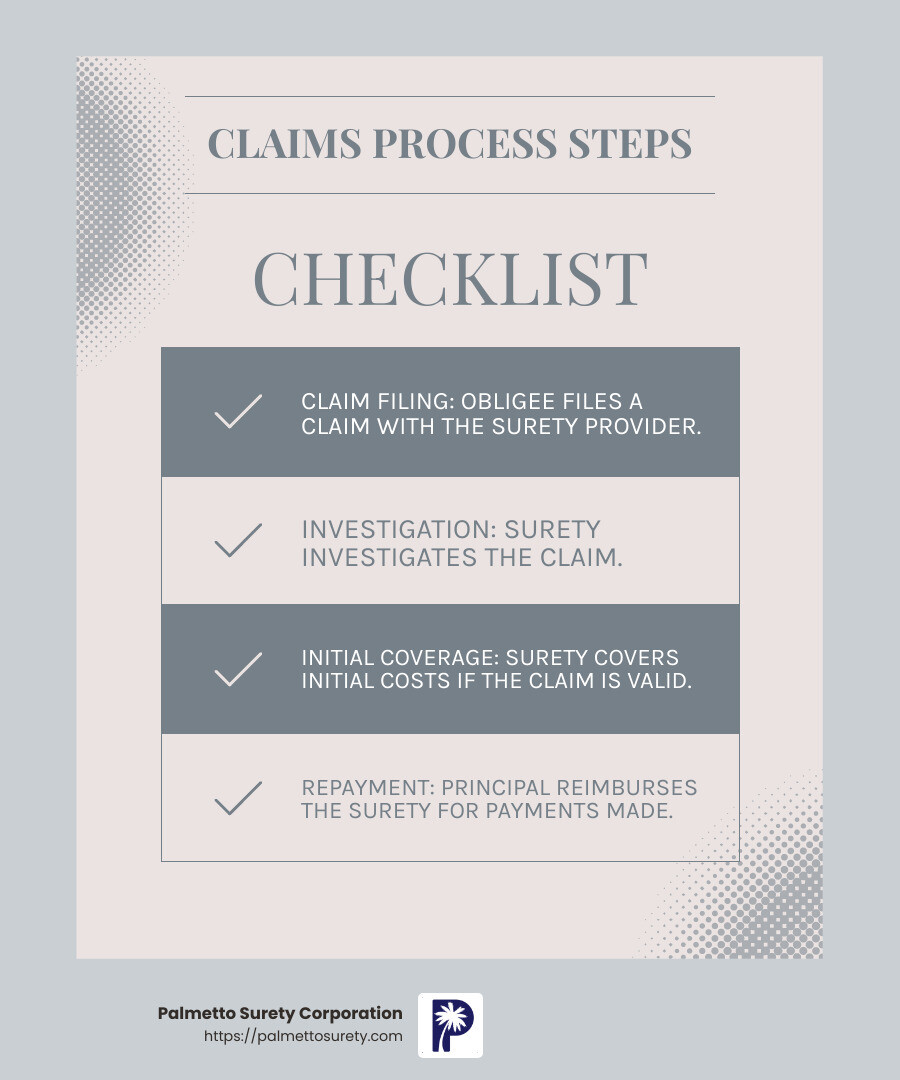
Example: If you fail to complete a construction project on time, the project owner can file a claim. The surety provider will investigate and, if the claim is valid, pay the project owner. You will then need to reimburse the surety provider for the amount paid.
Why Surety Bonds Matter
Surety bonds are crucial because they protect the project owner from financial loss due to non-performance or default by the contractor. They ensure that projects are completed as agreed, providing financial security and trust in the construction industry.
By understanding how surety bonds work, you can better steer the complexities of construction projects and maintain strong relationships with clients and project owners. This knowledge also helps you manage your financial responsibilities and avoid potential pitfalls in your business operations.
Key Differences Between Construction Insurance and Surety Bonds
Understanding the key differences between construction insurance and surety bonds is vital for any contractor. Both serve to protect against risks, but they do so in different ways and for different parties.
Protection
Construction Insurance: Protects you, the contractor, from financial losses due to accidents, property damage, or legal claims. It covers a wide range of incidents, from third-party injuries to equipment theft.
Surety Bonds: Protect the project owner (obligee) by ensuring that you fulfill your contractual obligations. If you fail to do so, the surety provider compensates the project owner and then seeks reimbursement from you.
Control
Construction Insurance: You have more control. You decide the types of coverage based on your needs and risks. For example, you might choose policies like general liability, commercial property, or workers’ compensation.
Surety Bonds: The project owner holds the control. They require the bond to ensure that the project will be completed as specified. You must comply with their requirements to secure the bond.
Claim Payment
Construction Insurance: When a claim is filed, the insurance company pays for the damages or legal fees. Once the claim is settled, you are not required to pay anything back to the insurance company. However, your premiums may increase.
Surety Bonds: If a claim is filed and found valid, the surety provider pays the project owner. However, you must reimburse the surety provider for the amount paid. This repayment is outlined in the indemnity agreement you sign when obtaining the bond.
Financial Responsibility
Construction Insurance: The financial burden is on the insurance company once you pay your premiums. They cover the costs of claims, legal fees, and settlements.
Surety Bonds: The financial responsibility ultimately falls on you. While the surety provider initially covers the claim, you must repay them. This makes it crucial to fulfill your contractual obligations to avoid out-of-pocket expenses.
Example: If a contractor fails to complete a project, the surety provider pays the project owner to hire another contractor. The original contractor must then repay the surety provider.
Cost Factors
Construction Insurance: Premiums are based on factors like location, coverage limits, number of employees, and company revenue. They are more straightforward and predictable.
Surety Bonds: The cost, or bond premium, is influenced by your credit score, financial stability, and the specifics of the project. Bad credit can significantly raise the premium.
Understanding these differences helps you make informed decisions about what protections you need for your construction business. Both construction insurance and surety bonds are essential, but they serve distinct roles in risk management and financial security.
Bond Insurance for Construction: Why It Matters
Bond insurance for construction is crucial for several reasons. It mitigates risks, ensures financial security, and guarantees project completion. Let’s break down why each aspect is important.
Risk Mitigation
In the construction industry, risks are everywhere. From project delays to contractor defaults, unexpected issues can arise at any time. Bond insurance helps mitigate these risks by providing a safety net.
For example, if a contractor fails to complete a project, a performance bond ensures the project owner is compensated. This coverage helps avoid financial losses and keeps the project on track.
Financial Security
Financial security is essential for both contractors and project owners. Surety bonds offer a layer of financial protection that standard insurance policies don’t.
According to a report by Arcadis, the average cost of a construction dispute in North America in 2020 was $37.9 million. With such high stakes, having bond insurance can save contractors from potential financial ruin.
Project Completion
One of the biggest concerns for project owners is whether a project will be completed on time and within budget. Surety bonds, like completion bonds, provide assurance that the project will be finished as agreed.
If a contractor abandons a project, the surety provider steps in to ensure completion. This could involve hiring a new contractor or compensating the project owner for the costs incurred. This guarantees that the project will be completed, even if issues arise.
Real-World Example
Consider a large public works project requiring significant materials. A supply bond ensures that all necessary supplies will be delivered. If the supplier defaults, the bond covers the costs of obtaining the supplies from another source. This keeps the project moving forward without financial setbacks.
In summary, bond insurance for construction is vital for managing risks, securing finances, and ensuring projects are completed. It provides peace of mind for both contractors and project owners, making it an indispensable part of the construction industry.
Next, let’s dive into frequently asked questions about bond insurance for construction to clarify common concerns and provide more detailed insights.
Frequently Asked Questions about Bond Insurance for Construction
What is the difference between bond and insurance in construction?
Construction insurance and surety bonds serve different purposes in the construction industry.
-
Construction insurance protects the contractor or business owner. It covers risks like property damage, employee injuries, and third-party claims. For example, if a worker gets injured on-site, workers’ compensation insurance will cover medical expenses and lost wages.
-
Surety bonds, on the other hand, protect the project owner (also known as the obligee). They ensure that the contractor (the principal) will fulfill their contractual obligations. If the contractor fails to complete the project or meet contract terms, the surety company compensates the project owner.
In short, insurance safeguards the contractor, while bonds safeguard the project owner.
How does bond insurance work?
Bond insurance for construction involves three parties:
- Principal: The contractor who needs the bond.
- Obligee: The project owner who requires the bond.
- Surety: The company that issues the bond and guarantees the contractor’s performance.
The process starts when the principal purchases a bond from the surety. The surety assesses the contractor’s financial stability, experience, and creditworthiness before issuing the bond.
If the contractor fails to meet the contractual obligations, the obligee can file a claim against the bond. The surety investigates the claim and, if valid, compensates the obligee. The contractor is then responsible for reimbursing the surety for the claim amount.
How do bonds work in construction contracts?
Bonds play a crucial role in construction contracts by providing financial guarantees and ensuring project completion. Here’s how they work:
-
Performance Bonds: These guarantee that the contractor will complete the project according to the contract terms. If the contractor defaults, the surety steps in to either complete the project or compensate the project owner.
-
Payment Bonds: These ensure that subcontractors and suppliers are paid. If the contractor fails to pay, the surety covers the payments, protecting the project owner from liens and work stoppages.
-
Bid Bonds: These guarantee that the contractor, if awarded the contract, will honor the bid and provide the required performance and payment bonds. If the contractor backs out, the surety compensates the project owner for the difference between the defaulting contractor’s bid and the next lowest bid.
-
Maintenance Bonds: These provide a warranty for a specified period after project completion, covering defects in workmanship or materials.
By integrating these bonds into construction contracts, project owners mitigate risks and ensure that projects are completed on time and within budget.
Next, we’ll summarize the key points and explore how Palmetto Surety Corporation can help you secure the right bonds quickly and efficiently.
Conclusion
In summary, construction insurance and surety bonds are essential tools for protecting different stakeholders in the construction industry. Construction insurance safeguards contractors against risks like property damage, employee injuries, and third-party claims. On the other hand, surety bonds protect project owners by ensuring that contractors fulfill their contractual obligations and complete projects as agreed.
Understanding the differences between these two forms of protection is crucial for anyone involved in construction projects. While insurance focuses on covering the contractor’s risks, bonds provide a financial guarantee to the project owner, ensuring project completion and compliance with contract terms.
At Palmetto Surety Corporation, we specialize in providing a wide range of surety bonds custom to meet the unique needs of the construction industry. Our streamlined process ensures quick approval and efficient service, allowing you to focus on what you do best—completing your projects on time and within budget.
Whether you need a performance bond, payment bond, bid bond, or any other type of surety bond, we are here to help. Our dedicated support team is available 24/7 to assist you with any questions or concerns, ensuring a hassle-free experience from start to finish.
Ready to secure the right bonds for your construction projects? Visit Palmetto Surety Corporation to get started today.
By choosing Palmetto Surety Corporation, you can trust that you are partnering with experts who understand the complexities of the construction industry and are committed to providing the best possible service.


