


Performance Bond for Construction Project: Top 3 Key Benefits 2024
If you’re looking for a performance bond for construction project, it’s crucial to understand the basics and how they protect project owners. A performance bond is a type of contract bond that provides financial guarantees ensuring the contractor completes the project as per the agreed terms. Here’s a quick snapshot:
- Definition: A financial guarantee that the contractor will perform the work according to the contractual terms.
- Purpose: Protects the project owner from financial loss or substandard work.
- How it works: If a contractor fails, the surety company steps in to complete the project or compensate the owner.
Performance bonds are vital in the construction industry to ensure that projects are completed to required standards and on time. They also help in fostering trust and reducing risks for all parties involved.
I’m Haiko de Poel Jr., with experience in marketing and digital change for the surety bond industry. My role at Palmetto Surety Corporation has given me the opportunity to ensure that businesses secure their performance bonds efficiently and effectively.
What Is a Performance Bond?
A performance bond is a financial guarantee that ensures a contractor will complete a project according to the agreed terms and conditions. This type of bond is crucial in the construction industry to protect project owners from potential financial losses due to incomplete or substandard work.
Key Takeaways
- Guarantee: A performance bond guarantees the contractor will fulfill their obligations as specified in the contract.
- Issued by Bank or Insurance: Typically, banks or insurance companies issue these bonds.
- Commodity Trades: Performance bonds are also used in commodity trades to guarantee delivery.
- Miller Act: This U.S. federal law requires performance bonds for public works projects over $100,000.
Understanding Performance Bonds
Performance bonds ensure that the terms of a contract are honored. If the contractor (the principal) fails to complete their obligations, the bond compensates the project owner (the obligee) for any financial damages. This process involves a third party, the surety, who provides the bond and guarantees the contractor’s performance.
Key Aspects of Performance Bonds:
- Contract Terms: The bond ensures the contractor will follow the contract terms.
- Compensation: If the contractor defaults, the surety compensates the project owner.
- Insolvency Protection: Protects the project owner if the contractor becomes insolvent.
- Project Bidding: Performance bonds are often required after a project is awarded through a bidding process.
Example: Under the Miller Act, contractors working on federal projects worth $100,000 or more must obtain performance bonds. This law ensures that public funds are protected and projects are completed as planned.

Performance bonds are not limited to construction. They are also used in commodity contracts to guarantee that sellers deliver goods as agreed. If the seller fails, the buyer receives compensation.
In summary, performance bonds provide financial protection and peace of mind for project owners, ensuring that contractors meet their obligations and complete projects successfully.
Parties Involved in a Performance Bond
When dealing with a performance bond for a construction project, three main parties are involved: the principal, the obligee, and the surety. Each plays a crucial role in ensuring the project’s success and financial protection.
Principal
The principal is the contractor or service provider responsible for completing the project. This party is hired to perform the work according to the terms specified in the contract. The principal must secure the performance bond, which serves as a promise to the project owner that the work will be finished as agreed.
Obligee
The obligee is the project owner or client who requires the bond. This could be a government agency, a private developer, or any entity that needs assurance that the project will be completed satisfactorily. The obligee sets the terms and conditions of the bond and can file a claim if the contractor fails to meet their obligations.
Surety
The surety is the bond provider, typically a bank or insurance company. The surety guarantees the principal’s performance and provides a financial guarantee to the obligee. If the contractor defaults, the surety steps in to compensate the obligee or arrange for the project’s completion.
Roles and Responsibilities:
- Principal: Completes the project as per the contract terms.
- Obligee: Requires the bond and sets its terms to ensure project completion.
- Surety: Provides the bond and guarantees the contractor’s performance.
A performance bond acts as a safety net for the project owner, ensuring that the contractor fulfills their commitments and completes the project as planned. This tripartite agreement helps mitigate risks and provides financial protection for all parties involved.
How Performance Bonds Work in Construction Projects
Performance Bond for Construction Project
A performance bond for a construction project ensures that the contractor will complete the work according to the contract terms. This bond acts as a financial guarantee for the project owner, protecting them from potential losses if the contractor fails to deliver.
Contract Terms and Project Specifications:
The contract outlines the project specifications, timeline, and standards the contractor must meet. The performance bond guarantees that these terms will be fulfilled. If the contractor doesn’t meet these obligations, the project owner can file a claim against the bond.
Financial Protection:
Performance bonds protect the project owner from financial damages caused by contractor default. This includes costs related to hiring a new contractor or fixing substandard work. Essentially, the bond ensures the project owner won’t bear the financial burden of the contractor’s failure.
Claim Process
If the contractor fails to meet their obligations, the project owner can file a claim against the performance bond.
Valid Claim:
To make a valid claim, the project owner must follow the bond’s terms, including providing timely notice of default. The surety company will then investigate to determine if the contractor is indeed in default.
Surety Compensation:
Once a claim is validated, the surety company has several options:
- Payout: The surety can pay the project owner up to the bond limit to cover the costs of completing the project.
- Financing: The surety might finance the current contractor to finish the work if they are close to completion.
- Arrangement: The surety and project owner may work together to hire a new contractor, with the surety covering additional costs.
- Takeover: The surety takes full responsibility for finding and funding a new contractor to finish the project.
Contractor Repayment:
After the surety compensates the project owner, the contractor must repay the surety for the amount paid out. This repayment is part of the indemnity agreement the contractor signed when obtaining the bond.
In summary, performance bonds provide essential financial protection and ensure the project is completed as agreed, even if the original contractor defaults. This helps maintain trust and reduces risks for all parties involved in construction projects.
Benefits and Drawbacks of Performance Bonds
Advantages
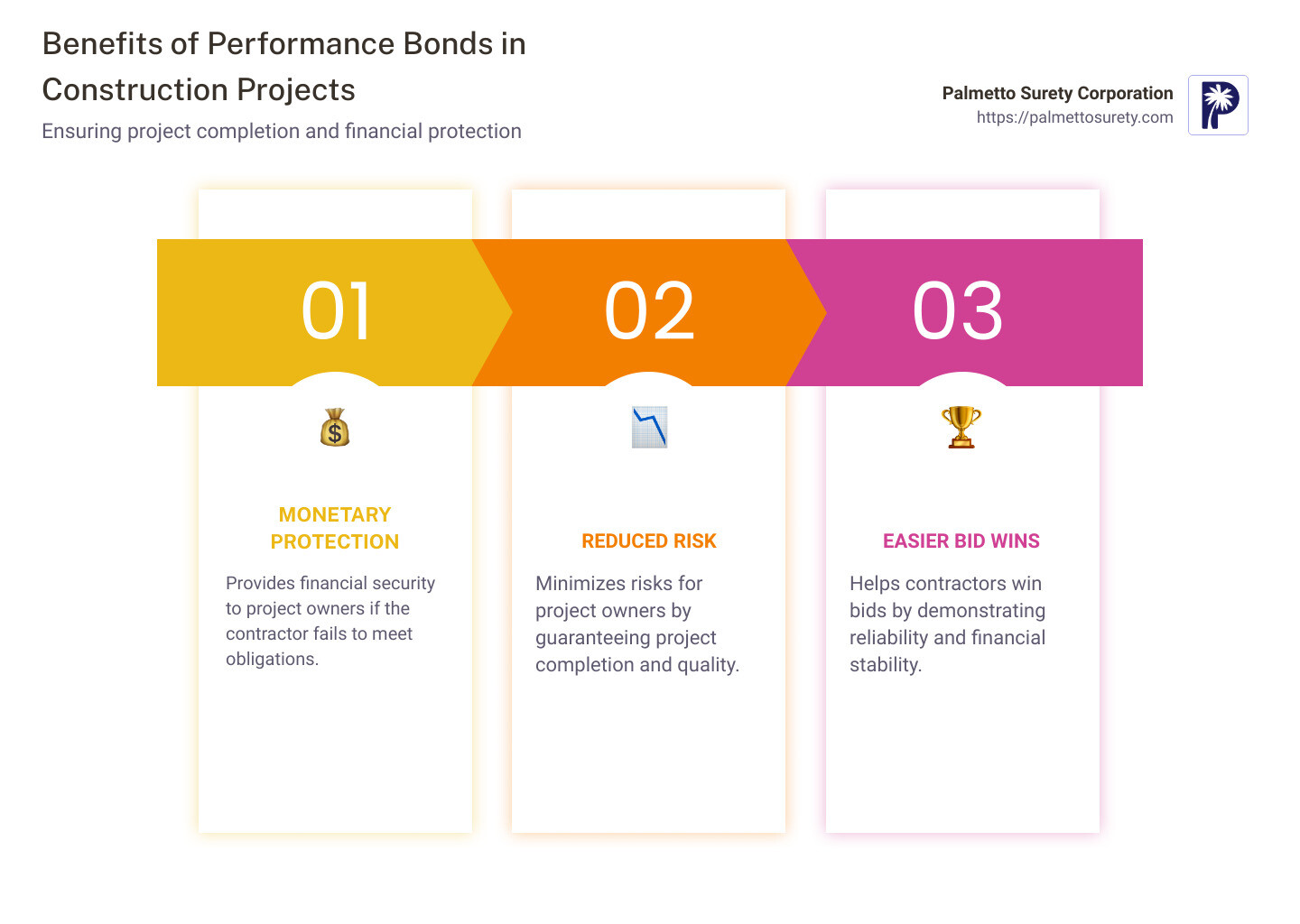
Financial Protection: A performance bond for a construction project offers solid financial protection. If a contractor fails to complete the project as agreed, the bond ensures the project owner receives compensation for the resulting financial losses. This includes costs related to hiring a new contractor or fixing substandard work.
Reduced Risk: Performance bonds significantly reduce the risk for developers and project owners. With a bond in place, they can be confident that the project will be completed, even if the original contractor defaults or goes bankrupt.
Easier Bid Wins: Contractors with performance bonds are often viewed as more reliable and trustworthy. This can make it easier for them to win bids, especially on large or government projects where bonds are required by regulations like the Miller Act.
Disadvantages
Denied Payments: One potential drawback is that bond issuers might attempt to deny payment. They could argue that the project owner did not comply with all the bond requirements or try to settle for a lesser amount. This can lead to disputes and delays in receiving compensation.
Underestimated Costs: If the project owner underestimates the cost of non-performance, they might still face financial shortfalls. The bond covers up to its limit, but any costs beyond that are the responsibility of the project owner.
Additional Contractor Costs: Obtaining a performance bond adds an extra cost for the contractor, typically between 1% and 4% of the bond amount. This cost is often passed on to the project owner, increasing the overall project expenses.
In summary, while performance bonds provide essential financial protection and reduce risks, they also come with potential drawbacks like denied payments and additional costs. Understanding these pros and cons can help project owners and contractors make informed decisions about using performance bonds in their construction projects.
How to Obtain a Performance Bond
Steps to Get a Performance Bond
Obtaining a performance bond for a construction project involves several steps. Here’s a simple guide to help you steer the process:
-
Find a Surety Broker: Start by finding a reputable surety broker. They will guide you through the process and help you understand the requirements.
-
Apply for a Letter of Bondability: This non-binding letter indicates the maximum project size the surety is willing to bond for you. It’s based on your credit, experience, and financial status.
-
Submit Financial Information: For smaller bonds (up to $400,000), you might only need good credit and a clean license history. For larger bonds, you’ll need to provide more detailed financial information, such as:
- Balance sheet
- Income statement
- Cash flow statement
- Two years of tax returns
- Bank statements
- Current work schedules
- Letter of experience outlining previously completed work
-
Undergo a Credit Check: Your credit history will be reviewed. Good credit is crucial for qualifying for a performance bond.
-
Receive a Quote: Once the surety has all the necessary information, they will provide a quote. This quote will outline the cost of the bond based on the project size and your financial status.
-
Pay the Premium: If you accept the quote, you’ll need to pay the premium, which is a small percentage of the bond amount.
Cost of a Performance Bond
The cost of a performance bond for a construction project varies based on several factors:
- Project Size: Larger projects typically have higher bond amounts, which can increase the cost.
- Creditworthiness: Contractors with better credit histories usually receive lower rates.
- Financial Strength: Sureties look at your financial statements to assess your ability to complete the project and repay any claims.
Typical Rates: The cost generally falls between 1% and 4% of the bond amount. For example, on a $500,000 project, the bond could cost between $5,000 and $20,000.
Example: If you’re a contractor bidding on a $1 million project, and your bond rate is 2%, the bond will cost you $20,000. This cost is often included in your project bid, effectively passing it on to the project owner.
Understanding the steps and costs involved in obtaining a performance bond can help you prepare better and ensure a smooth bonding process. This not only protects your business but also builds trust with project owners.
Frequently Asked Questions about Performance Bonds
What is a 10% Performance Bond?
A 10% performance bond is a type of surety bond that guarantees a contractor will pay a predetermined sum, usually 10% of the contract value, if they fail to meet their obligations. This bond replaces the bid bond once the contract is awarded and work begins.
Example: If a contractor is awarded a $500,000 project, a 10% performance bond would require them to secure a $50,000 bond. This ensures the project owner can cover additional costs if the contractor defaults.
What Are the Three Main Bonds for a Construction Project?
In construction, there are three main types of bonds:
-
Bid Bond: This bond ensures that a contractor submits a serious bid and will follow through if awarded the contract. If they back out, the project owner can claim the bond to cover the difference between the contractor’s bid and the next lowest bid.
-
Performance Bond: This bond guarantees the contractor will complete the project according to the contract terms. If the contractor fails to do so, the project owner can claim the bond to cover the cost of completing the project.
-
Payment Bond: This bond ensures that subcontractors, laborers, and suppliers get paid. If the contractor fails to pay them, claims can be made against the payment bond.
How Long Does a Performance Bond Last?
The duration of a performance bond depends on the terms of the contract. Most performance bonds last for the duration of the project, typically 12 months, but they can extend up to 36 months or longer.
Renewal Options: Some performance bonds are renewable, meaning they can be extended if the project takes longer than expected. Others are non-renewable and expire at the end of the contract period.
Contract Terms: Always check the specific terms in your contract to understand the exact duration and conditions of your performance bond. This ensures you are aware of any renewal requirements and deadlines for making claims.
Understanding these key aspects of performance bonds helps contractors and project owners manage their responsibilities and protect their financial interests throughout the construction process.
Conclusion
At Palmetto Surety Corporation, we understand the complexities and demands of the construction industry. Our goal is to provide quick approval and efficient service for all your bonding needs.
With over two decades of experience, our team has the expertise to steer the intricate requirements of construction projects. We offer a streamlined process to secure a performance bond for construction projects, ensuring you can focus on what’s most important—completing your project on time and within budget.
Our state-of-the-art underwriting platform simplifies the process, allowing you to obtain your performance bond swiftly. This efficiency not only saves you time but also helps you meet project deadlines without unnecessary delays.
As a trusted partner in the industry, Palmetto Surety Corporation is committed to supporting your success. Whether you’re a contractor, project owner, or surety agent, we provide the reliability and expertise you need to mitigate risks and ensure project completion.
For more information on securing a performance bond for your next construction project, visit our service page.

Experience hassle-free bonding with Palmetto Surety Corporation—your partner in construction success.


