


Freight Broker Bond Cost: 2024’s Ultimate Guide Explained
Understanding Freight Broker Bond Costs
If you’re a freight broker or considering becoming one, understanding freight broker bond cost is crucial for maintaining compliance and avoiding financial pitfalls. A freight broker bond (BMC-84) is mandatory for securing your license with the Federal Motor Carrier Safety Administration (FMCSA), ensuring you adhere to regulations.
Quick Answer:
– Cost Range: Starting at $938 annually
– Bond Amount: $75,000
– Factors: Credit score, business experience, financial stability
These bonds guarantee that brokers honor their contractual obligations to shippers and carriers. Without one, you can’t operate legally, making them essential despite the cost involved.
I’m Haiko de Poel Jr., an expert in marketing and digital change at Palmetto Surety Corporation. With experience in surety bonds, including freight broker bond costs, I’ll guide you through the essentials so you can steer this important business requirement with ease.
Quick freight broker bond cost definitions:
– brokers that work with new authority
– freight brokers
– transportation brokers
What is a Freight Broker Bond?
A freight broker bond, also known as a BMC-84 bond, is a type of surety bond required by the Federal Motor Carrier Safety Administration (FMCSA) for all U.S. freight brokers and forwarders. This bond ensures that brokers operate in compliance with federal regulations and fulfill their contractual obligations to shippers and carriers.
Definition and Purpose
The primary purpose of a freight broker bond is to provide a financial guarantee that brokers will adhere to the terms of their contracts and the regulations set forth by the FMCSA. If a broker fails to meet these obligations, the bond can be used to compensate the harmed parties, such as shippers or carriers, up to the bond amount.
Quick Facts:
– Bond Amount: $75,000
– Term: 1 year (renewable annually)
– Cost: Starts at $938 per year

FMCSA Requirements
The FMCSA mandates that all freight brokers and forwarders secure a $75,000 surety bond (BMC-84) or a trust fund agreement (BMC-85) before they can start operations. This requirement aims to protect the interests of shippers and carriers by ensuring that brokers are financially responsible and adhere to industry standards.
Key FMCSA Requirements:
1. File an OP-1 Application for Motor Property Carrier and Broker Authority.
2. Provide a $75,000 BMC-84 Surety Bond or BMC-85 Trust Fund Agreement.
3. Submit BOC-3 (Designation of Process Agent).
4. Pay a $300 Filing Fee.
Why is the Bond Necessary?
The bond acts as a safeguard, ensuring that brokers:
– Pay their business partners on time.
– Comply with federal regulations.
– Maintain ethical business practices.
If a broker fails to meet these requirements, claims can be made against the bond, and the surety company will cover valid claims up to the bond amount.

Real-World Example
Consider a scenario where a freight broker fails to pay a carrier for their services. The carrier can file a claim against the broker’s bond. If the claim is valid, the surety company will compensate the carrier, ensuring the broker’s failure doesn’t financially harm the carrier.
This bond not only protects business partners but also helps maintain the integrity and trustworthiness of the freight brokerage industry.
Next Section: How Much Does a Freight Broker Bond Cost?
Understanding the cost of a freight broker bond is crucial for budgeting and financial planning. In the next section, we’ll break down the factors that influence bond costs and provide a detailed cost range.
How Much Does a Freight Broker Bond Cost?
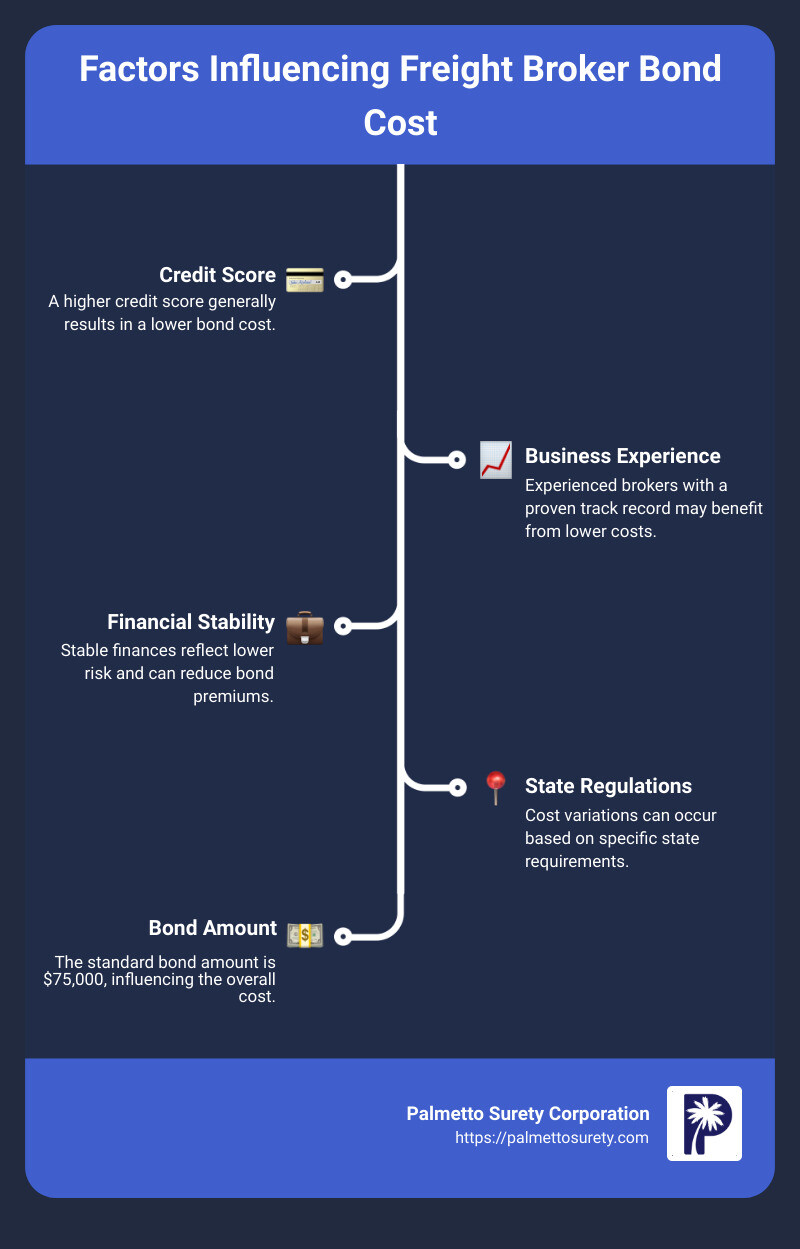
Understanding the freight broker bond cost is essential for anyone looking to operate as a freight broker. The cost isn’t a flat rate; it’s influenced by several factors, including your credit score, business experience, and financial stability. Let’s break down these factors and see how they impact the cost.
Factors Influencing Freight Broker Bond Cost
1. Credit Score:
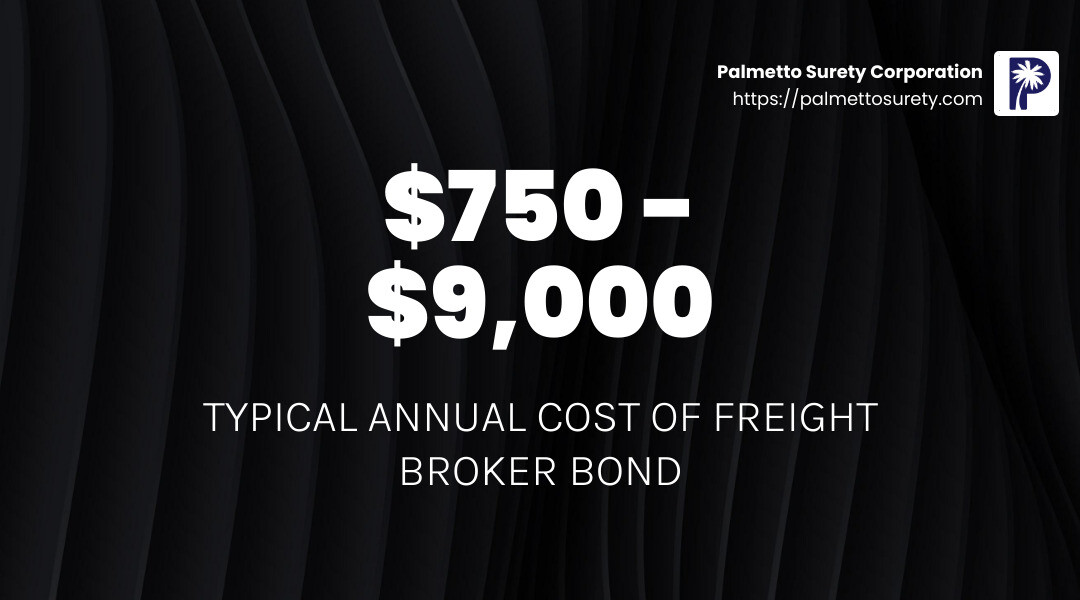
Your credit score is one of the most significant factors. Surety companies use it to gauge your financial reliability. Higher credit scores typically result in lower bond premiums. For example, a broker with an excellent credit score might pay around $938 annually, while someone with a lower score could pay much more.
2. Business Experience:
Experienced brokers often qualify for lower rates. If you’ve been in the industry for a while and have a track record of fulfilling your obligations, surety companies see you as a lower risk.
3. Financial Stability:
Surety companies also look at your overall financial health. This includes your business’s financial statements, assets, and liabilities. A financially stable business is considered less risky and may benefit from lower bond costs.
Cost Breakdown by State
The cost of a freight broker bond can also vary by state due to different regulatory environments and market conditions. Here’s a quick look at how state variations can impact bond costs:
- California: Due to its large economy and high volume of freight activity, bond costs might be slightly higher.
- Texas: With a booming logistics sector, costs are competitive, but they can vary depending on the specific region within the state.
- New York: Urban areas with high costs of living can see higher bond premiums.
- Florida: Competitive market conditions often lead to more competitive bond rates.
Regional Differences
Regional economic conditions also play a role. For instance, in states with higher freight volumes or more stringent regulations, brokers might see higher bond premiums. Conversely, regions with less freight activity or more lenient regulations might offer lower rates.
Quick Fact:
According to FMCSA data, as of August 8th, 2024, there are 26,327 active broker and freight forwarder licenses in the U.S., highlighting the widespread need for these bonds.
Next Section: How to Obtain a Freight Broker Bond
In the next section, we’ll guide you through the process of obtaining a freight broker bond, including the application process, required documents, and how to file with the FMCSA.
How to Obtain a Freight Broker Bond
Steps to Apply for a Freight Broker Bond
Applying for a freight broker bond is straightforward, especially when you know what to expect. Here are the key steps to get you started:
1. Online Application:
Begin by accessing an online portal, such as the one provided by Palmetto Surety Corporation. This portal lets you apply 24/7, making it convenient to start the process anytime.
2. Personal Information:
If you’re starting a new freight brokerage, you will need to provide your personal details. This includes your name, contact information, and Social Security number. This information helps the surety company assess your application.
3. Company Information:
For existing freight companies, you will need to provide additional details. This includes your company name, address, and your 6-8 digit motor carrier number as filed with the FMCSA. Ensure that all information is current and accurate to avoid delays.
4. Required Documents:
Gather and submit any required documents. These typically include financial statements, proof of business experience, and possibly personal financial information. This documentation helps the surety company understand your financial stability and risk profile.
5. Free Quote:
Once you’ve submitted your application, you’ll receive a free quote. The quote will outline the premium cost based on your provided information. Experienced brokers with good credit may qualify for lower rates.
6. Payment:
After reviewing your quote, proceed with the payment. Most surety companies offer multiple payment options, including online payment methods for convenience.
Electronic Filing with FMCSA
After obtaining your bond, the next step is to file it with the FMCSA.
1. Digital Submission:
The FMCSA now requires electronic submission of all bond information. Once you’ve paid for your bond, your surety company will handle this for you. They will electronically file the BMC-84 bond directly with the FMCSA.
2. Verification Process:
After submission, you can verify your bond status with the FMCSA. This ensures that your bond is active and that your freight broker authority is in compliance with federal regulations.
3. Updates and Renewals:
If you need to update any information on your bond, contact your bond company. They will file the necessary changes electronically with the FMCSA. Freight broker bonds must be renewed annually. Simply pay your renewal invoice to keep your bond active.
By following these steps, you can efficiently obtain and file your freight broker bond, ensuring compliance and smooth operation of your brokerage.
In the next section, we’ll explore alternatives to freight broker bonds, such as the BMC-85 trust fund agreement.
Alternatives to Freight Broker Bonds
BMC-85 Trust Fund Agreement
While many freight brokers choose the BMC-84 surety bond, there’s another option: the BMC-85 trust fund agreement. This alternative can be a good fit for some, especially larger brokerages with ample financial resources.
Full Collateral Requirement
The BMC-85 trust fund agreement requires brokers to deposit $75,000 in full collateral into a trust fund. This is a significant upfront cost. Because of this, it’s typically chosen by larger, well-established brokerages that have the financial stability to handle such a substantial commitment.
Trust Fund Details
Here’s how the BMC-85 works:
- Deposit: You place $75,000 into a trust fund. This money acts as a financial guarantee that you will fulfill your obligations as a freight broker.
- Trustee: The funds are managed by a trustee, who ensures that the money is available to cover any valid claims against your brokerage.
- Claims: If a claim is made against your brokerage, the trustee will use the funds in the trust to pay the claim.
Upfront Collateral vs. Annual Premium
One of the main differences between the BMC-85 trust fund agreement and the BMC-84 surety bond is how the financial guarantee is provided:
- BMC-85: Requires a full $75,000 upfront. This can be a heavy financial burden for smaller or newer brokerages.
- BMC-84: Requires only an annual premium, which is a percentage of the $75,000 bond amount. This is more manageable for those who don’t have large amounts of capital readily available.
Comparison with BMC-84
While both the BMC-85 and BMC-84 serve the same purpose—ensuring compliance with FMCSA regulations—there are key differences:
- Cost: BMC-85 requires full collateral upfront, making it more suitable for larger brokerages. BMC-84 requires an annual premium, which is more accessible for smaller or newer businesses.
- Risk Assessment: BMC-84 involves a surety company’s risk assessment, which can affect the premium cost based on factors like credit score and business experience. With BMC-85, the full collateral requirement bypasses this assessment.
Example: A Large Brokerage’s Choice
Consider a large brokerage with substantial capital. They might prefer the BMC-85 trust fund agreement to avoid the ongoing annual premiums of the BMC-84 surety bond. By depositing $75,000 upfront, they secure their compliance and potentially save on long-term costs.
In summary, the BMC-85 trust fund agreement is a viable alternative for those who can afford the upfront collateral. It’s crucial to weigh the pros and cons of each option to determine the best fit for your brokerage.
Next, we’ll discuss how to renew your freight broker bond to ensure continuous compliance with FMCSA regulations.
How to Renew Your Freight Broker Bond
Updating Bond Information
Renewing your freight broker bond is a straightforward process, but it’s essential to stay on top of it to maintain your compliance with FMCSA regulations.
Annual Renewal
Freight broker bonds need to be renewed annually. This means every year, you must pay the renewal premium to keep your bond active.
Invoice Payment
When it’s time to renew, you’ll receive an invoice from your bond company. Simply pay this invoice to renew your bond for another year. Make sure to pay on time to avoid any lapse in coverage.
FMCSA Verification
After your payment is processed, your bond company will verify your bond status with the FMCSA. This ensures that your bond remains active and your brokerage stays compliant.
Contact Bond Company
If you need to update any information on your bond, such as your business address or contact details, reach out to your bond company. They will handle the updates and file the necessary changes with the FMCSA.
Electronic Updates
Most bond companies, including Palmetto Surety Corporation, offer electronic updates. This means you can easily submit changes online, making the process quick and efficient.
FMCSA Filing
Once your bond company updates your information, they will electronically file the changes with the FMCSA. This ensures that your bond details are current and accurate in the FMCSA database.
To keep your freight broker bond active and in good standing, follow these steps each year. This will help you avoid any disruptions in your operations and maintain your compliance with federal regulations.
Next, we’ll dive into frequently asked questions about freight broker bond costs to help you better understand what to expect financially.
Frequently Asked Questions about Freight Broker Bond Costs
What is the minimum cost for a freight broker bond?
The minimum cost for a freight broker bond can vary, but it typically starts at $938 for the FMCSA-required $75,000 bond. However, this is just a starting point. Your actual premium may differ based on several factors, including your credit score, business experience, and financial stability.
How does credit score affect bond cost?
Your credit score has a significant impact on the cost of your freight broker bond. Surety companies use your credit score to assess the risk of issuing the bond. A higher credit score generally means a lower premium because it indicates that you are less likely to default on your obligations.
For example, a broker with a strong credit score might pay as little as 1.25% of the bond amount, whereas someone with a lower credit score might pay a higher percentage. This is why it’s crucial to maintain good credit to keep your bond costs manageable.
Can I reduce my bond cost over time?
Yes, you can reduce your bond cost over time. Here are a few ways to do that:
- Improve Your Credit Score: Regularly monitor and improve your credit score. Pay off debts and avoid late payments to boost your score.
- Gain Business Experience: The longer you are in business, the more favorable your bond terms can become. Experienced brokers often qualify for lower premiums.
- Demonstrate Financial Stability: Maintain a strong financial profile. This includes having a healthy business balance sheet and demonstrating consistent revenue growth.
By focusing on these areas, you can potentially lower your bond premium in future renewals.
These FAQs cover the basics of freight broker bond costs. If you have more questions or need personalized advice, reach out to Palmetto Surety Corporation for expert assistance. Next, we’ll discuss the alternatives to freight broker bonds, including the BMC-85 trust fund agreement.
Conclusion
Understanding the freight broker bond cost is essential for any freight broker looking to stay compliant and manage expenses effectively. As we’ve seen, several factors influence the cost, including your credit score, business experience, and financial stability.
At Palmetto Surety Corporation, we pride ourselves on providing quick approval and efficient service for all your surety bond needs. Our advanced technology allows you to purchase, print, and manage your surety bonds with ease.
Our dedicated support team is available 24/7 to assist you through every step of the process, ensuring you get the best possible service. Whether you need to apply for a new bond or renew an existing one, we make it straightforward and hassle-free.
Quick Approval: We understand the urgency of getting your bond approved. Our streamlined process ensures that you get quick approval, so you can focus on running your business.
Efficient Service: From application to filing with the FMCSA, our efficient service minimizes the time and effort required on your part. We handle the complexities, so you don’t have to.
For more information on how Palmetto Surety Corporation can help you secure your freight broker bond, visit our Freight Broker Surety Bond page.
By choosing Palmetto Surety Corporation, you’re opting for a reliable partner that understands your industry’s unique needs and offers the best solutions at competitive rates.


