


Purchase a Lost Title Bond: 8 Pro Tips for Stress-Free Success
Why You Need to Know How to Purchase a Lost Title Bond
When you need to purchase a lost title bond, you’re typically dealing with a vehicle ownership situation where the original title is missing, stolen, or defective. Here’s the quick process:
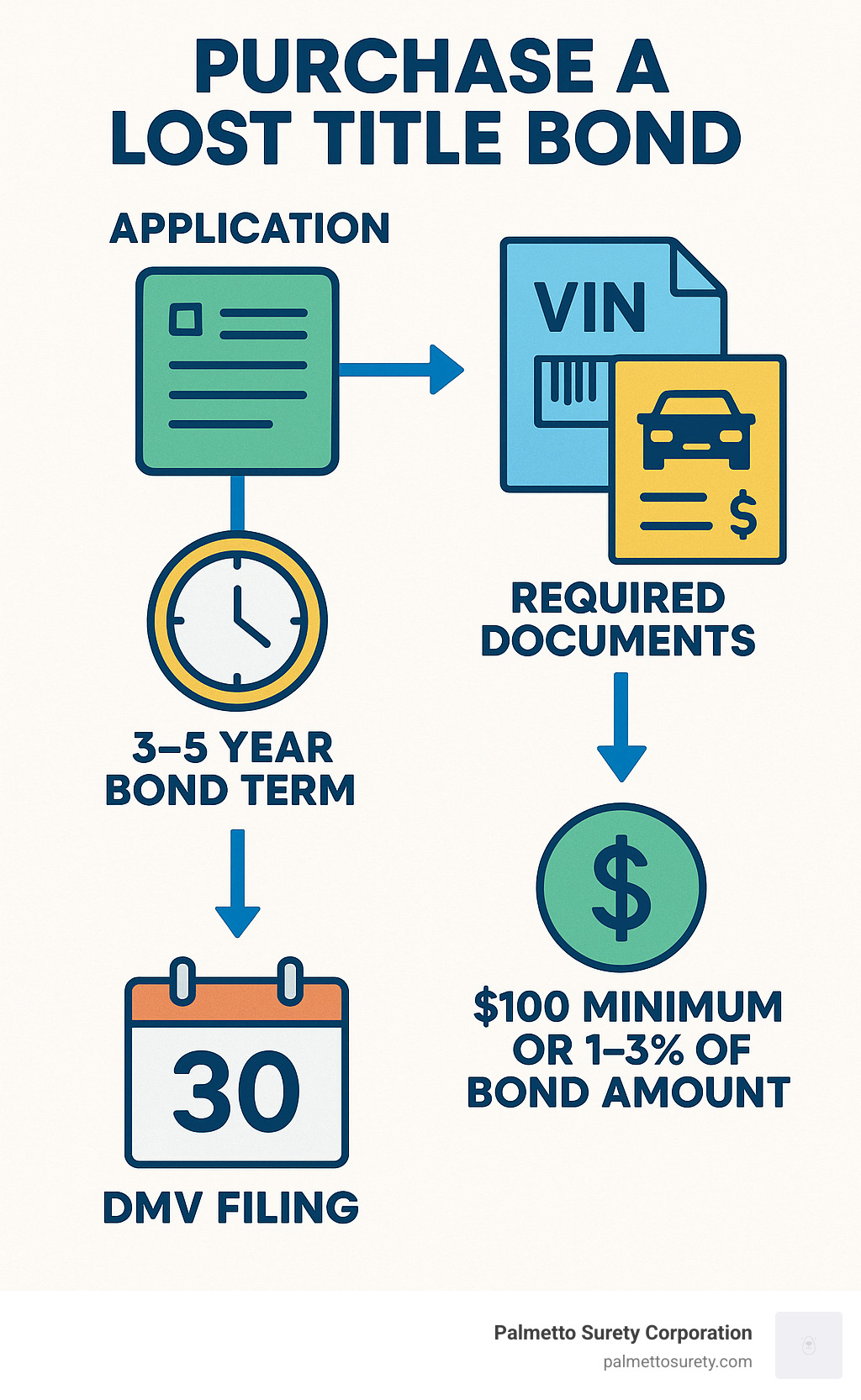
To Purchase a Lost Title Bond:
1. Verify eligibility – Check if your vehicle qualifies (usually vehicles worth >$3,000 and <30 years old)
2. Determine bond amount – Most states require 1.5× the vehicle’s fair market value
3. Apply online or by phone – Provide vehicle details, VIN, and personal information
4. Pay the premium – Typically $100 minimum or 1-3% of bond amount
5. Receive bond instantly – Emailed within minutes, with original mailed if required
6. File with DMV – Submit bond with title application within 30 days
A lost title bond is essentially a financial guarantee that protects previous owners, lien holders, and future buyers if someone challenges your ownership. The bond typically lasts 3-5 years depending on your state, and if no claims are made during that period, you can obtain a standard title.
Why bonds are required: States use this system to prevent title fraud while allowing legitimate owners to register vehicles when paperwork goes missing. As one frustrated forum user put it: “I’m fucking pissed” about losing their title – but bonded titles provide a legal solution to this common problem.
I’m Haiko de Poel Jr, and through my work with Palmetto Surety Corporation – one of the fastest-growing US surety bond companies – I’ve helped countless clients steer the process to purchase a lost title bond efficiently. My experience in redesigning and relaunching surety bond processes has given me deep insight into making complex bonding procedures simple and accessible.
Easy purchase a lost title bond word list:
– car title bond near me
– how to get a title for a car without title
– indemnity bond for car title
Lost Title Bond 101: Definition, Parties & Purpose


When you need to purchase a lost title bond, you’re essentially buying a financial safety net that helps you get legal ownership of your vehicle. Also called a certificate of title bond or bonded title, this surety bond acts like a substitute for your missing vehicle title while protecting everyone involved.
Think of it this way: the state wants to make sure you’re not trying to steal someone’s car or commit fraud. But they also understand that paperwork gets lost, stolen, or damaged. The bond bridges this gap by saying “if this person isn’t the real owner, we’ll pay for any damages.”
The lost title bond creates a three-party agreement that keeps everyone protected. The principal is you – the vehicle owner who needs the bond. The obligee is your state’s DMV or Department of Revenue that requires the bond. And the surety company is the insurance company that backs the bond and guarantees payment if something goes wrong.
This system provides fraud protection for prior owners, lien holders, and future buyers. If someone later proves they have a legitimate claim to your vehicle, they can file against the bond for compensation. Most bonds run for a three-year term, though some states require five years.
How a lost title bond works
The process works through a three-party agreement that creates a financial guarantee for everyone involved. When you purchase a lost title bond, you’re making a promise to the state that you’re the rightful owner of the vehicle.
Here’s where it gets interesting: if someone files a valid claim against your bond, the surety company will investigate thoroughly. If they determine the claim is legitimate, they’ll provide claim reimbursement up to the full bond amount to the claimant.
But here’s the catch – and it’s an important one. If the surety company pays out a claim, you must repay them every single dollar. This isn’t insurance that protects you; it’s a guarantee that protects everyone else from you. This arrangement creates a powerful incentive for honesty and helps prevent title fraud.
The good news? Most bonds never have claims filed against them. After your bond term expires (typically three years), you can apply for a standard title and your bond obligation ends completely.
When & Why You Must Purchase a Lost Title Bond

Let’s be honest – nobody wakes up thinking “I can’t wait to purchase a lost title bond today!” But sometimes life throws you curveballs, and you end up needing one to legally register your vehicle.
The reality is simple: when you can’t provide adequate proof of vehicle ownership to your state’s DMV, you’ll be required to get a bonded title. This isn’t a suggestion or recommendation – it’s the law in most states before they’ll issue you a title.
The trigger point usually comes down to your vehicle’s value. Most states require bonds for vehicles worth more than a certain amount. Take Tennessee, for example – if your vehicle is worth more than $3,000 and less than 30 years old, you’ll need a bond. Below that threshold, you might qualify for a simpler Certification of Ownership form instead.
Here’s where it gets interesting: the bond amount is typically 1.5 to 2 times your vehicle’s fair market value. So if your car is worth $10,000, you’ll need a bond for $15,000 to $20,000. Before you panic about the cost, remember you’re only paying a small premium (usually 1-3% of the bond amount), not the full value.
Common situations that trigger the need to purchase a lost title bond
After helping hundreds of clients through this process, I’ve seen just about every scenario that leads someone to need a bonded title. The lost or stolen title situation is probably the most straightforward – you had the paperwork but it disappeared before you could transfer it into your name.
Then there’s the frustrating “never received title” scenario. You bought a vehicle in good faith, but the seller never provided the title and has since vanished into thin air. One forum user perfectly captured this feeling about their Miata purchase: “Thanks. I’m fucking pissed” – and honestly, who wouldn’t be?
Incorrect title assignments create another common headache. Maybe the previous owner filled out the title wrong, or it got assigned to the wrong person. Either way, it’s now legally invalid and you need a bond to move forward.
The abandoned vehicle purchase situation comes up more often than you’d think. You find a great deal at a tow yard, estate sale, or similar situation, but there’s no proper title documentation. A bond becomes your path to legal ownership.
Sometimes the lender goes out of business before releasing your title after you’ve paid off the loan. It’s rare, but it happens, and a bonded title is often your only recourse.
Custom builds and kit cars present their own unique challenges since they never had an original title to begin with. A bonded title establishes that first legal ownership record.
State-by-state differences & exemptions
If you’re hoping for consistency across state lines, prepare for disappointment. Each state has its own rules, and they can vary significantly.
Tennessee keeps things relatively simple with a 3-year bond term at 1.5 times vehicle value, exempting vehicles worth $3,000 or less and classics 30 years or older.
Texas also uses a 3-year term at 1.5 times value, but has more extensive eligibility requirements you’ll need to steer.
Florida gets pickier – they require 2 times the KBB value for a 3-year term, but only allow bonded titles for vehicles aged 10-25 years from private sales.
Georgia stretches the bond term to 4 years and requires 2 times retail value with a $5,000 minimum. They also limit eligibility to vehicles from 1986 or newer.
Some states don’t offer bonded titles at all, forcing you to go through the court system instead. Before you start gathering documents and filling out applications, check with your local DMV to understand your state’s specific requirements. Trust me – a quick phone call upfront can save you hours of frustration later.
How to Purchase a Lost Title Bond: Step-by-Step

The process to purchase a lost title bond has become much simpler than it used to be. What once took weeks of paperwork and phone calls can now be completed online in just a few hours. At Palmetto Surety Corporation, we’ve helped thousands of clients through this process over our 20+ years in business.
The key is understanding that this isn’t just about filling out forms – you’re creating a legal guarantee that protects everyone involved. That’s why we’ve broken it down into four clear steps that remove the guesswork and get you back on the road quickly.
Step one involves verifying that you actually need a bond and determining your vehicle’s correct value. This sounds basic, but getting it wrong can delay everything by weeks. You’ll need to confirm your vehicle isn’t stolen, check for existing liens, and get an accurate appraisal.
Step two is gathering all your documents before you start the application. Nothing slows down the process like realizing halfway through that you’re missing a key piece of paperwork. The good news is that most of what you need is probably already in your possession.
Step three is the actual application and payment process. With online applications, this typically takes less than 30 minutes, and most approvals happen within hours. The premium is usually much less than people expect – often just $100 to $300 for most vehicles.
Step four involves filing your bond with your state’s DMV and receiving your bonded title. This is where many people stumble because each state has different requirements and deadlines. Some states give you 30 days to file, while others are more flexible.
The entire process from start to finish typically takes 1-2 weeks, with most of that time spent waiting for the DMV rather than the surety company. Our clients often tell us they wished they’d known how straightforward it would be before they started worrying about it.
1. Verify eligibility & valuation before you purchase a lost title bond
Think of this step as your homework before spending any money. Getting the details wrong here can delay your application for weeks or even disqualify you entirely, so it’s worth taking the time to get everything right upfront.
Start with a VIN verification to make sure your vehicle isn’t reported stolen. This might seem obvious, but you’d be surprised how often people unknowingly buy vehicles with theft reports. Most states require a law enforcement inspection or official theft check before they’ll approve any bonded title application. Better to find out now than after you’ve paid for your bond.
Next, run a thorough lien search to verify there are no outstanding loans on the vehicle. Banks and credit unions hold liens until loans are paid off, and vehicles with active liens typically can’t qualify for bonded titles. If you find an active lien, you’ll need to work directly with the lender instead of pursuing a bonded title.
Vehicle valuation is where many people get tripped up. You need to determine your vehicle’s fair market value using sources your state recognizes. Kelley Blue Book is the gold standard that most DMVs accept, but some states also accept dealer appraisals or other professional valuations if KBB doesn’t cover your specific vehicle.
Here’s a pro tip from our years of experience: always print out your valuation report and keep it with your other documents. DMV clerks want to see exactly how you arrived at your vehicle’s value, and having official documentation speeds up the approval process significantly.
Finally, contact your local DMV to confirm the exact bond amount required before you purchase a lost title bond. While most states use the standard 1.5× vehicle value formula, some have different calculations or minimum amounts that could affect your costs. A quick phone call can save you from ordering the wrong bond amount and having to start over.
The time you spend on this verification step pays dividends later. We’ve seen too many clients rush through this process only to find their vehicle doesn’t qualify or they’ve calculated the wrong bond amount. Take it slow, get it right, and the rest of the process will go smoothly.
2. Gather required documents
Getting your paperwork organized upfront can turn a potentially frustrating process into a smooth experience. I’ve seen too many clients get excited about getting their bond, only to hit roadblocks because they’re missing a key document.
The good news? Most of what you need is probably already in your possession or easy to obtain.
Start with your vehicle details. You’ll need the complete VIN, year, make, model, and body type. Sometimes states also want engine information, so having your registration handy (even if it’s expired) can save you a trip to peek under the hood.
Personal identification comes next. Your full legal name, current address, and driver’s license number are standard requirements. Make sure the name on your application matches your ID exactly – even small discrepancies can slow things down.
Proof of ownership is where things get interesting. A bill of sale is ideal, but don’t panic if you don’t have one. A notarized statement from the seller explaining the transaction works just as well. We’ve helped clients who bought vehicles from estate sales, tow yards, and even friendly neighbors who lost their paperwork years ago.
If the seller has vanished into thin air (unfortunately common with private sales), a detailed written explanation of how you acquired the vehicle can often substitute. Include dates, locations, amounts paid, and any witnesses to the transaction.
Your vehicle appraisal documentation needs to come from a recognized source. A printout from Kelley Blue Book usually does the trick, but some states accept dealer appraisals or other professional valuations if KBB doesn’t cover your specific vehicle.
Finally, check if your state requires special forms. Many have their own bonded title application forms that must be completed before you can purchase a lost title bond. Tennessee’s Certification of Ownership form is a perfect example – it can sometimes eliminate the need for a bond entirely if your vehicle qualifies.
The key is being thorough but not perfect. Missing one document won’t derail your application, but having everything ready means we can process your bond faster and get you back on the road sooner.
3. Apply and pay for your bond
This is where the rubber meets the road, and honestly, it’s much easier than most people expect. At Palmetto Surety Corporation, we’ve been perfecting this process for over 20 years, and we can now approve most applications within hours rather than the weeks it used to take.
The application itself is surprisingly straightforward. For most bonds under $25,000, you can complete everything online in about 10 minutes. You’ll simply enter all the vehicle details and personal information you gathered in step 2. Our online system walks you through each field, so there’s no guesswork about what information is needed.
Here’s something that surprises many clients: for bonds under $25,000, we typically don’t even run a credit check. That’s right – your credit score usually won’t prevent you from getting approved. Even if you need a larger bond that requires underwriting, we can work with clients who have less-than-perfect credit, though the premium rates may be slightly higher.
The cost to purchase a lost title bond is much more affordable than people think. We start at just $100 for bonds up to $6,000. For higher amounts, you’ll typically pay between 1-3% of the total bond amount. So if you need a $15,000 bond, you’re looking at somewhere between $150-$450 – not $15,000. Many clients are relieved when they realize they’re only paying the premium, not the full bond amount.
Once you’re approved and payment is processed, we deliver your bond documents electronically within minutes. You’ll receive everything via email, ready to print and take to your DMV. If your state specifically requires original documents with wet signatures (some still do), we can overnight those to you as well.
The whole experience from start to finish usually takes less than an hour for straightforward cases. It’s one of those processes that sounds intimidating but turns out to be pretty painless when you work with the right company.
4. File your bond and receive the bonded title
Once you’ve successfully applied and paid for your bond, you’re ready for the final step: getting that bonded title in your hands. This is where many people stumble, but it doesn’t have to be complicated.
Timing is everything when you file your paperwork. Most states give you a 30-day window to submit your bond after it’s issued, and missing this deadline is frustrating – you’ll often have to start the entire process over with a new bond. Mark your calendar and don’t wait until the last minute.
Head to your county clerk’s office or local DMV branch with your complete package. You’ll need your signed bond (the one we emailed you), the completed title application form, and any vehicle inspection reports your state requires. Don’t forget to bring payment for applicable fees and taxes – these vary by state but are separate from your bond premium.
The processing time typically runs 2-6 weeks once you submit everything. I know that seems like forever when you’re eager to get your vehicle properly titled, but most states are pretty consistent with their timelines. Some offer expedited processing if you’re willing to pay extra fees, which can be worth it if you need to sell or register the vehicle quickly.
Here’s some good news: temporary registration is available in many states while your bonded title application works its way through the system. This means you can legally drive your vehicle instead of having it sit in your driveway gathering dust. Just ask about temporary tags when you file your paperwork.
At Palmetto Surety Corporation, we’ve seen thousands of clients successfully steer this final step over our 20+ years in business. The key is staying organized and following up if you don’t hear back within the expected timeframe. State agencies are generally helpful, but a friendly phone call never hurts if your application seems to be taking longer than usual.
After the Purchase: Costs, Claims & Expiration
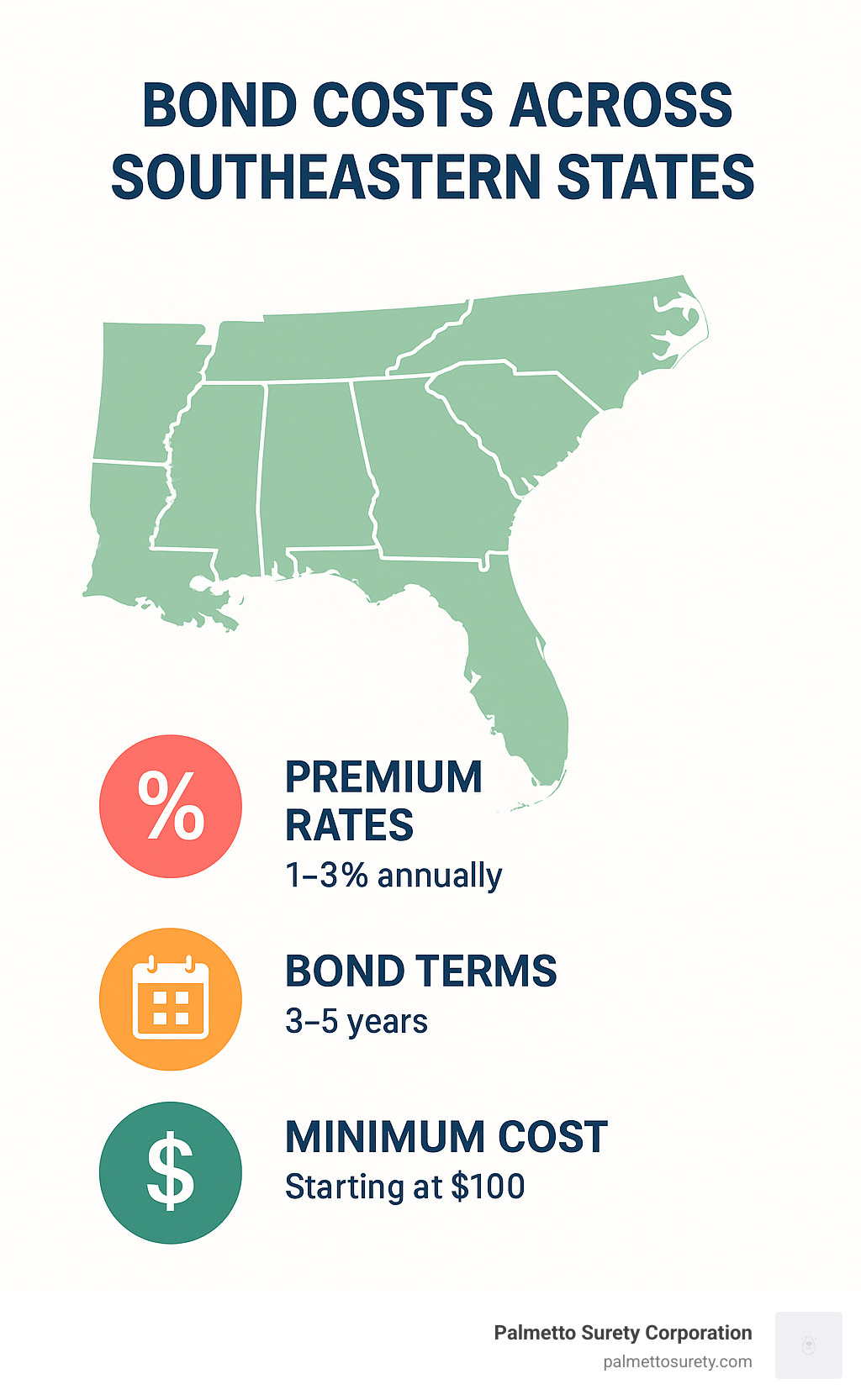
Once you purchase a lost title bond, you’ve started a three to five-year journey that ends with a clear title and full ownership rights. But understanding what happens during those years helps you manage expectations and protect yourself from surprises.
The cost structure often confuses people initially. You’re not paying the full bond amount – you’re paying a premium that typically ranges from $100 to $500 annually. Think of it like car insurance: the bond amount represents the maximum coverage available, while your premium is what you actually pay to maintain that protection.
Here’s something that makes lost title bonds unique: they don’t renew. Unlike other insurance products that automatically continue, your bond has a fixed term. Tennessee bonds last exactly three years, Georgia requires four years, and some states extend the term to five years. Once that time passes without valid claims, you’re done paying premiums forever.
You can absolutely sell, trade, or finance your vehicle during the bond period. A bonded title functions just like any other title for practical purposes. The “bonded” designation doesn’t hurt your vehicle’s value or make it harder to sell – it simply indicates the title went through this alternative process.
What happens if someone files a claim?
While claims against lost title bonds are uncommon, they do happen occasionally. The process is designed to be thorough and fair to all parties involved.
When someone files a claim, the surety company becomes a detective. They’ll investigate the claimant’s ownership evidence, interview all parties, and may even require court proceedings to determine who has the legitimate claim. The burden of proof falls on the claimant – they must demonstrate both legal ownership and actual financial damages.
Simply having old paperwork isn’t enough. We’ve seen claims denied because someone produced a decades-old registration card but couldn’t explain how they lost possession of the vehicle or why they waited years to come forward.
Here’s the part that catches some people off guard: if a claim is valid and the surety pays out, you must reimburse every penny. This includes the claim amount, investigation costs, and any legal fees. This might sound scary, but it’s actually what makes the system work – it prevents people from fraudulently claiming vehicles they don’t own.
The good news is you have full rights to contest any claim and provide evidence supporting your ownership. Many claims are successfully defended when the vehicle owner can demonstrate they purchased the vehicle legitimately.
Life after the three-year bond term
The waiting period eventually ends, and when it does, you’ll appreciate why the process exists. Once your bond term expires without valid claims, you can apply for a standard vehicle title that removes all references to the bonding process.
Your original bond documents get returned to you, and your liability under the bond completely ends. It’s like the bonded title period never happened – you now have the same clear ownership rights as someone who never had title problems.
Best of all, there are no ongoing costs beyond normal registration renewals. After paying premiums for three to five years, you’re free from any bond-related expenses. The clear title you receive is permanent and transferable just like any other vehicle title.
At Palmetto Surety Corporation, we’ve watched thousands of clients go through this process successfully. The relief on their faces when they receive that clear title makes all the paperwork and waiting worthwhile.
8 Pro Tips for a Smooth Bonded Title Journey

After two decades of helping clients purchase a lost title bond throughout the Southeast, I’ve seen what separates smooth experiences from frustrating ones. These insights come from real situations where small details made huge differences in outcomes.
Start with the smartest valuation strategy. When determining your vehicle’s worth, check multiple sources but don’t automatically use the highest value. If Kelley Blue Book shows a range of $8,000-$12,000, using the lower figure could save you hundreds in bond premiums. One savvy client told us, “I saved $300 by getting a dealer appraisal that came in lower than KBB” – and his DMV accepted it without question.
Treat documentation like your financial life depends on it – because it might. Keep copies of every form, email, and receipt in both digital and physical formats. I’ve seen cases where clients saved thousands because they had their original bill of sale when someone challenged their ownership three years later.
Your surety company choice matters more than you think. Working with a financially stable, A-rated company protects you if claims arise years down the road. At Palmetto Surety Corporation, our 20+ years in business means we’ll be here when you need us most. Fly-by-night companies might not be.
Filing timing can make or break your application. Don’t wait until day 29 of your 30-day filing window. DMV processing hiccups happen, and missing deadlines means starting over with a new bond purchase. File within the first two weeks to leave room for unexpected delays.
Stay on top of your application status by checking with your DMV every couple weeks after filing. Government agencies sometimes misplace paperwork or need additional information. Catching problems early prevents the frustration of finding months later that your application stalled.
Address changes during the bond term need immediate attention. Update your information with both the DMV and your surety company. Missing important notices about claims or title processing can create expensive complications that are easily avoided.
Poor credit doesn’t disqualify you from getting a bonded title. We regularly approve applicants with credit challenges, though premiums may be higher. Being upfront about credit issues actually speeds up the process rather than slowing it down.
Insurance requirements for bonded title vehicles vary by state, but maintaining proper coverage throughout the bond term is essential. Some states require specific liability limits or comprehensive coverage for vehicles with bonded titles, so check with your agent to avoid surprises.
The reward for following these guidelines is worth it – holding that clear title in your hands after the bond term expires, knowing you’ve steerd the system successfully and own your vehicle free and clear.
Frequently Asked Questions about Purchase a Lost Title Bond
What does a lost title bond cost?
When you purchase a lost title bond, the cost depends on how much your vehicle is worth and what your state requires for the bond amount. The pricing structure is pretty straightforward once you understand the basics.
For smaller bonds up to $6,000, most surety companies charge a flat rate of $100. This covers the majority of everyday vehicles that need bonded titles. If your bond amount falls between $6,001 and $50,000, you’ll typically pay 1-3% of the total bond amount annually, with that $100 minimum still applying.
Here’s a real-world example: if your state requires a $15,000 bond for your vehicle, you’d pay somewhere between $150 and $450 per year. The exact rate depends on factors like your credit score, which surety company you choose, and any specific requirements in your state.
For bonds over $50,000 – which covers luxury vehicles and commercial equipment – custom underwriting is usually required. These typically start around $750 but can vary significantly based on the specific situation.
You’re not paying the full bond amount. That $15,000 bond might only cost you $200 annually, making it an affordable solution to a frustrating title problem.
Can I purchase a lost title bond with bad credit?
Yes, poor credit won’t stop you from getting a lost title bond. This is one of the most common concerns we hear from clients, and the good news is that credit issues are rarely a dealbreaker.
For most bonds under $25,000, many surety companies don’t even bother running credit checks. The process is streamlined specifically because these are typically lower-risk situations involving everyday vehicles.
When credit does come into play – usually for larger bond amounts – it might affect your premium rate and require some additional paperwork during underwriting. You’ll likely pay a bit more than someone with excellent credit, but you won’t be automatically denied.
At Palmetto Surety Corporation, we’ve helped clients with all kinds of credit challenges secure the bonds they need. Being honest about credit issues upfront actually helps speed up the process, since we can route your application to the right underwriters from the start.
The key is working with an experienced surety company that understands these situations and has relationships with multiple insurance carriers to find you the best available rate.
Can I sell a vehicle with a bonded title?
Absolutely, and this surprises a lot of people. A bonded title works exactly like a regular title for all legal purposes, including selling, trading, or transferring ownership to someone else.
The buyer receives the same full ownership rights as they would with any other title. There’s no difference in their legal standing or ability to register, insure, or eventually sell the vehicle themselves.
The bonded title status also doesn’t hurt your vehicle’s value or make it harder to sell. Most buyers either don’t notice the bonded title designation or don’t care once you explain what it means.
While you’re not legally required to mention the bonded title status in most states, it’s good practice to be transparent with potential buyers. A simple explanation – “I had to get a bonded title because the previous owner lost the paperwork, but it’s exactly the same as a regular title” – usually satisfies any questions.
Once your bond term expires in 3-5 years, you can even apply for a standard title to remove any reference to the bonding process entirely.
Conclusion
When life throws you a curveball and you need to purchase a lost title bond, thousands of people successfully steer this process every year. What might seem like a bureaucratic nightmare at first glance is actually a well-established system designed to protect everyone involved while getting you back on the road legally.
The key to success lies in understanding that this isn’t just about filling out forms – it’s about proving your legitimate ownership while protecting others who might have valid claims. Take your time with the valuation process, gather all your documentation carefully, and don’t rush the filing deadlines. These small steps make the difference between a smooth experience and unnecessary complications.
At Palmetto Surety Corporation, we’ve been helping folks across the Southeast solve their bonded title challenges for over 20 years. We’ve seen every possible scenario, from the straightforward lost paperwork cases to the complex situations involving defunct lenders or abandoned vehicles. Our experience has taught us that most applications can be approved within hours when you have the right guidance and preparation.
What sets us apart isn’t just our fast approval process – it’s our understanding of local requirements across states like Tennessee, Georgia, and Florida. We know that a bond that works perfectly in Nashville might need different handling in Atlanta, and we’ve built our processes around these regional differences.
The best part about bonded titles? They’re temporary solutions that lead to permanent fixes. Once you complete your 3-5 year bond term without any valid claims, you’ll receive a standard title with no restrictions or special markings. It’s like the whole ordeal never happened, except you’ll have learned something valuable about vehicle ownership documentation.
Ready to turn your title troubles into a success story? Our team is standing by to help you purchase a lost title bond quickly and efficiently. With our streamlined online process and expert support, you’ll wonder why you worried about it in the first place.
More info about our surety services


