


What Is a Bail Bonds Agent: 10 Powerful Facts for 2025
Understanding What Is a Bail Bonds Agent in America’s Justice System
What is a bail bonds agent is a question many Americans face during difficult times. A bail bonds agent is a licensed professional who provides financial guarantees to courts, enabling defendants to secure release from jail while awaiting trial by paying a fee (typically 10% of the total bail amount) instead of the full cash bail.
Quick Answer:
– Role: Acts as a surety between defendant and court
– Fee: Usually 10% of total bail amount (non-refundable)
– Purpose: Secures pretrial release for those who can’t afford full cash bail
– Licensing: Required in most states with training and background checks
– Responsibility: Ensures defendant appears for all court dates
The American bail system is nearly unique worldwide. While most countries either hold defendants until trial or release them without payment, the United States operates a commercial bail bond industry worth approximately $14 billion annually. This system involves roughly 15,000 licensed bail bonds agents across the country.
When someone gets arrested, they face a choice: stay in jail until trial or find a way to post bail. For many families, paying the full bail amount in cash simply isn’t possible. That’s where bail bonds agents step in. They pledge money or property as surety to guarantee the defendant will appear in court.
The process seems straightforward, but it involves complex legal relationships, financial risks, and state-by-state regulations. Understanding how bail bonds agents operate helps families make informed decisions during stressful situations.
As Haiko de Poel Jr., I’ve worked extensively in the surety and bail bond industry, helping companies like Palmetto Surety Corporation and National Pretrial steer the complexities of what is a bail bonds agent and their role in America’s justice system. My experience spans marketing, operations, and strategic development within this specialized field, giving me unique insights into how bail bonds agents serve both defendants and the broader legal system.
Basic what is a bail bonds agent glossary:
– Experienced bail bondsman
– are bail bonds agents cops
– can a bail bonds agent arrest you

What Is a Bail Bonds Agent? Definition & Origins
What is a bail bonds agent? Simply put, they’re licensed professionals who help people get out of jail while waiting for trial. When someone can’t afford to pay the full bail amount set by a judge, a bail bonds agent steps in to provide that money—for a fee.
Think of it like this: if the court sets bail at $10,000 and you don’t have that much cash sitting around, a bail bonds agent will pay the court that $10,000. In return, you pay them about $1,000 (typically 10% of the bail amount). The agent is essentially saying to the court, “I guarantee this person will show up for their trial dates.”
The agent works for a surety company—an insurance company that backs these financial guarantees. If the defendant skips town and doesn’t appear in court, the agent and their company are on the hook for the full bail amount. That’s why they’re pretty careful about who they help and often require collateral like property or vehicles.
You might hear different terms thrown around: bail bondsman, bail bond agent, or bond dealer. While people use these interchangeably, there are technical differences. A bail bondsman traditionally posts the actual bail money, while a bail bond agent is licensed to write bonds for a fee. In practice, most professionals do both jobs.
Here’s something interesting: America’s commercial bail bond system is almost unique in the world. Only the Philippines has something similar. Most other countries either keep defendants in jail until trial or release them without requiring payment. This makes understanding what is a bail bonds agent particularly important for Americans navigating our justice system.
Understanding what is a bail bonds agent in today’s justice system
Modern bail bonds agents wear many hats in today’s legal landscape. They’re financial underwriters, risk assessors, and court system facilitators all rolled into one. When your cousin gets arrested at 2 AM on a Saturday, these are the people who can help get them out before Monday morning.
The agent’s job starts with a phone call from a worried family member or friend. They gather information about the defendant, the charges, and the bail amount. Then comes the paperwork—applications, promissory notes, and agreements that spell out everyone’s responsibilities.
What is a bail bonds agent’s biggest responsibility? Making sure defendants show up for court. They often send reminders about court dates, check in with clients, and sometimes even provide transportation to hearings. If someone doesn’t appear, the agent has to track them down or forfeit the full bail amount to the court.
These professionals must steer complex state regulations while operating around the clock. Arrests don’t follow business hours, so many agents offer 24/7 services. They assess each case’s risk level, determine appropriate collateral requirements, and maintain detailed records for regulatory compliance.
The relationship creates a triangle of responsibility between the defendant, the court, and the surety company. The agent serves as the crucial link that makes this system work for families who can’t afford full cash bail.
“what is a bail bonds agent” throughout history
The story of what is a bail bonds agent starts way before America existed. Ancient Mesopotamian clay tablets from 2750 BC show some of the earliest surety agreements. People in the Akkadian city of Eshnunna were already figuring out ways to guarantee someone would show up for legal proceedings without keeping them locked up.
These ancient contracts established a principle that still guides bail bonds today: one person can vouch for another’s promise to appear in court. It’s a concept that traveled through civilizations and eventually landed in American courtrooms.
The first real American bail bond business opened in 1898 when Peter P. McDonough set up shop in San Francisco. The McDonough brothers pioneered the idea of accepting a percentage fee instead of requiring the full cash amount upfront. This innovation made pretrial release accessible to working-class families who couldn’t afford large cash payments.
As the 20th century progressed, the industry grew and evolved. States began implementing licensing requirements, fee caps, and professional standards. The 1984 Bail Reform Act established federal guidelines, while individual states developed their own rules and regulations.
Today’s bail bonds agents operate under much stricter oversight than their historical counterparts. They need proper licensing, background checks, mandatory training, and continuing education. According to scientific research on bail reform, these regulations help ensure the system serves both public safety and defendants’ rights.
The evolution from ancient Akkadian contracts to modern American bail bonds shows how societies have long struggled with balancing justice, public safety, and individual freedom. Understanding this history helps explain why what is a bail bonds agent remains such an important question in today’s justice system.
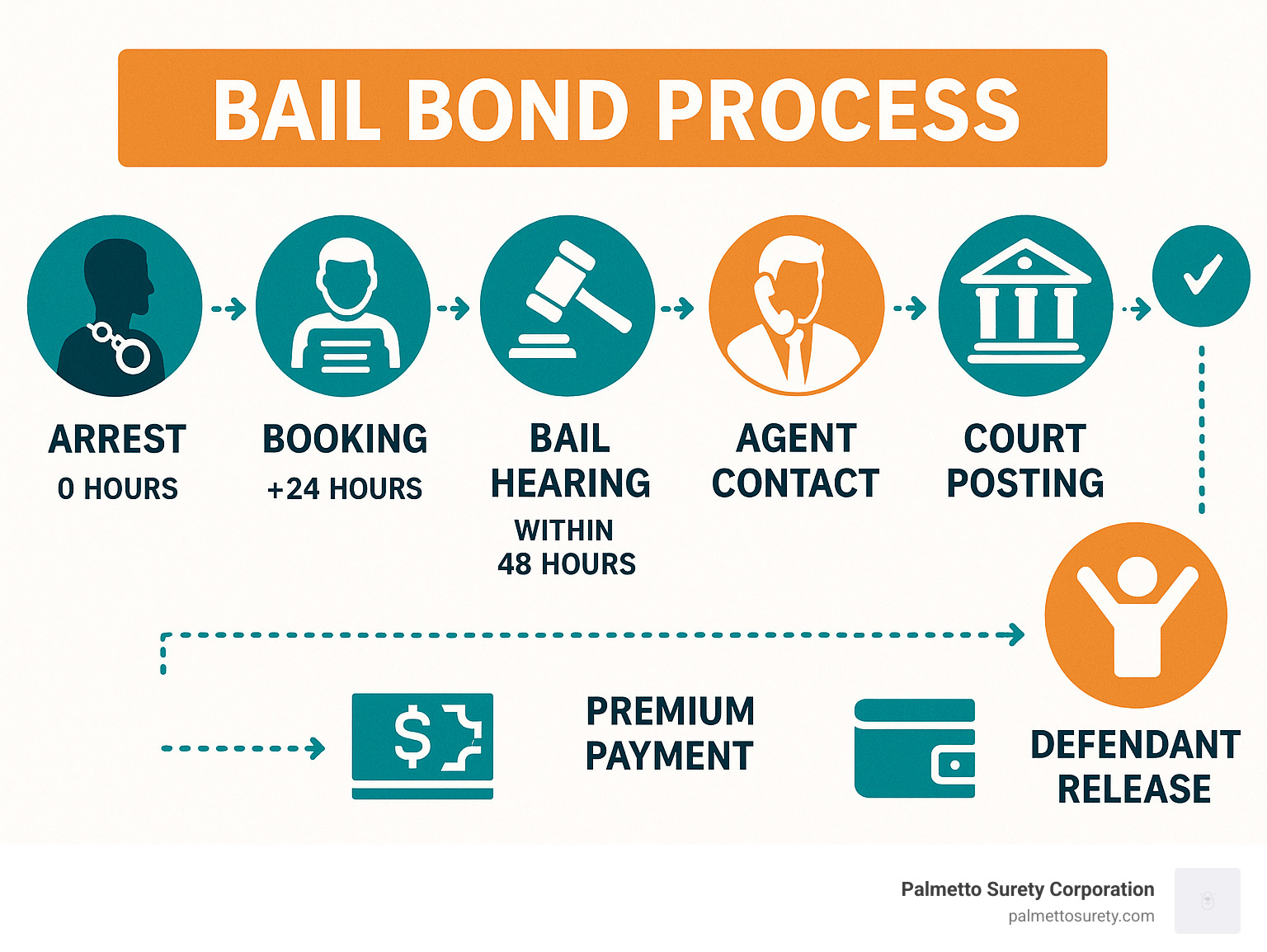
How the Bail Bond Process Works: Step-by-Step Guide

When someone gets arrested, the bail bond process kicks into motion like a well-oiled machine. Understanding how this works can help families steer one of the most stressful experiences they’ll ever face.
The journey starts with arrest and booking. Police take the defendant to jail where they go through the standard intake process—fingerprints, photos, and paperwork. This isn’t glamorous, but it’s necessary for the system to work.
Next comes the bail hearing. A judge looks at several factors to set the bail amount: how serious the charges are, whether the person has a criminal history, and if they might flee before trial. Many courts use preset bail schedules for common crimes, which speeds things up considerably.
Here’s where what is a bail bonds agent becomes crucial. When families realize they can’t afford the full bail amount—which might be $10,000, $50,000, or more—they call a licensed bail bonds agent. The agent needs specific information right away: the defendant’s full name, booking number, what charges they’re facing, and which jail is holding them.
The agent then does a risk assessment. They’re not being nosy—they’re protecting themselves financially. They want to know about the defendant’s job, family ties, and whether the person signing for the bond (called an indemnitor) can handle the responsibility. This determines if they’ll take the case and what collateral they might need.
If everything checks out, it’s paperwork time. The defendant or their family signs a bail bond application, a promissory note explaining the money terms, and other documents outlining everyone’s responsibilities. During the recovery period after a case ends, agents return any collateral that was provided.
The scariest part for agents is forfeiture—when a defendant doesn’t show up for court. The agent then owes the full bail amount to the court, which is why they take the risk assessment so seriously.
From First Call to Release
That first phone call to a bail bonds agent usually happens at 2 AM, and the person calling is often panicked. Good agents understand this and walk families through the process step by step.
The agent needs key information immediately: the defendant’s complete legal name and booking number, which jail facility is holding them, what specific charges were filed, the exact bail amount the court set, and contact information for family members who can vouch for the defendant.
Once the agent has this information, they explain how everything works. The premium—typically 10% of the total bail amount—is completely non-refundable. Even if charges get dropped next week, that money doesn’t come back. For a $20,000 bail, the family pays $2,000 and that’s it.
The paperwork includes a bail bond application with personal and financial details, a promissory note that spells out payment terms, a bond agreement between all parties, and terms and conditions that list what the defendant can and can’t do while out on bail.
After completing the paperwork and collecting payment, the agent posts the bond with the court. Now comes the waiting game. Some defendants walk out within an hour, while others might wait up to 48 hours depending on how busy the jail is.
Once released, the defendant must follow all court compliance rules. This means showing up for every court date, staying within travel restrictions, and avoiding any new legal trouble. The agent often provides court date reminders and monitors compliance throughout the case.
Costs & How Bail Bonds Agents Make Money
The business model for bail bonds agents is straightforward but risky. They make money from non-refundable fees charged to families who need their services.
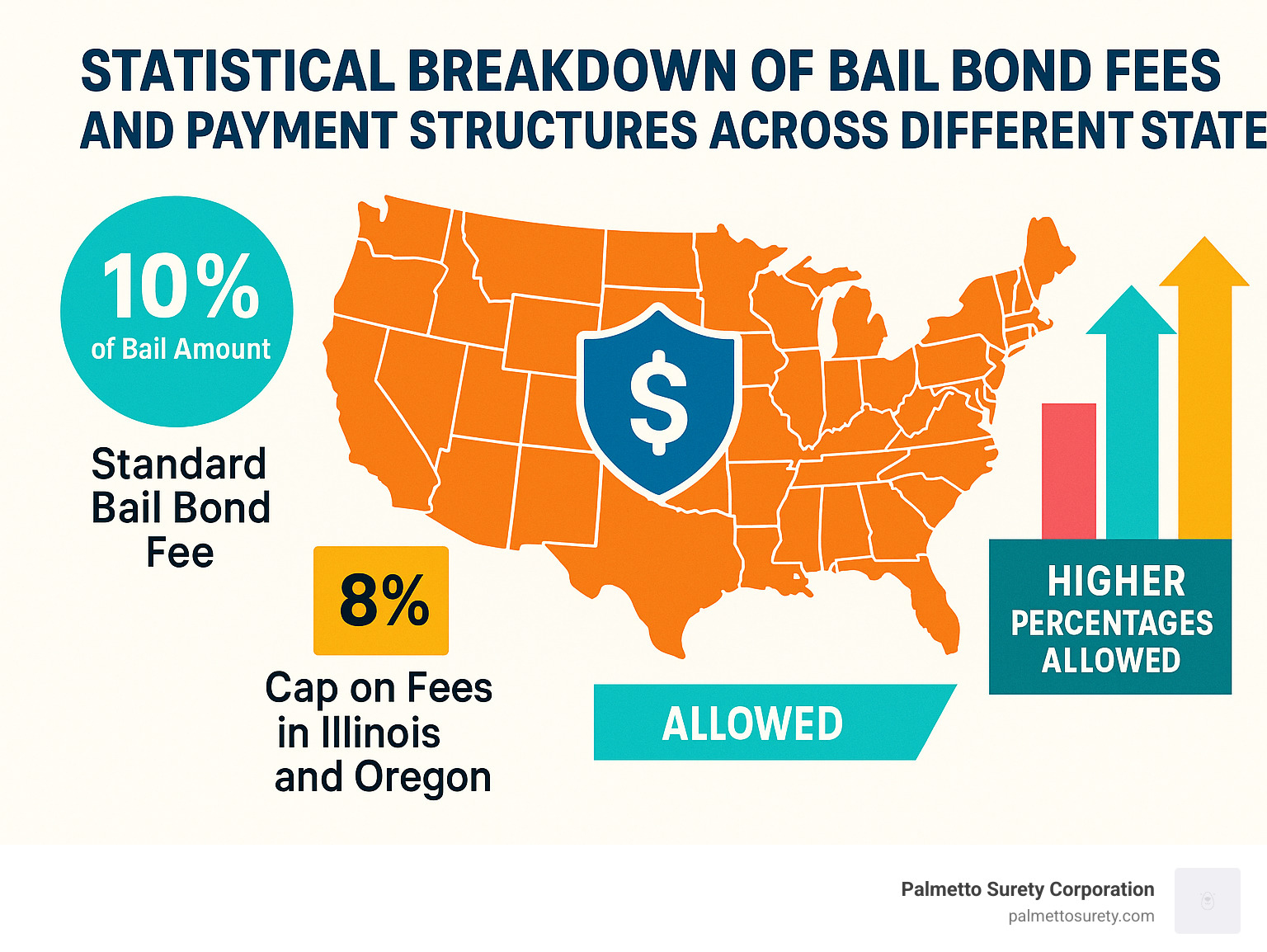
The standard rate is 10% for state charges and 15% for federal cases. Some states like Illinois and Oregon have 8% pricing options to make bail bonds more affordable. Other states allow higher percentages, especially for high-risk cases.
Here’s how the money flows: For a $15,000 bail, the agent collects a $1,500 premium and keeps that entire amount as revenue. However, they pay their own insurance requirements to the surety company—usually 10-15% of what they collect. This covers the surety company’s risk if the defendant skips town.
Operating expenses eat into profits quickly. Agents need licenses, office space, phone systems that work 24/7, marketing to attract clients, and staff to handle the workload. Many agents work around the clock since arrests don’t follow business hours.
Collateral management adds another layer of complexity. When families put up property deeds, jewelry, or vehicles as security, agents must properly store these items and return them when the case ends. This requires secure storage and detailed record-keeping.
The real financial danger comes from forfeiture. When defendants fail to appear in court, agents might hire bounty hunters or recovery specialists to find them. These costs can quickly exceed the original premium, turning a profitable case into a major loss.
Most agents offer payment plans for qualified families, accepting cash, credit cards, and sometimes financing arrangements. Some require full payment upfront, while others work with families who need time to gather the money. The minimums vary by state and agency, but many agents won’t write bonds under $500 due to the paperwork involved.
When cases end successfully, agents return collateral according to collateral return rules established in the original agreement. This process can take several weeks as courts finalize paperwork and agents verify all obligations are met.
Duties, Risks & Tools of the Trade
Being what is a bail bonds agent means juggling multiple roles while facing serious financial risks every day. These professionals work as financial underwriters, risk assessors, and compliance monitors all rolled into one demanding job.
Every case starts with a crucial decision: should they take the risk? Agents conduct detailed flight-risk assessments on defendants and co-signers alike. They dig into employment history, criminal records, family ties, and financial stability. A single bad judgment call can cost tens of thousands of dollars.
Once a defendant walks free, the real work begins. Agents must track court compliance religiously, maintaining regular contact with their clients. Many require weekly check-ins, verify that defendants still have jobs, and ensure they haven’t violated any bail conditions. Miss a court date, and the agent faces potential forfeiture of the entire bail amount.
The relationship between bail bonds agents and bounty hunters often confuses people. While both work in the justice system, their roles differ significantly:
| Bail Bonds Agent | Bounty Hunter |
|---|---|
| Posts bonds and collects fees | Tracks down fugitive defendants |
| Licensed insurance professional | May require separate licensing |
| Prevents failures to appear | Responds after failures occur |
| Ongoing client relationship | Short-term recovery mission |
When defendants skip court, agents coordinate with bounty hunters and recovery specialists. This partnership can mean the difference between a manageable loss and financial disaster. However, hiring recovery services costs money upfront with no guarantee of success.
The liability exposure keeps many agents awake at night. Beyond forfeiture risks, they face potential civil suits from clients, regulatory penalties from state agencies, and the constant threat of violence when dealing with desperate families. Insurance requirements help, but premiums eat into already thin profit margins.
Main Responsibilities of a Bail Bonds Agent
The daily grind of what is a bail bonds agent involves far more than most people realize. These professionals wear many hats, often working around the clock to serve clients and protect their business interests.
Background checks form the foundation of every decision. Agents spend considerable time researching defendants and their families before posting any bond. They verify employment, check criminal histories, and assess community ties. A thorough investigation upfront prevents problems later.
Co-signer vetting requires equal attention. The person guaranteeing the bond often carries more financial responsibility than the defendant. Agents examine credit reports, income verification, and asset documentation to ensure co-signers can handle potential losses.
Posting bonds sounds simple but involves complex paperwork and tight deadlines. Agents must understand local court procedures, filing requirements, and acceptable payment methods. One mistake can delay release for hours or even days.
The human side of the business shows through court date reminders. Good agents don’t just collect fees and disappear. They call defendants before hearings, verify court locations, and sometimes provide transportation assistance. These personal touches significantly improve appearance rates.
Emergency response defines much of the work. When defendants miss court or violate conditions, agents must act quickly. They contact clients, notify courts, and coordinate recovery efforts. Speed often determines whether a case results in minor inconvenience or major financial loss.
Key Risks and Liabilities
The bail bond business isn’t for the faint of heart. Forfeitures represent the biggest threat to any agent’s financial survival. When defendants disappear, agents face losing the entire bail amount to the court. High-value cases can mean forfeiting $50,000 or more in a single day.
Collateral seizure creates both financial and emotional challenges. When agents must take someone’s car, jewelry, or even their home, families often fight back legally and emotionally. These confrontations can turn dangerous quickly, especially when people face losing everything they own.
Civil suits come with the territory. Clients sue over seized property, alleged misconduct, or contract disputes. Even winning these cases costs money in legal fees and lost time. Professional liability insurance helps, but it’s expensive and doesn’t cover everything.
Regulatory penalties vary dramatically by state. Violations can result in license suspension, hefty fines, or even criminal charges. Agents must stay current on constantly changing regulations while managing their daily responsibilities.
The numbers tell a sobering story. Industry data shows approximately 25% of released felony defendants fail to appear for trial. However, defendants released through surety bonds actually show up more often than those released through other methods. This suggests that agents’ monitoring efforts do make a real difference in the justice system.
Recovery costs add another layer of financial risk. Hiring bounty hunters or private investigators to track down fugitive defendants can cost thousands of dollars with no guarantee of success. Some agents spend more on recovery than they originally earned from the bond premium.
Licensing, Regulation & State-by-State Variations

Understanding what is a bail bonds agent means understanding the maze of state regulations that govern this profession. Each state takes a different approach to licensing and oversight, creating a complex landscape that varies dramatically from coast to coast.
Four states have said “no thanks” entirely. Illinois, Kentucky, Oregon, and Wisconsin have completely banned commercial bail bonding. If you’re wondering what is a bail bonds agent in these states, the answer is simple: they don’t exist. These states use other methods like court-supervised release or deposit systems instead.
The remaining 46 states each have their own rules, and boy, do they differ. Some states treat bail bonds agents like insurance professionals with strict oversight. Others have more relaxed approaches that focus on basic licensing requirements.
California’s Department of Insurance runs a tight ship, requiring 20 hours of pre-licensing education and regular continuing education. Florida’s Department of Financial Services has similar requirements but different fee structures. New York’s Department of Financial Services adds even more layers of oversight and background screening.
The federal government steps in when cases involve federal courts. The landmark 1872 Supreme Court case Taylor v. Taintor gave bail agents broad authority to apprehend defendants who skip court dates. This precedent still influences how agents operate today, over 150 years later.
Recent court decisions are reshaping the industry. California’s 2021 Supreme Court ruling In Re: Humphrey declared that unaffordable bail orders violate constitutional rights unless clearly necessary. This decision reflects growing pressure for bail reform across the country.
Arizona’s statutes take yet another approach, focusing more on the relationship between agents and surety companies. Each state’s unique requirements mean that becoming licensed in multiple states requires learning different rules, procedures, and continuing education requirements.
How to Become a Licensed Bail Bonds Agent
Becoming a licensed bail bonds agent isn’t as simple as hanging up a shingle. The process varies by state, but most follow a similar pattern that ensures agents understand the law and can handle the responsibility.
Age requirements start at 18 in most states, though some prefer older applicants. Background checks are universal—felony convictions typically disqualify applicants, and many states exclude anyone with criminal history related to dishonesty or violence.
Pre-licensing education ranges from a quick 8-hour course to intensive 40-hour programs. These courses cover bail laws, court procedures, ethics, record-keeping, and state-specific regulations. The quality and depth vary significantly between states.
Written examinations test knowledge of local laws and procedures. Passing scores usually fall between 70-80%, and some states allow multiple attempts while others require retaking the entire course after failures.
Surety company appointment represents a crucial step that many people overlook. You can’t just decide to become a bail bonds agent—a licensed surety company must appoint you first. This appointment involves additional background screening and demonstrates that a legitimate insurance company trusts you with their money.
Fingerprinting and background checks go deeper than basic criminal history. Most states run prints through both state and federal databases, looking for any red flags that might indicate unsuitability for handling other people’s freedom and finances.
Licensing fees range from reasonable to expensive. Application costs might run $50 in one state and $500 in another. Annual renewal fees follow similar patterns, and some states add testing fees on top of licensing costs.
Professional liability insurance protects both agents and their clients. Required coverage amounts vary, but most states mandate enough insurance to cover potential damages from errors or misconduct.
Continuing education keeps agents current on changing laws and best practices. Annual requirements typically range from 8 to 20 hours of approved training. Miss your continuing education, and your license becomes inactive until you catch up.
Alternatives & Reform Movements
The bail bond industry faces growing pressure from reform movements that question whether commercial bail serves justice effectively. These alternatives aim to address concerns about fairness while maintaining public safety.
Own Recognizance (OR) release represents the simplest alternative. Courts release defendants based solely on their promise to appear, without requiring any payment. This works particularly well for defendants with strong community ties, steady employment, and no history of missing court dates.
Pretrial services programs offer government-operated supervision as an alternative to commercial bail bonds. These programs provide check-ins, court reminders, and support services while defendants await trial. They cost taxpayers money but eliminate the profit motive from pretrial release decisions.
Deposit bail systems allow defendants to post 10% of their bail amount directly with the court. Unlike commercial bail bonds, this money gets refunded after case completion (minus small administrative fees). Several states have adopted this approach as a middle ground between full cash bail and commercial bonding.
Electronic monitoring technology enables supervision without detention. GPS ankle bracelets and smartphone apps track defendants’ locations and movements. While more expensive than traditional bail monitoring, electronic monitoring costs less than jail housing and allows defendants to maintain employment and family responsibilities.
Text message and phone reminders show surprising effectiveness in improving court appearance rates. Scientific research on bail reform demonstrates that simple automated reminders can significantly reduce failure-to-appear rates, potentially reducing the need for commercial bail bonds altogether.
Bail abolition movements represent the most radical reform approach. Organizations like the American Civil Liberties Union argue for eliminating cash bail entirely, claiming it discriminates against poor defendants who pose no greater flight risk than wealthy ones who can afford bail.
Despite reform pressures, commercial bail bonding remains active in most states. Industry supporters argue that bail bonds agents provide valuable monitoring services at no cost to taxpayers, while ensuring higher court appearance rates than other release methods. The debate continues as states balance public safety, individual rights, and fiscal concerns.
California’s Penal Code illustrates how detailed state regulations can become, covering everything from fee structures to agent conduct standards. Understanding these regulations helps explain why what is a bail bonds agent varies so much depending on where you live.
Frequently Asked Questions about Bail Bonds Agents
What happens if the defendant fails to appear?
Missing a court date triggers a serious chain of events that unfolds quickly. What is a bail bonds agent becomes critically important during these situations, as they’re legally responsible for ensuring defendants show up.
Most courts offer a brief grace period—usually 24 to 48 hours—for defendants to voluntarily surrender before declaring the bond officially forfeited. This gives families a small window to contact their agent and resolve the situation without major consequences.
If the defendant doesn’t appear during this grace period, the court issues a forfeiture notice to the bail bonds agent. This starts what’s called a recovery period, typically lasting 90 to 180 days. During this time, the agent can locate and return the defendant to avoid losing the entire bail amount.
Recovery efforts can get intense. Agents often hire bounty hunters or licensed recovery specialists who have broad legal authority to apprehend fugitive defendants. These professionals can enter private property without warrants in many states—a power that surprises many people.
If recovery efforts fail, agents can seize any collateral provided by the defendant or co-signers. This might include homes, vehicles, jewelry, or other valuable property that families put up as security. It’s a harsh reality that can devastate families financially.
When all else fails, the agent forfeits the entire bail amount to the court. For a $50,000 bail, this represents a substantial business loss that explains why agents take court compliance so seriously.
The silver lining? Defendants released through surety bonds actually have better court appearance rates than those released through other methods. Professional monitoring and financial incentives help keep people on track.
What are the pros and cons of using a bail bonds agent?
Using a bail bonds agent comes with significant advantages that can make the difference between staying in jail or going home to family. The most obvious benefit is immediate release—defendants can often walk out within hours rather than sitting in jail for weeks or months awaiting trial.
This quick release helps preserve employment, allowing defendants to continue working and supporting their families. It’s hard to keep a job when you’re locked up indefinitely. Released defendants can also participate more effectively in preparing their legal defense, meeting with attorneys and gathering evidence.
The lower upfront cost makes bail bonds accessible to middle-class families. Paying a 10% fee is much more manageable than posting full cash bail. Many agents also offer payment plans for qualified clients, spreading the cost over time.
Experienced agents provide valuable professional guidance, helping families steer the confusing legal system and understand court requirements. They know which courts move quickly and which ones take forever.
However, there are real disadvantages to consider. The 10% premium is completely non-refundable, even if charges get dropped or the defendant is found innocent. For a $20,000 bail, that’s $2,000 that families never see again.
Collateral risk can be devastating. Families may lose homes, vehicles, or other property if the defendant skips court. The ongoing obligations can also feel burdensome—defendants must comply with agent check-ins and various restrictions on their freedom.
Limited availability means this option doesn’t exist everywhere. Four states have banned commercial bail bonding entirely, leaving families with fewer choices.
Are there alternatives to commercial bail bonds?
Several alternatives exist, though availability depends on your location and case circumstances. Cash bail remains the most straightforward option if you can afford it. You post the full amount directly with the court and get it back after case completion, minus any fines or fees.
Property bonds work for defendants with substantial real estate equity but limited cash. The property value must typically exceed the bail amount by 150 to 200 percent, making this option viable only for homeowners with significant equity.
Own recognizance release costs nothing but depends entirely on the defendant’s promise to appear. Courts consider employment history, family ties, criminal background, and flight risk when making these decisions. It’s essentially the court saying “we trust you to show up.”
Pretrial services programs operate in many jurisdictions, providing government supervision and support services. These might include regular check-ins, drug testing, or electronic monitoring. While more restrictive than simple release, they cost defendants nothing.
For minor offenses, citation release allows officers to issue tickets instead of making arrests. Defendants remain free while awaiting court dates, similar to traffic violations.
Some communities operate charitable bail funds—nonprofit organizations that post bail for indigent defendants, particularly for low-level offenses. These programs reflect growing concerns about wealth-based detention.
The reality is that what is a bail bonds agent and their services remain the most accessible option for most American families facing serious charges. While alternatives exist, commercial bail bonds provide immediate solutions when other options aren’t available or practical.
Understanding these alternatives helps families make informed decisions during stressful situations. Each option has trade-offs between cost, convenience, and restrictions on freedom.
Conclusion
Understanding what is a bail bonds agent opens a window into one of America’s most unique and complex legal institutions. These licensed professionals wear many hats—financial intermediary, risk assessor, compliance monitor, and often, a lifeline for families during their darkest hours.
The bail bond industry sits at the heart of ongoing debates about fairness in American criminal justice. Critics raise valid concerns about a system that can penalize poverty while generating profits from legal troubles. Yet supporters point to the practical reality that bail bonds agents provide essential services without burdening taxpayers, all while achieving impressive court appearance rates.
What is a bail bonds agent becomes more than an academic question when your loved one calls from jail at 2 AM. In those moments, understanding your options—commercial bail bonds, cash bail, or alternative release programs—can make the difference between weeks in custody and the ability to fight charges from home.
The landscape is shifting. Reform movements are gaining momentum in cities and states across America. Some jurisdictions are moving away from cash bail entirely, while others are strengthening oversight of commercial bonding. The profession will likely look different in ten years than it does today.
At Palmetto Surety Corporation, we’ve witnessed these changes during our two decades serving the southeastern United States. Our network of licensed bail bonds agents across Georgia, Florida, Louisiana, Mississippi, South Carolina, Tennessee, and Texas has helped thousands of families steer this challenging system. Our commitment to approving most applications within hours reflects something we’ve learned over the years—when someone’s freedom hangs in the balance, every minute matters.
The American approach to pretrial release will continue evolving, but the fundamental challenge remains constant: balancing individual liberty with public safety while ensuring defendants appear for their day in court. Whether through commercial bail bonds, government-run programs, or innovative new approaches, communities will keep searching for that balance.
For families facing these difficult decisions, knowledge truly is power. Understanding what is a bail bonds agent provides the foundation for making informed choices during stressful times. The more you know about the process, the better equipped you’ll be to protect your loved ones and your financial interests.
For more information about our surety services and how we support families throughout the Southeast, visit our website. Sometimes the most important questions arise when you least expect them—and we’re here to help when they do.


