


Capital gain saving bonds: 5 Powerful Benefits in 2025
Understanding Your Tax-Saving Options
Capital gain saving bonds (also known as 54EC bonds) are government-backed investment instruments that allow you to claim exemption on long-term capital gains tax when you reinvest proceeds from property sales.
For those looking for a quick overview of capital gain saving bonds:
| Feature | Details |
|---|---|
| Purpose | Tax exemption on long-term capital gains |
| Investment window | Within 6 months of asset sale |
| Maximum investment | ₹50 lakh per financial year |
| Lock-in period | 5 years (mandatory) |
| Interest rate | 5.25% per annum (taxable) |
| Eligible issuers | REC, PFC, IRFC (government entities) |
| Eligible gains | From sale of land or building held >24 months |
When you sell a property and make a profit, the government wants a slice of that gain. Capital gain saving bonds offer a legitimate way to defer or potentially eliminate this tax burden by reinvesting your profits into these special bonds.
These bonds aren’t just about tax savings – they also provide stable returns backed by government entities. The trade-off? You’ll need to lock in your money for 5 years, and the interest earned (though reliable) may not match more aggressive investment options.
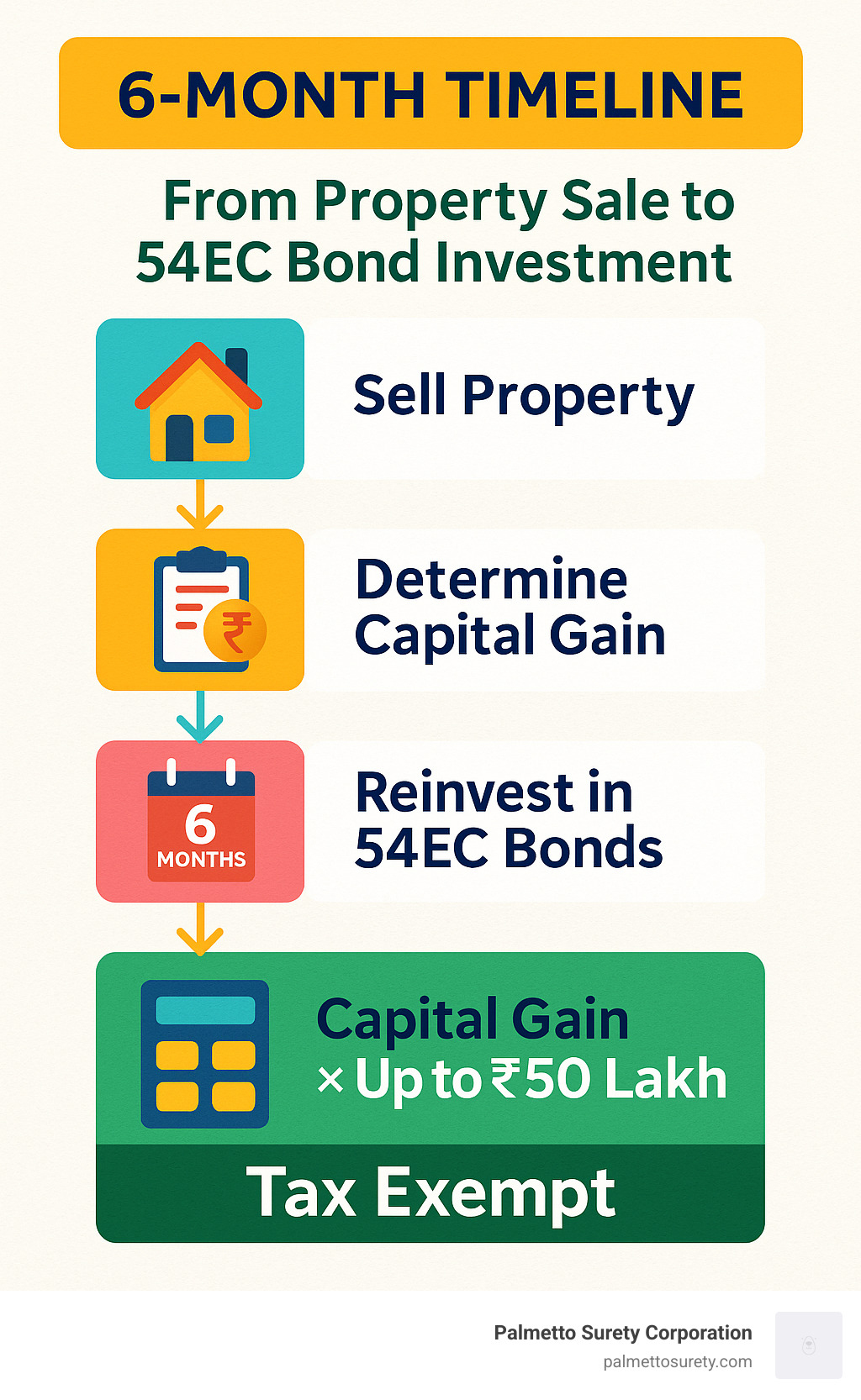
What makes these bonds particularly attractive is their simplicity. You sell an asset, invest the gains in these bonds within 6 months, and avoid paying capital gains tax on the amount invested (up to ₹50 lakh).
I’m Haiko de Poel Jr, and through my work with Palmetto Surety Corporation, I’ve helped countless clients understand how capital gain saving bonds can be integrated into their broader financial strategy alongside appropriate surety solutions.
Capital gain saving bonds basics:
– govt tax saving bonds
– high interest bonds 2025
– municipal bond sales

What Are Capital Gain Saving Bonds (54EC)?
Ever sold a property and winced at the potential tax bill? Capital gain saving bonds might just be your financial superhero. These special bonds, named after Section 54EC of the Income Tax Act, are designed to help you save on long-term capital gains tax when you sell property.
Think of these bonds as the government saying, “Invest your property profits with us, and we’ll give you a tax break.” Pretty sweet deal, right?
Currently, three government-backed organizations issue these bonds:
- Rural Electrification Corporation (REC)
- Power Finance Corporation (PFC)
- Indian Railway Finance Corporation (IRFC)
All three issuers boast AAA ratings – the financial equivalent of a perfect safety score. Capital gain saving bonds currently offer a steady 5.25% interest annually, paid out once a year. While not spectacular compared to some investments, the tax benefits make them quite attractive.
Key Definitions and Origins
The story of capital gain saving bonds begins with the Income Tax Act of 1961. Section 54EC was created to encourage people to reinvest their property profits into infrastructure development – a classic win-win scenario.
The key term here is “long-term capital asset,” which means land or buildings you’ve owned for more than 24 months before selling. When you make a profit selling these assets, the government normally wants its share through taxes.
As one of our clients at Palmetto Surety Corporation recently told me, “I was amazed how simple the concept is – the government gets funding for infrastructure, and I get to keep more of my property sale profits. Everybody wins!”
Capital Gain Saving Bonds Explained
At their heart, capital gain saving bonds offer a straightforward deal: reinvest your property sale profits into these government-backed bonds within six months, and you can claim exemption from long-term capital gains tax on that amount.
The catch? Your money stays locked up for 5 years – no transfers, no selling, no using these bonds as collateral. This lock-in period isn’t just a minor detail; it’s essential for qualifying for the tax exemption.
You can invest up to ₹50 lakh per financial year in these bonds, combining investments across all eligible issuers. This cap applies individually, so each person named on a property can potentially claim their own exemption.
A client from Charleston recently shared, “After selling my rental property, I was staring at a hefty tax bill. My advisor suggested 54EC bonds, and I invested ₹40 lakh. Not only did I avoid immediate taxes on that amount, but I’m now earning steady interest too. The 5-year lock-in period works for me since this is part of my longer-term planning anyway.”
The beauty of capital gain saving bonds lies in their simplicity and security – government backing means minimal risk, while the tax benefits offer immediate financial relief when you’re dealing with property sale gains.
Eligibility, Limits, and Lock-In Rules
Ready to dive into capital gain saving bonds but not sure if you qualify? Good news – these tax-saving instruments are accessible to a wide range of investors, though there are some important rules to keep in mind.

Who Can Invest and How Much?
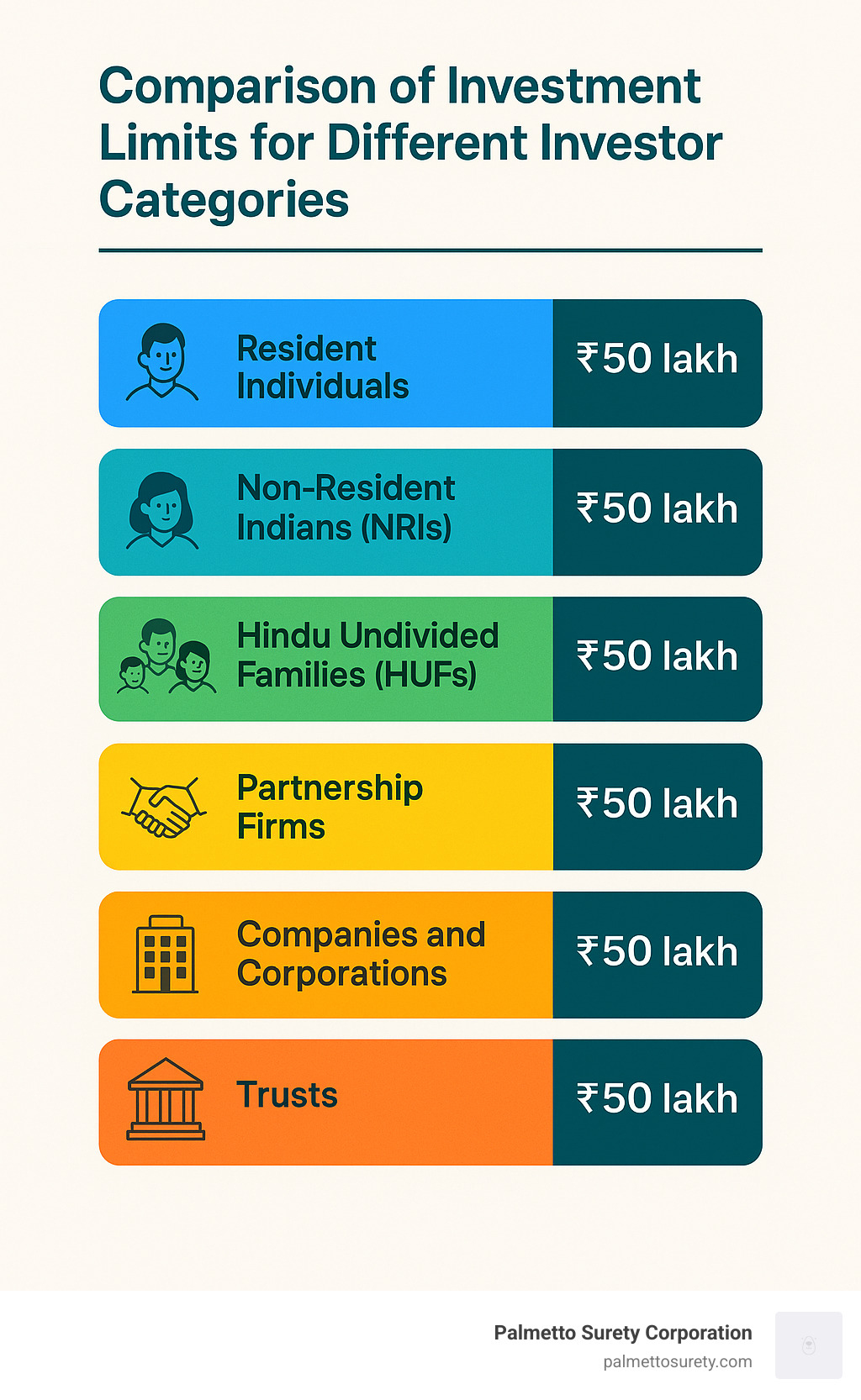
If you’ve recently sold property and are looking at a hefty capital gains tax bill, you’ll be pleased to know that capital gain saving bonds welcome almost everyone to the party. Whether you’re an individual investor, part of a family unit (HUF), running a partnership firm, or managing a corporation – these bonds are available to you. Even NRIs can take advantage of this tax-saving opportunity.
The only real requirement? You need to have realized long-term capital gains from selling land or a building that you’ve owned for more than 24 months.
There is, however, a ceiling to consider. You can invest up to ₹50 lakh per financial year per PAN number. This detail becomes particularly important for joint property owners.
“I’ve seen couples strategically use this limit to their advantage,” shares Sarah Thompson, a financial consultant who works with Palmetto Surety Corporation clients in South Carolina. “When spouses jointly own property with a 50:50 split and sell it for, say, an ₹80 lakh gain, each can invest their ₹40 lakh share separately. That’s ₹80 lakh in total tax-exempt investments, all perfectly legal.”
Business partners can similarly multiply their tax savings, with each partner able to invest up to the ₹50 lakh limit under their individual PAN.
Lock-In Period Impact on Capital Gain Saving Bonds
Here’s where things get a bit more restrictive. When you invest in capital gain saving bonds, you’re committing to a 5-year relationship. And like any serious commitment, there are rules:
Your bonds can’t be transferred to someone else. They can’t be cashed in early. You can’t use them as collateral for a loan. And you can’t sell them on the secondary market before the 5 years are up.
This lock-in period used to be just 3 years, but since April 2018, it’s been extended to 5 years. The tax benefits remain the same, but you’ll need to be patient for longer.
What happens if you break these rules? The tax exemption you claimed will be revoked, and those capital gains will come back to haunt you. They’ll be added to your income in the year you break the rules, and you’ll have to pay the tax you originally avoided.
Robert Chen, a property developer from Savannah who we worked with at Palmetto Surety, puts a positive spin on this restriction: “I initially balked at the 5-year lock-in, but then I realized it was actually helping me. It’s basically a forced savings plan with tax benefits. The guaranteed 5.25% return isn’t flashy, but it’s reliable – and the tax savings are substantial.”
When deciding if capital gain saving bonds are right for you, be honest about your liquidity needs over the next five years. If you might need access to these funds, this strategy could cause more problems than it solves.
Step-by-Step Investment Process
Investing in capital gain saving bonds doesn’t have to be complicated, but timing is everything. Your 6-month countdown starts the day you sign that property sale deed, not when the money hits your account!
Offline Application Walkthrough
If you’re more comfortable with paper in hand than pixels on a screen, the traditional application route might be right for you.
Start by grabbing the application form from the issuer’s website – whether that’s REC, PFC, or IRFC – or pick one up directly from their offices. When filling it out, double-check every detail against your identification documents. The last thing you want is a delay because your name doesn’t match your PAN card!
Be sure to attach all the required paperwork: your PAN card copy, address proof, the property sale deed, your capital gains calculation, and a canceled cheque for interest payments. Then prepare your payment – either by demand draft or account payee cheque made out to the issuing organization.
Once everything’s ready, submit your complete package to the designated collection center. Don’t forget to get a receipt – this little piece of paper is gold when tax season rolls around! Your physical bond certificate should arrive in the mail within 2-3 weeks.
“I almost waited until the last week of my 6-month window,” admits Michael Rodriguez from Warner Robins, Georgia. “Thankfully, I started the process early. Between gathering documents and waiting for processing, those months fly by faster than you’d think!”
Online & Demat Route

For those who prefer handling investments in their pajamas, the online route offers convenience and immediate confirmation.
First, you’ll need a demat account – if you don’t have one already, set one up with any registered depository participant. Then head to the official website of your chosen issuer (REC, PFC, or IRFC), create an account if needed, and fill out their electronic application form.
The digital process follows the same documentation requirements as the offline route, but you’ll upload scanned copies instead. Make your payment via NEFT, RTGS, or online banking, then review everything carefully before hitting that submit button. You’ll receive an acknowledgment number to track your application, and once approved, the bonds appear directly in your demat account – no waiting for the mailman!
Jennifer Williams, a real estate investor from Columbus, Georgia, couldn’t be happier with her choice: “Having my capital gain saving bonds in digital form means no more worrying about where I stored that important certificate. Plus, interest payments flow directly into my linked account without any extra paperwork.”
Whether you choose paper or pixels, remember the golden rule: that 6-month investment window is written in stone, not sand. The tax department doesn’t accept “I was busy” as an excuse for missing the deadline!
At Palmetto Surety Corporation, we’ve seen clients successfully steer both routes, and we’re always happy to point you toward resources that can help streamline the process. After all, protecting your hard-earned capital gains shouldn’t have to feel like another full-time job.
Benefits, Risks, and Tax Treatment
Capital gain saving bonds offer a unique combination of benefits and limitations that investors should carefully evaluate before committing their funds. These bonds serve a specific purpose in your financial toolkit – they’re not for everyone, but when used correctly, they can be incredibly valuable.
Calculating Your Exemption Correctly
Understanding how to calculate your tax exemption with capital gain saving bonds is crucial for effective tax planning. Let me walk you through a couple of real-world examples that will make this crystal clear:
Example 1: Full Investment of Capital Gains
– Sale price of property: ₹70 lakhs
– Indexed cost of acquisition: ₹56 lakhs
– Long-term capital gain: ₹14 lakhs
– Amount invested in 54EC bonds: ₹14 lakhs
– Taxable capital gain: Nil
In this scenario, you’ve completely eliminated your tax liability by investing the full amount of your gains in these bonds. Pretty neat, right?
Example 2: Partial Investment of Capital Gains
– Sale price of property: ₹90 lakhs
– Indexed cost of acquisition: ₹30 lakhs
– Long-term capital gain: ₹60 lakhs
– Maximum investment in 54EC bonds: ₹50 lakhs (due to the cap)
– Taxable capital gain: ₹10 lakhs
Here, you still have to pay tax on ₹10 lakhs because of the ₹50 lakh investment cap, but you’ve significantly reduced your tax burden.
David Thompson, a tax consultant who works with Palmetto Surety Corporation clients in Atlanta, puts it simply: “The exemption is proportional to your investment. If you have capital gains of ₹40 lakhs but only invest ₹20 lakhs in 54EC bonds, only half of your gains will be exempt from tax.”
The exemption applies only to the capital gains invested, not the entire sale amount. The indexed cost of acquisition (which accounts for inflation) is used to calculate the actual gain. For the latest research on bond taxation, you might want to check out the IRS Publication 550.
Downsides You Should Know
While capital gain saving bonds offer significant tax advantages, they’re not without their drawbacks. Think of these bonds like a sturdy family sedan – reliable and practical, but not exactly a sports car.
First, there’s the illiquidity factor. That 5-year lock-in period is no joke – your money is essentially frozen, regardless of emergencies or better opportunities that might come along. It’s like checking into Hotel California – you can check out anytime you like, but you can’t leave until those five years are up.
The yield of 5.25% is guaranteed, which is comforting, but in today’s investment landscape, it might seem modest compared to other options. It’s the financial equivalent of a steady, reliable friend rather than an exciting new acquaintance.
Then there’s inflation risk – with no adjustment for rising prices, your real returns could be eroded if inflation picks up steam. The interest earned is fully taxable as per your income tax slab, which takes a bite out of those already modest returns.
The ₹50 lakh investment cap per financial year might feel restrictive if you’ve hit the jackpot with a particularly profitable property sale. And finally, there’s the opportunity cost – while your money is locked in these bonds, it can’t be working for you elsewhere.
Emily Chen, a property investor from Sandy Springs, Georgia, shared her perspective: “The opportunity cost was my biggest concern. However, when I factored in the tax savings and considered the guaranteed returns against the backdrop of market volatility, the bonds made sense as part of my overall portfolio strategy.”
These bonds aren’t meant to be your entire investment strategy – they’re more like a specific tool in your financial toolbox, perfect for the right job but not for every situation. The key is understanding exactly when and how to use them to your advantage.
Comparing Capital Gain Saving Bonds with Other Tax-Saving Strategies
When it comes to managing capital gains tax, capital gain saving bonds are just one tool in your financial toolbox. Understanding how they stack up against alternatives can help you make choices that align with your unique situation and goals.

When Capital Gain Saving Bonds Win
There are certain situations where capital gain saving bonds truly shine. For starters, they offer a guaranteed tax exemption that doesn’t depend on market performance or future conditions. As long as you follow the rules and complete the lock-in period, your tax benefit is secure.
The safety factor can’t be overstated either. These bonds come with government backing and AAA ratings, making them about as close to risk-free as investments get. In today’s unpredictable world, that peace of mind is worth something.
“I sleep better at night knowing my investment is backed by government entities,” shares Thomas Wilson, a real estate developer from Marietta, Georgia. “After comparing various options, I chose 54EC bonds for a portion of my gains because of their simplicity and certainty. The guaranteed tax exemption and fixed returns provided stability to my overall portfolio.”
You’ll also appreciate the predictable 5.25% returns that make budgeting and financial planning straightforward. No need to worry about market fluctuations affecting your expected income stream.
The simplicity factor is another big win. The investment process is clear-cut and the rules aren’t wrapped in layers of complexity. Even if you’re not a financial wizard, you can understand how these bonds work.
Perhaps most importantly, once the 5-year lock-in period ends, you’re free to use the proceeds however you wish. Unlike Section 54F (which requires buying a residential property), there’s no reinvestment requirement tying your hands.
When Other Strategies May Suit You Better
That said, capital gain saving bonds aren’t always the perfect solution for everyone. If you might need access to your money within the next five years, the lock-in period could become problematic. In such cases, Section 54F might offer more flexibility since you can potentially leverage the property if needed.
For those with capital gains exceeding the ₹50 lakh limit, you’ll need to consider a mix of strategies anyway. Why not explore complementary approaches that align with your broader financial goals?
Patricia Rodriguez, a financial advisor who works with Palmetto Surety Corporation clients in Columbus, Georgia, typically recommends a blended approach: “Use 54EC bonds for the tax exemption up to the limit, then explore other options like municipal bonds or specific tax-saving mutual funds for the remainder, depending on your risk appetite and time horizon.”
If you have a higher risk tolerance and are seeking potentially greater returns, other investment avenues might better suit your needs. The guaranteed 5.25% return is attractive for its stability, but in bull markets, other investments might significantly outperform.
Your overall portfolio diversification is another important consideration. Financial experts generally advise against concentrating too much of your wealth in any single asset class. Capital gain saving bonds might work best as one element of a thoughtfully diversified investment strategy.
Some worthwhile alternatives to consider include:
- Section 54 provisions for reinvesting in another residential property
- Section 54F for selling any long-term capital asset and investing in a residential house
- A hybrid approach combining the maximum 54EC investment with other tax-efficient instruments
Your financial situation is unique, and what works perfectly for someone else might not be ideal for you. At Palmetto Surety Corporation, we believe in tailoring solutions to individual needs rather than one-size-fits-all approaches to financial planning.
Learn more about our bond solutions to see how they might complement your tax-saving strategy.
Frequently Asked Questions about Capital Gain Saving Bonds
What happens if I invest less than the capital gain?
Don’t worry if you can’t invest your entire capital gain in capital gain saving bonds – many investors choose to go this route! Your tax exemption will simply be proportional to whatever amount you do invest.
Let’s make this concrete: if you have a capital gain of ₹30 lakhs but only invest ₹15 lakhs in 54EC bonds, you’ll receive tax exemption on just that ₹15 lakhs. The remaining ₹15 lakhs will be taxed at the standard long-term capital gains rate.
Mark Johnson, a tax consultant from Roswell, Georgia who works with our clients, puts it this way: “Partial investment is completely valid. Many of our clients at Palmetto Surety Corporation choose this route to balance their liquidity needs with tax planning. Just remember that the exemption is directly proportional to your investment.”
Can NRIs purchase 54EC bonds?
Absolutely! Non-Resident Indians can indeed invest in capital gain saving bonds under Section 54EC. They follow the same rules as resident Indians – including the critical 6-month investment window and the ₹50 lakh maximum limit per financial year.
There are just a few extra documentation requirements for our NRI clients:
– A copy of your passport
– Proof of your overseas address
– NRO account details for receiving interest payments
One important distinction: while residents don’t have TDS (Tax Deducted at Source) applied to their interest payments, NRIs will have tax deducted at the applicable rates before receiving their interest.
Is the annual interest from capital gain saving bonds fully taxable?
Yes, while these bonds help you save on capital gains tax, the interest they generate doesn’t get any special tax treatment. The annual interest earned on capital gain saving bonds is fully taxable according to your income tax slab.
Here’s a practical example: If you invest ₹50 lakhs in 54EC bonds at the current 5.25% interest rate, you’ll earn ₹2.625 lakhs in annual interest. This amount gets added to your total income and taxed based on your tax bracket.
It’s worth noting that while the government doesn’t automatically deduct TDS on interest paid to resident individuals, you’re still responsible for declaring this income and paying the appropriate tax when filing your annual returns.
One of our clients from Albany, Georgia, Laura Zhang, shared her experience: “I was initially under the impression that both principal and interest would be tax-exempt. Understanding that only the capital gains tax on the principal is exempted while the interest is fully taxable helped me plan my finances more accurately.”
What happens if the bonds are redeemed before the 5-year lock-in period?
Breaking the 5-year commitment with capital gain saving bonds comes with serious consequences. If you redeem early, you’ll lose the tax exemption you originally claimed. Those capital gains that were exempted will be added back to your income in the redemption year, and you’ll need to pay the tax you initially avoided.
These bonds are specifically designed to be non-transferable and non-redeemable before maturity. The only exception is in the unfortunate event of the bondholder’s death, where the legal heirs may have options for early redemption.
Can I invest in 54EC bonds if my property was jointly owned?
Joint ownership can actually be advantageous for tax planning with capital gain saving bonds. Each owner can claim exemption under Section 54EC based on their share of the capital gain, with each person subject to their own individual limit of ₹50 lakhs per financial year.
For example, if a husband and wife jointly owned a property with a 60:40 share ratio and realized a capital gain of ₹70 lakhs, the husband could invest up to ₹42 lakhs (60% of ₹70 lakhs) and the wife could invest up to ₹28 lakhs (40% of ₹70 lakhs) in 54EC bonds.
William Chen, a property investor from Valdosta, Georgia who works with Palmetto Surety, notes: “Joint ownership actually worked in our favor for tax planning. My business partner and I were able to each use our ₹50 lakh limit, effectively doubling our tax exemption potential.”
How do I track my investment and interest payments?
Keeping tabs on your capital gain saving bonds is straightforward. If you hold physical bonds, you’ll receive annual interest warrants that you can deposit in your bank account. For bonds held in demat form, the interest is directly credited to your linked bank account on the scheduled payment dates.
You have several ways to monitor your investment:
– Through your bond certificates (for physical bonds)
– Via demat account statements (for electronic bonds)
– By reviewing annual interest payment receipts
– Through the issuer’s online portal (when available)
Most bond issuers provide online portals where you can register to track investments, view your interest payment history, and download documents needed for tax filing – making it easy to stay on top of your investment even through the 5-year lock-in period.
Conclusion
When it comes to managing your property sale profits, capital gain saving bonds offer a compelling blend of tax benefits and investment stability that’s hard to ignore. These Section 54EC bonds aren’t just a tax-saving tool – they’re a strategic financial decision that can protect your hard-earned gains while providing reliable returns.
Throughout this guide, we’ve explored how these bonds work as a financial safety net, allowing you to shield up to ₹50 lakhs of your long-term capital gains from taxation while earning a steady 5.25% annual return. The government-backed AAA rating provides peace of mind that your principal investment remains secure, even in uncertain economic times.

I’ve seen countless property sellers breathe a sigh of relief when they find how straightforward the investment process can be. That said, these bonds aren’t without their trade-offs. The 5-year lock-in period demands patience, the investment cap might feel restrictive for larger sales, and yes, the interest income remains taxable despite the principal’s tax advantages.
Your decision to invest should ultimately reflect your unique financial landscape – your liquidity needs, risk tolerance, and long-term goals all play essential roles. For some of our clients, capital gain saving bonds form just one piece of a diversified tax strategy; for others, they’re the perfect standalone solution.
At Palmetto Surety Corporation, we’ve spent over two decades helping clients across Georgia, Florida, Louisiana, Mississippi, South Carolina, Tennessee, and Texas steer complex financial decisions. While our primary expertise lies in providing surety bonds across various industries, we understand how tax-efficient investment strategies like capital gain saving bonds complement your overall financial health.
Timing is everything – that 6-month window after your property sale closes quickly. Planning ahead and understanding all angles will help you maximize benefits while minimizing potential drawbacks.
For those looking to learn how our surety solutions might work alongside your investment in capital gain saving bonds, I invite you to visit us at Palmetto Surety Corporation or reach out to any of our southeastern U.S. offices. Our team is always ready to discuss how these financial instruments can work together to strengthen your financial foundation.
By making informed choices about your capital gains, you’re not just protecting your wealth – you’re also contributing to national infrastructure development through these government-backed bonds. That’s what I call a win-win situation.


