


How Much Does a Bail Bondsman Owner Make? Top 3 Secrets
How much does a bail bondsman owner make? The answer isn’t straightforward, as earnings can vary significantly based on several factors. However, experienced bail bondsmen with well-established businesses can earn well into the six figures annually.
- Average Earnings: Industry estimates suggest that a typical agent earns between $50,000 to $80,000 per year.
- Experienced Owners: With the right connections and business acumen, net profits can easily exceed $100,000.
- State Matters: Earnings are influenced by state laws, business structure, and geographic location.
Becoming a bail bondsman is not just about making a living; it’s a dynamic career with significant earnings potential. As a bail bondsman, you act as a financial bridge for those awaiting trial, helping clients secure their freedom while managing your own business operations. The job is engaging, full of unexpected challenges, and offers the chance to own and run your own company.
As an expert in marketing and digital strategy, I’m Haiko de Poel Jr., with years of experience in analyzing business models, including how much a bail bondsman owner can make. I leverage my strategic insight to help businesses open up growth opportunities. Up next, let’s dive deeper into understanding the revenue streams and factors affecting bail bondsman earnings.
Terms related to how much does a bail bondsman owner make:
– how does the bail industry work
– how to become a bail agent
– how to start a bail bond business
This introduction is part of an article titled “Bail Bondsman Earnings: What Owners Really Make,” focusing on the keyword “how much does a bail bondsman owner make,” written for Palmetto Surety Corporation, to be published on https://palmettosurety.com.
Understanding Bail Bondsman Earnings
How Much Does a Bail Bondsman Owner Make?
The question “how much does a bail bondsman owner make“ often arises when considering this unique career path. The answer isn’t straightforward due to the various factors influencing earnings. However, let’s break it down.
Annual Income and Salary Range
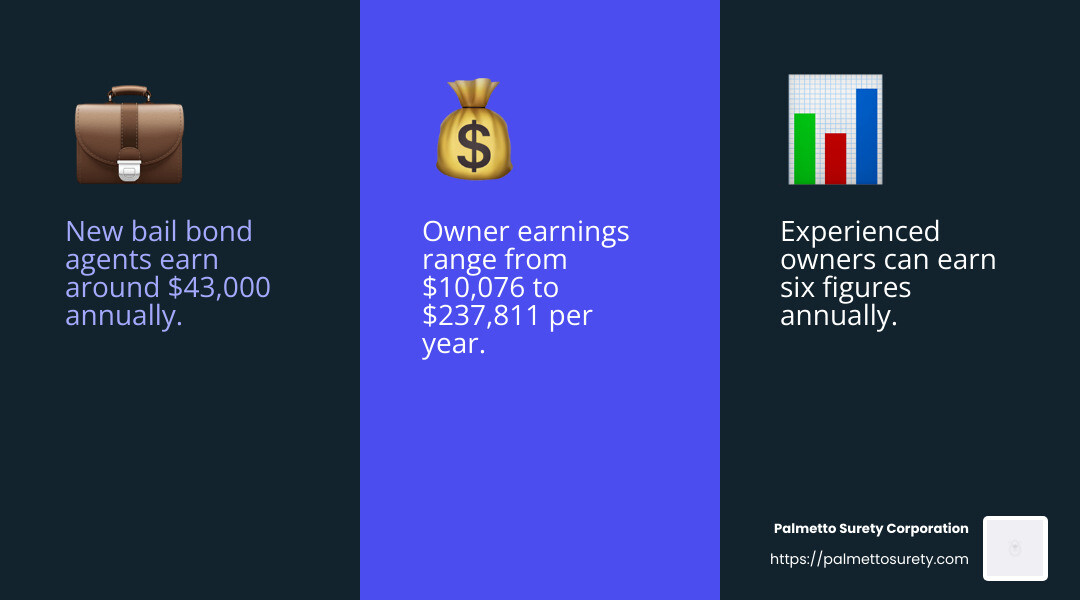
- Average Salary: New bail bond agents typically earn around $43,000 annually. However, for bail bondsman owners, the figures can be significantly higher.
- Experienced Owners: Those with an established business can see their annual income soar well into six figures, thanks to their business acumen and industry connections.
- Salary Range: The earnings spectrum is broad, with some owners making as little as $10,076 and others reaching up to $237,811 per year.

Revenue Streams
Bail bondsmen have several revenue streams that contribute to their earnings:
- Commission on Bonds: Bondsmen typically charge a non-refundable premium, often a percentage of the bail amount. This premium is their primary source of income.
- Collateral: In some cases, bondsmen may accept collateral, such as property or valuables, which can provide additional financial security.
- Insurance Companies: Many bail bondsmen work under the umbrella of insurance companies, which can offer a stable income stream and support.
Factors Influencing Earnings
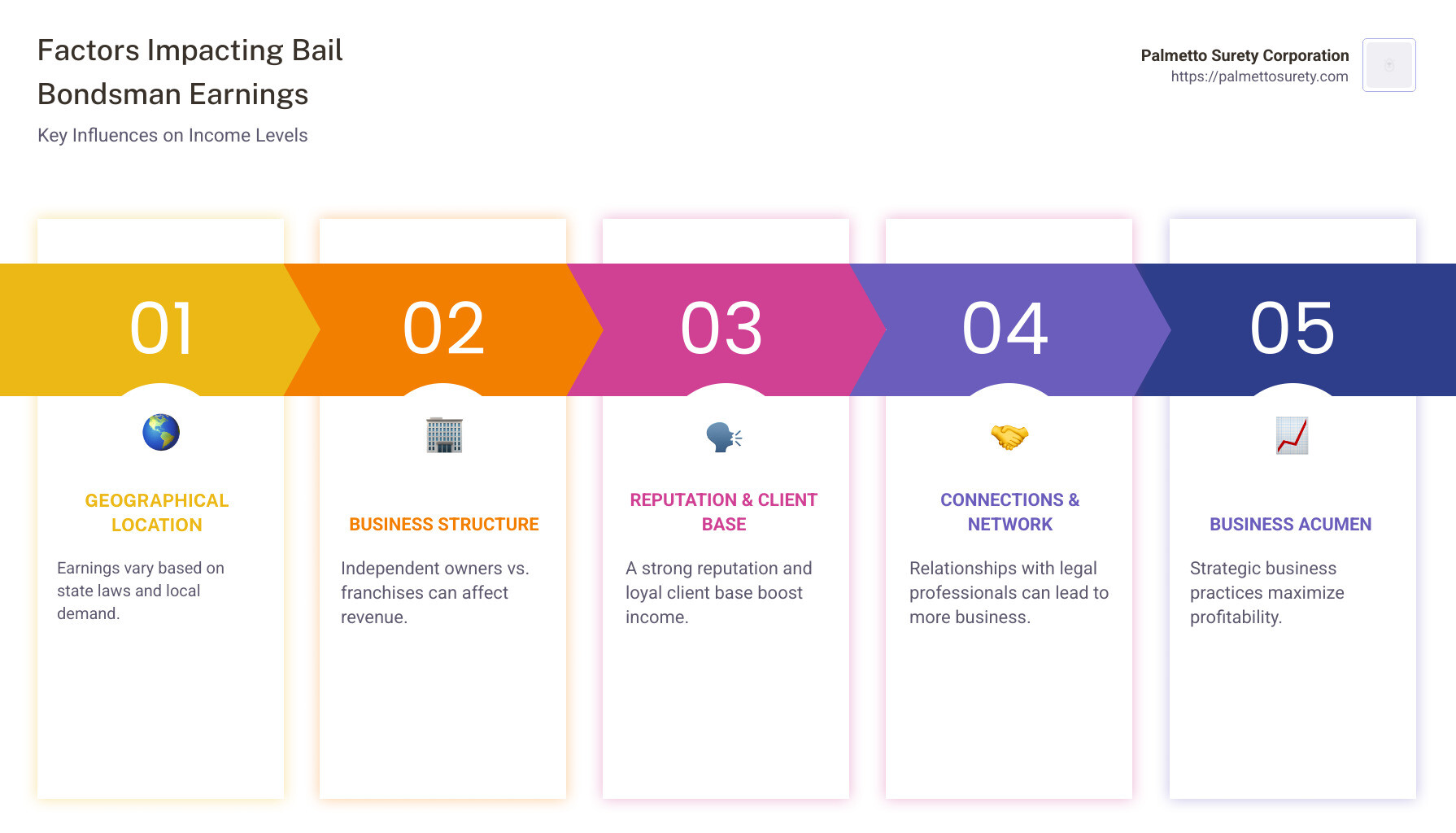
Several factors significantly impact how much a bail bondsman owner can make:
Location
- State Laws: Different states have different regulations on how much bondsmen can charge. For instance, Colorado allows up to 15% of the bail amount, while Ohio caps it at 6.5%.
- Geographic Demand: Operating in a high-demand area, such as a busy metropolitan region, can lead to more clients and higher earnings.
Reputation
- Legal Community Connections: Strong ties with defense attorneys and a good reputation in the legal community can drive more business.
- Client Trust: A trustworthy image can attract more clients, leading to repeat business and referrals.
Client Base
- Size and Diversity: A larger and more diverse client base can stabilize income, as relying on a few clients can be risky.
- Client Reliability: Clients who adhere to their court dates reduce the risk of financial loss due to forfeited bonds.
Understanding these nuances helps provide a clearer picture of the potential earnings and challenges faced by bail bondsman owners. In the next section, we’ll explore the various ways bail bondsmen make money and the associated risks.
How Bail Bondsmen Make Money
Revenue Streams for Bail Bondsmen
Bail bondsmen generate income through several key revenue streams. Understanding these can help explain how they make money in this unique industry.
-
Commission on Bonds: The primary revenue comes from the non-refundable fees, or premiums, charged to clients. This fee is typically a percentage of the total bail amount. For example, in many states, this is around 10% of the bail. If the bail is set at $10,000, the bondsman may charge a $1,000 fee.
-
Collateral: Sometimes, bondsmen accept collateral, such as real estate, vehicles, or jewelry, to back the bond. This provides a financial safety net if the defendant fails to appear in court.
-
Property Bonds: In some cases, bondsmen can use property as a bond for release. This is less common but can be a significant revenue stream when applicable.
-
Insurance Companies: Many bail bondsmen operate with the support of insurance companies. These companies help mitigate the financial risk associated with the bail bond and provide a stable income stream for the bondsman.
Risks and Challenges
While the bail bonds industry can be lucrative, it also comes with notable risks and challenges:
-
Defendant Absconding: If a defendant fails to appear in court, the bondsman may have to pay the full bail amount to the court. This can lead to significant financial loss.
-
Collateral Seizure: To recover losses from absconding defendants, bondsmen may need to seize and sell collateral. This process can be legally complex and time-consuming.
-
Legal Actions: Bondsmen must navigate legal challenges, including potential lawsuits or disputes over collateral. This requires a good understanding of legal procedures and the ability to manage these situations effectively.
These revenue streams and risks highlight the complexity of the bail bonds industry. While there’s potential for significant earnings, bondsmen must carefully manage these challenges to succeed.
Steps to Become a Bail Bondsman
Licensing and Education Requirements
Becoming a bail bondsman involves meeting specific requirements and obtaining the necessary licenses. Let’s break down the process:
-
Age and Citizenship: You must be at least 18 years old (21 in some states like North Carolina) and a U.S. citizen. Residency in the state where you plan to work is also required.
-
Pre-Licensing Course: Before you can apply for a license, you need to complete a pre-licensing course. This course covers the basics of bail bonds, legal regulations, and how to operate within your state’s legal framework. Depending on the provider, the course can take as little as two days or require at least 15 hours of study.
-
State Licensing Exam: After completing the course, you’ll need to pass a state licensing exam. The exam fee is usually around $56.50, and you’ll need to register in advance. Make sure to bring proof of course completion and pay for fingerprinting, or your exam may be canceled.
-
Receive Your License: Once you’ve passed the exam, you’ll receive your bail bonding license, typically within two weeks. This license allows you to operate legally in your state.
-
Continuing Education: Some states require bail bondsmen to complete continuing education to maintain their license. This ensures you stay updated on legal changes and industry practices.
Skills Needed for Success
Success as a bail bondsman requires more than just meeting licensing requirements. Key skills are essential:
-
Communication: Strong communication skills are crucial. You’ll be dealing with clients under stress and need to explain legal processes clearly and empathetically.
-
Stress Management: The job can be high-pressure, especially when clients are anxious or when dealing with legal complexities. Effective stress management will help you remain calm and make sound decisions.
-
Negotiation: Negotiating terms with clients and managing collateral agreements requires sharp negotiation skills. This helps ensure that both you and your client are protected.
-
Legal Knowledge: Understanding the legal system and the bail process is vital. This knowledge helps you steer challenges and avoid legal pitfalls.
These steps and skills are foundational to becoming a successful bail bondsman. With the right education and abilities, you can thrive in this challenging yet rewarding field.
Frequently Asked Questions about Bail Bondsman Earnings
How much does a bail bond business make?
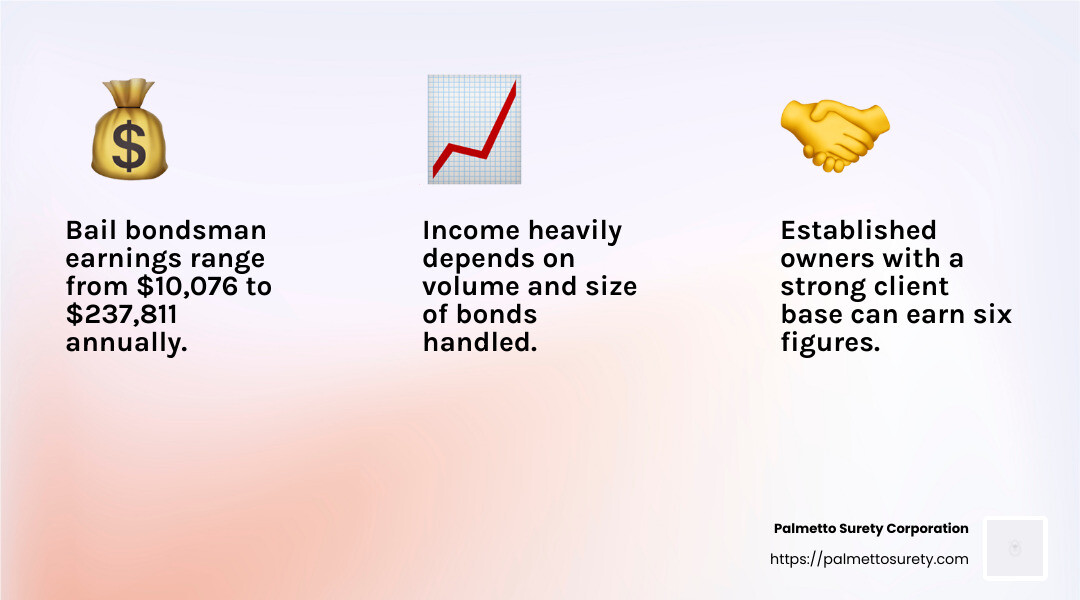
The earnings of a bail bond business can vary widely. On average, a new bail bond agent might make around $43,000 a year. However, for established owners with a solid reputation and a strong client base, annual incomes can reach well into six figures. The potential earnings depend heavily on the volume and size of the bonds they handle.
Do bail bondsmen put up their own money?
Yes, bail bondsmen often put up their own money, but they don’t do it alone. They usually work with insurance companies for financial backing. When a bail bond is issued, the bondsman charges a non-refundable fee, typically 10% of the bail amount. This fee is the bondsman’s main source of revenue. To cover the full bail amount, they may use collateral provided by the defendant or their family, which can include property, vehicles, or other valuable assets.
Do bail bondsmen make good money?
Bail bondsmen can indeed make good money, especially if they own their business and manage it well. The income potential is high, with opportunities to earn significant commissions on larger bonds. Additionally, being a bail bondsman offers career benefits like flexible work schedules and the chance to be your own boss. However, success in this field requires a mix of business acumen, strong communication skills, and the ability to manage risks effectively.
Conclusion
Choosing a career as a bail bondsman can be both financially rewarding and personally fulfilling. At Palmetto Surety Corporation, we understand the unique opportunities and challenges this career path offers. With over 20 years of experience in the industry, we are committed to supporting bail bondsmen and helping them succeed.
Career Opportunities
Becoming a bail bondsman opens doors to a dynamic and flexible career. You have the freedom to set your own schedule and operate your own business. This autonomy allows you to build a career that aligns with your personal goals and lifestyle. As a bail bondsman, you play a crucial role in the justice system, helping defendants steer their legal obligations while maintaining their freedom.
Financial Rewards
The financial rewards in the bail bonds industry can be substantial. With the ability to earn commissions on each bond, successful bail bondsmen can see their annual incomes rise well into six figures. The potential for financial growth is significant, especially if you own your business and have a strong client base. By leveraging our expertise and resources at Palmetto Surety Corporation, you can maximize your earnings and ensure long-term success.
For those considering a career in bail bonds, the path is clear and promising. With dedication, the right skills, and support from a trusted partner like Palmetto Surety Corporation, you can achieve both professional and financial success.
Explore career opportunities with Palmetto Surety Corporation and start your journey today!


