


How Does a Bail Bond Business Work? 5 Key Insights
How does a bail bond business work? A bail bond business functions as a financial service provider that helps defendants secure their release from jail while awaiting trial. Here’s a concise overview:
- Defendant Arrested: After an arrest, a defendant may be granted bail until court proceedings.
- Bail Set by Court: The court sets the bail amount based on the legal infraction and the defendant’s risk profile.
- Bail Bond Service Engaged: If a defendant cannot afford the bail, they may seek assistance from a bail bond company.
- Payment & Agreement: The defendant or their representative pays a non-refundable fee, typically 10% of the bail, to the bail bond agent.
- Bail Posted: The bail bond business posts the full bail amount to secure the defendant’s release.
- Court Appearance: The defendant must appear at all court dates.
- Collateral Secured: If necessary, collateral may be required to mitigate the bail bond company’s risk.
The bail bond industry plays a crucial role in the criminal justice system, providing defendants the opportunity to continue their daily lives while awaiting trial. By offering funds for bail, these businesses ensure that defendants are not detained due to financial limitations, supporting a fair judicial process.
I’m Haiko de Poel Jr, an expert and strategist in the financial services industry, particularly focused on how a bail bond business works. At Palmetto Surety Corporation, I bring deep expertise in branding and market strategies, helping businesses navigate the criminal justice landscape effectively.

Important how does a bail bond business work terms:
– how to start a bail bonds business in florida
– how to start a bail bonds business in georgia
– how to start a bail bonds business in texas
Understanding Bail Bonds
A bail bond is a financial agreement that allows a defendant to be released from jail while awaiting their court date. This bond acts as a refundable deposit ensuring the defendant returns for all required court appearances.
What is a Bail Bond?
When someone is arrested, a judge sets a bail amount. This amount serves as a guarantee that the defendant will appear in court. If the defendant cannot pay the full bail amount, they can opt for a bail bond. In this arrangement, a bail bond agent provides the court with a surety bond, covering the bail.
How Does it Work?
-
Payment: The defendant pays a non-refundable fee, typically around 10% of the bail amount, to the bail bond agent.
-
Agreement: The agent assures the court that the defendant will attend all court dates. If the defendant fails to appear, the agent is responsible for the full bail amount.

-
Refundable Deposit: If the defendant attends all court appearances, the bail is refunded. However, the fee paid to the bail bond agent is not refundable.

Importance of Court Appearances
The primary condition of a bail bond is that the defendant must attend all court proceedings. Failing to do so results in the forfeiture of the bail and potential legal consequences for the defendant. It also places financial risk on the bail bond company, as they are liable for the full bail amount.
Ensuring Court Compliance
Bail bonds help defendants maintain their daily lives while awaiting trial, but they come with responsibilities. The defendant’s compliance with court appearances is crucial. This system supports the judicial process by balancing the rights of the accused with the need to ensure court attendance.
By understanding these elements, individuals can better steer the bail bond process and fulfill their obligations within the criminal justice system.
How Does a Bail Bond Business Work?
The Role of a Bail Bondsman
A bail bondsman plays a crucial role in the criminal justice system. They act as a bridge between the court and the defendant, ensuring that defendants can secure temporary freedom while awaiting trial. Here’s how they do it:
-
Bail Bond Agents: These are the professionals who help defendants by posting bail on their behalf. They charge a non-refundable fee, generally about 10% of the bail amount. This fee is the primary way bail bond businesses make money.
-
Responsibilities: The bail bondsman is responsible for ensuring the defendant appears in court. If the defendant skips their court date, the bondsman must pay the full bail amount. This is why they often require collateral, like a house or car, to minimize their risk.
-
Collateral and Court Agreements: Collateral acts as a safety net. If the defendant fails to appear, the bondsman can claim the collateral to cover losses. This agreement is made with the defendant or their family to ensure the bail amount is secured.
Types of Bail Bonds
There are several types of bail bonds, each serving different needs:
-
Surety Bail: This is the most common type. A bail bond company provides a surety bond to the court, guaranteeing the defendant’s appearance. The defendant pays a fee to the bail bondsman for this service.
-
Recognizance Bail: In this scenario, the defendant is released based on a written promise to appear in court. No money is exchanged, but failure to appear can lead to arrest.
-
Cash Bail: The defendant or a cosigner pays the full bail amount in cash. This amount is refundable if the defendant appears at all court dates.
-
Property Bail: Here, the defendant uses property as collateral. The court holds the property title until the case concludes, ensuring the defendant appears in court.
By understanding these roles and types, individuals can steer the bail bond process more effectively. Bail bondsmen provide a vital service, allowing defendants to maintain their daily lives while ensuring they meet their legal obligations.
The Financial Aspects of Bail Bonds
How Bail Bonds Companies Make Money
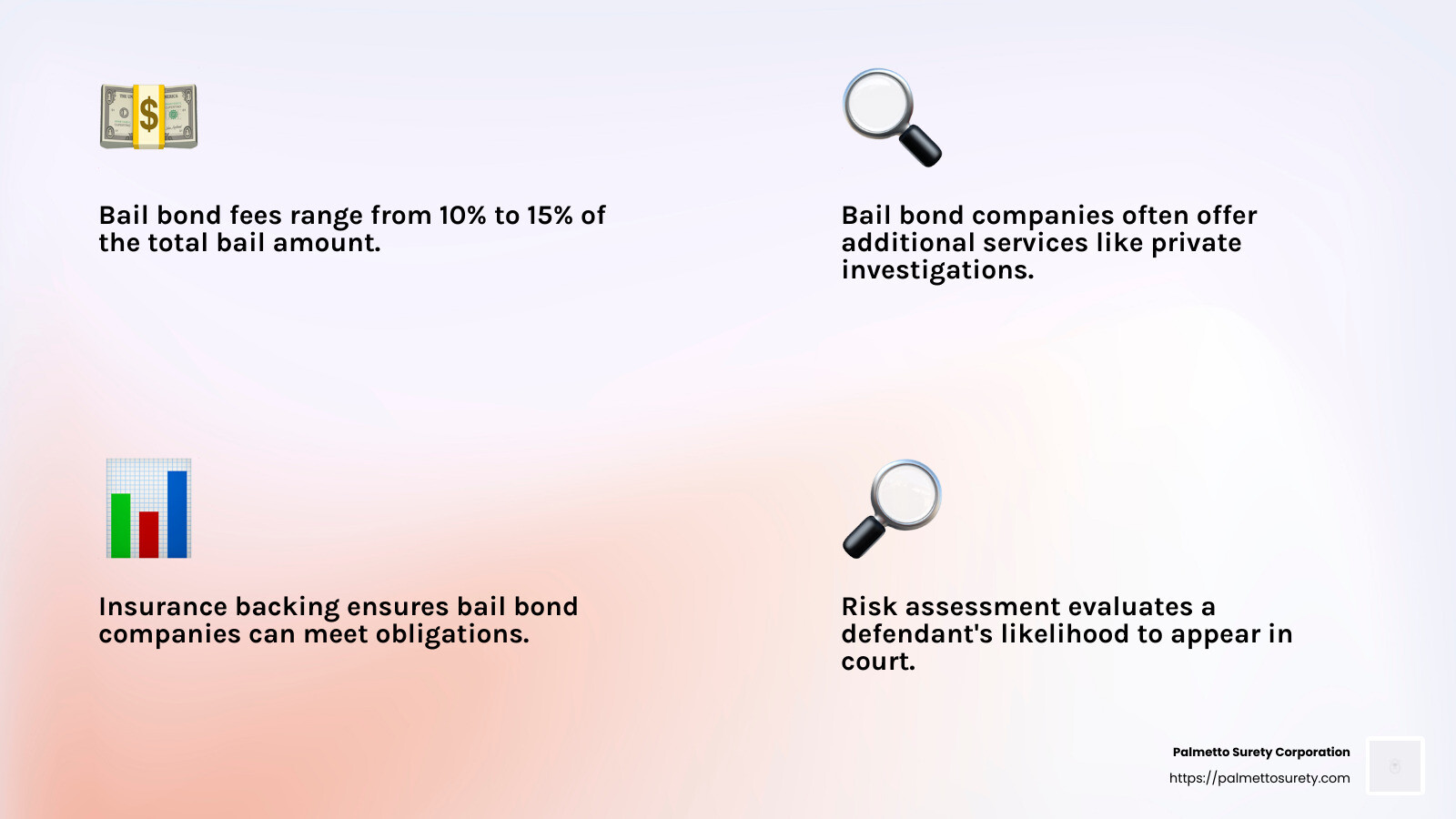
Bail bond companies operate in a unique financial space where their income primarily comes from the fees charged for their services. These fees, often termed as the bail premium, are typically non-refundable and are a percentage of the total bail amount set by the court. Usually, this fee ranges from 10% to 15% of the bail, depending on state regulations.
Revenue Streams
The primary revenue stream for bail bond companies comes from these non-refundable fees. For example, if a court sets a bail at $10,000, the bail bondsman charges a $1,000 to $1,500 fee to post a bond on behalf of the defendant. This fee compensates the bondsman for the risk they take in guaranteeing the defendant’s appearance in court.
Additionally, some bail bond companies might offer other services, like private investigations or process serving, which can also contribute to their revenue streams.
Insurance Backing and Risk Assessment
Behind the scenes, bail bond companies often have insurance backing. This means they partner with insurance companies that provide surety bonds. These bonds act as a safety net, ensuring the bail bond company can fulfill its financial obligations if a defendant fails to appear in court.
Risk assessment is a critical part of the bail bond business. Bail bondsmen evaluate the likelihood of a defendant appearing in court. They consider factors like the defendant’s criminal history, community ties, and employment status. This assessment helps determine whether to issue a bond and what collateral might be necessary to secure it.
By understanding these financial aspects, you can see how bail bond companies manage to stay profitable while taking on significant risks. The non-refundable fees, coupled with careful risk management and insurance backing, form the backbone of their business model.
Legal and Operational Considerations
What Happens if a Defendant Fails to Appear?
When a defendant is granted bail, it comes with the expectation that they will show up for all required court dates. But what happens if they don’t?
Bail Hearing and Judge Discretion
The bail amount is set during a bail hearing. At this hearing, a judge uses their discretion to decide the terms of bail based on factors like the severity of the crime, the defendant’s criminal history, and their likelihood to flee. Judges might refer to bail schedules, which are predetermined lists that suggest bail amounts for various offenses. However, they have the authority to adjust these amounts based on the specifics of a case.
Consequences of Failing to Appear
If a defendant does not appear in court, several things can happen:
-
Forfeited Bail: The court keeps the bail amount, and the defendant loses any money or property used as collateral.
-
Arrest Warrant: An arrest warrant is issued, meaning the defendant is now wanted by the police.
-
Bounty Hunter Involvement: Bail bond companies may hire a bounty hunter to locate and return the defendant to custody. Bounty hunters have special legal permissions to apprehend fugitives, often crossing state lines to do so.
The role of a bounty hunter is crucial in these situations. They work to ensure that the bail bond company does not suffer financial loss from a forfeited bail. If the defendant is successfully returned to court, the bail bond company might recover some of its losses.
Understanding these legal and operational aspects highlights the importance of appearing in court when out on bail. It also underscores the significant role that bail bond companies play in the justice system, balancing financial risk with their responsibility to ensure defendants honor their court commitments.
Frequently Asked Questions about Bail Bonds
Is the Bail Bond Fee Refundable?
When you work with a bail bond company, it’s important to understand that the fee you pay is non-refundable. This fee is a service charge for the bail bondsman’s work in securing the defendant’s release. Think of it as a payment for a service, similar to a commission. Once paid, this fee is not returned, regardless of the outcome of the case.
Do Bail Bondsmen Put Up Their Own Money?
Bail bondsmen don’t typically use their own money to cover the bail amount. Instead, they rely on surety insurance for financial backing. This means they have an agreement with an insurance company that provides the necessary funds if the defendant fails to appear in court. This setup allows bail bond companies to manage the financial risk associated with each bail bond they issue.
How Much Do Bail Bondsmen Charge?
The cost of a bail bond is usually a percentage of the total bail amount set by the court. Bail bondsmen generally charge a fee of 10-15% of the bail amount. However, this can vary based on state regulations, which may cap the maximum fee allowed. For instance, in some states, the fee might be limited to a maximum of 10%. It’s important to check the specific regulations in your state to understand what you might be expected to pay.
Conclusion
In the complex world of bail bonds, Palmetto Surety Corporation stands out as a leader in providing quick and reliable services. With over 20 years of experience in the commercial surety and bail bond industry, we have built a reputation for efficiency and trustworthiness. Our operations are primarily based in the southeastern United States, including states like Georgia, Florida, and Texas, where we work through a network of skilled bail agents and bonding companies.
Our quick service is a hallmark of our business. We pride ourselves on our ability to approve most applications within hours, ensuring that individuals and their families can secure the necessary bail bonds without unnecessary delays. This rapid response is crucial in the bail bond business, where time is often of the essence.
At Palmetto Surety Corporation, we understand the importance of being there for our clients when they need us most. Our commitment to excellence and customer satisfaction is best, making us the go-to choice for bail bond services in the region.
For more information on how we can assist you with your bail bond needs, visit our website. We are here to help you steer the process with ease and confidence.


