


Is a Fiduciary Bond Required in Ohio Probate Court? Top Guide 2024
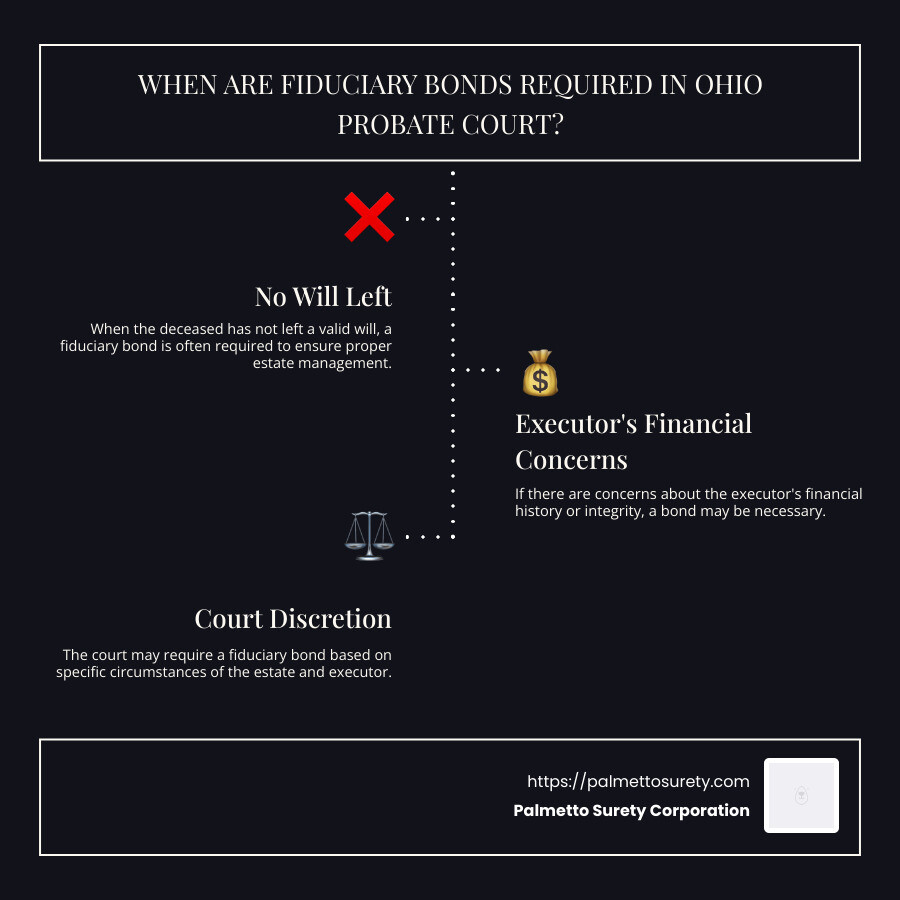
Is a fiduciary bond required in ohio probate court? Generally, yes. Probate courts in Ohio often mandate a fiduciary bond to protect the decedent’s estate when no will is left. These bonds ensure that the executor or administrator of an estate carries out their duties honestly and without fraud. However, there are exceptions, such as when an executor is a direct heir and entitled to the entire estate.
In Ohio, the probate court oversees the lawful distribution of a deceased person’s estate. It’s here that fiduciary bonds play an essential role. Acting as a sort of insurance, these bonds provide security for heirs and creditors, ensuring that the estate is managed with integrity. They serve as a safeguard, especially in cases where there might be concerns about an executor’s ability to handle financial affairs dutifully.
As Haiko de Poel Jr, with years of experience in the field of surety bonds through Palmetto Surety Corporation, I’ve seen the importance of these bonds in providing peace of mind to families during challenging times. Understanding when is a fiduciary bond required in ohio probate court is crucial for seamless estate execution.
Is a fiduciary bond required in ohio probate court terms to know:
– what are the requirements to obtain court bonds
– why does a court require a probate bond
This article, titled “Understanding Fiduciary Bonds in Ohio Probate Court,” is about the keyword “is a fiduciary bond required in ohio probate court” and was written for the company Palmetto Surety Corporation, to be published on https://palmettosurety.com.
What is a Fiduciary Bond?
A fiduciary bond is a type of surety bond required by probate courts in Ohio to ensure that the executor or administrator of an estate fulfills their duties responsibly. These bonds act as a financial guarantee that the fiduciary will manage the estate assets honestly and in accordance with the law.
Purpose of a Fiduciary Bond
The main purpose of a fiduciary bond is to protect the estate’s beneficiaries and creditors. When someone passes away without a will, or in situations where there might be concerns about the executor’s financial handling capabilities, the probate court often mandates a fiduciary bond. This bond acts as a safeguard against potential mismanagement or fraud.
Protection for Estate Beneficiaries and Creditors
For estate beneficiaries, a fiduciary bond provides reassurance that the executor will distribute assets fairly and according to the court’s instructions. If the executor fails to perform their duties or engages in fraudulent activities, the bond can be used to compensate the beneficiaries or creditors for any financial loss.

For creditors, the bond ensures that any debts owed by the estate will be settled appropriately. This protection is crucial, as it holds the fiduciary accountable for managing the estate’s obligations efficiently.
How Fiduciary Bonds Work
When a fiduciary bond is in place, it involves three parties:
- Principal: The executor or administrator who is responsible for managing the estate.
- Obligee: The probate court that requires the bond.
- Surety: The company, like Palmetto Surety Corporation, that issues the bond and guarantees the fiduciary’s performance.
If the fiduciary fails to meet their obligations, the surety company will compensate the affected parties up to the bond amount. However, the fiduciary is ultimately responsible for reimbursing the surety company for any claims paid out.
In summary, fiduciary bonds are a vital component in the probate process, providing essential protection for beneficiaries and creditors. They ensure that the executor or administrator manages the estate with honesty and integrity, safeguarding the interests of all parties involved.
Is a Fiduciary Bond Required in Ohio Probate Court?
In Ohio, whether a fiduciary bond is required in probate court depends on several factors. The probate court uses its discretion to determine when a fiduciary bond is necessary, guided by Ohio law and specific case circumstances.
When is a Fiduciary Bond Required?
A fiduciary bond is often required when there are concerns about the financial past or capabilities of the executor or administrator. Here are some scenarios where the court may mandate a bond:
- No Will or Concerns About the Executor: If an individual passes away without a will, or if there are doubts about the executor’s ability to manage the estate responsibly, a fiduciary bond might be required.
- Financial Concerns: If the executor has a questionable financial history, such as poor credit or past financial mismanagement, the court may insist on a bond to protect the estate.
- Court Discretion: The probate court has the authority to require a fiduciary bond if it believes it is in the best interest of the beneficiaries and creditors.
The bond acts as a safety net, ensuring that the executor carries out their duties ethically and efficiently.
When is a Fiduciary Bond Not Required?
There are exceptions where a fiduciary bond may not be necessary:
- Waiver by the Will or Trust Instrument: If the deceased’s will explicitly states that no bond is required, or if a trust instrument provides similar instructions, the court may waive the bond requirement.
- Court Opinion: The court might also waive the bond if it is satisfied that the executor is trustworthy and capable, based on their reputation or relationship with the deceased.
- Next of Kin: In some cases, if the executor is the next of kin and entitled to the entire estate, the bond might not be required, as outlined in Ohio law.
These exceptions can streamline the probate process, but they also place greater trust in the executor’s ability to manage the estate without additional oversight.
In summary, while fiduciary bonds are a common requirement in Ohio probate court, there are situations where they may be waived. Whether a bond is required depends on the specific circumstances of each case and the court’s assessment of the executor’s trustworthiness and financial history.
How to Apply for an Ohio Fiduciary Bond
Applying for an Ohio Fiduciary Bond is a crucial step for executors and administrators in probate court. It ensures they can manage an estate’s assets responsibly. Here’s a simple guide on how to apply, including what you’ll need and the costs involved.
Application Process
-
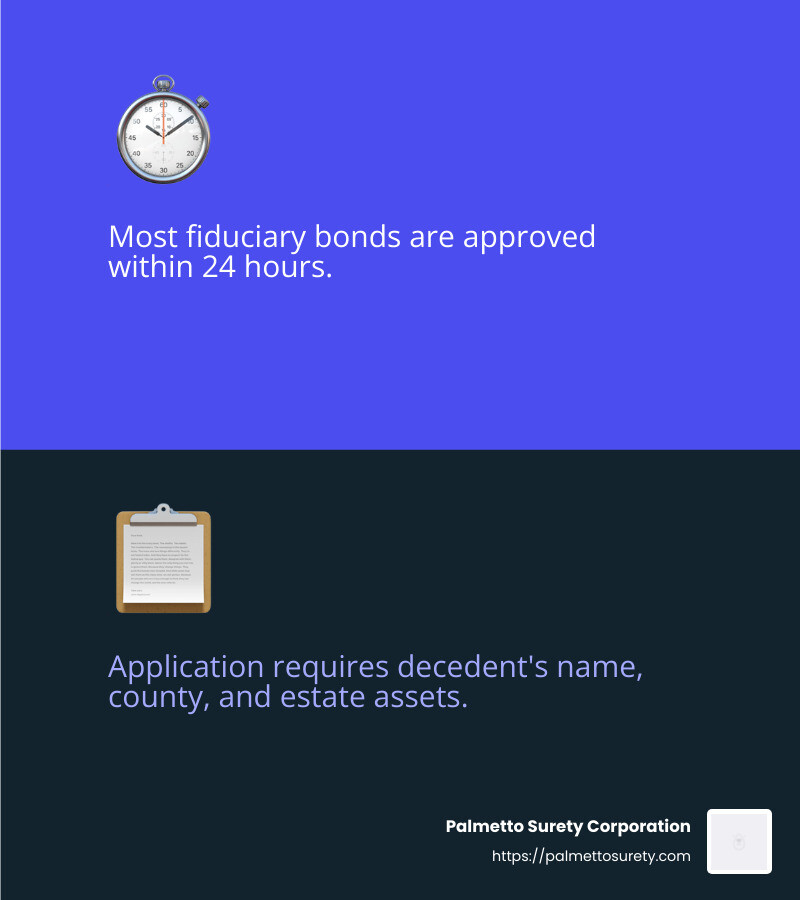
Gather Required Information: Before applying, collect essential details typically found in a personal credit application. This includes the decedent’s full name, the county where the probate case is filed, estate assets, and information about the estate heirs.
-
Choose Your Application Method: You can apply for the bond online, download an application to fill out manually, or send your application via secure message. Each method is designed to be straightforward and user-friendly.
-
Submit the Application: Once your application is complete, submit it through your chosen method. Prompt responses to any follow-up questions can expedite the approval process.
-
Approval Time: After submission, approval and issuance of the bond typically occur within 24 hours, provided all questions are answered promptly.
Qualifications for Obtaining a Fiduciary Bond
To qualify for an Ohio Fiduciary Bond, applicants are evaluated based on several criteria:
-
Credit History: A good personal credit history is essential. It demonstrates financial responsibility and trustworthiness.
-
Attorney Assistance: Having an attorney can be beneficial. They can help answer questions and ensure the application is thorough and accurate.
-
Fiduciary Experience: Experience in handling fiduciary or financial matters can strengthen your application. It shows the court that you are capable of managing the estate effectively.
Cost of an Ohio Fiduciary Bond
The cost of a fiduciary bond in Ohio is based on a tiered pricing structure. Here’s what to expect:
-
Tiered Pricing: The bond price is generally between 0.25% and 0.75% of the bond’s face value. The exact percentage depends on the size of the estate and the bond amount required.
-
Minimum Premium: Regardless of the estate size, there is a minimum premium of $100. This ensures coverage for smaller estates.
-
Renewal Payments: Most bonds require annual renewal payments. However, some carriers offer a flat rate, one-time payment for bonds with a minimum penalty.
Understanding these costs and requirements can help you prepare financially and ensure a smooth application process.

By following this guide, you can steer the application process for an Ohio Fiduciary Bond with confidence. Next, we’ll explore the specific conditions and exceptions that may apply to fiduciary bonds in Ohio.
Conditions and Exceptions for Fiduciary Bonds in Ohio
When dealing with probate court in Ohio, understanding the conditions and exceptions for fiduciary bonds is crucial. These bonds are typically required to protect the estate and its beneficiaries, but there are specific scenarios where exceptions may apply.
Bond Conditions
In Ohio, a fiduciary bond is generally required for executors and administrators unless a waiver is granted. The bond serves as a financial guarantee that the fiduciary will manage the estate responsibly and adhere to their duties. This bond must be filed with the probate court before the issuance of fiduciary letters.
Executor Bond
An executor bond is a type of fiduciary bond that applies when an individual is appointed to execute a deceased person’s will. The court may require this bond to ensure the executor fulfills their responsibilities, such as distributing assets and settling debts. The bond amount is typically at least double the value of the personal property and annual real estate rentals within the estate.
Guardian Bond
A guardian bond is necessary when someone is appointed to manage the affairs of a minor or an incapacitated person. However, if the guardian is only responsible for the person’s well-being (not their estate), the bond is often waived unless the court finds a good reason to require it.
Waiver Conditions
In some cases, the need for a fiduciary bond can be waived. For instance, if the trust instrument explicitly states that no bond is required, the court may honor this unless it believes the estate’s interests demand a bond. Additionally, if the estate’s value is less than $10,000, the court may choose to waive or reduce the bond amount.
Guardian of the Person
For guardians of the person only, a bond is generally not required unless the court sees a necessity for it. This exception often applies when a parent nominates a guardian for their child in a will and specifies that no bond is needed.
Small Estates
Small estates, valued under $10,000, may qualify for a bond waiver or reduction. This is because the administrative burden and risk are considerably lower for smaller estates, making a full bond less critical.
Trustee Appointments
In certain situations, such as when trustees are appointed from county services or agencies under specific sections of the Ohio Revised Code, the court may dispense with the bond requirement. This is especially true if these entities have already provided a bond under another statutory requirement.
Understanding these exceptions and conditions can help fiduciaries prepare for their role in managing an estate. Knowing when a bond is necessary or when it can be waived is essential for navigating Ohio’s probate court system efficiently.
Next, we’ll address common questions about obtaining a fiduciary bond in Ohio’s probate court.
Frequently Asked Questions about Fiduciary Bonds in Ohio Probate Court
What is the Process for Obtaining a Fiduciary Bond?
Obtaining a fiduciary bond in Ohio begins with completing an application. This application process is streamlined to make it as simple as possible. You can apply online or download an application form and send it via fax or secure message. The information required is similar to that of a personal credit application and includes probate case details, such as the decedent’s full name, the county where the probate case is filed, estate assets, and heirs.
Once your application is submitted, it is reviewed for approval based on criteria like your personal credit history, any attorney assistance you have, and your experience in managing fiduciary or financial matters. With all the necessary details in hand, most applications are approved and issued within 24 hours.
How Long Does it Take to Get a Fiduciary Bond?
The timeline for obtaining a fiduciary bond in Ohio is usually quick. After submitting your application, you can expect confirmation of receipt within a few hours. If there are any additional questions, responding promptly will help expedite the process. In most cases, once all questions are answered, the bond is approved and issued on the same day or within 24 hours. For those in urgent need, overnight or same-day courier services are available for an additional cost.
Can the Court Waive the Requirement for a Fiduciary Bond?
Yes, in certain circumstances, the Ohio probate court can waive the requirement for a fiduciary bond. This waiver might occur if the decedent’s will explicitly states that no bond is required or if the executor is the sole heir and next of kin entitled to the entire estate. Additionally, small estates valued under $10,000 may qualify for a waiver or reduction in the bond amount, as the risk and administrative burden are lower. However, the court retains discretion to require a bond if it believes the estate’s interests are at risk.
Understanding these possibilities can help you steer the probate process more efficiently. Next, we will explore the application process in more detail.
Conclusion
Navigating the probate process in Ohio can be complex, but understanding the role of a fiduciary bond simplifies it significantly. These bonds are crucial for ensuring that executors and administrators fulfill their duties responsibly, protecting the interests of beneficiaries and creditors alike. While not always required, they provide a layer of security that can be pivotal in managing an estate effectively.
At Palmetto Surety Corporation, we pride ourselves on offering a seamless experience for obtaining these bonds. Our expertise in the field, coupled with our innovative platform, ensures that most applications are approved swiftly—often within hours. We understand the urgency that often accompanies probate matters, and our efficient service is designed to meet these needs promptly.
Whether you’re an executor, administrator, or attorney, our team is here to support you through the process. With over 20 years of experience, Palmetto Surety Corporation is your reliable partner in securing the necessary bonds to comply with Ohio probate court requirements.
For more information on how we can assist you, visit our Palmetto Surety Corporation service page. Let us help you steer the complexities of probate with confidence and ease.


