


What are the Requirements to Obtain Court Bonds: Top 5 Essential Steps in 2024
Why Understanding Court Bond Requirements is Crucial
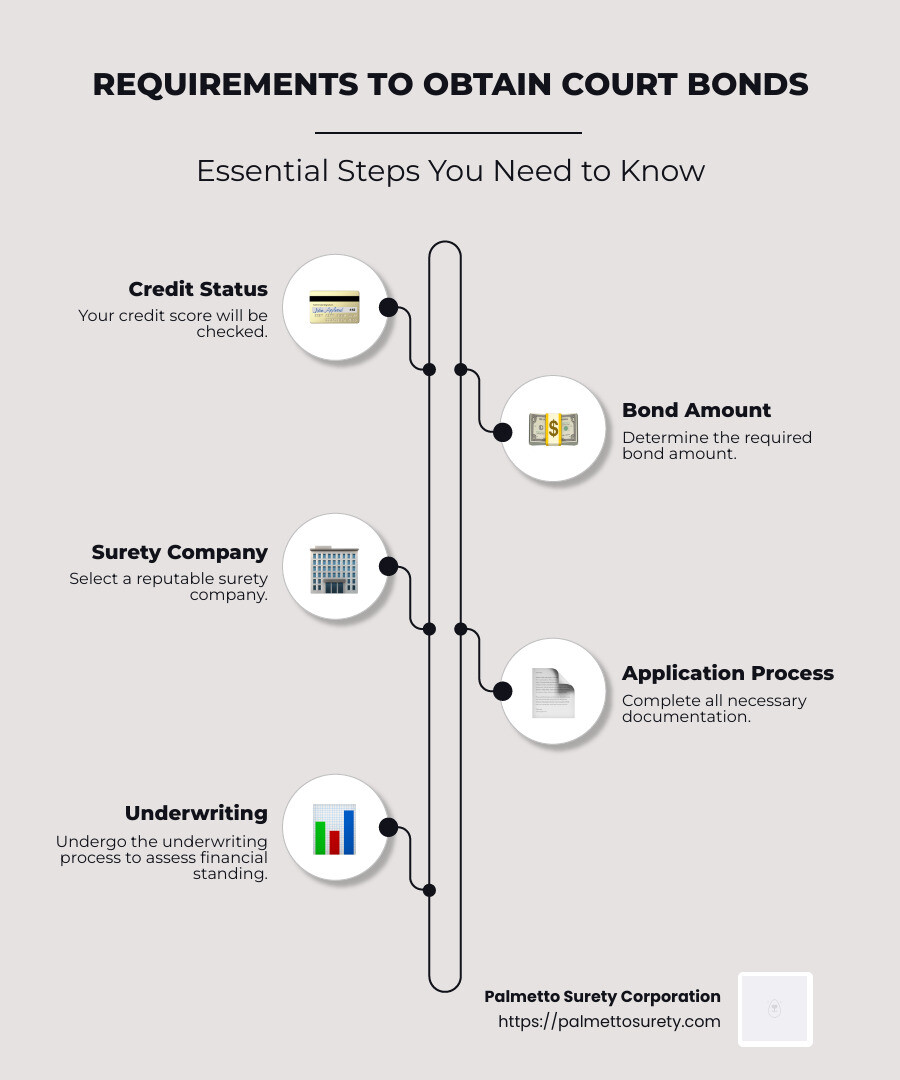
If you’re wondering what are the requirements to obtain court bonds, let’s cut to the chase:
- Credit Status: Your credit score matters.
- Bond Amount: Know the required bond amount.
- Surety Company: Choose a reputable surety company.
- Application Process: Prepare for underwriting and documentation.
Court bonds play a vital role in legal proceedings, acting as a financial guarantee that ensures the involved parties fulfill their obligations. This comprehensive guide will help you steer the often complex requirements to obtain court bonds and ensure that you are well-prepared for any legal obligations that come your way.
I’m Haiko de Poel Jr., a specialist in explaining intricate topics simply. With extensive experience at Palmetto Surety Corporation, I’m excited to guide you through what are the requirements to obtain court bonds to make this process as seamless as possible.
What are the Requirements to Obtain Court Bonds?
Credit Status and Financial Standing
Your credit status is crucial when obtaining a court bond. Surety companies use your credit score to assess risk. A higher credit score generally means a lower premium.
Financial standing matters too. Surety companies evaluate your financial obligations and stability. They want to know you’re capable of handling the bond’s financial responsibilities. If your financial history is strong, you’re more likely to get favorable terms.
Documentation and Legal Requirements
When it comes to documentation, courts require specific legal documents to issue a bond.
- Court Orders: You must provide court orders mandating the need for a bond.
- Bond Applications: Fill out bond applications thoroughly. Missing information can delay the process.
- Legal Documents: Any supporting legal documents, such as wills or guardianship papers, may be required depending on the bond type.
Types of Court Bonds
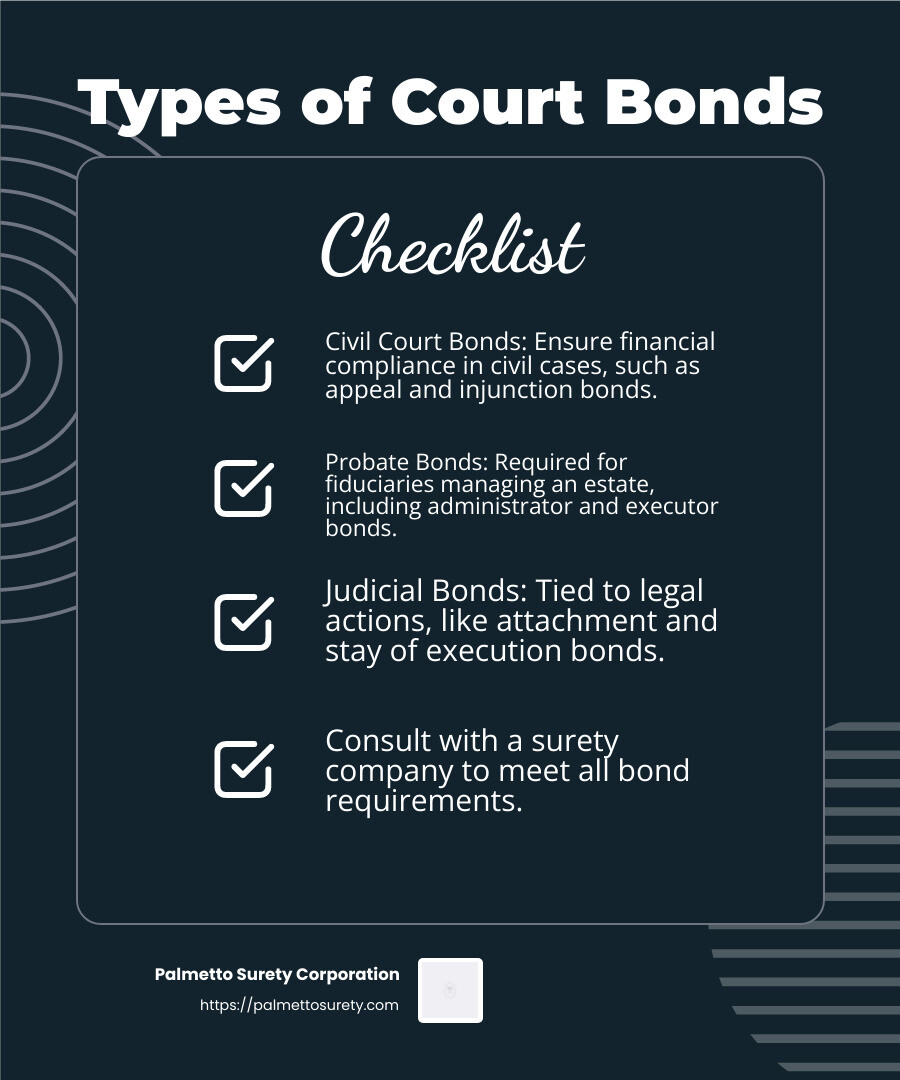
Court bonds fall into three main categories: civil court bonds, probate bonds, and judicial bonds. Each type has its own requirements and purposes.
Civil Court Bonds
Civil court bonds ensure financial compliance in civil cases. Examples include:

- Appeal Bonds: Required if you want to delay payment while appealing a court judgment.
- Injunction Bonds: Needed if you’re requesting a court to take specific action like stopping someone from doing something.
- Replevin Bonds: Used when you seek to recover personal property before a final court decision.
Probate Bonds
Probate bonds are necessary for fiduciaries managing someone’s estate. Types include:
- Administrator Bonds: Required if you handle an estate without a will.
- Executor Bonds: Needed if you’re named executor in a will.
- Guardianship Bonds: For those managing the estate of a minor or legally incompetent person.
Judicial Bonds
Judicial bonds are tied to legal actions. Examples are:
- Attachment Bonds: For plaintiffs seeking to seize a defendant’s property before a trial.
- Stay of Execution Bonds: If you want to delay a court judgment.
- Condemnation Bonds: For public utility companies seizing land while court proceedings determine fair compensation.
Understanding the specific requirements to obtain court bonds can simplify the process. Always consult with a knowledgeable surety company to ensure you meet all criteria.
Types of Court Bonds
Court bonds fall into three main categories: civil court bonds, probate bonds, and judicial bonds. Each type has its own purpose and requirements.
Civil Court Bonds
Civil court bonds are typically required in civil litigation to ensure that parties comply with court orders and judgments. Here are some common types:
-
Appeal Bonds: These bonds are required when a party wants to delay the payment of a court judgment while appealing the decision. They guarantee that if the appeal fails, the judgment amount will be paid, including interest and court costs.
-
Injunction Bonds: Needed when a party requests a court to issue an injunction to stop someone from doing something. This bond protects the defendant from financial harm if the injunction is later found to be unnecessary.
-
Replevin Bonds: Used when a party seeks to recover personal property before a final court decision. This bond ensures that the property will be returned if the court rules in favor of the defendant.
Probate Bonds
Probate bonds are required in situations where a fiduciary is managing an estate. These bonds protect the beneficiaries from financial harm due to the fiduciary’s actions. Types include:
-
Administrator Bonds: Required if an individual is managing an estate without a will. This bond ensures the proper handling of the estate’s assets.
-
Executor Bonds: Needed if you are named as the executor in a will. This bond ensures that the executor fulfills their duties according to the will’s instructions.
-
Guardianship Bonds: For those managing the estate of a minor or a legally incompetent person. This bond guarantees that the fiduciary will act in the best interest of the ward.
Judicial Bonds
Judicial bonds are required in legal actions to ensure compliance with court orders and judgments. Examples include:
-
Injunction Bonds: Similar to civil injunction bonds, these are required when a court issues an injunction as part of a legal action.
-
Replevin Bonds: These bonds are also required in judicial proceedings where a party seeks to recover property before a final decision.
-
Appeal Bonds: Required in judicial cases where a party wants to appeal a court judgment. This bond guarantees that the judgment will be paid if the appeal fails.
Understanding the specific requirements to obtain court bonds can simplify the process. Always consult with a knowledgeable surety company to ensure you meet all criteria.
How to Obtain a Court Bond
Navigating the process of obtaining a court bond can seem daunting, but breaking it down into manageable steps makes it much simpler. Here’s a comprehensive guide on how to do it.
Choosing a Surety Company
The first step in obtaining a court bond is selecting a reputable surety company. A good surety company will offer:
-
Experience and Expertise: Choose a company with a proven track record in providing court bonds. This ensures they understand the specific needs and legal nuances involved.
-
Strong Customer Support: Look for a company that provides excellent customer service. You want a surety company that is responsive and can guide you through the process.
-
Wide Range of Bonds: Ensure the company offers the type of bond you need, whether it’s a civil court bond, probate bond, or judicial bond.
Application Process
Once you’ve chosen a surety company, the next step is to go through the application process. Here’s what you need to know:
-
Documentation: Gather all necessary documents before starting your application. This may include court orders, legal documents, and any specific paperwork required by the surety company.
-
Credit Checks: Be prepared for a credit check. Your credit status is a significant factor in the underwriting process. A good credit score can make it easier to get approved and may lower your premium.
-
Bond Amount: The bond amount required will be specified by the court. This amount influences the premium you’ll pay, which is usually a percentage of the total bond amount.
Underwriting Criteria
The underwriting process is where the surety company assesses the risk of issuing the bond. Key factors include:
-
Financial Standing: The surety will evaluate your financial stability. They want to ensure you can meet the bond’s financial obligations if necessary.
-
Legal Requirements: Make sure you meet all legal requirements for the bond. This includes any specific criteria set by the court or jurisdiction.
-
Type of Bond: Different bonds have different underwriting criteria. For example, an appeal bond may have stricter financial requirements compared to a guardianship bond.
Here’s a quick overview of the typical steps:
- Select a reputable surety company.
- Complete the application and provide necessary documentation.
- Undergo a credit check.
- Meet the underwriting criteria.
- Receive bond approval and pay the premium.
By following these steps, you can efficiently obtain the court bond you need, ensuring compliance with court orders and protecting all parties involved.
Now that you know how to get a court bond, let’s dive into the different types of court bonds available and their specific uses.
Frequently Asked Questions about Court Bonds
How Much Does a Court Bond Cost?
The cost of a court bond depends on several factors, primarily the bond amount, premium rate, and your credit status.
-
Bond Amount: The court will specify the bond amount required. This is the total value of the bond that needs to be covered.
-
Premium Rate: This is typically a percentage of the bond amount. For example, if the bond amount is $10,000 and the premium rate is 1%, you would pay $100 for the bond. Premium rates can vary based on the type of bond and the surety company’s policies.
-
Credit Status: Your credit score plays a significant role in determining the premium rate. A higher credit score can result in a lower premium, while a lower score might increase the cost. Surety companies assess your creditworthiness to gauge the risk of issuing the bond.
What Does a Bond Order Mean in Court?
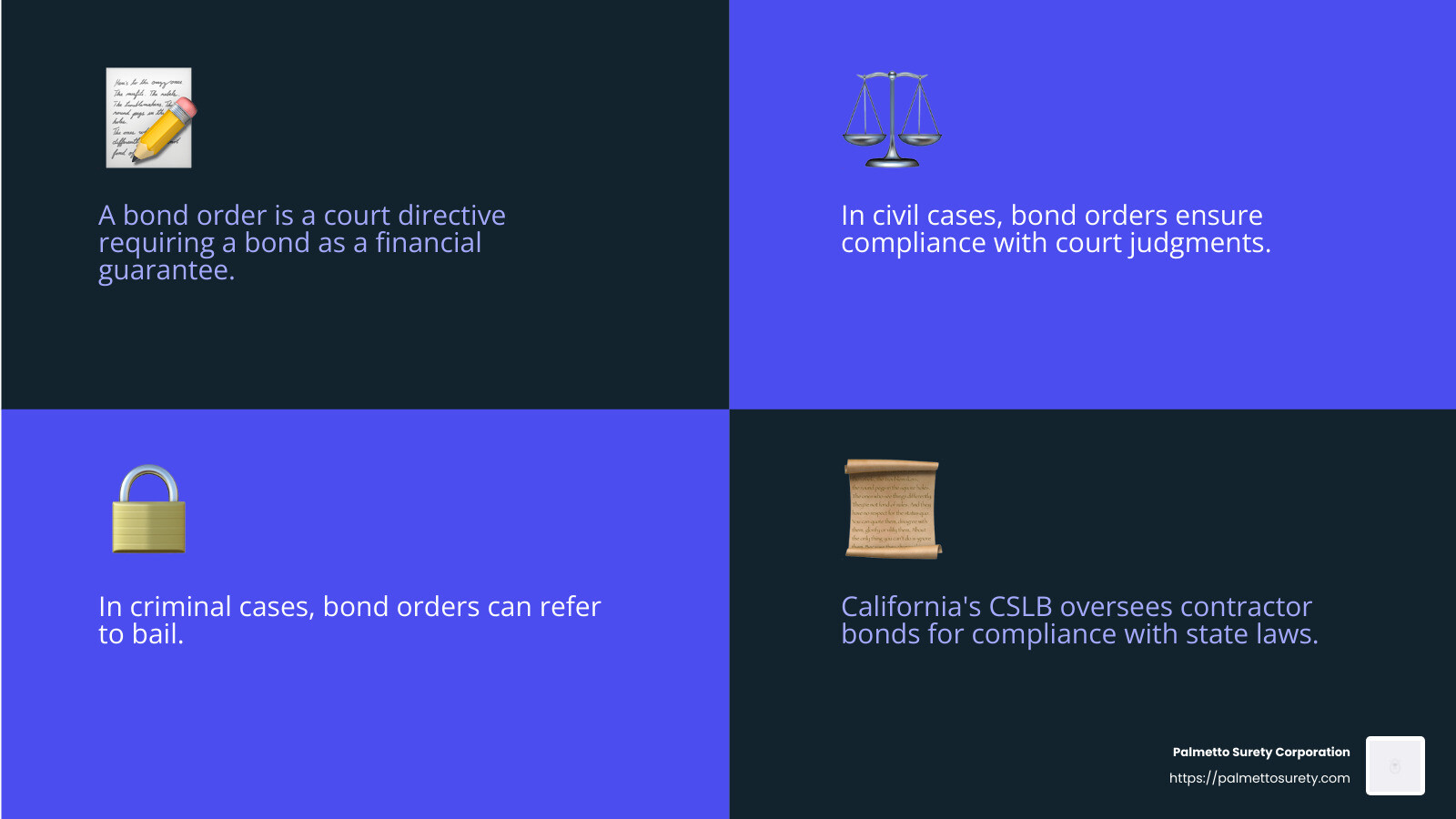
A bond order is a court directive that requires a party to obtain a bond. This bond acts as a financial guarantee that the party will fulfill specific obligations as dictated by the court.
-
Court Order: The court issues the order, specifying the type of bond required and the bond amount. This could be related to bail, probate, or other legal proceedings.
-
Bail: In criminal cases, a bond order might refer to bail. This ensures that a defendant will appear in court for their trial. If the defendant fails to appear, the bond amount is forfeited.
-
Legal Proceedings: In civil cases, bond orders can ensure compliance with court judgments or the proper management of an estate, among other things.
What are the Requirements for a Bond in California?
In California, the requirements for obtaining a court bond can vary depending on the type of bond and the specific legal context. Here are some general guidelines:
-
Contractor License Bond: Contractors in California must obtain a license bond as part of their licensing process. This bond guarantees that the contractor will comply with state laws and regulations.
-
State Laws: California has specific statutes that govern the issuance and requirements of court bonds. It’s essential to understand these laws to ensure compliance. For example, the California State License Board (CSLB) enforces regulations for contractor bonds.
-
CSLB Enforcement: The CSLB oversees the licensing and bonding of contractors in California. They ensure that contractors meet all legal requirements, including maintaining a valid bond.
To obtain a court bond in California, you generally need to:
- Determine the type of bond required by the court.
- Select a reputable surety company.
- Complete the application process, including providing necessary documentation and undergoing a credit check.
- Meet the underwriting criteria set by the surety company.
- Pay the premium and receive the bond approval.
Understanding these requirements will help you steer the process of obtaining a court bond in California efficiently.
Next, we’ll explore the different types of court bonds available and their specific uses.
Conclusion
At Palmetto Surety Corporation, we understand the complexities and urgency often associated with obtaining court bonds. Whether you’re dealing with civil court bonds, probate bonds, or judicial bonds, our team is here to help you steer the process with ease.
Quick Approval
Time is often of the essence in legal proceedings. That’s why we pride ourselves on our ability to approve most applications within hours. With over 20 years of experience in the surety bond industry, we have honed our processes to be both quick and efficient, ensuring you get the bond you need when you need it.
Efficient Service
From the moment you contact us, our dedicated team works tirelessly to make the bonding process as smooth as possible. We offer a seamless application process, clear documentation requirements, and expert guidance every step of the way. Our state-of-the-art platform simplifies underwriting, significantly reducing the time it takes to get your bond approved.
By choosing Palmetto Surety Corporation, you’re not just getting a bond; you’re partnering with a team committed to providing exemplary support and service. Our expertise and innovative approach to surety bonds mean you can focus on your legal obligations without worrying about delays or complications.
Ready to get started? Visit our service page to learn more about how we can help you secure your court bond quickly and efficiently.
Navigating court bond requirements doesn’t have to be daunting. With the right partner by your side, you can ensure compliance and focus on what matters most—your legal responsibilities. Choose Palmetto Surety Corporation for reliable, fast, and efficient court bond solutions.


