


Employee theft insurance: Secure Your Business 2025
Why Employee Theft Insurance Is Critical for Business Survival
Employee theft insurance protects businesses from financial losses caused by dishonest acts committed by their own employees, including embezzlement, forgery, and theft of money, securities, or property.
Key Facts About Employee Theft Insurance:
- Coverage: Protects against employee embezzlement, forgery, theft, and fraudulent acts.
- Cost: Typically 1-3% of the coverage amount (e.g., $600-750 annually for a $100,000 policy).
- Types: Name Schedule, Blanket Position, or Primary Commercial Blanket bonds.
- Trigger: Covers losses finded during the policy period; may require employee conviction for payout.
- Exclusions: Owner theft, indirect losses, voluntary money transfers, and trade secrets.
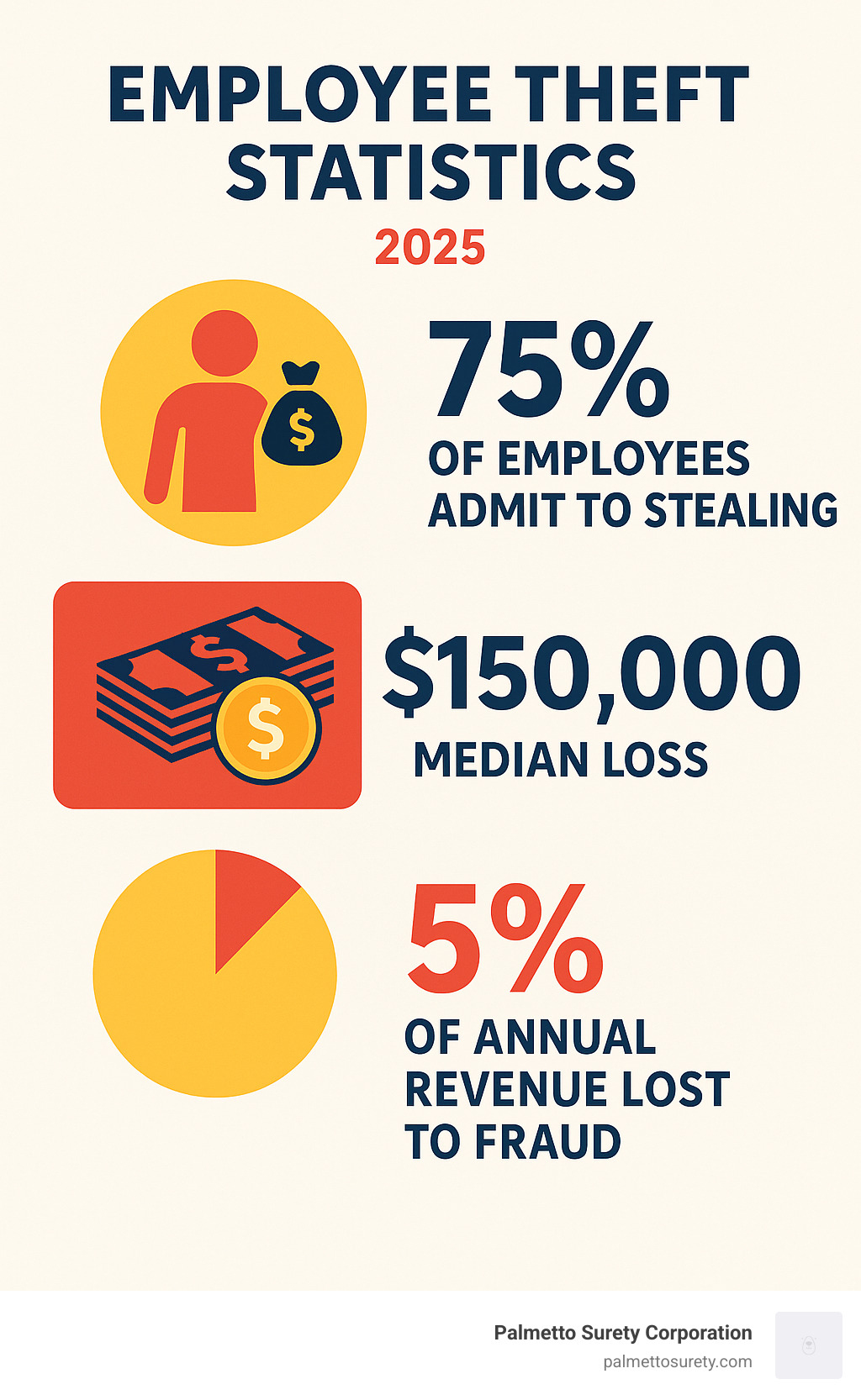
The statistics are sobering. According to the Association of Certified Fraud Examiners, organizations lose about 5% of their annual revenue to employee fraud each year. The median loss is $150,000, and employee theft contributes to nearly 30% of all business failures. Shockingly, 90% of all significant theft losses come from employees, not external criminals. These are often trusted, long-term employees, and a single incident can mean the difference between survival and bankruptcy.
I’m Haiko de Poel Jr., and through my work at Palmetto Surety Corporation, I’ve seen how employee theft insurance can save businesses from devastating losses. My experience has shown me that most business owners underestimate both their vulnerability and the protection available to them.
The Staggering Financial Impact of Employee Theft
The financial devastation from employee dishonesty is staggering. The U.S. Chamber of Commerce estimates that employers lose $20 billion to $40 billion annually to employee theft, a key factor in nearly 30% of all business failures.
Research on the devastating cost of internal fraud shows organizations lose about 5% of their revenue each year. The median loss per case is $150,000, with 23% of cases exceeding $1 million. These schemes often go undetected for an average of 14 months, causing steady financial bleeding that can cripple a company.
Why Even Trusted Employees Pose a Risk
Surprisingly, the most damaging thefts are often committed by long-term, trusted employees. This happens when three factors align: financial pressure, opportunity, and rationalization.

- Financial Pressure: Personal crises like medical bills, debt, or addiction can drive anyone to desperation.
- Opportunity: Trusted employees often have the most access to financial systems and the least oversight, creating tempting opportunities.
- Rationalization: Employees who feel underpaid, overworked, or wronged may justify theft as a form of revenge or entitlement. Research from employee behavior studies shows some workers believe it’s acceptable to steal if the company “won’t notice it missing.”
Since many employees admit they would steal if they knew they wouldn’t get caught, trust alone is not a sufficient business strategy. You need robust systems and proper employee theft insurance.
Industries Most Vulnerable to Employee Theft
While no business is immune, some industries face higher risks:
- Retail: High volumes of cash and easily resold inventory.
- Healthcare: Access to billing information, insurance data, and medical supplies.
- Financial Services: Direct access to large sums of money and client accounts.
- Construction: Valuable equipment, materials, and complex invoicing systems.
- Non-profits: Often operate with limited oversight and high levels of trust.
- Cash-Heavy Businesses: Any business with frequent cash transactions, like restaurants and convenience stores.
Understanding your industry’s vulnerabilities is key to securing the right level of protection.
Understanding Employee Theft Insurance and Fidelity Bonds
Business owners are often confused by terms like employee theft insurance, fidelity bonds, and employee dishonesty coverage. These all refer to the same essential protection: a financial safety net for when an employee commits a dishonest act like embezzlement or forgery.
This is “first-party” coverage, meaning it protects your business from your own team members, unlike general liability insurance which covers claims from third parties. A fidelity bond is a type of commercial surety bond, a specialty at Palmetto Surety. To learn more, see our guide on what is a surety bond?

Key Differences: Employee Theft Coverage vs. Other Business Protections
It’s a common misconception that a general liability or Business Owner’s Policy (BOP) will cover significant employee theft. While a BOP may offer minimal coverage (e.g., $10,000-$25,000), it’s often insufficient for the median loss of $150,000. Employee theft insurance is specialized protection that fills a critical gap left by other policies.
| Feature | Employee Theft Insurance (Fidelity Bond) | General Liability Insurance | Cyber Insurance | Business Owners Policy (BOP) |
|---|---|---|---|---|
| Who is covered? | Your business (from employee theft) | Third parties (customers, public) | Your business (from cyber incidents) | Your business (property, liability) |
| What is covered? | Direct financial loss from employee dishonesty (theft, fraud, embezzlement) | Third-party bodily injury, property damage, advertising injury | Data breaches, cyberattacks, ransomware, business interruption from cyber event | Property damage, general liability, some limited crime coverage |
| Primary Purpose | Protect against internal employee crime | Protect against third-party claims | Protect against digital risks | Bundled property and liability for small businesses |
| Common Exclusions | Owner theft, indirect losses, social engineering fraud | Employee injuries (covered by workers’ comp), professional errors | Physical damage, employee dishonesty (unless cyber-related) | Significant employee theft (often limited to $10k-$25k) |
Main Types of Employee Dishonesty Bonds
The right bond depends on your business structure. You can learn more about the various types of surety bonds explained on our website.
- Name Schedule Fidelity Bond: Covers specific employees listed by name on the bond. Ideal for small businesses with a few key staff handling finances.
- Blanket Position Bond: Covers all employees in specific job titles (e.g., “cashier” or “manager”) up to a set limit per position. Useful for roles with frequent turnover.
- Primary Commercial Blanket Bond: The most comprehensive option, covering every employee in the organization under one aggregate limit. It automatically includes new hires and eliminates administrative updates.
At Palmetto Surety, we can typically approve applications within hours, providing fast and continuous protection.
Decoding Your Policy: What’s Covered and What’s Not

Understanding your employee theft insurance policy is crucial. The policy’s insuring agreement defines what is covered, typically the direct loss of money or property from an employee’s dishonest act. A key term is “manifest intent,” which means the employee must have clearly intended to cause the loss for personal gain, distinguishing theft from an honest mistake.
Specific Acts Typically Covered
Employee theft insurance covers a wide range of dishonest acts, including:
- Embezzlement: An employee stealing assets they were entrusted to manage.
- Forgery or Alteration: Falsifying signatures on checks or altering financial documents.
- Skimming: Taking cash from a sale before it is recorded in the books.
- Larceny/Inventory Theft: The straightforward theft of company property, supplies, or merchandise.
- Time Theft: Falsifying timesheets, which costs U.S. employers over $11 billion annually.
- Data Theft: Stealing customer lists, trade secrets, or other sensitive company information.
- Funds Transfer Fraud: Deceiving a financial institution into sending money to an unauthorized account.
Common Exclusions and Limitations
It’s equally important to know what is not covered:
- Theft by Owners or Partners: Policies protect the business from employees, not its owners.
- Indirect or Consequential Losses: The policy covers the stolen money, not lost profits or reputational damage.
- Loss of Trade Secrets: This often requires a special endorsement and can be difficult to value.
- Voluntary Parting with Money: Losses from social engineering scams, where an employee is tricked into sending money, are typically excluded and require separate coverage.
- Late Reporting: Most policies require you to report a loss within a specific timeframe (e.g., 60 days) of its findy.
‘Loss Sustained’ vs. ‘Loss Finded’ Policies
This policy distinction is critical for timing your claim.
- ‘Loss Sustained’ policies cover thefts that both occur and are finded during the policy period.
- ‘Loss Finded’ policies are more common and business-friendly. They cover losses finded during the policy period, regardless of when the theft occurred.
Because fraud can go undetected for years, a ‘Loss Finded’ policy offers better protection. When switching providers, ensure you have “prior acts” coverage to avoid dangerous gaps.
Proactive Prevention: Spotting Red Flags and Implementing Controls
While employee theft insurance provides a financial safety net, prevention is always the best strategy. Preventing theft saves you the stress, disruption, and headache of dealing with employee dishonesty. It’s about creating a culture of integrity while implementing smart controls.

Warning Signs of Potential Employee Theft
Be aware of red flags that may indicate fraudulent activity:
- Behavioral Changes: An employee becomes defensive about their work, refuses to take vacations, or works unusual hours.
- Lifestyle Changes: An employee’s lifestyle (new cars, lavish trips) suddenly seems to exceed their known income.
- Attitude Shifts: A persistently disgruntled or resentful attitude can be a motivator for theft. The FBI warns about revenge theft from employees who feel mistreated.
- Financial Discrepancies: Unexplained cash shortages, missing inventory, or unusual payments in your records.
Essential Prevention Strategies for Your Business
Implement these strategies to build a theft-resistant business:
- Separation of Duties: Ensure no single employee controls a financial transaction from start to finish.
- Regular Audits: Conduct periodic, unannounced reviews of financial records and inventory.
- Mandatory Vacations: Require employees in sensitive financial roles to take uninterrupted time off, which often helps uncover fraud.
- Clear Reporting Procedures: Establish a confidential system for employees to report suspected dishonesty without fear of retaliation.
- Limit Access to Data: Restrict access to sensitive financial and company information to only those who need it.
- Lead by Example: Research shows that leading by example fosters an ethical culture throughout the organization.
- Thorough Background Checks: Screen potential hires by verifying criminal records and employment history, following all EEOC guidelines for employers.
Even with the best prevention, theft can still occur. That’s why employee theft insurance and commercial surety bonds are essential as a final layer of protection.
Securing Your Business: The Employee Theft Insurance Process
Getting the right employee theft insurance involves determining your coverage needs, understanding the cost, and knowing how to steer the claims process.
How to Determine the Right Coverage Amount
To choose the right coverage limit, assess your risk exposure by considering:
- Asset Valuation: The maximum value of cash, securities, and inventory an employee could steal.
- Annual Revenue: A common benchmark is 5% of annual revenue, reflecting average fraud losses.
- Employee Access: How many employees have access to financial systems, inventory, or cash.
- Worst-Case Scenario: The maximum damage a single trusted employee could inflict before being caught.
- Internal Controls: Stronger controls may justify lower limits, while weak controls require higher coverage.
Most businesses secure coverage between $100,000 and $1 million.
Understanding the Cost of Employee Theft Insurance
Employee theft insurance is highly affordable. Premiums typically range from 1-3% of the coverage amount. For example, a $100,000 policy often costs between $600 and $750 per year.
Costs are influenced by the coverage limit, bond type, industry risk, and the number of employees. Businesses with strong internal controls and good financial standing often qualify for better rates. You can learn more about the cost of surety bonds on our website.
Navigating the Claims Process
If you suspect theft, follow these steps:
- Find and Document: Immediately document the loss, including what happened, when you finded it, and any evidence.
- Notify Your Insurer: Report the loss immediately. Most policies have a strict notification window (e.g., 30-60 days).
- Provide Proof of Loss: Submit detailed documentation, such as financial records, bank statements, inventory reports, and witness statements.
- Cooperate with the Investigation: The insurer will investigate the claim. Full cooperation will speed up the process.
- Await Payout: Once the claim is verified and approved, you will be reimbursed for the direct financial loss up to your policy limit. Many policies require a criminal conviction before paying out.
Throughout this process, ensure you follow all laws regarding employee privacy and termination. The EEOC offers guidance on legal compliance for employers.
Frequently Asked Questions about Employee Theft Coverage
Here are answers to some of the most common questions about employee theft insurance.
Does employee theft insurance cover independent contractors or volunteers?
Standard policies typically only cover W-2 employees on your payroll. However, coverage can often be extended through an endorsement to include temporary staff, volunteers, or independent contractors. It is crucial to discuss everyone who has access to your assets with your surety provider to ensure they are included in your policy. Do not assume coverage exists.
What is the difference between a fidelity bond and a business service bond?
These two bonds protect different parties:
- A fidelity bond (employee theft insurance) protects your business from financial losses caused by your employees’ dishonest acts.
- A business service bond protects your clients from theft committed by your employees while working on the client’s premises (e.g., a cleaning service employee stealing from a client’s home).
Many service-based businesses need both to be fully protected.
How long does it take to get a claim paid?
The timeline varies. Simple, well-documented claims may be resolved in a few weeks. However, complex cases involving sophisticated fraud or criminal proceedings can take several months. The speed of a payout depends heavily on:
- The complexity of the case.
- The quality of your proof-of-loss documentation.
- Your cooperation during the investigation.
- The time required for any criminal proceedings, as many policies require a conviction before paying a claim.
Conclusion
With businesses losing an average of 5% of their annual revenue to internal fraud, employee theft is a pervasive threat. The question is not if your business could be affected, but when.
Employee theft insurance is the financial safety net that can mean the difference between weathering a loss and facing bankruptcy. While proactive prevention through internal controls is crucial, this insurance protects you from the unexpected betrayal that could otherwise destroy everything you’ve built.

At Palmetto Surety Corporation, our two decades of experience in commercial surety bonds means we understand your risks. We provide more than a policy; we help you build a risk mitigation strategy for true peace of mind.
The cost of protection is minimal compared to the potential devastation. A $100,000 policy typically costs just $600 to $750 annually. Don’t wait for a crisis to find you’re unprotected.
Get your commercial surety bond quote today and secure your business’s future.


