


Where to check online for a bail bond: Fast 2025 Help
Why Knowing Where to Check Online for a Bail Bond Matters
When someone you care about is arrested, knowing where to check online for a bail bond saves precious time and reduces stress. Fortunately, most bail information is now available online through official government portals and licensed bail bond agency websites.
Quick Answer – Where to Check Online for a Bail Bond:
- County Sheriff or Jail Websites – Search inmate databases for bail amounts
- State Department of Corrections – Official inmate lookup services
- Court System Payment Portals – Direct bail payment options (like Pennsylvania’s PAePay® Bail)
- Licensed Bail Bond Company Websites – Find local bondsmen and apply online
- Federal Systems – CeBONDS for immigration bonds, federal court websites
Information You’ll Need:
- Inmate’s full legal name
- Date of birth
- Booking number (if available)
- Arresting county or jurisdiction
The digital shift means you can locate inmates, verify bail amounts, and even post bonds online in many places. However, the process varies by location; some areas offer comprehensive online services while others still require in-person visits.
Understanding your options helps you decide whether to pay bail directly, work with a bail bondsman, or explore other release options. Time is critical, and knowing where to look online can speed up the entire process.
I’m Haiko de Poel Jr., and in my work in the surety industry, I’ve helped countless families steer the complexities of the bail process. My experience shows that having the right information quickly makes all the difference in these stressful situations.
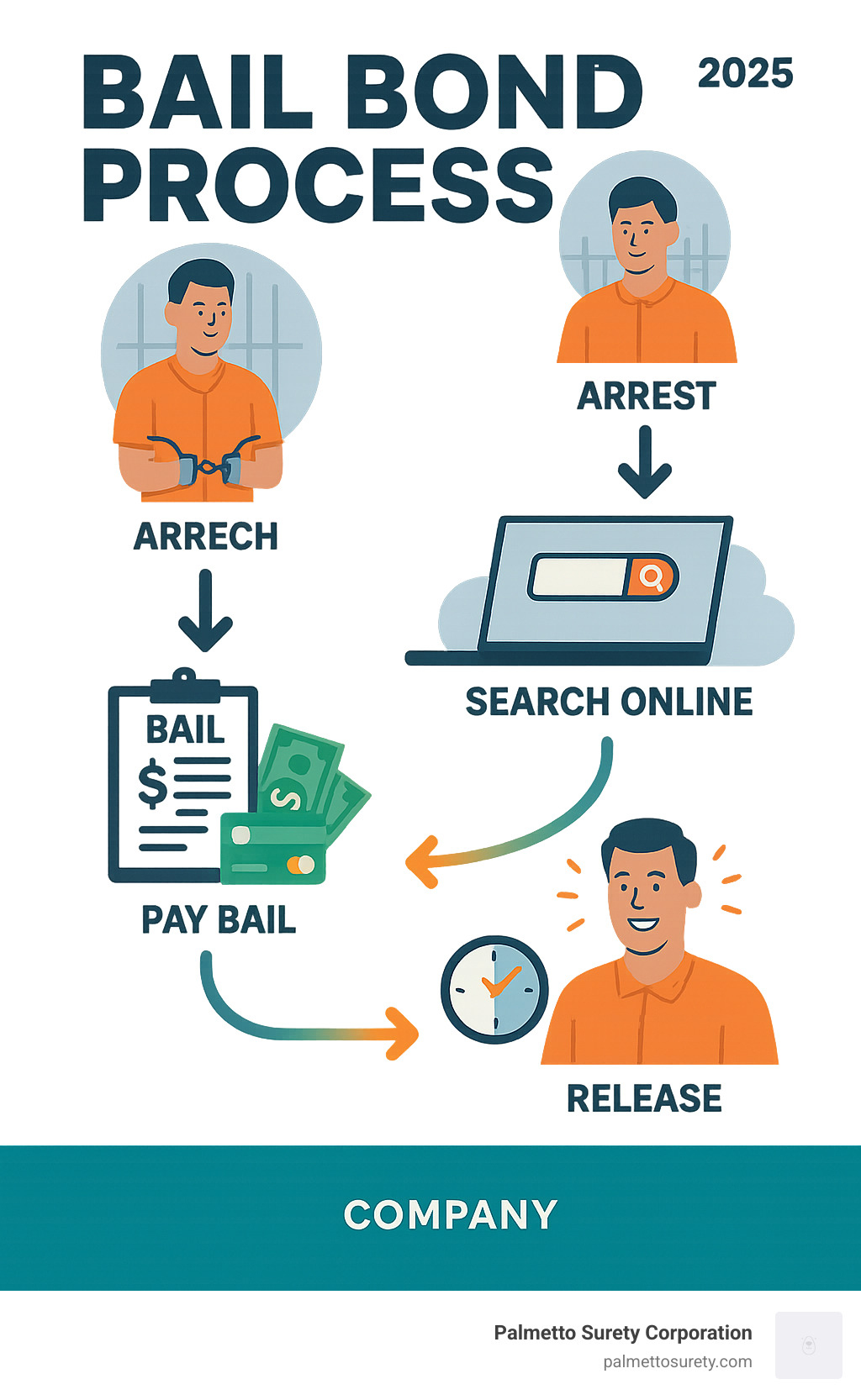
How to Find Inmate and Bail Information Online
Instead of making endless phone calls, you can use online inmate lookup services to quickly locate an arrested loved one and find out where to check online for a bail bond. Most jails and correctional facilities offer these digital tools, which are a lifeline for families under stress.


The key is knowing where to look. County sheriff websites, state Department of Corrections portals, and local jail systems all maintain searchable databases that are updated regularly.
What Information is Needed to Look Up Bail?
Before searching, gather these essential details to find your loved one quickly. You’ll need their full legal name as it appears on their ID.
Their date of birth is also important, especially for common names. The arresting county or city helps narrow down which system to search.
If you have a booking number or case number, it will take you directly to their information. Some areas, like New York City, also use a NYSID (New York State Identification number) for searches.
Most systems allow searches with just a name and date of birth, but more information yields faster results.
Using Official Inmate Lookup Services
Start your search on official government websites. Most county sheriff’s offices and state correctional departments have made their inmate databases available online 24/7. For example, if someone was arrested in New York City, you can use the DOC Incarcerated Person Lookup Service to find current inmates.
These official sites typically show bail and bond amounts, which is exactly what you need to know where to check online for a bail bond. You’ll also see the charges they’re facing.
Navigating these websites is usually straightforward. Most have simple search boxes where you enter the person’s information.
Pay special attention to any holds or warrants listed. An inmate may have additional legal issues from other jurisdictions that must be resolved before they can be released, even if you post bail for the current charge. Knowing about these complications upfront can save you time and frustration.
The information on these sites is usually updated several times a day, so if you don’t find someone immediately, check back in a few hours as booking can take time.
Where to Check Online for a Bail Bond: Government and Licensed Bail Bond Agencies
Once you have the bail amount, you have two main options for securing release: paying the full amount directly to the court or working with a licensed bail bond company for a fraction of the cost. Knowing where to check online for a bail bond is the next step.
When you pay bail directly, you put up the full cash amount. A bail bond, on the other hand, is an insurance policy where a licensed company guarantees the court that your loved one will appear for their court dates. We provide comprehensive court bonds that serve as this crucial guarantee.
Paying Bail Directly Through Court or Jail Websites
Some jurisdictions have made it easy to pay bail online through secure government portals. It’s worth checking if this option exists, as it can be the most straightforward route.

For example, Pennsylvania’s PAePay® Bail system lets you pay online with a credit or debit card, but it includes a non-refundable 2.75% service fee and may have transaction limits. For higher bail amounts, you might need to make multiple payments.
However, online bail payment isn’t available everywhere. Places like New York City require in-person payments. Always double-check the rules for your specific courthouse or jail.
Even with online payment, release isn’t instant. The jail must process paperwork, and you may need to complete additional documents as a surety before your loved one is released.
How to Find a Licensed Bail Bondsman Online
If paying the full bail amount isn’t feasible, a bail bondsman is your lifeline. Start with a search for “bail bondsman” plus your city and state. Look for companies that prominently display their state licenses on their website, as this is a requirement.
Good companies provide online applications, clear fee explanations, and transparent processes. Many can approve applications within hours.
Financially, expect a non-refundable premium of 10-15% of the total bail amount. For a $10,000 bail, you would pay a $1,000-$1,500 fee that you won’t get back. Some companies may also require collateral like property to secure larger bonds.
Our network across the southeastern United States specializes in quick approvals, often processing applications in just a few hours. You can learn more about how bail bond insurance provider services work.
Special Case: Federal and Immigration Bonds
Federal and immigration cases use different systems and require specialized knowledge.
For immigration bonds, ICE (Immigration and Customs Enforcement) uses an online system called CeBONDS. Only certain people can use this system: U.S. citizens, permanent residents, qualified law firms, and approved non-profits.
The CeBONDS system has strict eligibility rules and requires documents like a U.S. passport or green card. Payments are not accepted via credit card; they must be made through Fedwire or ACH bank transfers. ICE only processes bonds during business hours (Monday-Friday, 9 a.m. to 3 p.m. in the relevant time zone), so timing is crucial.
If you need to post an immigration bond, you can click here to post an immigration bond through the official ICE portal. The process can be complex, especially during a stressful time.
Understanding the Bail Bond Process and Payment
After finding a bail bond company, it’s key to understand the process. A bail bond is a legal agreement, not just a payment. You’ve figured out where to check online for a bail bond, and now you’re entering a contract.

The bail bond application involves the co-signer (indemnitor) signing a contract with the agency. This contract outlines the co-signer’s responsibility to ensure the defendant appears for all court dates. The defendant must also attend every court appearance until the case is resolved, or the bond may be forfeited.
What are the Different Types of Bail Bonds?
When looking into bail, you’ll encounter various release options depending on the jurisdiction and charges. We offer extensive knowledge on all types of surety bonds, including those used for bail.
Here are the most common types:
- Cash Bail: The full bail amount is paid directly to the court. The money is returned (minus fees) if the defendant attends all court dates.
- Surety Bond (Bail Bond): The most common option. You pay a non-refundable premium (typically 10-15%) to a bail bondsman, who guarantees the full bail amount to the court. Collateral may be required.
- Property Bond: Real estate is used as collateral to secure a bond. The property’s value usually needs to be significantly higher than the bail amount.
- Release on Recognizance (ROR): A defendant is released without payment, based on their promise to appear in court. This is common for minor offenses.
- Unsecured Bond: Similar to ROR, but the defendant signs a promissory note for the full bail amount, payable only if they fail to appear in court.
The Cost of a Bail Bond and Where to Check Online for a Bail Bond Payment
The cost of a bail bond includes:
- The Bail Premium: This is the non-refundable fee paid to the bondsman, typically 10-15% of the total bail amount as regulated by state law. For a $10,000 bail, the premium would be $1,000 to $1,500. This fee is for the bondsman’s service and is not returned.
- Additional Fees/Collateral:
- Processing Fees: Third-party fees (e.g., 2.75%) may apply for online or credit card payments.
- Poundage: Some jurisdictions retain a small percentage of the cash bail (e.g., 3%) as an administrative fee.
- Collateral: For large or high-risk bonds, a bondsman may require collateral (property, vehicles, cash), which is returned once the case is resolved.
When asking where to check online for a bail bond payment, most bail bond companies have a “Pay Online” section on their website for premium payments via credit/debit cards. Payment plans may also be available.
It’s crucial to know what payment forms are accepted:
- Accepted for Bail (Directly to Court/Jail): Typically U.S. cash, cashier’s checks, money orders, or credit/debit cards where online portals exist. Checks must be payable to the specific correctional facility or court.
- NOT Accepted for Bail (Directly to Court/Jail): Personal checks and money orders exceeding facility limits.
For more details, explore our resources on the cost of surety bonds.
What Happens After the Bond is Posted?
Posting the bond is just the first step. The release process requires patience, as there’s no set timeline. After you’ve figured out where to check online for a bail bond and paid, the wait begins.
The Release Process and Timeline
There’s no set timeline for release after a bond is posted, ranging from 30 minutes to over 24 hours. The variation depends on factors outside your control.
Release time varies based on factors like jail processing workloads, staffing levels, the time of day, and the inmate’s location within the facility. A bond posted at 3 AM on a Saturday will likely take longer to process than one posted during regular business hours.
Crucially, if there are multiple charges or outstanding warrants, release won’t happen until everything is resolved. An active warrant from another county will keep your loved one in custody even after you post bail. Always verify there are no other holds before posting bail to save time, money, and frustration.
Getting Bail Money Back
How you get money back depends on how you paid.
If you paid cash bail directly to the court, you’ll get most of it back after a favorable outcome. The court often keeps a small percentage called “poundage” (e.g., 3%) as an administrative fee. The refund is issued as a check, not cash.
To claim a cash bail refund, the person on the original bail receipt must present it with a photo ID. A lost receipt requires a sworn, notarized affidavit. If there’s a conviction with a fine, the court may apply your bail money toward it.
Bail bond premiums are non-refundable. The 10-15% fee you paid the bondsman is their service charge, regardless of the case outcome.
However, any collateral you provided (like property or cash) will be returned once the bond is “exonerated.” This happens when the court officially releases the bond after all court obligations have been met.
Civil charges, such as in family court, operate under different rules, and bail money may not be refundable.
Keep your original bail receipt safe. Without it, getting your money back is much more difficult.
Frequently Asked Questions about Online Bail Bonds
Here are answers to common questions about the bail process and where to check online for a bail bond.
What is the Difference Between Bail, a Bail Bond, and a Release Order?
Understanding these terms can save you time and money.
- Bail is the dollar amount set by a judge for temporary release.
- A bail bond is a surety bond from a licensed agent. You pay a non-refundable premium (typically 10-15%), and the agent guarantees the full bail amount to the court.
- A release order is the official paperwork authorizing the jail to release the defendant once bail or a bond is secured.
In short: bail is the amount, a bail bond is a payment method, and a release order is the green light.
How Long Does the Release Process Take After Posting a Bond?
As mentioned, the release time varies widely, from 30 minutes to over 24 hours. It depends on the jail’s size, staffing, time of day, and whether the inmate has other charges or outstanding warrants.
While most jails accept bonds 24/7, the actual release might not happen immediately. Be patient and stay in touch with the facility for updates. A long wait doesn’t necessarily mean something is wrong.
Can I Get a Bail Bond for Someone in Another State?
Yes, this is called a transfer bond. You work with a bail bondsman in your home state, who coordinates with a licensed agent in the state where your loved one is being held. This lets you handle paperwork and payment locally.
At Palmetto Surety Corporation, our network of agents across the southeastern United States makes this process much smoother. We have over 20 years of experience helping families with these cross-state situations.
The process usually takes a bit longer than a local bond due to coordination, but it’s often easier than traveling or navigating another state’s system alone.
If you need help with a transfer bond, you can learn more about how to transfer bond bail someone out of jail in another state through our services.
Conclusion
Knowing where to check online for a bail bond can turn an overwhelming situation into a manageable one. The digital shift has made it possible to handle much of the bail process from home, empowering you to act quickly.
First, use official government lookup services to find inmate details and the bail amount. Next, decide on your payment method: paying the full amount directly through a court portal (if available) or working with a licensed bail bondsman for a non-refundable premium.
When choosing a bondsman online, verify their state license and understand the terms, including the premium and any collateral requirements. Every jurisdiction is different, from online payment availability to the rules for federal and immigration cases.
For over 20 years, Palmetto Surety Corporation has helped families across the southeastern United States steer these situations. Our network of experienced bail agents understands the urgency and stress involved. We focus on approving most applications within hours, providing fast, efficient service to get your loved one home as quickly as possible.
The process doesn’t end when the bond is posted. Understanding the release timeline and your responsibilities helps set proper expectations. Most importantly, you are not alone. Professional help is available 24/7 to guide you.
Learn more about our bail surety bonds and find how our experienced team can help you through this difficult time with the compassion and efficiency you deserve.


