


How to find out a bond amount: 1st Easy Steps
Why Finding the Right Bond Amount Matters Most
When a loved one is arrested, learning how to find out a bond amount is the top priority. This amount determines the cost to secure their release from jail while awaiting trial.
Quick ways to find out a bond amount:
- Call the jail directly – Use the inmate’s full name and date of birth
- Check online inmate search portals – Most county sheriff websites offer these tools
- Contact the courthouse clerk – They have access to all court records
- Consult a bail bond agent – They can look up the information for you 24/7
Judges set bond amounts based on the crime’s severity, the defendant’s criminal history, and flight risk. This amount is crucial as it dictates your next steps: paying the full amount to the court or working with a bail bond agent for a 10% fee.
Different types of bonds exist, such as surety, property, or cash bonds, each with different requirements. The sooner you know the amount and type, the faster you can start the release process.
I’m Haiko de Poel Jr. of Palmetto Surety Corporation. I’ve helped countless families steer the process of finding a bond amount and securing release. My experience shows that having the right information upfront makes all the difference.
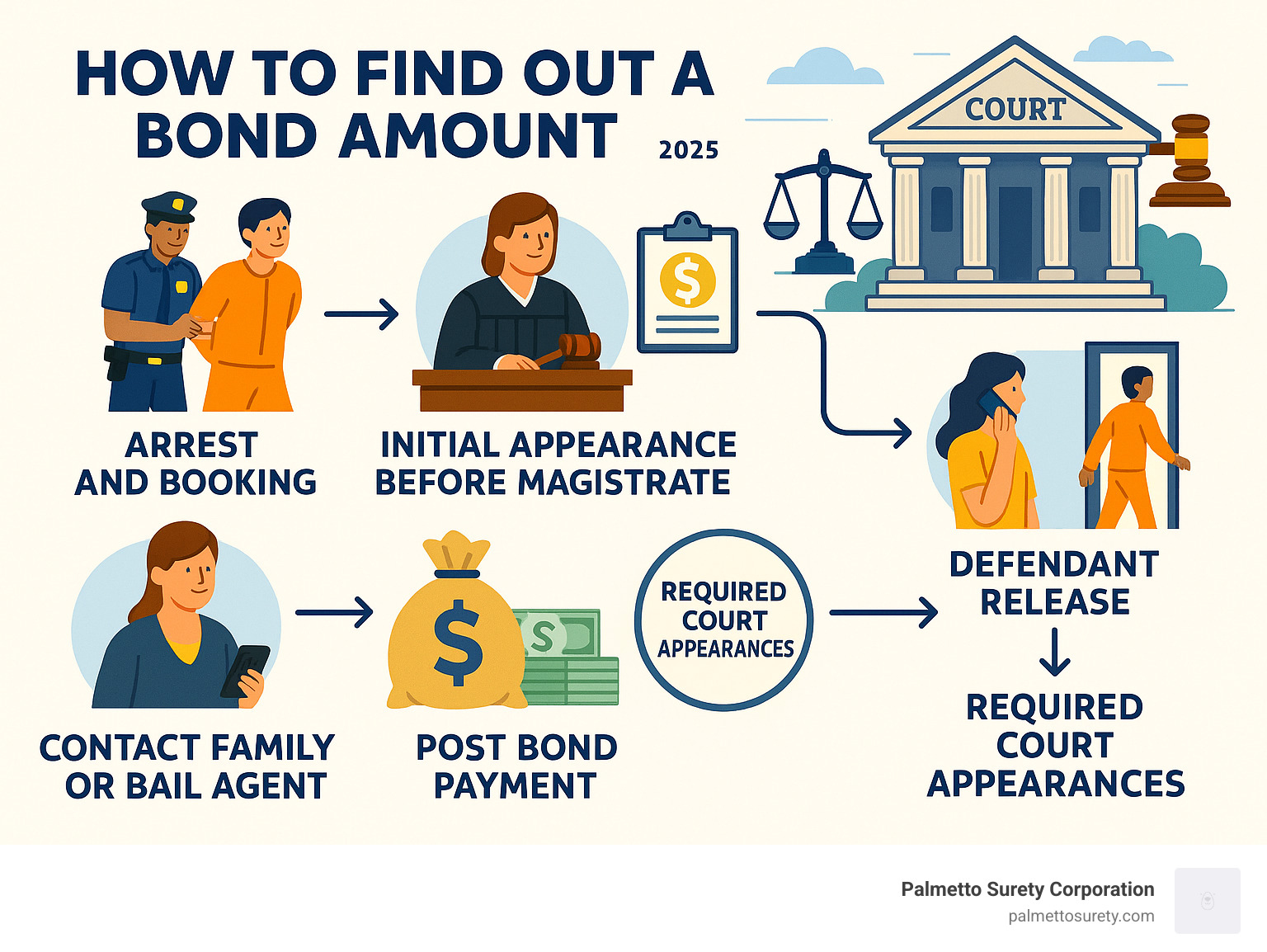
Basic how to find out a bond amount glossary:
The First Step: How to Find Out a Bond Amount
When a loved one is arrested, the first step is finding the bail amount to plan for their release. Fortunately, there are several reliable ways to get this information.


Contacting the Court or Jail Directly
The most direct way to how to find out a bond amount is by contacting the jail where the person is held or the court overseeing their case.
When calling the jail, provide the defendant’s full name and date of birth. A booking number will speed up the process. Most facilities have a dedicated inmate information line. For example, Bexar County, TX, has an Inmate/Bond Information Line you can find on their official page: Inmate & Bond Information | Bexar County, TX. In Shelby County, TN, you can call 901-222-4700 for bond information, as noted in their FAQs • How do I find out the bond for someone in custody?.
The courthouse clerk’s office also has bail amount records and can provide official information during business hours.
Using Online Inmate Search Tools
Many county sheriff’s offices offer online inmate search portals. These tools are often the quickest way to find an inmate’s location, charges, and bond amount.
These public databases are easy to use. For instance, the Seminole County Sheriff’s Office in Florida provides a Correctional Facility & Probation page to search for inmates and bond information. Another resource is VINE (Victim Information and Notification Everyday), an online portal for tracking offender custody status, which often includes bond details. You can access it here: VINE (Victim Information and Notification Everyday).
When using these tools, ensure you have the correct spelling of the individual’s full name and date of birth to narrow the search.
Consulting a Professional Bail Bond Agent
If you’re overwhelmed or can’t get information from the jail or court, a professional bail bond agent is an excellent option. At Palmetto Surety Corporation, our network of agents is available 24/7. They are experts at navigating the system and can quickly how to find out a bond amount for you.
Bail bond agents have direct access to jail and court systems, allowing them to get information promptly. You only need to provide the defendant’s full name, date of birth, and the jail’s location. Their guidance is invaluable during a stressful time, and they can start the bail process immediately. For more on how our agents can help, visit our More info about our agent services page.
Understanding How Bail is Determined
Knowing the bond amount is the first step. It’s also important to understand how that figure was determined. Bail is not a random number; it’s a court’s decision designed to ensure the defendant returns for court dates, not to serve as pre-trial punishment.

Key Factors Influencing the Bail Amount
Judges have discretion when setting bail but follow guidelines and consider several factors. The main goals are ensuring the defendant appears in court and protecting public safety.
The severity of the crime is a key factor; serious felonies lead to higher bail than misdemeanors. A defendant’s criminal history, especially past failures to appear or prior convictions, will also increase the bail amount. Judges also assess flight risk. Strong community ties, a stable job, or homeownership can suggest a lower risk and lead to lower bail. Conversely, a lack of ties can increase it. Public safety is another major concern; if the defendant is deemed a danger, bail may be set very high or denied. Finally, a judge may consider the defendant’s financial status to set an amount that is significant enough to ensure their return without being impossible to pay.
The Role of a Bail Schedule
Many jurisdictions use a bail schedule, which is a list of pre-set bail amounts for common offenses. This schedule provides a starting point for judges, especially during initial appearances right after an arrest.
Bail schedules categorize crimes and assign a standard bail amount. While judges can deviate from these amounts based on the specific circumstances, the schedules provide a clear baseline. For example, the Denver County Court Bond Schedule offers a transparent look at what to expect for various charges, helping to streamline the process.
What’s the Difference Between Bail and a Bail Bond?
Understanding the difference between bail and a bail bond is key to the release process.
Bail is the full amount of money set by the court as a guarantee that the defendant will appear for all court dates. If they comply, the full amount is typically returned, minus court fees.
A bail bond is a promise from a third party, like a bail bond agent from Palmetto Surety Corporation. Instead of paying the full bail amount, you pay the agent a smaller, non-refundable fee (a premium), typically 10% of the total bail. The agent then guarantees the full bail amount to the court on the defendant’s behalf.
Here’s a simple comparison:
| Feature | Paying Cash Bail Directly to the Court | Using a Bail Bond Agent |
|---|---|---|
| Upfront Cost | 100% of the total bail amount | Typically 10% of the total bail amount |
| Refundability | Most of it is refundable if conditions met (less court fees) | The premium (fee) is non-refundable |
| Who Posts the Money | You or your family directly to the court | Bail bond agent posts the full amount |
While the bail amount is the total sum, a bail bond offers a way to secure release for a fraction of that cost, which is a vital option for many families trying to figure out how to find out a bond amount and get a loved one home. We encourage you to Learn more about bail bonds on our website.
Navigating the Bail Bond Process
Once you know the bond amount, the next step is securing release. This requires understanding the cost, available bond types, and what to expect when posting bail.

How to Find Out a Bond Amount and Calculate the Cost
After you how to find out a bond amount, calculating the cost is straightforward. In most states, the standard premium for a bail bond is 10% of the total bail set by the court.
For example, if bail is set at $20,000, the bail bond fee would be:
$20,000 × 0.10 = $2,000.
This $2,000 is the non-refundable fee paid to the agent. While 10% is typical, some states have lower rates or statutory caps, so the exact percentage can vary. If you are unsure, call Palmetto Surety Corporation or one of our licensed agents; we can confirm the precise rate for your location and circumstances—often in just a few minutes.
You can make a quick estimate yourself by applying the percentage above, but for an exact quote and to learn about financing options, reach out to us directly rather than relying on third-party calculators.
Types of Bail Bonds You Might Encounter
There are several specific types of bail bonds:
- Surety Bond: The most common type, where a bail bond agent, backed by a surety insurance company, guarantees the full bail amount to the court for a non-refundable premium. The agent assumes the financial risk. This is the primary service facilitated by Palmetto Surety Corporation.
- Cash Bond: The full bail amount is paid directly to the court in cash. The money is returned (minus court fees) if the defendant attends all court dates.
- Property Bond: Real estate is used as collateral. The court places a lien on the property and can foreclose if the defendant fails to appear.
- Federal Bond: For federal crimes, these are more complex and often involve higher bail amounts and specialized agents.
- Citation Bond: Issued by a police officer for minor offenses, allowing immediate release on a promise to appear without an upfront payment.
- Signature Bond (or Personal Recognizance Bond): The defendant is released on their written promise to appear in court, typically for minor offenses and those with low flight risk. No money is required upfront.
Understanding these types helps determine the best path forward once you how to find out a bond amount. Learn more about bond types on Investopedia’s Understanding the different types of bail bonds and our site’s Understanding the different types of surety bonds.
What to Expect When Posting Bail
After deciding to use a bail bond, the process involves several steps:
- Paperwork: You will complete a bail bond application and agreement with the agent, outlining the terms.
- Payment Methods: Agents accept cash, cashier’s checks, money orders, and credit cards. Credit card payments may include a processing fee (typically around 3%).
- Collateral Requirements: Collateral may be required for higher bail amounts or higher-risk cases. It secures the bond for the agent if the defendant fails to appear. Common forms include real estate, vehicles, jewelry, or bank accounts. Collateral is returned once the case is resolved.
- Securing Release: After paperwork and payment, the agent posts the bond with the jail. The release time varies by facility, but the agent works to expedite it.
At Palmetto Surety Corporation, we offer convenient Make a payment online options to help speed up the release.
Your Rights and Responsibilities in the Bail Process
Securing a bond brings relief, but it also comes with serious legal responsibilities for the defendant, the person posting the bond (the indemnitor), and the surety company. Understanding these duties is crucial to avoid unexpected costs and further legal trouble.
What is a Surety and What Are Their Responsibilities?
In the context of bail, a “surety” can refer to the person who co-signs the bond, often a family member or friend. This individual guarantees the defendant will appear in court. This is distinct from the surety insurance company (like Palmetto Surety Corporation) that financially backs the bond agent. As an individual, you act as a personal guarantor, or indemnitor, for your loved one.
As a surety or indemnitor, your responsibilities are significant. You must supervise the defendant, ensuring they follow all court-ordered bail conditions, such as curfews or treatment programs. Your primary duty is to guarantee their court appearances. If they fail to appear, your financial guarantee is at risk, meaning you are liable for the full bond amount. You may need to prove you have the financial means to cover this amount.
Being a surety is a serious commitment. For a deeper understanding, you can find information on sites like Steps to Justice: what are a surety’s rights and responsibilities?.
Consequences of Violating Bail Conditions
The bail system relies on compliance. When a defendant violates their bail conditions, there are serious consequences for everyone involved.
Missing a court date results in a Failure to Appear (FTA), and the court will issue an arrest warrant. This leads to bond forfeiture, meaning any cash or collateral is lost. If you used a bail bond agent, you become responsible for paying the full bail amount, and the agent can seize your collateral. Beyond the financial risk, the defendant will be re-arrested and may face a much higher bail or be held without it. Violating bail can also lead to new criminal charges.
It’s vital for both the defendant and the surety to understand these consequences. Our team at Palmetto Surety Corporation can explain what happens with bond claims; learn more on our Learn about bond claims page.
Are Bail Bond Fees Refundable?
A common question is whether bail bond fees are refundable. The premium paid to a bail bond agent (typically 10% of the total bail after you how to find out a bond amount and calculate the cost) is non-refundable. It is the agent’s earned fee for providing the service and taking on the financial risk.
However, if you paid the full bail amount directly to the court (a cash bond), that money is typically refundable once the case is finished and all court obligations are met, minus any administrative fees or fines.
Any collateral provided to a bail bond agent is different from the non-refundable premium. Collateral is held as security and is returned once the defendant attends all court dates and the case is resolved. Our official Our refund policy explains these details.
Frequently Asked Questions about Finding a Bond Amount
Navigating the bail process raises many questions. Here are answers to common queries about how to find out a bond amount and the steps involved to make the process clearer.
How do bail bond calculators work?
A bail bond calculator estimates the premium you’ll pay. You input the total bail amount, and the calculator applies the standard premium percentage (usually 10%, but this can vary by state). The result is the estimated non-refundable fee for the bail bond agent’s service. While these tools are great for a quick estimate, always contact a professional bail bond agent to confirm the exact cost.
Are there discounts or financing options available for bail bonds?
Yes, financing options are often available. Many bail bond agents, including those in the Palmetto Surety Corporation network, understand the financial burden and offer flexible solutions.
Many agents provide payment plans for larger bonds, allowing you to pay the premium in installments. Collateral options can also be used as security instead of a full cash premium. Some agents offer discounts for military members, union members, or others. It’s always best to ask about available options. Many agents also offer plans that don’t require a credit check, focusing instead on your ability to pay or provide collateral. Our agents strive to find solutions that work for you.
What information do I need to give a bail bondsman?
To speed up the process when contacting a bail bondsman, have the following key information ready:
You will need the defendant’s full name (spelled correctly), their date of birth, and the jail location (city, county, or facility name). The booking number is also extremely helpful for locating the person in the system. Finally, knowing the charges helps the bondsman understand the situation.
With this information, a professional bail bond agent can quickly gather all necessary details, including the exact bond amount, and guide you through the release process.
Conclusion
Navigating the aftermath of an arrest can be daunting, but understanding how to find out a bond amount is a crucial first step toward securing a loved one’s freedom. We’ve explored various avenues, from direct calls to jails and courts, to utilizing online inmate search tools, and even leveraging the expertise of professional bail bond agents.
We’ve also demystified how bail amounts are determined, the key factors influencing them, and the critical difference between paying cash bail and opting for a bail bond. While the premium paid to a bail bond agent is a non-refundable service fee, it allows us to secure release for a fraction of the total bail amount, making it a valuable option for many families.
At Palmetto Surety Corporation, we understand the urgency and stress involved in these situations. With over 20 years of experience in the commercial surety and bail bond industry, we pride ourselves on providing quick, efficient, and compassionate service through our extensive network of agents across the southeastern United States, including Georgia, Florida, Louisiana, Mississippi, South Carolina, Tennessee, and Texas. Our purpose is to simplify complex processes and offer reliable support when it’s needed most.
For expert assistance with bail surety bonds, contact us today. We’re here to help you every step of the way: For expert assistance with bail surety bonds, contact us today.


