


How bail bonds work: Simple Steps 2025
Explaining the Bail Bond Process
After an arrest, getting out of jail is a top priority. This is where understanding how bail bonds work is essential.
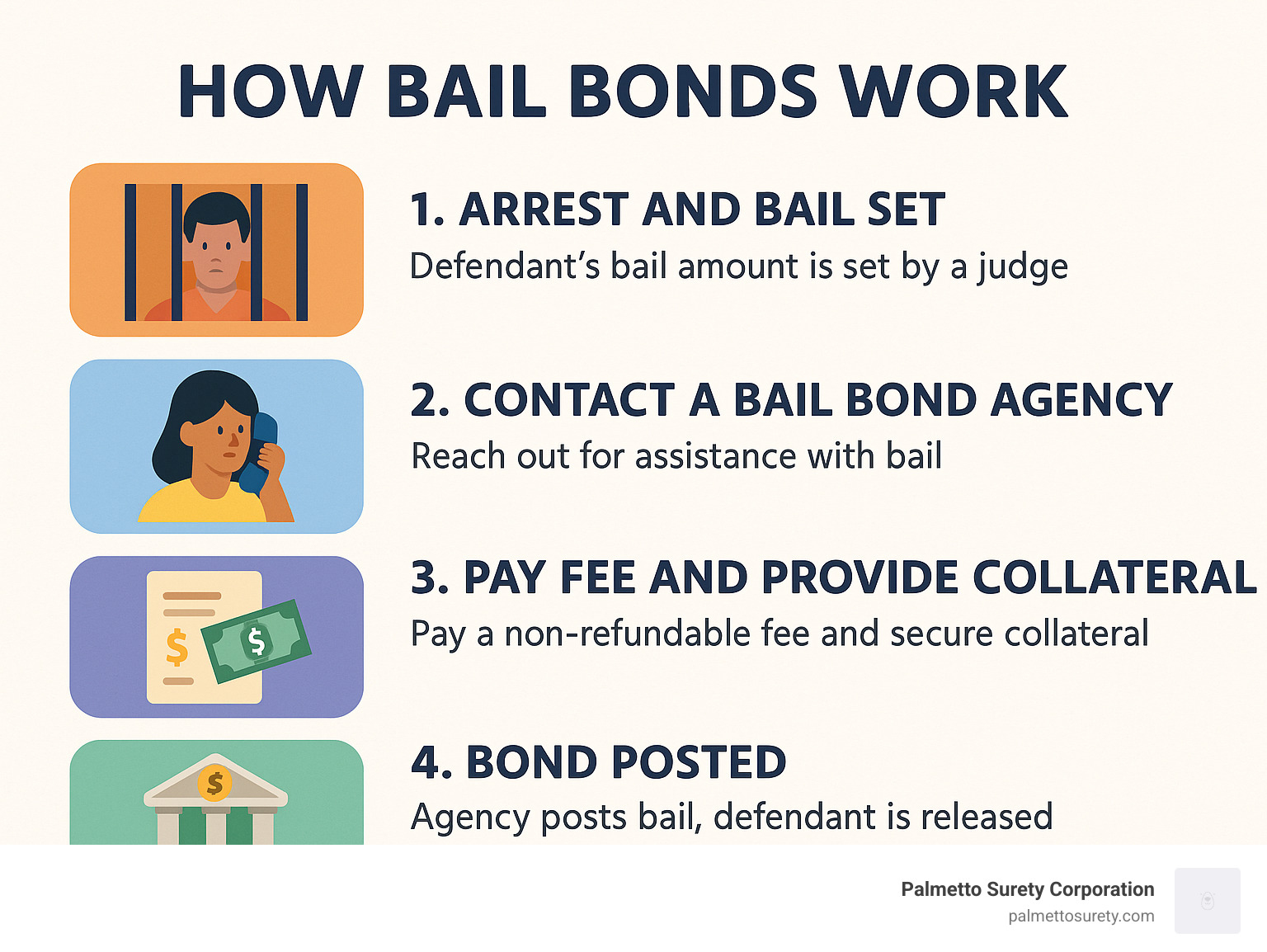
The bail bond process generally operates as follows:
- Arrest and Bail Set: A judge sets a bail amount for the defendant.
- Contact a Bail Bond Agency: If the defendant or their family cannot afford the full bail, they contact a licensed bail bond agency.
- Pay a Fee and Provide Collateral: The client pays a non-refundable premium (typically 10% of the total bail) and may provide collateral to secure the bond.
- Bond Posted: The agency posts the full bail amount to the court.
- Release and Court Appearance: The defendant is released but must appear for all scheduled court dates.
An arrest is stressful, and paying the full bail amount is often impossible. In fact, nearly 90 percent of individuals waiting for trial are in jail because they cannot afford bail. Bail bonds provide a critical path to pretrial release, allowing people to return home while awaiting court.
I’m Haiko de Poel Jr., an expert in this field. My experience relaunching a top US Surety Bond company gives me unique insight into how bail bonds work.
The Foundation: Understanding Bail and Its Purpose

Before diving into the mechanics of how bail bonds work, it’s important to understand bail itself. Bail is a financial guarantee set by a court to ensure a defendant appears for all scheduled court dates after being released from jail. It’s a promise backed by money.
Rooted in the presumption of innocence, bail allows individuals to remain free, work, and prepare their defense. This is vital, as two-thirds of 750,000 Americans in jail at any given time are waiting for trial. Without bail, many would be incarcerated regardless of guilt.

Judges consider various factors to set a bail amount that compels a defendant’s return. Bail schedules for common offenses sometimes provide a starting point. For more details, explore More info about what bail is.
How is the Bail Amount Determined?
When a judge determines a bail amount, several critical factors are assessed to gauge the defendant’s flight risk and potential danger to the community. These include:
- Crime Severity: More serious crimes, like felonies, have much higher bail than misdemeanors. For example, a nonviolent misdemeanor might be $500, while a felony could be $20,000 or more.
- Criminal Record: A history of failing to appear or a long criminal record usually means higher bail due to increased flight risk.
- Flight Risk: Judges assess the likelihood of a defendant fleeing, considering community ties (family, job), financial resources, and past evasion attempts.
- Community Ties: Strong community ties (stable job, family, long-term residency) can lead to lower bail, as they suggest the defendant is less likely to flee.
- Public Safety: If the defendant is considered a danger to the public, bail may be set very high or even denied.
Here’s a quick comparison of typical bail amounts:
| Type of Crime | Typical Bail Amount |
|---|---|
| Misdemeanor/Low-level | $100 – $500 |
| Nonviolent Misdemeanor | Around $500 |
| DUI Suspicion | Around $500.00 |
| Felony Crime Charges | $20,000 or more |
| Felony (Los Angeles) | $20,000 |
| Delivery of Fentanyl | $25,000.00 or higher |
What Are Your Options After Bail Is Set?
Once bail is set, there are three main options for release:
- Pay the Full Bail Amount in Cash: You can pay the entire bail amount directly to the court. The money is returned (minus fees) after the case concludes. However, this ties up a large sum of money, which is impractical for most.
- Remain in Jail Until the Charges Are Resolved: If bail is unaffordable, the defendant remains in jail. Nearly 90 percent of those awaiting trial are jailed because they can’t afford bail. This has severe consequences: detained defendants are three times more likely to be sentenced to prison. The median jail stay for felony defendants who can’t afford bail is 45 days, but it can be much longer.
- Arrange for a Bail Bond: This is the most common solution. You pay a fraction of the bail (a premium) to a bail bond agent, who guarantees the full amount to the court, making release affordable and accessible.
Understanding these options is the first step. For more details, you can refer to FindLaw: Getting Out of Jail After You Have Been Arrested.
How Bail Bonds Work: The Process from Arrest to Release

Now let’s walk through the actual steps of how bail bonds work to get someone out of jail. The journey is designed to bring your loved one home as quickly as possible.
It begins with an arrest and booking. During booking, personal details are recorded, and fingerprints and mugshots are taken. This process takes 1-3 hours but can last up to 12, depending on the facility. Communication is difficult until processing is complete.
Next is the bail hearing. After booking, a judge sets the bail amount at an initial court appearance (arraignment). Less serious offenses may have a pre-set bail schedule.
This is when you contact a bail agent. Provide the agent with the defendant’s full name, date of birth, location, booking number, and charges for faster service.
Then comes the bail bond agreement. The agent explains the non-refundable premium (usually 10% of the bail) and any collateral requirements. You’ll sign an Indemnity Agreement outlining your responsibilities.
Once paperwork and payment are complete, the agent will post the bond at the jail. This is a formal promise to the court that the defendant will appear at all court dates.
Finally, it’s time for jail release. Once the bond is posted, the jail begins its release process. Paperwork takes about 45 minutes, but release can take from a few hours to 6-12 hours, depending on the jail’s size and workload. We work to expedite this process.
For more details, explore Learn more about the bail bonds process.
The Role of a Bail Bond Agent
Bail bond agents are licensed professionals who guide you through the process of getting a loved one out of jail. At Palmetto Surety Corporation, we work with an extensive network of experienced bail bondsmen across the Southeastern United States, including Georgia, Florida, Louisiana, Mississippi, South Carolina, Tennessee, and Texas.
Here’s what a bail bond agent does:
- Acts as a Financial Guarantor: For a non-refundable fee, the agent, backed by a surety company like ours, guarantees the full bail amount to the court if the defendant fails to appear.
- Handles Paperwork and Logistics: The agent manages all necessary forms and coordinates with the jail and court to ensure the bond is posted correctly.
- Coordinates the Release: The agent monitors the release process with the jail to help expedite the defendant’s release.
- Provides Client Monitoring: Agents often keep in touch with the defendant through check-ins and court date reminders to ensure compliance with the bail agreement.
- Manages Risk: Agents assess flight risk and may require collateral from the defendant or a co-signer to manage that risk.
- Handles Enforcement (if needed): If a defendant fails to appear, the agent is responsible for locating and returning them to court to prevent bond forfeiture.
Becoming a licensed agent requires rigorous training that varies by state, ensuring they are experts. For a deeper dive, visit FindLaw: The Role of a Bail Bondsman.
Understanding How Bail Bonds Work to Secure Release
Understanding the release timeline can help manage expectations. The total time from your first call to the defendant’s release is typically about five hours. This includes about 45 minutes for our paperwork. However, the jail’s internal processing after we post the bond can add significant time, from a few hours to 6-12 hours in larger facilities. While we can’t control the jail’s timeline, our agents work to expedite the process.
A “Rapid Intake” process can help those with existing warrants. It allows a bondsman to post bond quickly, helping to avoid a public arrest and minimize jail time. The agent handles the warrant, paperwork, and bond, and can accompany the individual for processing and release.
To see how technology can make this process even faster, you might be interested in checking out how you can Buy bail bonds online.
The Financials and Logistics of Bail Bonds

Understanding how bail bonds work financially can ease the stress of an arrest, as they make release more affordable.
The primary cost is the bail bond premium, a non-refundable fee paid to the agent for their service and for taking on the financial risk of guaranteeing the full bail amount to the court.
In addition to the premium, collateral may be required. This is a valuable asset pledged to the bail bond company as a security deposit to cover the bond amount if the defendant fails to appear in court.
Our network of agents offers flexible payment plans to help manage these unexpected costs. Learn more about The cost of surety bonds.
How Much Does a Bail Bond Cost?
The cost of a bail bond is typically straightforward and regulated by state law. The standard fee is 10% of the total bail amount. For a $10,000 bail, the premium would be $1,000.
While 10% is typical, rates vary by state (e.g., Florida is 10%, Virginia is 10-15%). Federal bonds are often higher, around 15%. A small administration fee of $25-$75 may also apply.
This premium is non-refundable, as it pays for the service of securing the bond, regardless of the case’s outcome.
Since even 10% can be substantial, our agents offer payment plans to make the process more manageable. You can Make a payment online.
Collateral and Types of Bail Bonds Offered by Palmetto Surety
Collateral serves as a backup plan for the bail bond company. It’s an asset pledged to cover the full bail amount if the defendant fails to appear in court. Collateral isn’t always required; the need for it depends on the bail amount, the charges, and the defendant’s flight risk. Larger bonds usually require collateral.
Acceptable collateral is flexible and can include real estate, vehicles, cash, jewelry, stocks and bonds, or other valuables. Collateral is returned once the case is concluded, all court appearances have been made, and all fees are paid.
While Palmetto Surety Corporation specializes in Surety Bonds, it’s helpful to know other types of bail:
- Surety Bond: A licensed agent, backed by a surety company, guarantees the full bail amount to the court for a non-refundable premium and sometimes collateral. This is the most common type.
- Cash Bond: The full bail amount is paid in cash directly to the court and is returned (minus fees) after the case concludes.
- Property Bond: Real estate is used as collateral for the full bail amount. This process can be slow and complex.
- Personal Recognizance (OR) Release: The defendant is released on their written promise to appear, with no money required. This is for low-risk individuals.
- Citation Release: For minor offenses, police issue a citation with a court date instead of making an arrest.
- Federal Bonds: For federal crimes, these bonds are stricter and typically have a 15% premium.
We are proud to be the foundation for surety bonds. To dig deeper, take a look here: Types of surety bonds.
Responsibilities, Consequences, and Controversies

Release on bail is a relief, but it’s a privilege with serious responsibilities for both the defendant and their co-signer. Ignoring these duties has severe consequences.
The primary responsibility is to appear for all scheduled court dates. The bail bond is a financial guarantee to the court that the defendant will show up. Beyond court appearances, the defendant must follow all bond conditions set by the court or bail agent. These rules ensure they remain a low risk and can include:
- Remaining within a specified jurisdiction.
- Avoiding contact with victims or witnesses.
- Committing no new crimes.
- Regular check-ins with the bail agent.
- Attending court-ordered counseling or treatment.
This accountability lasts until the case is resolved (dismissed, acquitted, or sentenced), at which point the bond is canceled. For a deeper look into the financial promise behind these bonds, you can explore What is surety bond insurance?.
What Happens if You Don’t Show Up? How Bail Bonds Work After a Failure to Appear
Failing to appear in court, or “skipping bail,” has serious and immediate consequences. The court declares the bond forfeited, meaning the bail bond company (and its backer, like Palmetto Surety) owes the court the full bail amount.
The court then issues a bench warrant for the defendant’s arrest, allowing law enforcement to arrest them on sight. The bail bond company will seize and sell any collateral pledged for the bond. If the collateral doesn’t cover the full amount, the company can sue the defendant and the co-signer for the remaining balance.
Failing to appear is a separate criminal offense, leading to new charges. Bail agents are legally authorized to find and apprehend defendants who skip bail, often using professional bail enforcement agents (or “bounty hunters”) to return them to custody.
If a court date is missed for a legitimate reason, contact the bail agent or an attorney immediately. Prompt communication can sometimes resolve the issue. Intentionally skipping court, however, results in severe penalties. For a clear understanding of the financial guarantee, take a look at What is a bond guarantee?.
The Bail System Under Scrutiny
While how bail bonds work provides a path to release, the U.S. cash bail system is controversial. Debates focus on issues of fairness and equality.
Critics argue the system is discriminatory against low-income defendants. Since nearly 90 percent of individuals waiting for trial are in jail because they cannot afford bail, freedom often depends on wealth, not guilt or risk. This disproportionately affects minority groups.
Detained defendants are three times more likely to be sentenced to prison than those released on bond, as incarceration makes it difficult to prepare a defense or maintain employment. This leads to unnecessary incarceration of low-risk individuals who are simply poor. The average jail stay for a felony defendant unable to make bail is 45 days, causing immense disruption to their lives.
Criticism has fueled a bail reform movement advocating for reducing or eliminating cash bail for some offenses and increasing the use of personal recognizance releases.
At Palmetto Surety, we understand these complex issues. Our role is to provide a legal and accessible path to pretrial release within the current system, helping people return to their lives while awaiting court. For more insights, you can check out resources like Nearly 90 percent of individuals waiting for trial are in jail because they cannot afford bail and Assessing the Impact of Bail on California’s Jail Population.
Conclusion
We’ve covered the essentials of how bail bonds work, from arrest to the responsibilities of pretrial release. Understanding this process is crucial when navigating the justice system.
To recap: Bail is a financial guarantee for court appearances. When full bail is unaffordable, a bail bond is a practical alternative. For a non-refundable 10% premium and sometimes collateral, a licensed agent backed by a surety company like Palmetto Surety Corporation guarantees the full bail amount to the court.
The process—from arrest and booking to contacting an agent and posting the bond—is designed for a quick release. However, this freedom comes with the critical responsibility of attending all court dates and following all conditions to avoid severe consequences like bond forfeiture and new charges.
For over 20 years, Palmetto Surety Corporation has supported bail agents across the Southeast, including Georgia, Florida, Louisiana, Mississippi, South Carolina, Tennessee, and Texas. We understand the urgency and pride ourselves on quick, efficient service, approving most applications within hours through our extensive network.
Our commitment is to facilitate an affordable and timely release, allowing individuals to prepare their defense from home. While the bail system is complex, bail bonds are a vital tool for pretrial freedom. We are here to guide you with clear answers and support.
Ready to learn more about how we can assist you during a challenging time? Please visit Learn more about bail surety bonds.


