


Can Your Bail Bondsman Make You Drug Test? 7 Shocking Facts 2025
Understanding Bail Bondsman Authority Over Drug Testing
Can your bail bondsman make you drug test – this question comes up more often than you might think. The short answer is: it depends on your specific bail agreement and state laws.
Quick Answer:
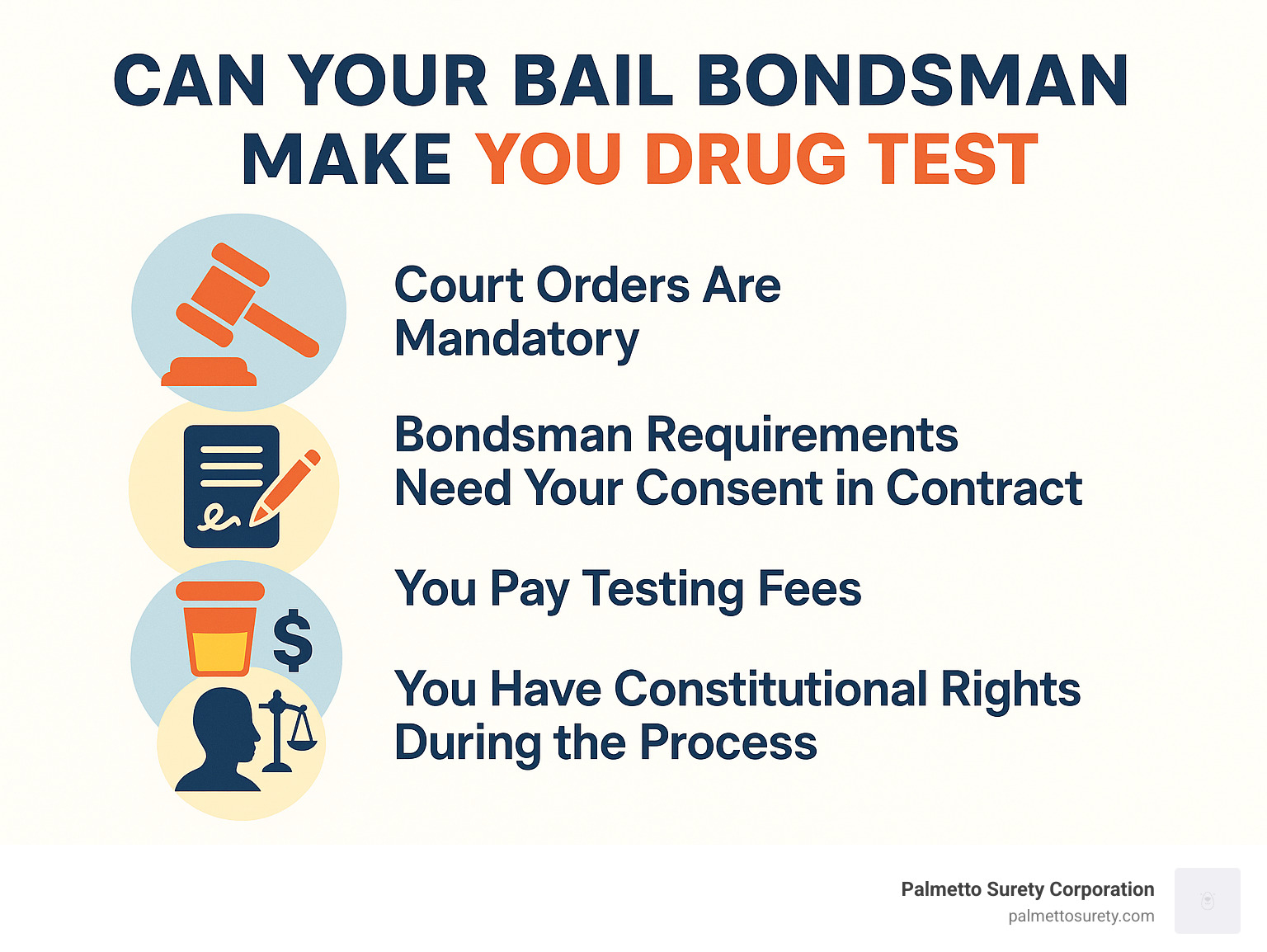
– Court-ordered testing: Yes, if the judge requires it as a bail condition
– Bondsman-required testing: Maybe, if you agreed to it in your bond contract
– Your rights: You can refuse, but the bondsman can surrender you back to jail
– Costs: You typically pay $20-40 per test
– Consequences: Failed tests can lead to bond revocation and re-arrest
When you’re released on bail, understanding who has authority over your freedom becomes crucial. According to research from the U.S. Department of Justice, approximately 32% of felony defendants released pretrial in the 75 largest U.S. counties were subject to drug testing as a condition of release.
Bail bondsmen are private commercial lenders – they don’t work for the court, but they do have financial skin in the game. This means they can impose their own conditions beyond what the court requires, but only if you agree to them in your contract.
Missing a scheduled test is treated as seriously as a positive result in most jurisdictions. Modern labs have strict anti-tampering procedures, so attempts to cheat can lead to bond revocation and additional charges.
I’m Haiko de Poel Jr., and through my work at Palmetto Surety Corporation and experience with companies like National Pretrial, I’ve seen how can your bail bondsman make you drug test situations play out across different states.
Glossary for can your bail bondsman make you drug test:
– can a bail bondsman make an arrest
– can you make payments to a bail bondsman
– how do you make money as a bail bondsman

Who Actually Sets Your Bail Conditions?

The judge has the final say on your bail conditions, not your bail bondsman. When you’re wondering can your bail bondsman make you drug test, it all starts with what the judge decides.
During your bail hearing, the judge considers the nature of your charges, your criminal history, flight risk, and community ties. Based on this, they set your bail amount and conditions you must follow while out.
These court authority decisions aren’t suggestions – they’re orders. The judge might require check-ins with pretrial services, staying in town, avoiding certain people, or drug testing. Each condition becomes part of your bond contract.
In Texas, Article 17.40 gives judges power to issue arrest warrants if you break these conditions. Miss a court-ordered drug test? You could be back in jail immediately.
Court-Ordered vs. Bondsman-Imposed Rules
Think of bail conditions like a two-story house. Court-ordered conditions are your foundation – solid, non-negotiable, and absolutely required. Bondsman-imposed rules are the second floor – they can exist, but only if the foundation supports them.
Court-ordered conditions come straight from the judge. These might include abstinence clauses, specific supervision levels, or mandatory drug testing. You don’t get to negotiate these.
Bondsman-imposed rules are different. Since bail bondsmen have a financial stake in your case, they can add extra requirements to protect their investment. But these only count if you agreed to them in writing.
The big difference is in surrender power. Courts can issue bench warrants. Bondsmen can’t issue warrants, but they can march you right back to jail to protect themselves from losing money.
This contractual consent system means that when you’re asking can your bail bondsman make you drug test, the answer often depends on what you signed. The fee responsibility usually falls on you either way.
Can Your Bail Bondsman Make You Drug Test?
The straightforward answer to can your bail bondsman make you drug test is: it depends entirely on what you signed when you got your bond.
Bail bondsmen aren’t court employees. They’re private business owners who lend money by posting your bail. When you sign that bond contract, you’re entering a business deal, not just filling out court paperwork.
Most bond agreements include language about drug testing as a condition of service. The bondsman is taking a financial risk – if you skip town or violate bail conditions, they’re on the hook for the full bail amount. That’s why they often require certain assurances, including staying clean and proving it through testing.
State laws vary significantly on what bondsmen can actually require. But in most places, if you agreed to testing in your contract, you’re legally bound to comply.
The supervision bondsmen provide differs from court-ordered monitoring. Courts have formal pretrial services departments. Bondsmen typically rely on periodic check-ins and may use random testing.
You’ll typically pay for each test, usually between $20-40 per visit. This cost is almost always your responsibility and should be clearly outlined in your bond agreement.
| Aspect | Court-Ordered Tests | Bondsman-Required Tests |
|---|---|---|
| Authority | Judge’s order | Contractual agreement |
| Enforcement | Bench warrant, legal proceedings | Surrender power |
| Cost | Varies by jurisdiction | Typically $20-40 per test |
| Frequency | Set by court order | Determined by bondsman |
| Refusal consequences | Immediate arrest warrant | Bond surrender |
| Appeal options | Motion to modify conditions | Renegotiate contract terms |
When can your bail bondsman make you drug test?
Drug-related charges are the biggest red flag for bondsmen. If your case involves possession, distribution, or any substance-related offense, expect testing to be part of your agreement.
Your criminal history plays a huge role too. Previous bond violations, failures to appear, or substance abuse patterns will influence whether testing becomes a requirement.
The financial risk assessment matters enormously. If you or your co-signer are considered high-risk, stricter conditions become more likely.
Most importantly, everything must be in your written agreement. Bondsmen can’t just decide later that they want you to start testing.
Consequences if your bail bondsman makes you drug test and you fail
Failing a bondsman-required drug test creates immediate problems that are often more severe than people expect.
A positive result triggers fast action. Unlike court-ordered testing, bondsmen can move quickly to protect themselves. They’re business people first.
The most serious consequence is surrender back to jail. Your bondsman has the legal right to “fire” you as a client and return you to custody.
Once you’re surrendered, getting out again becomes much harder. You’ll need to find a new bondsman willing to take the risk, or your family will need to post the full cash bail amount.
Your money is usually gone for good. The fee you paid (typically 10% of the bail amount) is generally non-refundable.
The key thing to remember is that communication is everything. If you’re struggling with substance use, talking to your bondsman beforehand is always better than trying to hide it.
What Happens If You Fail or Refuse a Bondsman Drug Test?

Failing or refusing a drug test when can your bail bondsman make you drug test becomes reality is a serious situation. The consequences hit fast and hard because bondsmen don’t mess around when their money is on the line.
When you fail a test, your bondsman can immediately surrender you back to jail. This isn’t like court proceedings where you get a hearing. They simply call the jail and say “we’re bringing this person back.” You could be in handcuffs within hours.
The bench warrant that follows is usually just paperwork since you’re already back in custody. But any money you paid to the bondsman is gone. That bond forfeiture means you lose your fee (typically 10% of your bail amount) permanently.
If you try to run after failing a test, your bondsman might hire bounty hunters to track you down. The costs for this get added to what you already owe.
Some bondsmen offer treatment referral options instead of immediate surrender, but don’t count on it. However, if you communicate immediately and honestly about your situation, you might have better options.
The golden rule here is communication duty. If you fail a test, call your bondsman right away. Don’t hide, don’t make excuses, and don’t wait for them to find out.
Mitigation steps work best when you have documentation. If you’re taking prescribed medication that could cause a positive result, having your doctor’s letter and prescription bottles can help. But this information should have been shared before you took the test.
Can your bail bondsman make you drug test again after a failure?
After you fail a drug test, expect your life to get much more restricted if your bondsman doesn’t surrender you immediately.
Increased frequency is almost guaranteed. Instead of weekly tests, you might face daily or multiple tests per week. Your schedule basically revolves around their testing requirements now.
The higher costs add up quickly. At $20-40 per test, daily testing can cost you $140-280 per week.
Stricter check-ins become the new normal. You might need to report daily instead of weekly. Some require both morning and evening check-ins.
Collateral risk increases dramatically if property or vehicles were used to secure your bond. Every failed test brings you closer to losing whatever was put up as security.
These tighter conditions aren’t usually negotiable. Your bondsman is already taking a bigger risk by keeping you out after a failure.
Navigating Prescriptions, Medical Marijuana, and False Positives
Dealing with legitimate medications while on bail can feel like walking through a minefield. Many defendants don’t realize that their prescribed medications could trigger a positive drug test and potentially land them back in jail.
Prescription proof is your first line of defense. Always carry more than just your prescription bottle – get a detailed letter from your doctor explaining why you need the medication and how it might affect drug testing.
The situation gets trickier with medical marijuana. Even in states where it’s legal, using medical marijuana while on bail requires careful navigation. If your bail conditions include staying drug-free, you’ll need explicit permission from the court before using medical marijuana, even with a valid prescription.
Disclosure forms at testing facilities aren’t just paperwork to rush through. Take time to list every medication, supplement, and even herbal tea you’ve consumed recently.
Understanding scientific research on detection windows helps you plan better. Different substances stay in your system for different lengths of time.
Modern labs follow SAMHSA guidelines for accuracy, but false positives still happen. Certain blood pressure medications can trigger positive results for amphetamines. Some antibiotics can cause false positives for cocaine. Even poppy seed bagels can sometimes cause issues with opiate tests.
Your Fourth and Fourteenth Amendment rights still apply during bail, but they’re more limited when you’ve agreed to testing in your bond contract.
Having a comprehensive doctor letter that explains your medical conditions and necessary medications can save you from serious problems. This letter should explain not just what you take, but why you need it and how it might affect drug testing.
What to do before your bail bondsman makes you drug test
Smart preparation can prevent most problems with can your bail bondsman make you drug test situations. Start by creating a complete list of everything you put in your body – prescription drugs, over-the-counter medications, vitamins, supplements, and even energy drinks.
Document everything with photos, receipts, and doctor’s notes. Keep copies of all prescriptions and get letters from your doctors explaining your medical needs. This documentation should be ready before your first test.
Notify your bail agent about any medications or medical conditions that might affect testing. This conversation needs to happen upfront, not after problems arise.
Request accommodations if you have medical conditions requiring controlled substances. Work with both your bondsman and attorney to ensure proper protections are in place.
Get attorney advice about any testing requirements, especially if you have complex medical situations. Your lawyer can help you understand your rights and negotiate reasonable testing terms.
Honesty and preparation are your best tools for navigating these complex situations.
State-by-State Variations and Legal Limits on Bondsman Testing Power
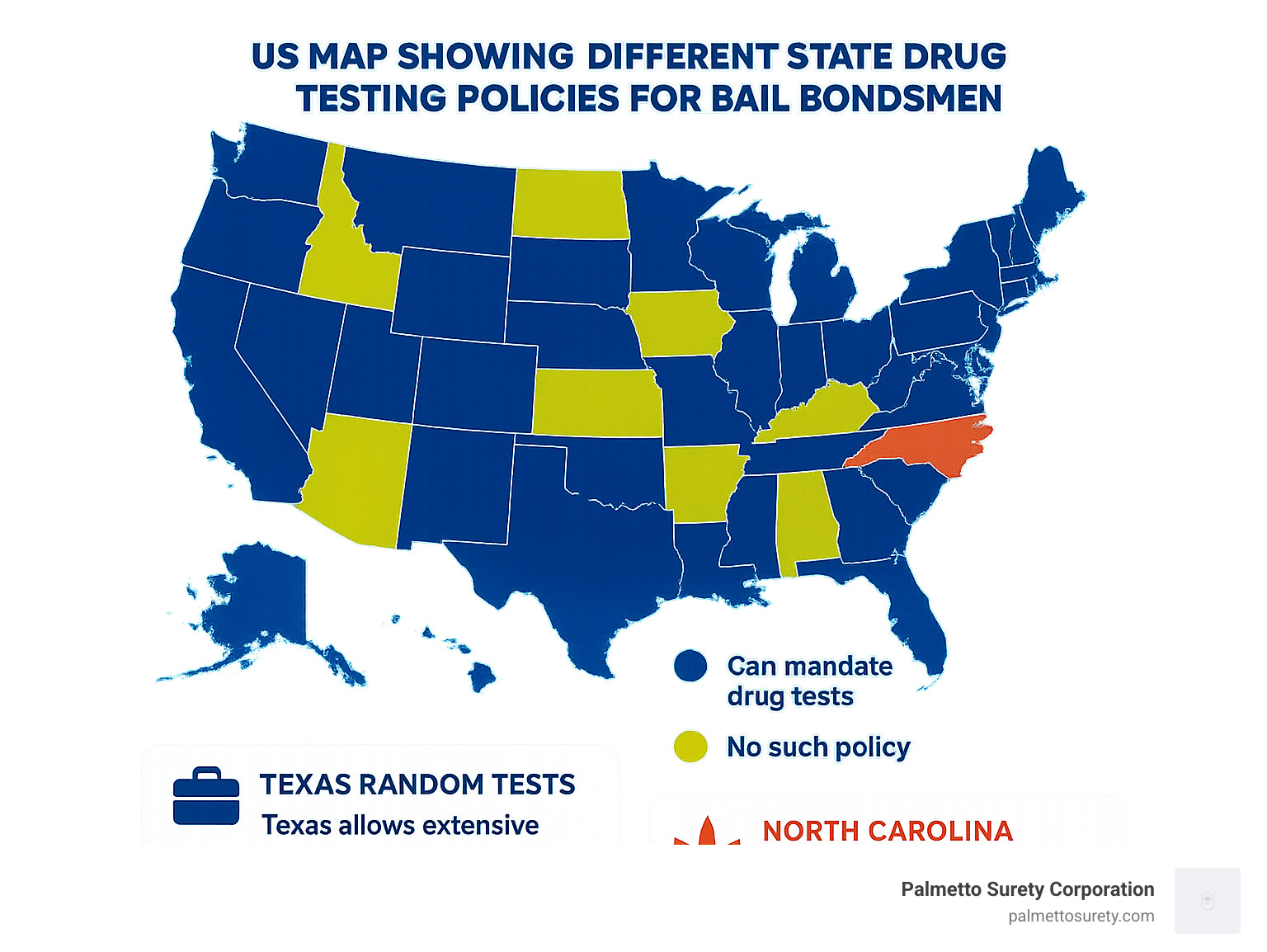
If you’re wondering can your bail bondsman make you drug test, the answer depends heavily on which state you’re in. The patchwork of state laws creates a confusing landscape where what’s allowed in one state might be prohibited in another.
Texas takes a particularly aggressive approach to pretrial drug testing. The state allows extensive random testing through the Community Justice Assistance Division. Bondsmen here have broad authority to require testing as part of their agreements.
North Carolina maintains strict marijuana prohibitions that can catch defendants off guard. Even if you have a legal medical marijuana prescription from another state, North Carolina doesn’t recognize it for bail purposes.
California offers stronger privacy protections that limit how often and extensively bondsmen can test you. The state requires more justification for testing requirements and gives defendants more ways to challenge unreasonable demands.
The constitutional framework provides some baseline protections everywhere. Federal court decisions have established that bail-stage drug testing must meet constitutional standards of reasonableness and voluntariness. A 1989 constitutional analysis found that testing programs must be carefully designed to comply with Fourth, Fifth, and Fourteenth Amendment protections.
Courts generally uphold bail-stage drug testing as constitutional when it meets reasonable standards and involves proper consent. However, coercive or excessive testing programs can cross the line into constitutional violations.
Some states cap testing fees to prevent excessive financial burden. These caps typically range around $20 per test. Testing frequency limits also exist in certain jurisdictions to prevent harassment.
Know your rights when your bail bondsman says you must drug test
Understanding your constitutional rights becomes crucial when your bondsman starts talking about drug testing requirements.
Your right to due process means you can’t be punished based on test results without a fair opportunity to respond. This includes the right to challenge false positives and present evidence about legitimate medication use.
The voluntariness requirement is often misunderstood. While you can agree to testing as part of your bond contract, that agreement must be truly voluntary. Coercive or deceptive practices in getting your consent can violate your rights.
Fourth Amendment protections against unreasonable searches still apply during pretrial release. You can consent to testing, but the scope and frequency must be reasonable.
Testing requirements cannot be discriminatory based on race, religion, or other protected characteristics. Any testing program must be applied consistently and fairly.
The bottom line is that while can your bail bondsman make you drug test often has a “yes” answer, that authority isn’t unlimited. Understanding your rights helps you steer the system more effectively.
Frequently Asked Questions about Bail-Stage Drug Testing
Let me address the most common questions I hear from defendants and their families about drug testing during the bail process.
1. Is drug testing a standard bail condition everywhere?
Can your bail bondsman make you drug test isn’t a universal requirement – it really depends on your specific situation and location. According to Department of Justice statistics, about 32% of felony defendants in the largest U.S. counties face drug testing requirements, but this number jumps significantly higher for drug-related charges.
Your likelihood of facing testing requirements increases based on several key factors. The nature of your charges plays the biggest role – drug possession, DUI, or trafficking charges almost always trigger testing requirements. Your criminal history matters too, especially if you have previous substance abuse issues or bond violations.
The judge’s discretion and local court policies create significant variation between jurisdictions. Some courts have standard testing protocols that kick in automatically for certain charges, while others evaluate each case individually.
Your bail bondsman’s requirements add another layer of complexity. Even if the court doesn’t require testing, your bondsman might include it in your contract as a condition of service.
2. Do I have to pay each time my bondsman tests me?
Unfortunately, yes – you’re typically on the hook for testing fees when your bondsman requires drug testing. These costs usually run between $20-40 per test, though I’ve seen variation depending on your location and the type of testing method used.
The fee structure should be crystal clear in your bond agreement before you sign anything. Some bondsmen want payment upfront at each testing appointment, while others send you a monthly bill.
These costs add up faster than you might expect, especially with frequent testing schedules. If you’re testing twice a week, you could be looking at $160-320 per month just for testing fees.
Some jurisdictions have fee caps to prevent excessive charges, but these consumer protections aren’t available everywhere.
3. How often can my bail bondsman require a test?
The testing frequency really comes down to what’s written in your bond agreement and your state’s specific regulations. I’ve seen everything from monthly check-ins to daily testing requirements, depending on the circumstances.
Weekly testing represents the most common schedule for drug-related cases. Random testing follows an unpredictable schedule designed to catch people off guard. Daily testing usually happens in high-risk situations or after you’ve already had a violation. Monthly testing is reserved for lower-risk defendants.
Here’s what really matters: after a failed test, frequency almost always increases dramatically. I’ve worked with defendants who went from weekly to daily testing after a single violation.
State regulations may limit excessive testing to prevent harassment, but these protections vary widely across the country.
Conclusion
Navigating the question can your bail bondsman make you drug test doesn’t have to feel overwhelming once you understand the basics. The reality is that both courts and bondsmen can require testing, but they do so through different channels and with different levels of authority.
Court-ordered testing is non-negotiable – when a judge requires it, you must comply or face immediate consequences. Bondsman-required testing, however, only applies if you signed up for it in your bond contract.
The most important thing to remember is that knowledge is power in these situations. Before you sign anything, make sure you understand exactly what you’re agreeing to. If your bondsman wants to include drug testing in your agreement, ask about the frequency, costs, and what happens if you have a positive result due to prescribed medications.
Communication really can save you from serious trouble. I’ve seen too many cases where a simple conversation about prescription medications could have prevented a bond violation. If you take any medications – even over-the-counter ones – tell your bondsman upfront.
Your constitutional rights don’t disappear just because you’re out on bail. You still have protections against unreasonable searches and the right to due process. However, these rights work differently when you’ve voluntarily agreed to certain conditions as part of your bond contract.
Budget-wise, testing fees typically run $20-40 per test, which can add up quickly if you’re tested frequently. Factor this into your financial planning, especially since failed tests often lead to increased testing requirements.
At Palmetto Surety Corporation, our network of experienced agents across Georgia, Florida, Louisiana, Mississippi, South Carolina, Tennessee, and Texas understand these local variations and requirements. We’ve been helping people steer the bail process for over 20 years, and we know that clear communication from the start prevents problems down the road.
The bottom line is simple: stay compliant, communicate early, and protect your rights. Whether you’re dealing with court-ordered testing or bondsman requirements, understanding your obligations helps you maintain your freedom while your case moves through the system.
We’re here to help guide you through this process. Our quick approval times and efficient service mean you can get back to your life faster, but staying compliant with all conditions keeps you there. For more information about how we support our clients through every step of the pretrial process, check out our agent services page.


