


What is a Suretyship? Top 3 Crucial Facts 2025
What is a suretyship? In simple terms, a suretyship is a contractual relationship where one party, the surety, guarantees the performance of another party, the principal, to a third party, the obligee. If the principal fails to uphold their contractual obligations, the surety steps in to cover the financial obligations. This definition encapsulates the essence of what a suretyship involves and highlights its critical role in ensuring that agreements between parties are honored.
Essentially, suretyship serves as a safety net in financial and contractual dealings, offering peace of mind to businesses and individuals alike. By understanding what is a suretyship, companies can better steer the complexities of contracts and safeguard their interests. Whether you’re new to suretyship or a seasoned professional, grasping this simple concept is crucial in a world where trust and reliability are paramount.
As a leading expert in marketing and digital change, I’m Haiko de Poel Jr. With experience in rebranding and strategic planning in the surety bond industry, I have a deep understanding of what is a suretyship and its importance in facilitating business operations and building trust. Let’s explore this topic further to uncover its nuances and applications in various industries.

What is a suretyship terms at a glance:
– bondability letter
– examples of surety bond claims
– payments on a surety bond would be made to the
What is a Suretyship?
Key Components of Suretyship
In a suretyship agreement, three key players are involved: the principal, the surety, and the obligee. Understanding their roles is crucial to grasping how suretyship functions.
Principal: This is the party responsible for fulfilling the obligation. Think of the principal as the performer in the contract. Their job is to complete the tasks or meet the conditions agreed upon with the obligee.
Surety: The surety acts as the guarantor. If the principal fails to meet their obligations, the surety steps in to ensure the obligee isn’t left hanging. Essentially, the surety provides a financial backing that assures the obligee that the principal’s commitments will be fulfilled, one way or another.
Obligee: The obligee is the party that benefits from the suretyship agreement. They receive the guarantee that the principal will perform according to the contract. If not, the surety covers any financial losses or obligations.


Principal Obligations
The principal’s main responsibility is to fulfill the contract terms. Whether it’s completing a construction project or delivering goods, the principal must perform as promised. If they fail, the surety is on the hook.
Surety Guarantees
The surety’s role is to provide a financial guarantee. This means they promise to step in financially if the principal defaults. It’s like having a safety net that ensures the obligee gets what’s due, even if the principal can’t deliver.
Obligee Benefits
The obligee benefits from the peace of mind that comes with a suretyship agreement. They know that even if the principal doesn’t follow through, the surety will cover any losses. This protection makes suretyship a valuable tool in risk management.
In summary, the suretyship agreement is a powerful mechanism that ensures obligations are met and parties are protected. This tri-party relationship is vital for maintaining trust in various industries, from construction to finance. Understanding these key components helps businesses steer contracts and safeguard their interests.
Types of Surety Bonds
Surety bonds come in various forms, each designed to meet specific needs and circumstances. Let’s explore some of the most common types, including contract surety bonds, commercial surety bonds, and performance bonds.
Common Surety Bond Examples
Contract Surety Bonds
These bonds are primarily used in the construction industry. They ensure that contractors fulfill their contractual obligations. There are several types within this category:
-
Bid Bonds: These guarantee that a contractor will enter into a contract if they win the bid. If they don’t, the surety covers the difference between the lowest bid and the next lowest bid.
-
Performance Bonds: Once a contractor begins work, a performance bond ensures they complete the project as per the contract terms. It’s a safety net for project owners, protecting against subpar work or incomplete projects.
-
Payment Bonds: These ensure that a contractor pays their workers, subcontractors, and suppliers. This bond is crucial for preventing liens against the project property.
Commercial Surety Bonds
These bonds cover a wide range of non-construction related obligations. They ensure compliance with laws and regulations and can be divided into several subtypes:
-
License and Permit Bonds: Required by government agencies, these bonds ensure businesses comply with laws and regulations to receive a license or permit. Examples include contractor license bonds and health spa bonds.
-
Court Bonds: Used in legal proceedings, these bonds ensure parties meet their obligations as determined by the court. They include appeal bonds and bail bonds, among others.
Performance Bonds
As mentioned, performance bonds are crucial in the construction industry. They ensure that contractors complete projects to the agreed standards. However, these bonds aren’t limited to construction. They can be used in any situation where performance according to a contract is necessary.
Construction Bonds
Construction bonds are a type of contract surety bond specifically for the construction industry. Besides bid and performance bonds, they include:
- Completion Bonds: These guarantee that a project will be completed, even if the original contractor cannot finish the work. Completion bonds provide peace of mind to project owners, ensuring that projects reach the finish line no matter what.
In summary, surety bonds serve as a financial safety net across various industries, from construction to legal proceedings. They help maintain trust and ensure obligations are met, protecting all parties involved.
How Suretyship Differs from Insurance
Suretyship and insurance might seem similar at first glance, but they have distinct differences that matter a lot. Let’s break it down.
Risk Transfer Mechanisms
In insurance, the risk is transferred to the insurance company. If something goes wrong, the insurer pays out. For example, if a house burns down, the insurance company covers the loss. Simple, right?
But in suretyship, the risk doesn’t shift away from the principal. Instead, the surety acts as a safety net for the obligee. If the principal fails to meet their obligations, the surety steps in. However, unlike insurance, the principal must repay the surety for any claims paid out. This makes suretyship more like a form of credit.
Underwriting Criteria
How do insurance companies decide who gets coverage? They use a spread of risk approach. This means they pool risks and charge premiums based on the likelihood of an event happening.
Surety companies, on the other hand, focus on prequalification and selection. They evaluate the principal’s character, capacity, and capital. It’s like a credit check. They want to ensure that the principal can fulfill their obligations.
Financial Backing
Insurance premiums are calculated with the expectation of eventual payouts. In suretyship, premiums are more like service fees. They pay for the surety’s financial backing and guarantee, not for expected losses.
Liability Differences
Liability in suretyship is joint and primary with the principal. This means the creditor can go after either the principal or the surety for payment. In contrast, a guarantor’s liability is secondary. The creditor must first try to collect from the principal before turning to the guarantor.
Contract Obligations and Legal Principles
Suretyship involves a three-party agreement: the principal, the obligee, and the surety. The surety guarantees that the principal will meet their obligations. If not, the surety pays the obligee and then seeks reimbursement from the principal.
Insurance is a two-party contract. It involves the insurer and the insured. The insurer promises to compensate the insured for specific losses.
In summary, suretyship is a unique blend of credit and insurance. It ensures that obligations are met, but ultimately, the principal bears the financial responsibility.
Frequently Asked Questions about Suretyship
What is an example of a suretyship?
Imagine a construction project. The contractor, known as the principal, promises to complete the work. However, the project owner, or obligee, needs assurance that the work will be done. This is where a surety comes in. The surety issues a bond, guaranteeing that the contractor will fulfill their obligations. If the contractor fails, the surety steps in to compensate the obligee, ensuring the project isn’t left unfinished.
What is the purpose of suretyship?
The main purpose of suretyship is to provide a financial guarantee. It ensures that if a principal defaults on their obligations, the obligee won’t suffer financially. This is especially important in industries like construction, where project completion is crucial. Suretyship acts as a safety net, protecting the obligee from potential financial loss due to a principal’s failure to perform.
What is a suretyship agreement?
A suretyship agreement is a contract involving three parties: the principal, the obligee, and the surety. Here’s how it works:
- Principal: The party responsible for fulfilling an obligation, like completing a project.
- Obligee: The party that benefits from the fulfillment of the obligation.
- Surety: The party that provides a financial guarantee that the principal will meet their obligations.
In this agreement, the surety promises to compensate the obligee if the principal defaults. However, the principal must reimburse the surety for any claims paid. This arrangement ensures that the obligee is protected, while the principal remains ultimately responsible for their obligations.
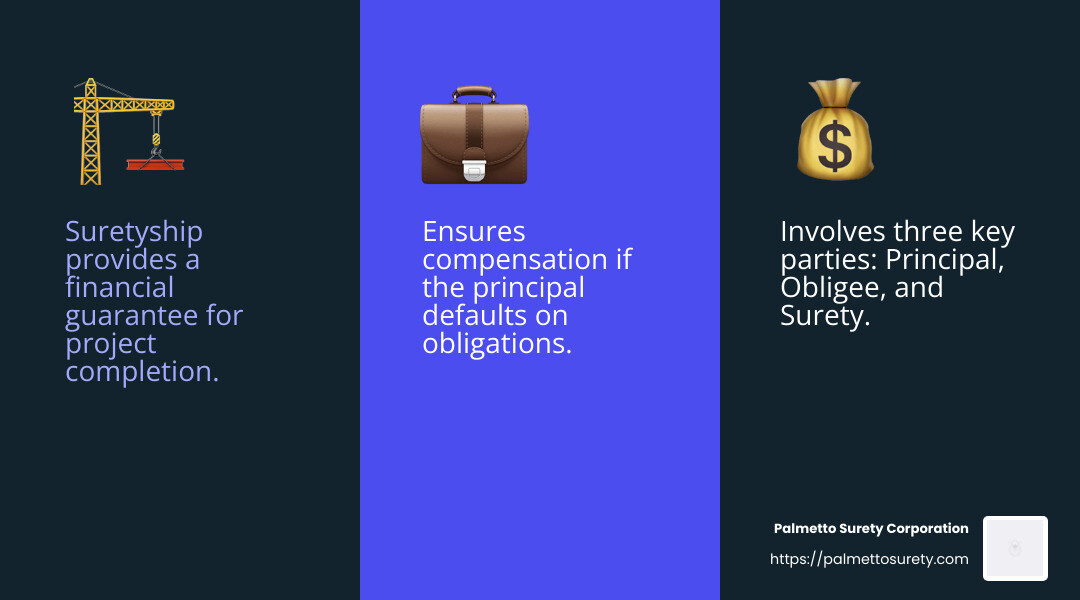
Suretyship provides financing security by guaranteeing that obligations are met, even if the principal defaults. This makes suretyship a vital tool for managing repayment obligations and protecting against debtor default.
Conclusion
At Palmetto Surety Corporation, we understand the complexities of suretyship and aim to make the process straightforward for our clients. With over 20 years of experience in the industry, we specialize in providing surety bonds for various sectors, including construction, manufacturing, transportation, and healthcare. Our expertise allows us to tailor solutions to meet the unique needs of each industry.
One of our standout features is our ability to offer quick approval for most surety bond applications. We know that time is of the essence, especially in industries where project timelines are tight. Our efficient processes mean that you can often get the bonds you need within hours, not days. This speed and efficiency set us apart and ensure that your projects can proceed without unnecessary delays.
Our presence across several states, including Florida, Georgia, Louisiana, Mississippi, South Carolina, Tennessee, and Texas, means we are well-positioned to serve a wide range of clients. Our team is dedicated to providing exceptional service and support, ensuring that you have the guidance and information you need every step of the way.
Whether you’re a contractor needing a performance bond, a business securing a license bond, or a company seeking a bid bond, we are here to help. Trust Palmetto Surety Corporation to provide the financial guarantees you need to protect your interests and ensure project success. For more information or to start your surety bond application, visit our Surety Bond Services page.


