


Bail Bondsman Career Information: Top 5 Insider Secrets
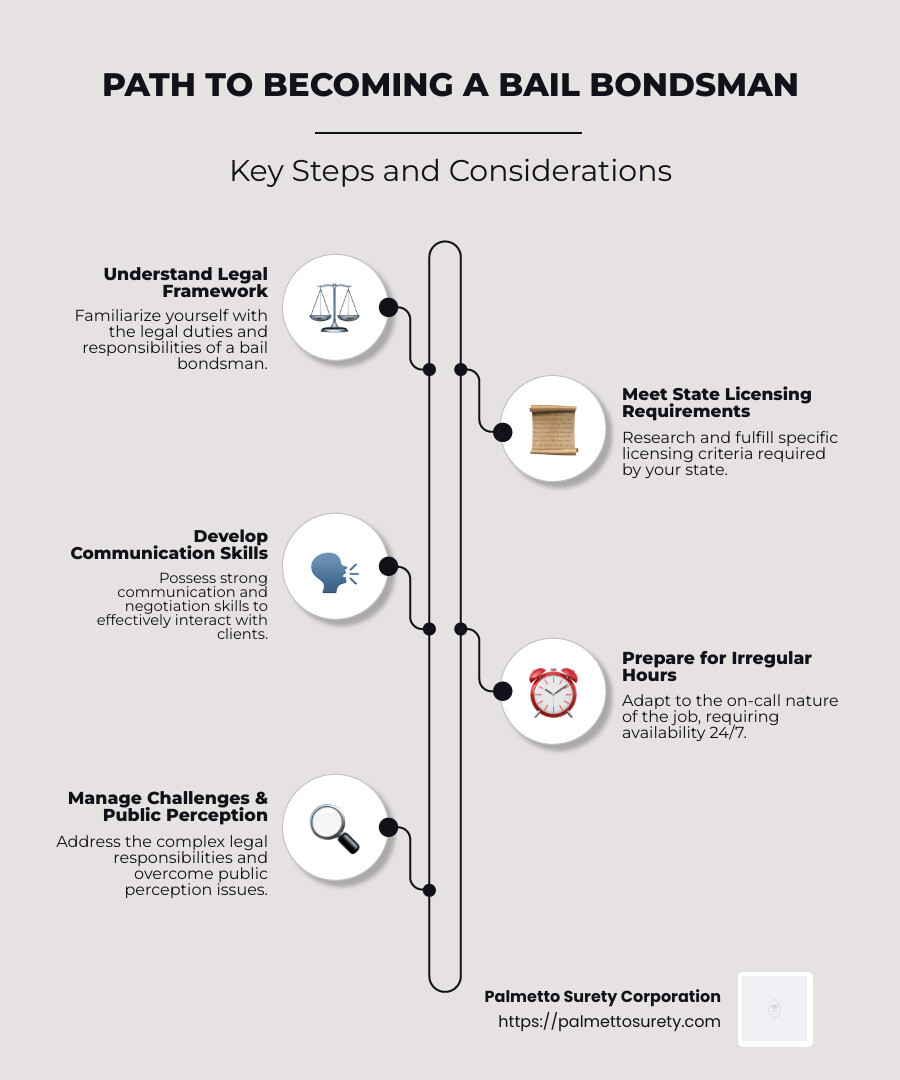
Bail bondsman career information is crucial for anyone considering this unique and challenging field. A bail bondsman, or bail agent, plays an essential role in the criminal justice system by securing the temporary release of defendants awaiting trial. To start on this career, key steps include:
– Understanding the legal framework and duties involved.
– Meeting specific state licensing requirements.
– Possessing strong communication and negotiation skills.
– Being prepared for irregular hours, as bail agents must be on call 24/7.
As a voiceless player in the justice system, a bail bondsman not only aids individuals but also helps alleviate the overcrowded prison system. Despite the rewarding aspects, the profession does face challenges, including complex legal responsibilities and public perception issues.
As your guide, I’m Haiko de Poel Jr., offering insights based on my expertise in the financial services industry and my role at Palmetto Surety Corporation, where I’ve significantly contributed to strategic growth and rebranding efforts within the surety bonds sector. This ensures a comprehensive understanding of bail bondsman career information.
Let’s explore the fascinating world of bail bonds.
Understanding the Role of a Bail Bondsman
A bail bondsman or bail agent is a crucial player in the criminal justice system. They help defendants gain temporary freedom while awaiting trial by posting bail on their behalf. This role involves a mix of responsibilities and requires strong client interaction skills.
Key Responsibilities
-
Posting Bail: The primary duty of a bail bondsman is to post bail for defendants. This involves paying a percentage of the bail amount set by the court to secure the defendant’s release.
-
Ensuring Court Appearance: A bail bondsman must ensure their clients appear in court for their scheduled trials. If clients fail to show up, the bondsman is responsible for the full bail amount.
-
Client Monitoring: Bail bondsmen often monitor their clients to ensure compliance with court conditions. This might involve regular check-ins or collaborating with bail enforcement agents if a client skips bail.

Client Interaction
Interacting with clients is a significant part of a bail bondsman’s job. Here’s what it typically involves:
-
Building Trust: Clients and their families are often under stress. A bail bondsman needs to build trust and provide reassurance during these challenging times.
-
Negotiating Terms: Bondsmen negotiate the terms of bail with clients, including payment plans for the bail premium, which is usually 10-15% of the total bail amount.
-
Explaining Legalities: It’s crucial for bail agents to explain the bail process and legal responsibilities to clients, ensuring they understand their obligations.

Why This Role is Essential
The role of a bail bondsman is vital in the justice system. By securing the release of defendants, they help reduce jail overcrowding and allow individuals to continue their lives while awaiting trial. Moreover, they provide a service that ensures defendants return for their court dates, maintaining the integrity of the judicial process.
In short, being a bail bondsman is not just about financial transactions; it’s about fostering trust, ensuring accountability, and facilitating justice.
Ready to learn how to start this career? Let’s move on to the next section.
How to Become a Bail Bondsman
Starting on a bail bondsman career involves meeting specific requirements, gaining the necessary education, obtaining licenses, and honing essential skills. Here’s a straightforward guide to help you steer this path.
Requirements
Before becoming a bail bondsman, you need to meet some basic criteria. These typically include:
-
Age and Residency: You must be at least 18 years old and a resident of the state where you plan to operate.
-
Criminal Record: A clean criminal record is crucial. Most states disqualify applicants with felony convictions.
-
Financial Stability: You need to demonstrate financial responsibility, often by partnering with a surety company to cover bail amounts.
Licensing
Licensing is a critical step in your journey. Here’s what it generally involves:
-
Pre-Licensing Course: Most states require you to complete a pre-licensing course. This course covers the legal aspects of bail bonds and prepares you for the state exam.
-
State Exam: After your course, you’ll need to pass a state licensing exam. This exam tests your understanding of bail bond laws and practices.
-
Application for License: Once you pass the exam, apply for your state license. This might include submitting fingerprints and undergoing a background check.
-
Partnering with a Surety Company: Having a surety company endorse you is often necessary. They back the bonds you issue, ensuring you meet financial obligations.
Education and Skills
While formal education beyond a high school diploma or GED isn’t always required, certain skills and knowledge are beneficial:
-
Understanding of Legal Systems: Knowing how the criminal justice system works is crucial for explaining processes to clients.
-
Communication Skills: Effective communication helps in building trust and negotiating terms with clients.
-
Analytical Skills: Being able to assess risks and make informed decisions is vital, especially when evaluating whether to post bail for a client.
-
Empathy and Patience: Working with stressed clients requires patience and understanding to guide them through challenging times.
State-Specific Variations
That requirements can vary significantly by state. For instance, becoming a bail bondsman in North Carolina involves an apprenticeship, whereas in South Carolina, you can start practicing immediately after obtaining your license.
This path offers not just a career but a chance to make a difference in the justice system. Ready to explore the next steps in this engaging field? Let’s continue.
Bail Bondsman Career Information
Earnings
A career as a bail bondsman can be financially rewarding. Most bondsmen earn through fees, typically 10% to 15% of the bail amount set by the court. For example, if a court sets a $10,000 bail, a bondsman may charge $1,000 to $1,500 as their fee.
Work Environment
Bail bondsmen often work in offices close to courthouses for convenience. Some even operate from home, offering flexibility but requiring discipline. The job involves a mix of office tasks and fieldwork, including:
-
Paperwork and Record Keeping: You’ll spend significant time managing client records and legal documents.
-
Client Interaction: Expect to interact with clients, courts, and law enforcement regularly. This requires strong communication skills.
-
Travel: Sometimes, you may need to travel to find clients who miss court appearances, either personally or by hiring a bounty hunter.
The environment can be and unpredictable, with no two days being the same. This variety can be exciting but also challenging.
Job Outlook
The demand for bail bondsmen is influenced by the legal system and societal trends. While the career is seen as stable, certain factors can impact job prospects:
-
Legal Reforms: Changes in bail laws, such as the shift towards personal recognizance bail, can affect demand. Some states are moving away from cash bail, which could impact the traditional bail bondsman role.
-
Criminal Justice Trends: As more people with backgrounds in criminal justice and law enforcement enter the field, the profession is gaining respect and recognition.
Despite these shifts, the need for bail bondsmen remains, particularly in states that continue to use the cash bail system. The Professional Bail Agents of the United States notes that the field is growing, offering opportunities for those entering the profession.
Curious about the challenges and rewards of being a bail bondsman? Let’s explore what makes this career both demanding and fulfilling.
Challenges and Rewards in the Bail Bonds Industry
Being a bail bondsman is not just about securing someone’s release from jail. It comes with its own set of challenges and rewards, along with a few common misconceptions.
Challenges
-
Steep Competition and Legal Changes: The bail bonds industry faces competition from deposit bail systems, where a percentage of the bail is paid directly to the court. This is an attempt by local governments to provide an alternative to traditional bail bonds. Legal reforms, like the movement away from cash bail in some states, can also impact demand for bondsmen.
-
Risk of Non-Appearance: If a client skips their court date, the bondsman is on the hook for the entire bail amount. This can be financially risky and requires effective skip tracing skills to locate and return clients to court.
-
Negative Perceptions: The profession often faces criticism for perceived high fees and its impact on lower socioeconomic groups. Critics argue that these fees can be difficult for many to afford, labeling them as a form of usury.
-
Emotional Toll: Dealing with clients in difficult situations can be emotionally draining. It requires a balance between professionalism and empathy, often without getting too personally involved.
Rewards
-
Financial Benefits: As mentioned earlier, the financial rewards can be significant. With experience, a bail bondsman can earn a substantial income, especially in states where the cash bail system is prevalent.
-
Variety and Independence: No two days are the same. The mix of office work, client interaction, and fieldwork keeps the job dynamic. Plus, many bondsmen enjoy the independence of being their own boss, setting their own hours, and making key business decisions.
-
Helping Others: For many bondsmen, the most rewarding part is helping clients through tough times. Seeing someone turn their life around or successfully steer the legal system can be fulfilling.
-
Community Impact: Bondsmen play a crucial role in the justice system by helping to reduce jail overcrowding and ensuring defendants have the opportunity to prepare for their court dates outside of confinement.
Misconceptions
-
“It’s Just Like TV”: Many people think being a bail bondsman is all about action-packed chases, thanks to shows like “Dog the Bounty Hunter.” In reality, it’s a lot more about paperwork, client management, and strategic planning.
-
“Bondsmen Are Just in It for the Money”: While the financial aspect is important, many bondsmen are genuinely invested in helping their clients and making a positive impact in their communities.
Understanding these aspects can help you decide if a career as a bail bondsman is right for you. Next, we’ll tackle some frequently asked questions about this career path.
Frequently Asked Questions about Bail Bondsman Careers
Is a bail bondsman a good career?
Being a bail bondsman can be a rewarding career, both financially and personally. The earning potential is significant, especially if you’re willing to put in the time and effort. Most bondsmen charge a fee of 10% to 15% of the total bail amount. For example, on a $10,000 bail, the fee can be $1,000 to $1,500. This fee is non-refundable, providing a steady income stream.
Beyond the financial benefits, many bondsmen find satisfaction in their role as a form of community service. They help individuals steer their legal challenges and ensure that defendants have the chance to prepare for their court appearances outside of jail. This aspect of the job can be deeply fulfilling for those who are passionate about helping others.
How do bail bondsmen make money?
Bail bondsmen earn money primarily through bail fees. When a person is arrested, a court may set a bail amount as a guarantee for their appearance at future court dates. A bail bondsman provides a surety bond to the court and charges the defendant a percentage of the bail as a fee. This fee is the bondsman’s profit and is retained even if the defendant appears in court.
Additionally, some bondsmen earn a commission if they work under a larger bail bond company. The commission structure can vary, but it’s typically a percentage of the bail fee. For example, if the fee is $1,000, a bondsman might earn $250 to $500 as their commission.
What education or skills are needed to be a bondsman?
To become a bail bondsman, you need to meet certain pre-licensing requirements, which vary by state. Generally, you must complete a state-approved training program that covers bail bond laws, ethics, and procedures.
After completing the training, you’ll need to pass a state exam to obtain your bail bondsman license. The exam typically consists of multiple-choice questions on bail bond laws and practices. It’s crucial to check your specific state’s requirements, as they can differ.
In addition to formal education, certain skills are essential for success in this field. Strong communication and negotiation skills are crucial for dealing with clients and legal professionals. Analytical skills are also important for assessing risk and making informed decisions about which clients to accept.
Understanding these aspects can help you decide if a career as a bail bondsman is right for you. Next, we’ll explore the conclusion, focusing on the growth opportunities and industry impact for those interested in this career path.
Conclusion
A career as a bail bondsman offers both challenges and opportunities for growth. At Palmetto Surety Corporation, we understand the complexities of this profession and are committed to supporting bail bondsmen in their journey. With over 20 years of experience in the industry, we provide the resources and expertise that can help you succeed.
The bail bondsman career is not just about financial gain; it’s about making a real impact. By helping individuals secure their release, you play a crucial role in the justice system. This career allows you to support your community, offering defendants a chance to prepare for their legal proceedings outside of jail.
Moreover, the industry is evolving with technology, making it easier than ever to manage your business. Palmetto Surety Corporation offers cutting-edge tools that streamline the process, allowing you to focus on what matters most—helping your clients. Our quick approval process ensures that you can provide efficient service, which is vital in this environment.
Career growth in this field is promising. As the demand for bail bondsmen continues to rise, so do the opportunities for those who are dedicated and skilled. Whether you’re looking to start your own bail bond business or join a reputable company, the potential for professional development is significant.
In summary, a career as a bail bondsman can be both rewarding and impactful. At Palmetto Surety Corporation, we’re here to support your journey every step of the way. If you’re ready to explore this exciting career path, learn more about our services and how we can help here.


