


What is a Bounty Hunter? Top 5 Astonishing Facts
Evolution and Legality of Bounty Hunters
What is a bounty hunter? A bounty hunter is a person who captures fugitives for a monetary reward, often acting on behalf of a bail bond company. They are freelance agents, skilled in tracking, apprehending, and returning fugitives who skip bail.
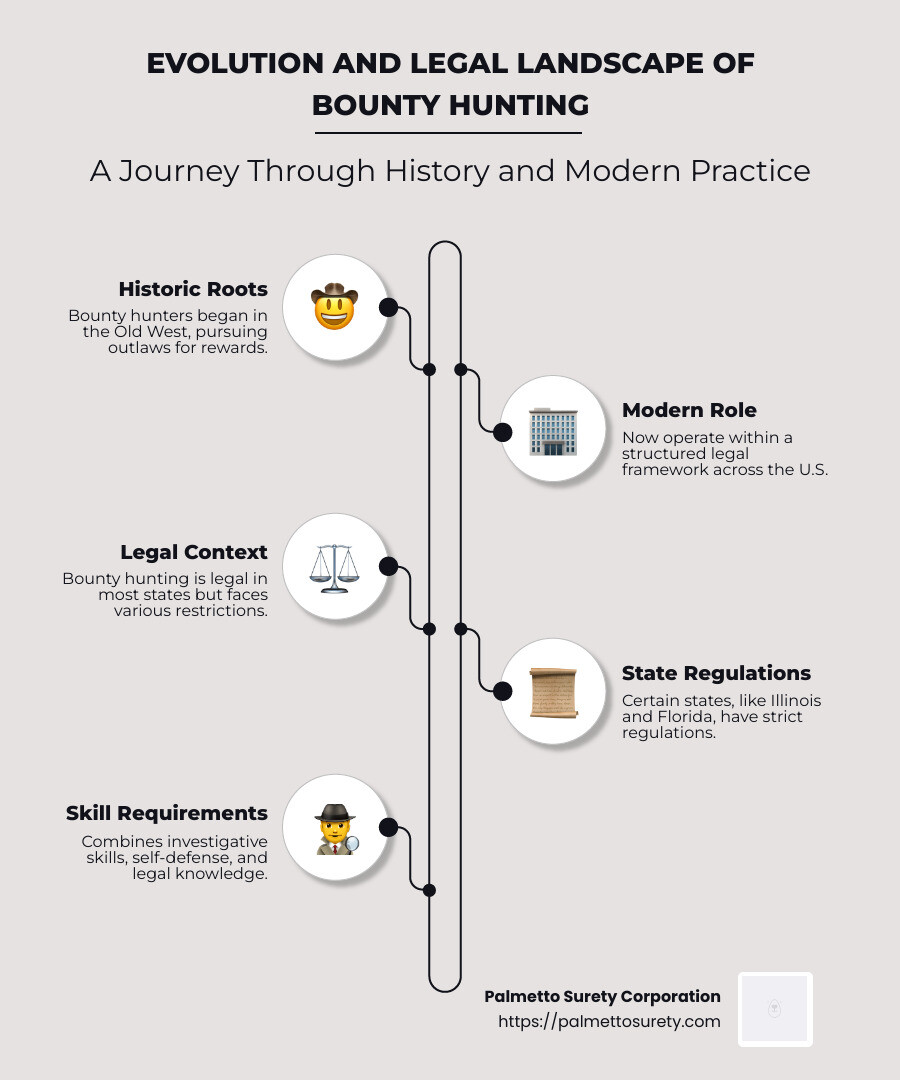
- Historic Roots: Bounty hunters trace their origins back to the Old West, chasing down outlaws and bringing them to justice.
- Modern Role: Today, bounty hunters operate in a structured legal framework, navigating rules that vary significantly across the United States.
- Legal Context: The profession is lawful in most states, but with restrictions. States like Illinois and Florida have stringent rules on bounty hunting activities.
This unique profession, once glamourized by movies, requires a mix of investigative skills, physical prowess, and a deep understanding of legal obligations. Despite evolving perceptions and regulations, bounty hunters remain an essential part of the justice system.
I’m Haiko de Poel Jr., driven by a passion for exploring unique fields like what is a bounty hunter. My background, rooted in branding and digital change, aligns with helping industries understand seemingly niche professions. Let’s dig deeper into the complexities of bounty hunting as we transition into its definition and roles.
What is a bounty hunter word list:
– bail bondsperson meaning
– bail enforcement agent
– what does a bail bondsperson do
What is a Bounty Hunter?
The Role of a Bounty Hunter
A bounty hunter is a professional who locates and apprehends fugitives who have skipped bail. They work closely with bail bondsmen, who provide bail money to the accused in exchange for a fee or collateral. When a person out on bail fails to appear in court, they become a fugitive. This is where the bounty hunter steps in.
Key Responsibilities:
-
Capture Fugitives: The primary role of a bounty hunter is to track down and capture individuals who have avoided court appearances. This involves a mix of investigative work and physical apprehension. They may use various tools and tactics, such as surveillance and intelligence gathering, to locate their targets.
-
Bail Enforcement: Bounty hunters act as enforcers for bail bond companies. They ensure that fugitives are returned to court, thus securing the financial interests of the bail bondsmen.

-
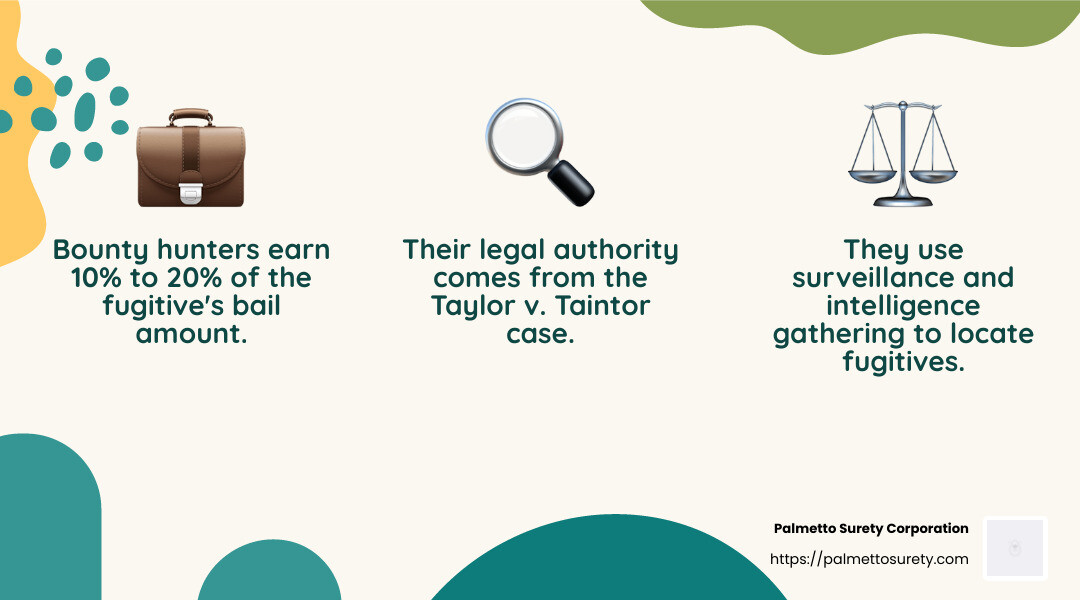
Legal Authority: Bounty hunters possess certain legal powers that allow them to pursue fugitives across state lines and, if necessary, enter a fugitive’s property without a warrant. These powers stem from the U.S. Supreme Court case Taylor v. Taintor (1873), which grants them authority similar to law enforcement officers in specific contexts.
How Bounty Hunters Get Paid
Bounty hunters are primarily compensated through a commission-based system. Their earnings are directly tied to the bail amount set for the fugitive they capture.
Payment Structure:
-
Commission: Bounty hunters typically receive a percentage of the bail amount as their fee. This percentage can range from 10% to 20% of the total bail. For example, if the bail is set at $10,000, the bounty hunter could earn between $1,000 and $2,000 upon successful capture.
-
Financial Incentives: The financial reward is a significant motivator for bounty hunters. The potential for high earnings drives them to efficiently locate and apprehend fugitives. However, the profession also involves risks and costs, such as travel expenses and equipment.
Bounty hunting is a high-stakes profession that requires a balance of skill, legal knowledge, and physical capability. It plays a crucial role in the bail bond industry, ensuring that justice is served and financial obligations are met.
The Legal Framework of Bounty Hunting
Bounty hunting operates within a unique legal framework in the United States, shaped by both historical precedents and modern state-specific regulations. Understanding this framework is crucial for anyone interested in the bounty hunting profession.
State-Specific Regulations
Taylor v. Taintor (1873): This landmark U.S. Supreme Court case set the stage for bounty hunters’ legal authority. It established that bounty hunters have significant rights to pursue and capture fugitives. They can cross state lines and, in many cases, enter a fugitive’s residence without a warrant. However, these powers are not without limits and vary by state.
State Regulations: While the federal framework provides a baseline, each state has its own set of laws governing bounty hunting. Some states, like Texas and California, require bounty hunters to obtain a license, ensuring they meet specific training and ethical standards. These licensing requirements often include background checks and passing a state exam.
Prohibited States: Not all states permit bounty hunting. States like Illinois, Kentucky, Oregon, and Wisconsin have banned the practice altogether. These states have abolished commercial bail bonds, rendering bounty hunting unnecessary and illegal. In these regions, the responsibility for capturing bail jumpers falls to law enforcement agencies.
Training Standards: Training requirements for bounty hunters vary widely. Some states mandate formal education in criminal justice or completion of a training program. Others may have minimal or no training requirements. This inconsistency means that a bounty hunter’s skill level can differ significantly depending on where they operate.
Legal Rights
Bounty hunters possess certain legal rights that distinguish them from ordinary citizens. These rights stem from their contractual relationship with bail bondsmen and the legal system. They include:
- Arrest Authority: Bounty hunters can arrest fugitives without a warrant, provided they have the bail bond contract as authorization.
- Cross-State Pursuit: They can pursue fugitives across state lines, though they must adhere to the legal requirements of the state in which they make the arrest.
- Entry Rights: In many states, bounty hunters can enter a fugitive’s property without a warrant. However, they must respect the laws of each state, as unauthorized entry can lead to legal consequences.
Understanding the legal framework and state-specific regulations is essential for bounty hunters to operate within the law. It ensures they can effectively and safely perform their duties while respecting the rights of the individuals they pursue.
The Skills and Training of a Bounty Hunter
Bounty hunters need a unique blend of skills and training to excel in their profession. These skills ensure they can effectively track and apprehend fugitives while staying safe and within the law.
Education and Certification
Criminal Justice Education: Many bounty hunters start with a background in criminal justice. This education provides a strong foundation in understanding legal systems, criminal behavior, and law enforcement techniques. While not always mandatory, a degree in criminal justice can open more opportunities and provide a deeper understanding of the field.
Investigative Skills: Like detectives, bounty hunters need sharp investigative skills. They spend a lot of time researching, interviewing, and conducting surveillance to locate fugitives. This requires attention to detail, resourcefulness, and the ability to analyze various sources of information, such as public records and social media.
Self-Defense and Physical Training: Apprehending fugitives can be risky. Bounty hunters often undergo self-defense training to protect themselves. Many are trained in martial arts and firearms, ensuring they can handle situations that might become physical. Physical fitness is also crucial, as the job can be demanding and sometimes involves chasing or restraining individuals.
Professional Training and Certification: Depending on the state, bounty hunters may need to complete specific training programs. For example, states like California and New York have mandatory training courses that cover relevant laws, ethical considerations, and practical skills. These programs often culminate in a state exam that must be passed to earn a license or certification.
State Exams and Licensing: In states where licensure is required, bounty hunters must pass a state exam to demonstrate their knowledge of legal and practical aspects of the job. This process ensures they understand the legal framework they operate within and can perform their duties responsibly.
Bounty hunters must continuously develop their skills and stay informed about changes in laws and regulations. This commitment to ongoing learning and training is essential for success in this challenging and dynamic field.
Frequently Asked Questions about Bounty Hunters
What are bounty hunters legally allowed to do?
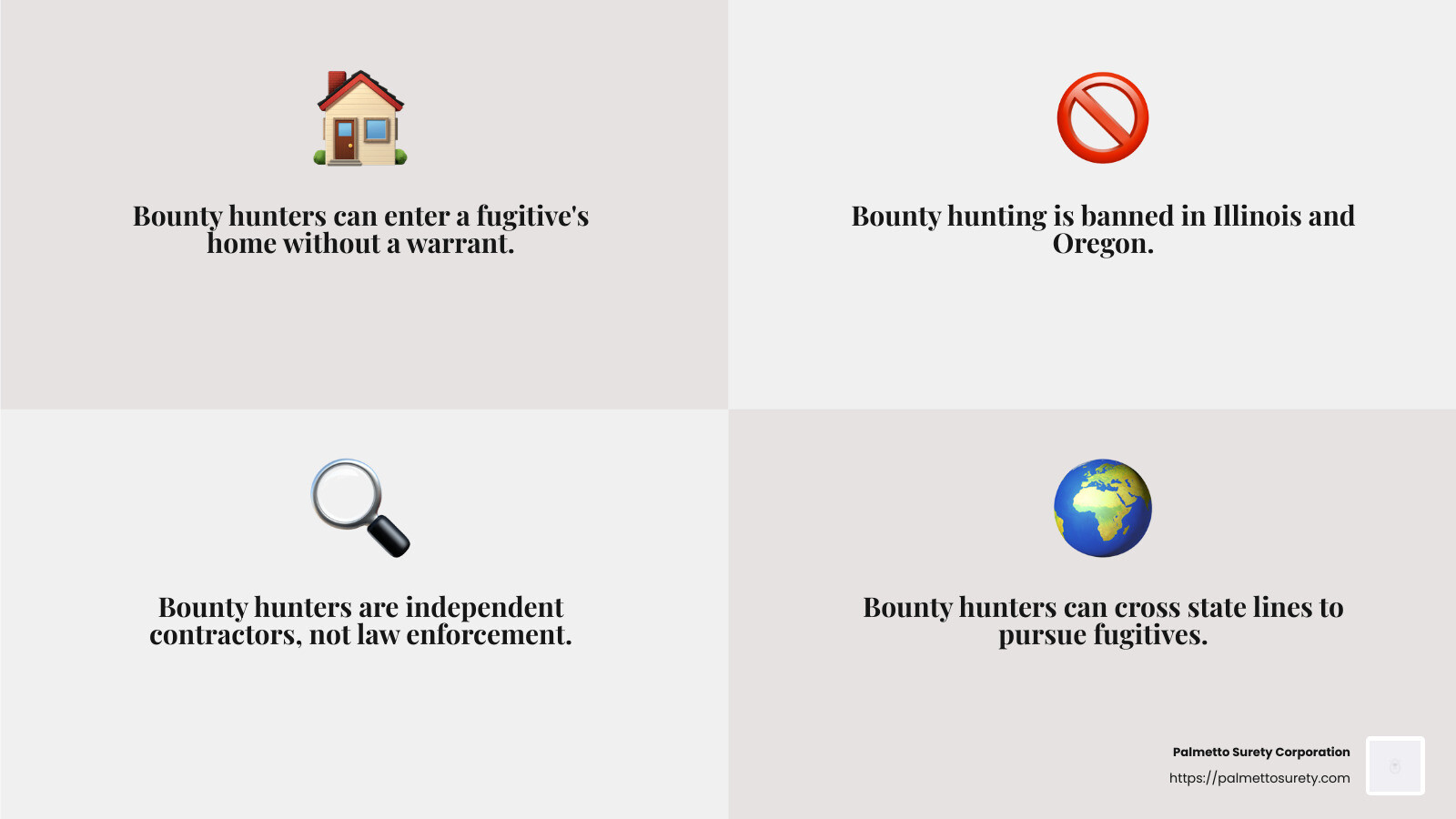
Bounty hunters have unique legal authority, but it’s not without limits. They can enter a fugitive’s home without a warrant to make an arrest, which is a power not typically granted to law enforcement officers. However, they must have reasonable belief that the fugitive is present.
In many states, bounty hunters can cross state lines to capture a fugitive. The landmark case Taylor v. Taintor (1872) established that bounty hunters could pursue fugitives across state borders. But it’s crucial to remember that each state has its own regulations, and some states, like Illinois and Oregon, ban bounty hunting entirely.
Are bounty hunters real law enforcement officers?
No, bounty hunters are not law enforcement officers. They operate as independent contractors hired by bail bond agents to capture fugitives who have skipped bail. This means they do not have the same legal protections or powers as police officers.
Bounty hunters do not have the authority to wear uniforms or badges that resemble those of law enforcement. They cannot identify themselves as police officers. Instead, they are often referred to as “bail enforcement agents” or “fugitive recovery agents” to clarify their role.
How do bounty hunters differ from private investigators?
Though both bounty hunters and private investigators engage in investigative work, their roles and objectives differ significantly.
Bounty Hunters:
- Primarily focus on locating and apprehending fugitives who have skipped bail.
- Work closely with bail bond agents and operate on a commission basis.
- Have specific legal powers, such as entering a fugitive’s residence without a warrant.
Private Investigators:
- Conduct investigations for various purposes, such as background checks, surveillance, and gathering evidence for legal cases.
- Typically hired by individuals, businesses, or lawyers.
- Do not have the authority to make arrests or enter private properties without permission.
Understanding these differences helps clarify the unique position bounty hunters hold within the legal system. Their work is specialized and closely tied to the bail bond industry, whereas private investigators have a broader scope of services.
Conclusion
Bounty hunters, often seen as modern-day lawmen, play a vital role in the bail bond industry. They bridge the gap between law enforcement and the judicial system, ensuring that fugitives are brought to justice. Despite their unique powers, they operate independently and are not part of the formal law enforcement community.
At Palmetto Surety Corporation, we understand the complexities of this profession. With over 20 years of experience in providing commercial surety bonds and bail bonds, we support bounty hunters and bail agents through quick and efficient service. Our network of professionals is dedicated to maintaining the integrity and safety of our communities.
The industry outlook for bounty hunters remains strong, given the continued need for their services in the bail bond process. As regulations evolve and states reassess their laws, bounty hunters will need to stay informed and adaptable. This ensures they can operate legally and effectively across different jurisdictions.
For more information on how Palmetto Surety Corporation can assist you with your surety bond needs, visit our service page.
By understanding the legal framework and honing their skills, bounty hunters will continue to be an essential part of the justice system. They are the unsung heroes who help maintain order, often working behind the scenes to keep our communities safe.


