


How to Start a Bail Bonds Business in Florida: Top 2025 Guide
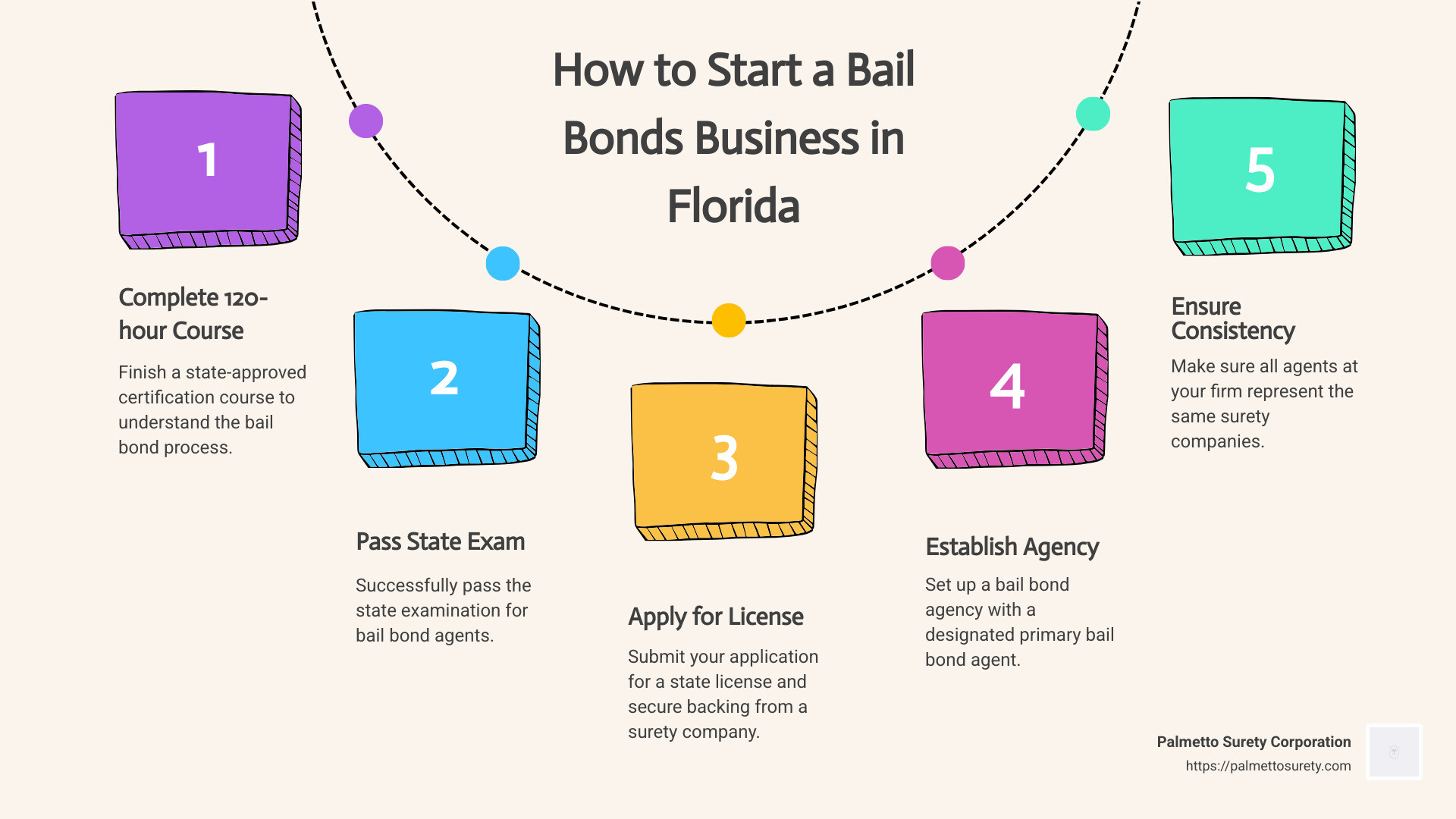
How to start a bail bonds business in Florida involves several important steps and legal requirements. Here’s a concise guide to help you begin:
- Complete a 120-hour state-approved certification course.
- Pass the state exam for bail bond agents.
- Apply for your state license and secure backing from a surety company.
- Establish a bail bond agency with a designated primary bail bond agent.
- Ensure all agents at your agency represent the same surety companies.
Starting a bail bonds business in Florida requires navigating specific laws outlined in Chapters 648 and 903 of the Florida Statutes. Aspiring business owners must first become licensed bail bond agents, a process that includes mandatory coursework and passing a state exam. The bail bond industry, a $15 billion per year sector in the U.S., plays a crucial role in Florida’s legal system, balancing the opportunity for defendants’ pretrial release with ensuring their court appearances.
I’m Haiko de Poel Jr., and my expertise in “how to start a bail bonds business in Florida” spans strategizing marketing and digital change for businesses like Palmetto Surety Corporation. Let’s explore how legality and industry demands shape this business niche.
How to Start a Bail Bonds Business in Florida
Licensing Requirements
To start a bail bonds business in Florida, you must first meet specific licensing requirements. The process begins with ensuring you meet the basic criteria:
- Age Requirement: You must be at least 18 years old.
- Educational Background: A high school diploma or its equivalent is necessary.
Once these are in place, the next step is a background check. This ensures that you have a clean criminal record, particularly in the past ten years. It’s crucial because the state wants to ensure that bail bondsmen are trustworthy and reliable.
Certification Courses
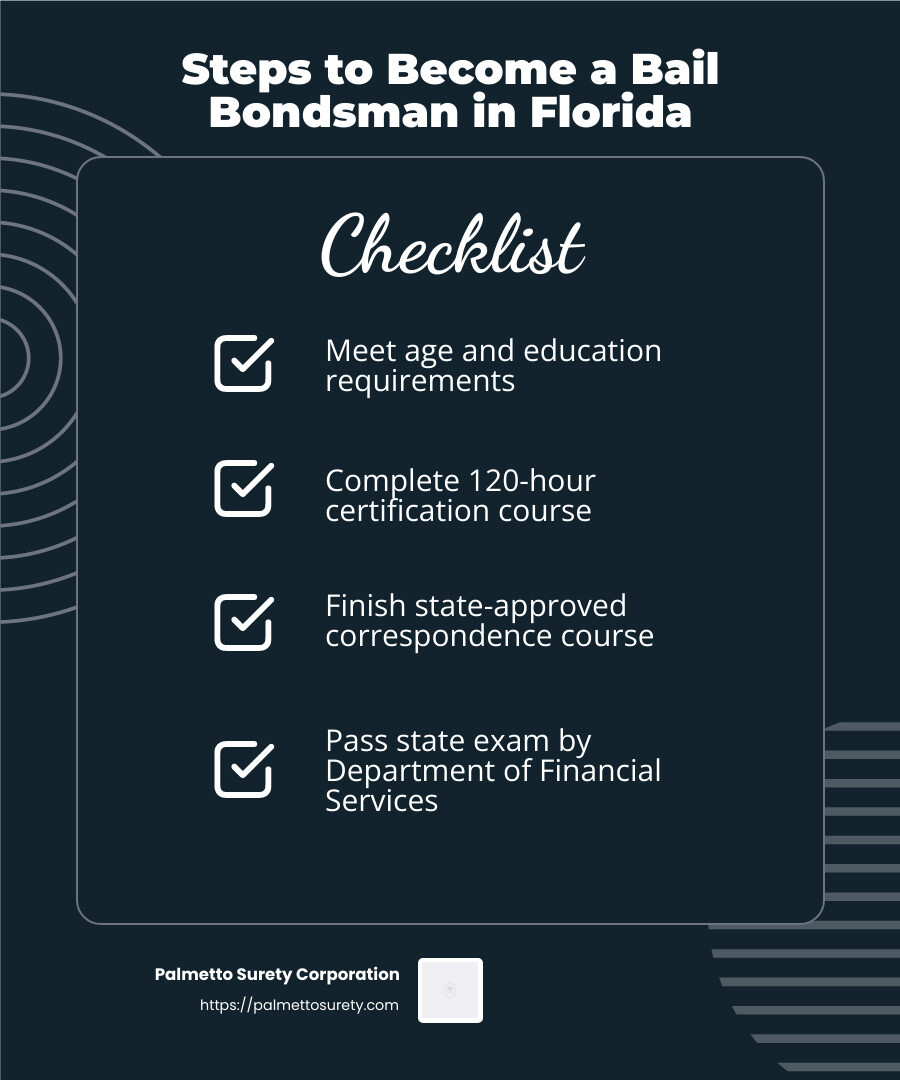
The cornerstone of becoming a licensed bail bondsman in Florida is completing a state-approved 120-hour certification course. This course is typically offered online, providing flexibility for students. The University of Florida, in partnership with the Florida Bail Bond School, offers this course, which includes live webcasts and requires textbooks.
The course covers essential topics like legal hearings, accounting, and data entry. Upon completion, you’ll have the foundational knowledge needed for the bail bond industry.


In addition to the 120-hour course, you must also complete a state-approved correspondence course for bail bond agents. This additional training ensures you’re well-versed in the specifics of Florida’s bail bond laws and procedures.
After completing these courses, the next step is to pass the state exam, administered by the Department of Financial Services. This exam tests your understanding of the material covered in your courses and is a critical step in the licensing process.
By meeting these requirements and passing the necessary exams, you’ll be prepared to apply for your state license and begin your journey in the bail bond industry. This structured path ensures that all bail bond agents in Florida are well-equipped to handle the responsibilities of the role, maintaining the integrity and effectiveness of the bail bond system.
With your license in hand, you can move forward to establish your bail bond agency, backed by a surety company, ensuring you’re ready to operate within Florida’s legal framework.
Legal and Operational Considerations
Starting a bail bonds business in Florida requires a solid understanding of the legal and operational landscape. This involves navigating through Florida statutes, agency contracts, and ownership rules.
Florida Statutes and Regulations
To operate legally, you need to familiarize yourself with Florida’s insurance laws, primarily found in Title XXXVII and Chapter 69B of the Florida Administrative Code. More specifically, Chapters 648 and 903 are essential for bail bond agents. These chapters outline the legal framework and operational guidelines for bail bond businesses in Florida.
For instance, Chapter 648 details the licensing requirements, the responsibilities of bail bond agents, and the regulatory standards they must adhere to. Understanding these statutes is crucial because they define what you can and cannot do as a bail bond business operator.
Agency Contracts and Ownership
When establishing your bail bond agency, entering into an agency contract with a surety company is a fundamental step. This contract authorizes you to issue bail bonds on behalf of the surety company. These contracts are comprehensive and include several critical clauses, such as the appointment of agents and commission structures.
Agent Appointment: The surety company appoints you as their agent, and this appointment must be registered with the Department of Financial Services. This ensures that you are legally recognized to issue bonds.
Ownership Restrictions: According to Florida statutes, only licensed and appointed bail bond agents can own or control a bail bond agency. This means individuals with certain criminal backgrounds or those not meeting the licensing criteria are prohibited from owning or working in a bail bond agency.
Understanding and complying with these legal requirements is key to successfully operating your bail bond business in Florida. By ensuring that you meet all statutory obligations and have the necessary agency contracts in place, you can focus on building a reputable and compliant business.
Setting Up Your Bail Bond Agency
Starting a bail bonds business in Florida involves setting up a physical office that is accessible and compliant with local regulations. Here’s how to get your agency up and running.
Location and Accessibility
Location is key. Your bail bond office must be easily accessible to the public. This means choosing a location that’s straightforward to find and enter. Avoid places that are hard to reach, like those tucked away behind other buildings or in areas with restricted access.
Zoning laws are crucial. Check with local authorities to ensure your chosen location complies with zoning regulations. Some areas may have specific restrictions on where a bail bond office can be located, so it’s important to verify these details before signing any lease agreements.
Office Operations
Business hours matter. Your bail bond agency must be open to the public for at least eight hours during a normal workday, typically between 8:00 AM and 6:00 PM, Monday through Friday. This ensures that clients can reach you when they need to, except on legal holidays.
Signage should be clear and professional. Your office sign should clearly display the agency’s name and make it obvious that you are a bail bond service. However, avoid any misleading terms that suggest you offer insurance or government services, as these could be confusing for clients and are not permitted.
Appoint a primary bail bond agent. Each location must have a designated primary bail bond agent. This person is responsible for the overall operation and management of the agency. They handle hiring, supervising employees, and ensuring compliance with all regulations. If there’s a change in the primary agent, notify the Department of Financial Services within 10 working days.
Setting up your agency with these considerations in mind will help you establish a solid foundation for your business operations. Next, let’s explore how to effectively manage your bail bond business to ensure smooth day-to-day operations.
Managing Your Bail Bond Business
Once your bail bond agency is set up, effective management becomes crucial. This involves supervising employees and keeping detailed records to ensure compliance and smooth operations.
Supervision and Employees
Primary agent responsibility. The primary bail bond agent is the cornerstone of your agency’s operations. They are responsible for supervising all activities within the agency and ensuring that everything runs smoothly. This includes hiring and supervising employees, handling client interactions, and maintaining compliance with Florida regulations.
Hiring restrictions. When hiring employees, be aware of the legal restrictions. You cannot employ anyone who has previously been denied licensure or had their license suspended or revoked in Florida or any other jurisdiction. This is crucial to maintain the integrity of your agency and avoid legal complications.
Team supervision. Regularly oversee your team to ensure they are following proper procedures and maintaining professionalism. This includes training them on how to handle sensitive client information and ensuring they understand the importance of compliance with all legal requirements.
Record Keeping and Reporting
Accurate record keeping is essential. Florida regulations mandate that each bail bond office maintain accurate and comprehensive records. This includes a daily bond register and premium payment records.
Daily bond register. This register must chronologically document all bonds issued. It should include details like the power of attorney number, execution date, defendant’s name, bond amount, and premium charged. Keeping this register up to date ensures that you can easily track each bond’s status and comply with regulatory requirements.
Premium payment records. You must keep evidence that premiums due to the insurance company have been paid. This can include cancelled checks and report copies. These records must be retained for at least three years following the payment to ensure you meet the legal requirements.
Compliance with retention rules. All records must be kept for a minimum of three years after the bond’s discharge or termination of liability. This helps protect your agency from potential legal issues and ensures transparency in your operations.
Managing your bail bond business effectively involves not only supervising your team but also maintaining meticulous records. This ensures you remain compliant with Florida laws and regulations, laying the groundwork for a successful and reputable agency.
Frequently Asked Questions about Starting a Bail Bonds Business in Florida
How much do bail bondsmen make in Florida?
The income for bail bondsmen in Florida can vary widely. According to data sourced from Glassdoor, the salary range for bail bond agents is influenced by factors like location, experience, and the volume of cases handled. Typically, bail bondsmen earn a commission based on the bond amounts they handle, usually around 10% of the total bail amount. For instance, if a bail is set at $10,000, the bondsman might charge a $1,000 fee. This means that income potential can be significant, especially in areas with high demand for bail services.
Is the bail bond business profitable?
Profitability and growth potential. The bail bond industry is indeed a lucrative one. With the U.S. bail bond market being a $2.3 billion industry, there is ample opportunity for profit. The gross profit margin for bail bonds is notably high, averaging around 83%. This is significantly higher than other insurance sectors, such as auto or home insurance, which average around 33%. With the right business strategy, including effective marketing and client management, a bail bonds business in Florida can be highly profitable.
How long does it take to become a bail bondsman in Florida?
Timeline and steps. Becoming a bail bondsman in Florida involves several key steps and can take several months to complete. Here’s a brief overview:
-
Meet basic requirements. You must be at least 18 years old and hold a high school diploma or equivalent.
-
Complete the required courses. You’ll need to finish a state-approved 120-hour basic certification course, which includes both online and live webcast components. The University of Florida offers such courses, which can be completed at your own pace.
-
Pass the state exam. After completing the coursework, you must pass a final exam administered by the Florida Department of Financial Services.
-
Obtain your license. Once you pass the exam, you’ll need to apply for a bail bondsman license. This process involves a background check and can take additional time depending on the state’s processing speed.
Overall, the entire process from start to licensure can take anywhere from a few months to a year, depending on how quickly you can complete the courses and pass the necessary exams.
Conclusion
Starting a bail bonds business in Florida can be a rewarding venture, but it requires careful planning and understanding of the legal framework. At Palmetto Surety Corporation, we understand the complexities of this industry, and we’re here to support you every step of the way.
Quick Service: One of the key advantages we offer is our ability to approve most applications within hours. This quick turnaround can be crucial for bail bond agencies that need to respond swiftly to client needs. Our streamlined processes and cutting-edge technology ensure that you can focus on growing your business without unnecessary delays.
Industry Expertise: With over 20 years of experience in the commercial surety and bail bond industry, we have the expertise to guide you through the intricacies of starting and running a successful bail bonds business. Our team is knowledgeable about the specific requirements and regulations in Florida and can provide personalized advice custom to your agency’s needs.
Whether you’re just starting out or looking to improve your existing operations, partnering with Palmetto Surety Corporation can provide you with the resources and support needed to thrive in this competitive field.
For more information on how we can assist you in launching and managing your bail bonds business, visit our Palmetto Surety Corporation service page.
By choosing us as your surety partner, you’re not just getting a service provider; you’re gaining a trusted ally committed to your success.


