


Freight Brokers Bonds: Top 5 Essential Tips 2025
Freight brokers bonds play a crucial role in the logistics industry, ensuring that all parties adhere to regulations. Here’s why these bonds are indispensable:
- What is it? A surety bond mandated by the FMCSA (Federal Motor Carrier Safety Administration) for freight brokers.
- Why is it important? It guarantees that brokers conduct business ethically and meet their financial commitments.
- How much does it cost? Prices start at $938 for a $75,000 bond.
Freight brokers are essential in coordinating freight shipments and ensuring goods are delivered efficiently. Meanwhile, freight brokers bonds, also known as BMC-84 or ICC broker bonds, provide a financial safeguard, ensuring compliance with FMCSA standards. They protect involved parties by covering losses if a broker fails to honor their contractual duties. For those in the freight brokerage field, understanding these bonds is vital for compliance and business success.
I’m Haiko de Poel Jr., an experienced marketer specializing in digital transformation and marketing strategies. My collaboration with Palmetto Surety Corporation has focused on enhancing surety bond processes, making freight brokers bonds more accessible and manageable for businesses.
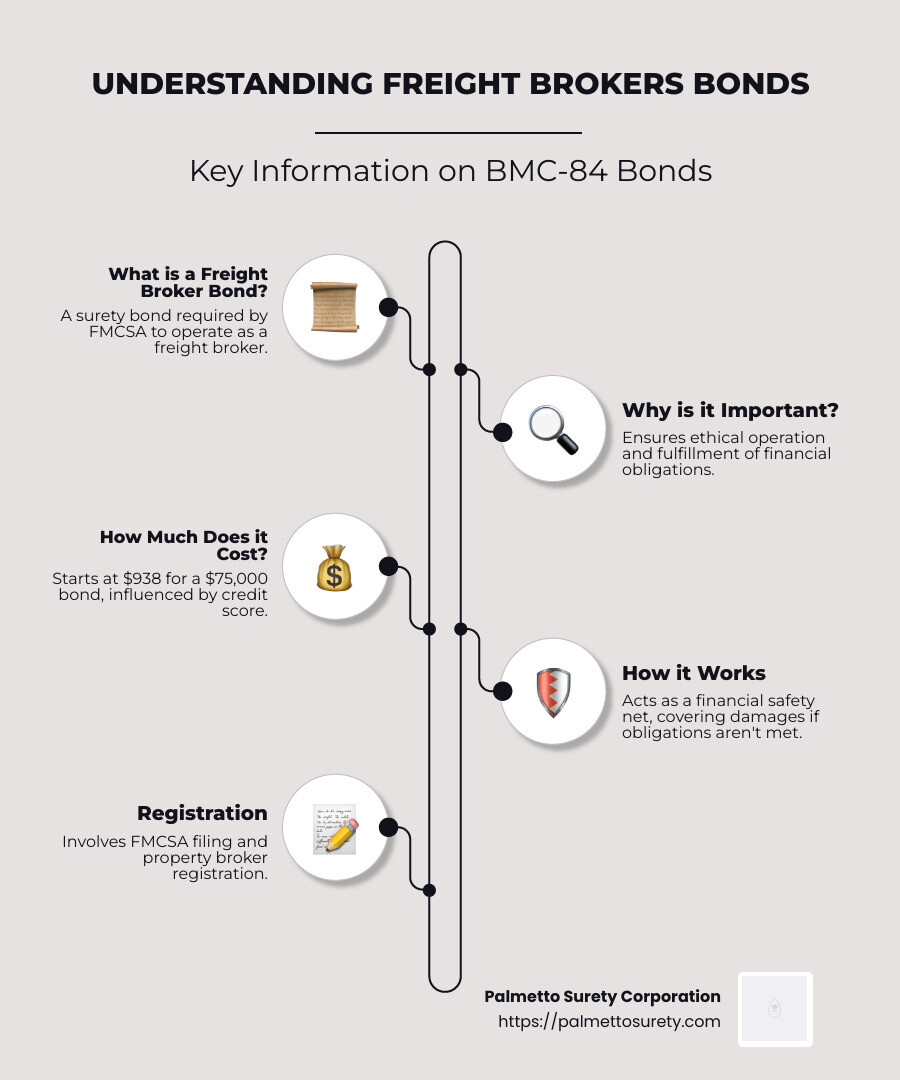
Understanding Freight Brokers Bonds
Freight brokers bonds, also known as BMC-84 bonds, are a cornerstone of the freight brokerage industry. These bonds are not just a formality; they are a legal requirement set by the FMCSA (Federal Motor Carrier Safety Administration).
The $75,000 Requirement
In 2013, the MAP-21 bill mandated that all freight brokers must secure a $75,000 surety bond. This was a significant increase from the previous $10,000 requirement. The purpose of this increase was to ensure that brokers have a stronger financial backing, providing greater protection to shippers and carriers.
This bond amount acts as a safety net, ensuring that brokers fulfill their financial obligations. If a broker fails to pay shippers or carriers, the bond can cover these payments, up to the $75,000 limit. This not only protects the parties involved but also encourages ethical business practices within the industry.
The Role of the MAP-21 Bill
The MAP-21 bill, which stands for “Moving Ahead for Progress in the 21st Century,” was a significant piece of legislation impacting the transportation sector. Among its many provisions, it sought to bolster the integrity and reliability of freight brokers by increasing the bond requirement. This change was crucial in reducing fraud and ensuring that brokers are financially accountable.
Why BMC-84 Bonds Matter
The BMC-84 bond is more than just a regulatory hurdle. It’s a guarantee that brokers will conduct their operations ethically and responsibly. By holding a bond, brokers demonstrate their commitment to fulfilling contracts and protecting the interests of shippers and carriers.

For new brokers entering the industry, understanding the importance of these bonds is vital. Not only do they ensure compliance with FMCSA regulations, but they also build trust with partners and clients. In a competitive market, having a BMC-84 bond can be a decisive factor in securing business.
In summary, freight brokers bonds are indispensable in maintaining the integrity and smooth functioning of the freight brokerage industry. They provide assurance and protection, making them a fundamental aspect of any broker’s operations.
How Freight Brokers Bonds Work
Freight brokers bonds play a vital role in the logistics industry by guaranteeing duties, providing financial protection, and ensuring compliance.
Guarantee Duties
At their core, freight brokers bonds serve as a promise that brokers will fulfill their financial obligations. When a broker enters into a contract with shippers or carriers, they are expected to pay for services rendered. If a broker fails to do so, the bond acts as a safety net. The surety company behind the bond can cover unpaid amounts, up to the bond’s $75,000 limit. This guarantees that shippers and carriers receive what they’re owed, maintaining trust in the system.
Financial Protection
The financial protection offered by these bonds is twofold. First, it safeguards shippers and carriers from potential financial losses due to non-payment. Second, it shields the brokerage industry from unethical practices. By requiring brokers to secure a bond, the FMCSA ensures that only financially responsible entities operate in the market. This reduces the risk of fraud and promotes fair business practices.
Compliance
Compliance with FMCSA regulations is non-negotiable for freight brokers. A BMC-84 bond is a mandatory requirement for obtaining and maintaining a brokerage license. This bond is a testament to a broker’s commitment to adhering to industry standards and legal obligations. Without it, a broker cannot legally operate, underscoring its importance in the regulatory framework.
For brokers, understanding how these bonds work is crucial. They are not just a financial instrument but a key component of legal compliance and industry integrity. By securing a freight brokers bond, brokers affirm their dedication to ethical practices, financial responsibility, and the overall health of the freight brokerage sector.
Obtaining a Freight Broker Bond
Getting a freight broker bond is an essential step in becoming a licensed freight broker. Here’s a simple guide to navigating the process.
Application Process
The application for a freight broker bond begins with choosing a surety bond provider. Companies like Palmetto Surety Corporation offer a streamlined process. You can apply online, providing basic information about your business and financial standing. The surety company evaluates your application to determine your premium, which is a percentage of the $75,000 bond amount.
MC Number
An MC number, or Motor Carrier number, is crucial for your freight brokerage. It’s issued by the FMCSA and is part of your business identity in the logistics world. To get this number, you must file an OP-1 form with the FMCSA. This form registers you as a motor property carrier and broker. Expect the processing to take about 4-6 weeks.
FMCSA Registration
Registering with the FMCSA is a must for all freight brokers. This federal body oversees the safety and compliance of commercial motor vehicles. Once you have your MC number, you need to provide proof of your BMC-84 bond. The FMCSA requires this bond to ensure that you will meet your financial obligations to shippers and carriers.
After submitting your bond and other required documents, you’ll also need to file a BOC-3 form. This form designates a process agent in each state you operate in, which is part of maintaining legal compliance.
With these steps completed, your registration with the FMCSA will be processed, and you’ll be ready to legally operate as a freight broker. This process ensures that only qualified and financially responsible brokers enter the market, maintaining integrity and trust in the logistics industry.
Cost of Freight Brokers Bonds
When it comes to the cost of freight brokers bonds, several factors come into play. Understanding these can help you plan and budget effectively.
Pricing Factors
The cost of a freight broker bond isn’t fixed. It’s based on a percentage of the $75,000 bond amount. This percentage, known as the premium, can range from as low as 1.25% to as high as 12.5% annually. This means you could pay between $938 and $9,375 each year.
Several elements influence where you fall within this range:
-
Credit Score: Your personal and business credit scores significantly impact your bond premium. A higher credit score usually means a lower premium. This is because surety companies view those with good credit as lower-risk clients.
-
Business Experience: If you’ve been in the freight brokerage business for a while, you’re likely to get a better rate. Experience suggests stability and reliability, which surety companies favor.
-
Financial Standing: While some companies require detailed financial records, others, like Palmetto Surety Corporation, do not. They offer competitive rates without demanding extensive financial documentation.
Credit Score
Your credit score is a crucial factor in determining your bond premium. A score of 700 or above can secure you the lowest rates. If your score is lower, don’t worry. There are options available to help you get bonded.
- Bad Credit Solutions: Some surety companies specialize in helping those with less-than-perfect credit. They might offer higher premiums but can provide the bond you need to operate legally.
Financing Options
For those facing higher premiums, financing options can make the cost more manageable. This is especially helpful for new businesses that might not have the upfront cash to cover a high premium.
-
Payment Plans: Some providers offer payment plans, allowing you to spread the cost over several months. This can ease the financial burden and help you maintain cash flow.
-
Flexible Terms: Look for surety companies that offer flexible financing terms. This can include adjusting payment schedules to align with your business’s income cycle.
In summary, the cost of freight brokers bonds varies based on credit score, business experience, and financial standing. By understanding these factors and exploring financing options, you can find a bond solution that fits your needs.
Frequently Asked Questions about Freight Brokers Bonds
How does a freight broker bond work?
A freight broker bond is essentially a promise. It’s a guarantee that freight brokers will fulfill their duties and adhere to the rules set by the Federal Motor Carrier Safety Administration (FMCSA). If a broker fails to meet their obligations, harmed parties can file a claim against the bond. The surety company then investigates and, if the claim is valid, pays up to the bond amount.
This protection is crucial for ensuring trust and reliability in the freight industry. The bond acts as a safety net, providing financial protection to shippers and carriers if a broker fails to pay freight charges or otherwise violates regulations.
What is a BMC 84 freight broker bond?
The BMC 84 bond is a specific type of freight broker bond required by the FMCSA. It’s a $75,000 surety bond that brokers must file to get and maintain their property broker registration. This bond is a key part of the Moving Ahead for Progress in the 21st Century Act (MAP-21), which aims to improve safety and accountability in the transportation sector.
Filing a BMC 84 bond with the FMCSA is a critical step in becoming a licensed freight broker. Once filed, it assures business partners that the broker has the financial backing to cover potential claims.
How much is a BMC 84 bond?
The cost of a BMC 84 bond isn’t a flat rate. Instead, it’s calculated as a percentage of the $75,000 bond amount. This percentage is influenced by various factors, primarily:
-
Credit Score: A higher credit score can significantly reduce your bond premium. For example, applicants with excellent credit might pay as little as 1.25% of the bond amount, translating to about $938 annually.
-
Business Experience: Seasoned brokers often enjoy lower premiums due to their established track record and perceived lower risk.
-
Financial Standing: While some companies require detailed financial documentation, others, like Palmetto Surety Corporation, offer competitive rates without such demands.
For those with less-than-perfect credit, options are available. Some surety companies specialize in providing bonds to applicants with lower credit scores, though this usually results in a higher premium. Exploring these options can help ensure you meet the FMCSA’s bonding requirements without breaking the bank.
Conclusion
At Palmetto Surety Corporation, we understand how critical freight broker bonds are to the transportation industry. These bonds not only ensure compliance with FMCSA regulations but also build trust with shippers and carriers.
We pride ourselves on our quick approval process. In most cases, we can approve applications within hours. This means you can get your bond fast and start your business operations without unnecessary delays. Our efficient service allows you to focus on what you do best—connecting shippers and carriers—while we handle the bonding process with expertise and care.
Our team is dedicated to providing personalized support, ensuring you understand each step of obtaining your bond. We offer competitive rates that cater to a wide range of credit scores, making it easier for you to meet the $75,000 bond requirement without financial strain.
With locations in Georgia, Florida, Louisiana, Mississippi, South Carolina, Tennessee, and Texas, we are well-positioned to serve freight brokers across the southeastern United States. Our commitment to ethical business practices and transparency ensures you receive reliable service every time.
Whether you’re a seasoned broker or new to the industry, Palmetto Surety Corporation is here to support your journey. Trust us to deliver the bonding solutions you need to succeed.


