


What is a Contractors License Bond: Top 3 Powerful Reasons
What is a contractors license bond? At its core, a contractor’s license bond is a type of surety bond required for contractors to secure a license and legally work on project contracts. These bonds serve as financial guarantees that a contractor will abide by the rules and obligations of their license and fulfill their contractual duties. Here’s a quick breakdown:
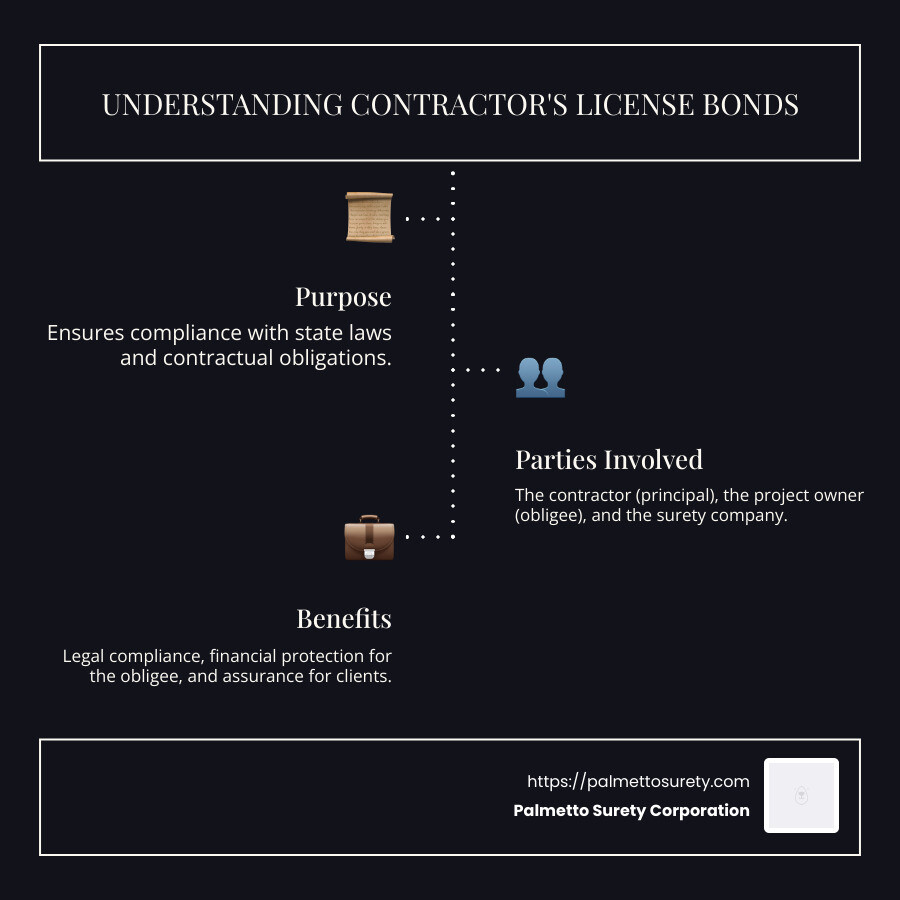
- Purpose: Ensures compliance with state laws and contractual obligations.
- Parties Involved: The contractor (principal), the project owner (obligee), and the surety company.
- Benefits: Legal compliance, financial protection for the obligee, and assurance for clients.
Understanding the intricacies of a contractor license bond is crucial for anyone in a contracting business. It provides surety to clients and project owners that the contractor is qualified and financially capable of completing projects. This bond safeguards against potential financial losses and improves trust in the contractor’s reliability.
I’m Haiko de Poel Jr, an expert in surety bonds, guiding businesses through the complexities of what is a contractors license bond. With years of experience in branding and changing companies like Palmetto Surety Corporation, I ensure businesses confidently meet their bonding needs.
What is a contractors license bond terms to remember:
– what is licensed and bonded contractor
– how to become licensed and bonded contractor
– how to get bonded contractor
What is a Contractor’s License Bond?
A contractor’s license bond is a legal requirement for contractors aiming to secure a license to work on projects. This bond acts as a financial guarantee that the contractor will adhere to state laws and fulfill contractual obligations. Let’s break down its key components and how it works.
Key Components of a Contractor’s License Bond
- Principal: The contractor who needs the bond to obtain a license and legally operate.
- Obligee: The party requiring the bond, usually a state or local government agency, to ensure compliance and protect public interests.
- Surety: The insurance company that issues the bond, providing a financial guarantee to the obligee.
These three parties form a tripartite agreement to ensure the contractor meets all legal and contractual requirements.
How Contractor’s License Bonds Work
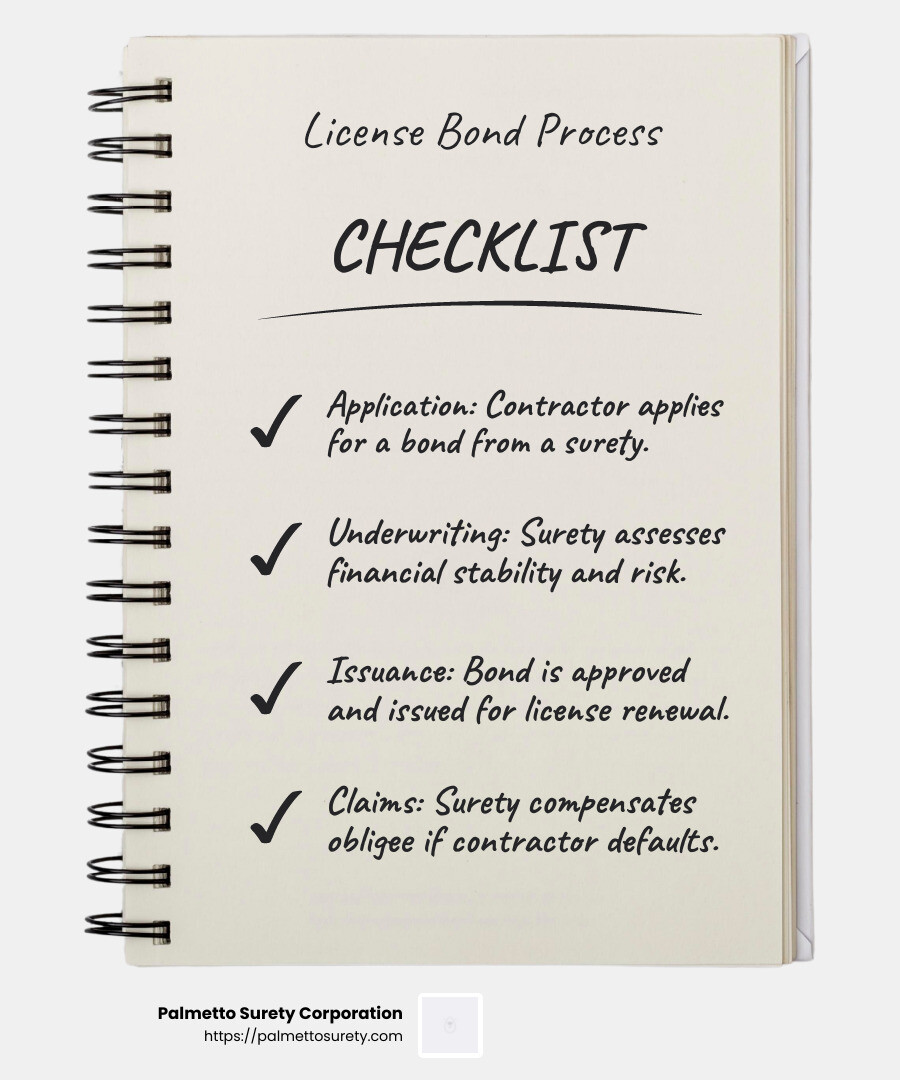
The process of obtaining a contractor’s license bond involves several steps:
- Application: The contractor applies for a bond from a surety company.
- Underwriting: The surety assesses the contractor’s financial stability, credit history, and business experience to determine the risk involved.
- Issuance: If approved, the bond is issued, allowing the contractor to obtain or renew their license.
In case the contractor fails to comply with the terms of the bond, the obligee can file a claim. The surety investigates the claim and, if valid, compensates the obligee up to the bond amount. The contractor is then responsible for reimbursing the surety for any payouts made.

This bond not only ensures legal compliance but also builds trust with clients by providing financial protection against potential losses. Understanding these components and processes helps contractors steer the complexities of their licensing requirements efficiently.
Types of Contractor Bonds
Contractor bonds come in several forms, each serving a distinct purpose in the construction and contracting world. Understanding these bonds is crucial for contractors to ensure compliance and protect all parties involved in a project. Here, we’ll explore bid bonds, performance bonds, and payment bonds.
Bid Bonds
Definition: A bid bond is a type of surety bond required during the bidding process for a construction project. It guarantees that the contractor will enter into the contract at the bid price if awarded the project.
Purpose: The primary purpose of a bid bond is to protect the project owner by ensuring that the chosen contractor will honor their bid and proceed with the contract. It discourages frivolous bids and ensures that only serious contractors participate in the bidding process.
Process:
– Submission: Contractors submit a bid bond along with their bid proposal.
– Evaluation: The project owner evaluates all bids, knowing that each is backed by a financial guarantee.
– Award: If the contractor wins the bid but fails to honor the contract terms, the obligee can claim the bond to recover the difference between the defaulted bid and the next lowest bid.
Performance Bonds
Definition: A performance bond is a surety bond issued to guarantee satisfactory completion of a project by a contractor.
Purpose: This bond protects the project owner from financial losses if the contractor fails to complete the project as per the contract terms. It ensures that the work will meet the specified standards and deadlines.
Process:
– Issuance: Once a contractor is awarded a project, they must secure a performance bond.
– Execution: The bond remains in place throughout the project duration.
– Claim: If the contractor defaults or performs inadequately, the project owner can claim the bond. The surety then steps in to either complete the project or compensate the owner for losses.
Payment Bonds
Definition: A payment bond is a type of surety bond that guarantees subcontractors and suppliers will be paid for their work and materials.
Purpose: Payment bonds ensure that everyone involved in the project receives payment, preventing liens on the property and disputes that can delay project completion.
Process:
– Requirement: Contractors must secure a payment bond before starting the project.
– Coverage: The bond covers payments to all subcontractors and suppliers.
– Claims: If the contractor fails to pay, affected parties can file a claim against the bond to receive compensation.
These bonds not only protect project owners and subcontractors but also improve a contractor’s credibility. By understanding these bonds, contractors can better steer the complexities of construction projects and build trust with clients and partners.
Why You Need a Contractor’s License Bond
Contractor’s license bonds are more than just a formality—they’re essential for operating legally and successfully in the construction industry. Here’s why they’re crucial:
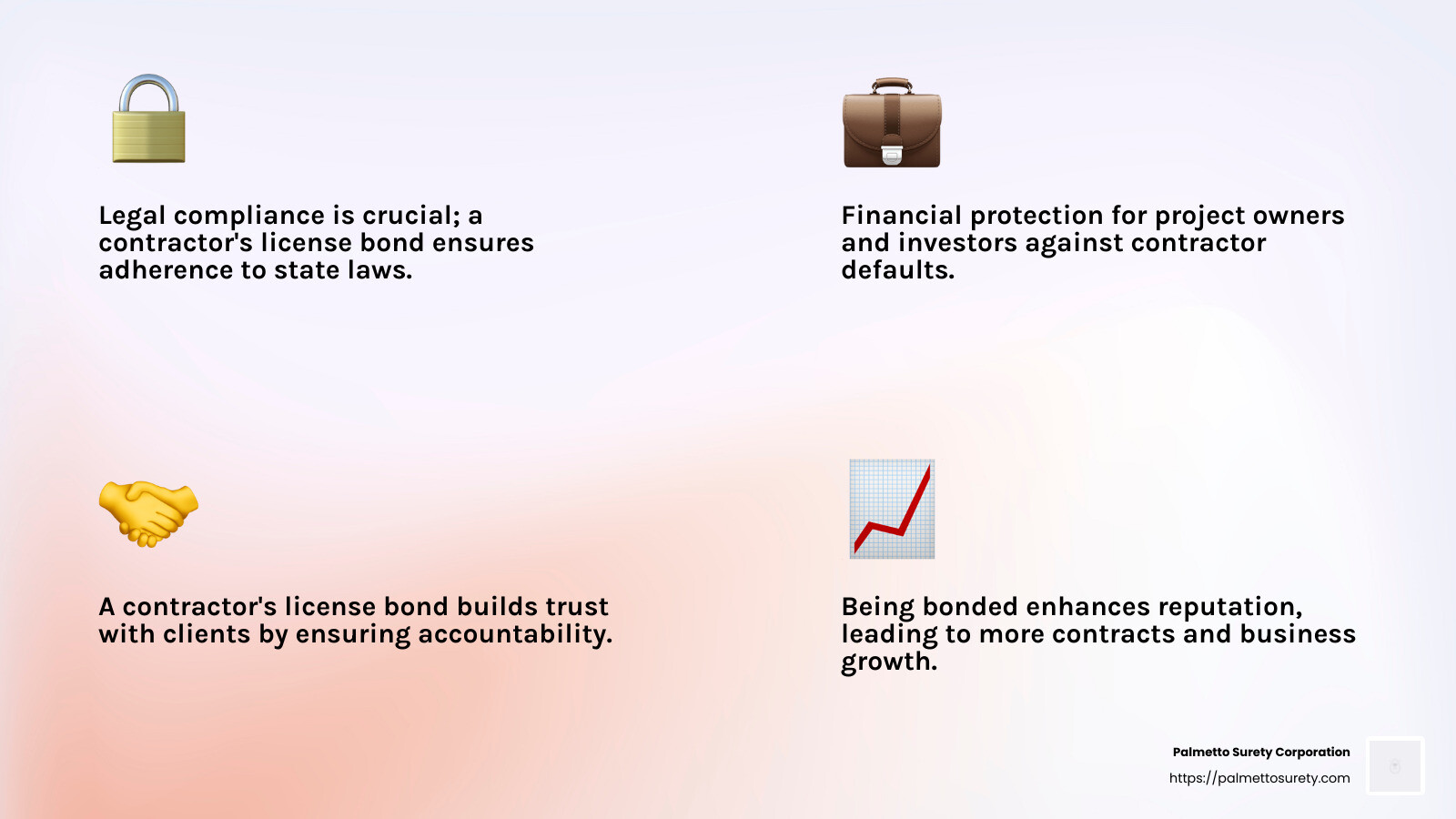
Legal Compliance
State Laws and Regulations
In states like Tennessee, obtaining a contractor’s license bond is often a legal requirement. This bond ensures that contractors adhere to state laws and regulations. For example, the Tennessee Department of Commerce and Insurance mandates that contractors working on projects valued at $25,000 or more must have a contractor’s license bond. This helps maintain industry standards and ensures that contractors are financially accountable.
Licensing Criteria
A contractor’s license bond is part of the licensing process. Without it, you can’t legally bid on or work on certain projects. This bond demonstrates that you meet the financial and legal criteria set by the state, enabling you to operate within the law.
Financial Protection
Project Owners and Taxpayers
A contractor’s license bond serves as a financial safeguard for project owners, taxpayers, and investors. If a contractor fails to complete a project or violates a contract, the bond provides financial compensation to cover losses. This protection is crucial for public and private projects alike, ensuring that funds are not wasted and projects are completed as promised.
Investors
For investors, a contractor’s license bond is a sign of reliability. It reassures them that their investment is protected against potential contractor defaults, making it easier to secure funding for projects.
Trust-Building
Customer Confidence
Having a contractor’s license bond builds trust with clients. It shows that you are committed to quality and accountability. Clients are more likely to choose contractors who are bonded because it provides them with peace of mind that they are working with a reputable professional.
Reputation and Business Growth
Being bonded can significantly improve your reputation. It sets you apart from unbonded contractors and positions your business as credible and trustworthy. This can lead to more contracts, referrals, and ultimately, business growth.
In short, a contractor’s license bond is a vital tool for legal compliance, financial protection, and trust-building. It not only protects all parties involved but also helps contractors grow their businesses by establishing a strong reputation in the industry.
How Much Does a Contractor’s License Bond Cost?
Understanding the cost of a contractor’s license bond is crucial for budgeting and planning. Here’s a breakdown of the factors that influence the cost, how risk is assessed, and what typical premium rates look like.
Cost Factors
The cost of a contractor’s license bond is primarily determined by several key factors:
-
Bond Amount: This is the total value of the bond that the contractor must secure. In Tennessee, for example, a contractor might need a $500,000 bond for projects under $3 million.
-
Credit Score: A contractor’s personal and business credit scores play a significant role in determining the bond cost. A higher credit score can often result in lower premium rates.
-
Business History: A well-established business with a solid track record may qualify for lower rates compared to a new or struggling business.
Risk Assessment
Risk assessment is a critical part of the bonding process. Here’s how it works:
-
Underwriting: This is the process where the surety (insurance company) evaluates the contractor’s creditworthiness and financial stability. The surety will look at factors like credit score, business history, and any past bond claims.
-
High-Risk vs. Low-Risk: Contractors deemed high-risk, perhaps due to poor credit or a history of claims, will likely face higher premiums. Conversely, low-risk contractors with strong financials and a clean claims history can expect lower costs.
Premium Rates
Premium rates for contractor’s license bonds typically range from 0.5% to 5% of the bond amount. Here’s what to expect:
-
Percentage Range: Most contractors will pay between 1% and 3% of the bond amount. For a $500,000 bond, this means costs could range from $5,000 to $15,000.
-
Typical Costs: For contractors with excellent credit, the cost might be as low as 0.5%. On the other hand, contractors with lower credit scores might pay closer to 5%.
-
Examples: If a contractor with good credit needs a $50,000 bond, they might pay $250 at a 0.5% rate. However, if the rate is 2%, the cost would rise to $1,000.
In summary, the cost of a contractor’s license bond varies based on several factors, including the bond amount, credit score, and business history. Understanding these elements can help contractors better prepare for the financial commitment involved in securing a bond.
Frequently Asked Questions about Contractor’s License Bonds
What are the three types of bonds that can be required from a contractor?
Contractors often need to secure different types of bonds to ensure compliance and project fulfillment. Here are the three main types:
-
Bid Bonds: These bonds are submitted with a contractor’s bid for a project. They guarantee that if the contractor wins the bid, they will enter into a contract and provide the necessary performance and payment bonds. Bid bonds protect the project owner from financial loss if a contractor fails to honor their bid.
-
Performance Bonds: Once a contractor is awarded a project, a performance bond is necessary. It ensures that the contractor will complete the project according to the contract terms. If the contractor fails to deliver, the bond compensates the project owner, covering any additional costs to complete the work.
-
Payment Bonds: These bonds guarantee that the contractor will pay their workers, subcontractors, and suppliers. Payment bonds protect these parties from non-payment, ensuring everyone involved in the project gets paid for their services and materials.
What is a California Contractors License Bond?
In California, a Contractors License Bond is a legal requirement for obtaining a contractor’s license. This bond serves several purposes:
-
Public Protection: It protects the public from potential damages caused by a contractor’s violation of licensing laws. If a contractor fails to adhere to the rules, the bond compensates the affected party, up to the bond amount.
-
Financial Loss: The bond safeguards against financial loss due to a contractor’s failure to complete a project or meet contractual obligations. It’s a safety net that assures clients and the state that contractors will perform their duties responsibly.
How much does a surety bond cost in Tennessee?
The cost of a surety bond in Tennessee varies based on several factors, including the contractor’s risk profile and the bond amount. Here’s a quick overview:
-
Cost Range: In Tennessee, typical bond premiums range from 0.5% to 5% of the bond amount. For a $500,000 bond, costs could be as low as $2,500 or as high as $25,000, depending on the contractor’s creditworthiness and business history.
-
Low-Risk Bonds: Contractors with strong financials and excellent credit scores can expect lower premium rates, often closer to the 0.5% mark.
-
High-Risk Bonds: Contractors with poor credit or a history of claims might face higher rates, potentially up to 5%. This reflects the increased risk perceived by the surety in underwriting the bond.
Understanding these aspects of contractor bonds can help you steer the requirements and costs associated with securing the necessary bonds for your business.
Conclusion
In summary, contractor license bonds are essential tools for ensuring that construction projects run smoothly and legally. They serve as a financial safety net, protecting project owners, workers, and the public from potential risks associated with construction contracts. By requiring these bonds, states and local governments ensure that contractors meet their obligations and maintain high standards of professionalism and reliability.
The importance of contractor license bonds cannot be overstated. They not only provide legal compliance and financial protection but also build trust between contractors and their clients. This trust is crucial for business growth and establishing a solid reputation in the industry.
At Palmetto Surety Corporation, we understand the complexities and requirements of securing contractor license bonds. With over 20 years of experience, we specialize in providing quick and efficient service to meet the needs of contractors across various industries. Our expertise ensures that you can focus on what you do best—completing projects to the highest standards—while we handle your bonding needs.
For more information on how Palmetto Surety Corporation can help you with your contractor license bond requirements, visit our service page today.


