How to check if a contractor is licensed and bonded: Top Tips 2024
How to check if a contractor is licensed and bonded can seem daunting, but protecting your investment and avoiding potential headaches is crucial.
Quick Answer:
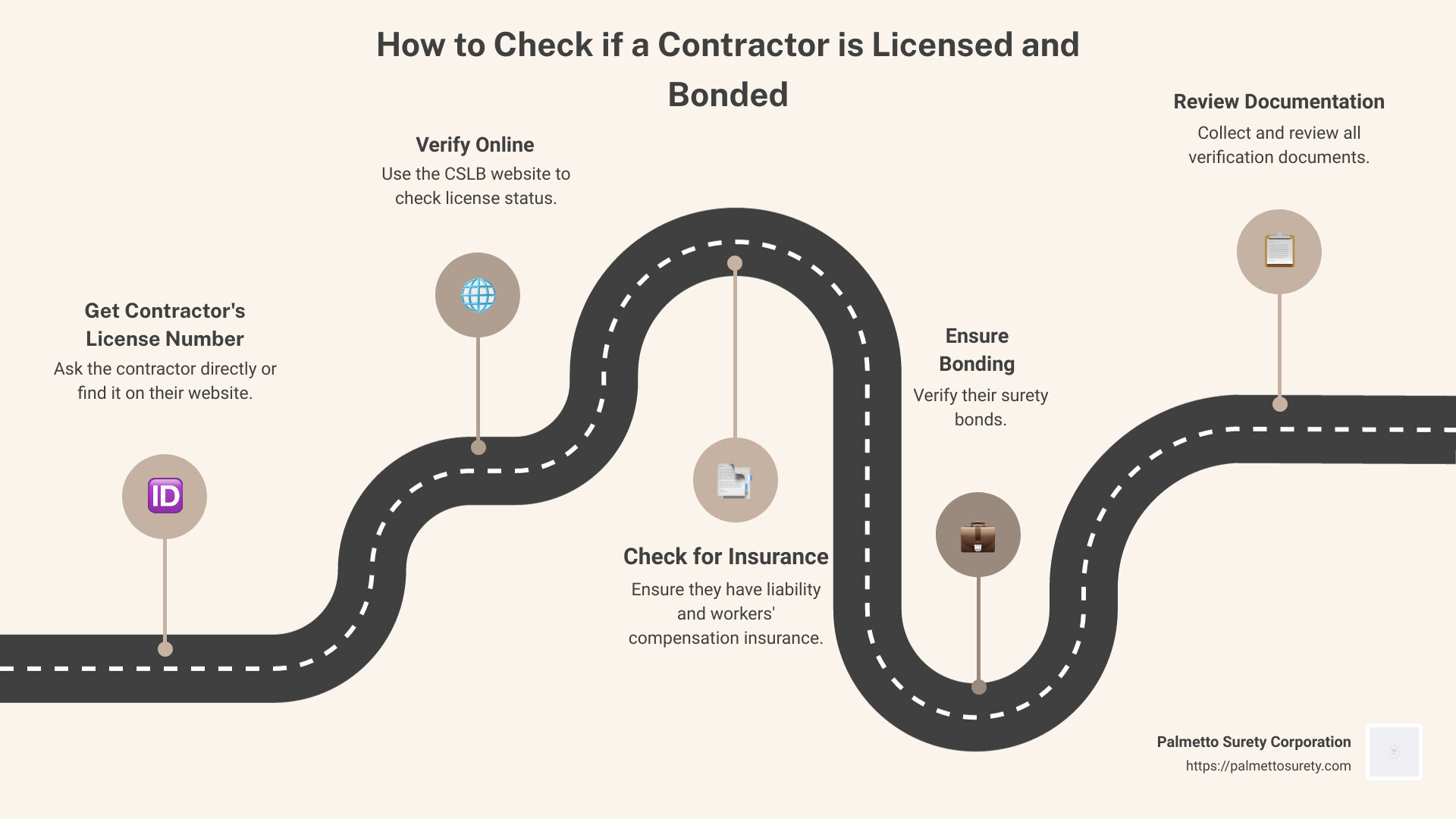
- Get Contractor’s License Number: Ask the contractor directly or find it on their website.
- Verify Online: Use the Contractor State License Board (CSLB) website to check license status.
- Check for Insurance: Ensure they have liability and workers’ compensation insurance.
- Ensure Bonding: Verify their surety bonds.
Choosing the right contractor is vital, especially when faced with roughly 300,000 licensed and countless unlicensed contractors in California alone. Hiring a licensed contractor offers numerous benefits, including legal recourse if something goes wrong. On the flip side, hiring an unlicensed contractor can leave you with little to no protection.
Imagine starting a home renovation project with an unlicensed contractor. Midway through, you notice significant mistakes. Without a license, the Contractor State License Board (CSLB) can’t help, leaving you to either negotiate directly or take costly legal actions. This highlights the critical importance of working with licensed professionals.
My name is Haiko de Poel Jr. With experience in marketing, branding, and innovation, I’ve helped companies like Palmetto Surety Corporation steer complex markets. I aim to simplify the process of how to check if a contractor is licensed and bonded so you can avoid unnecessary risks.
Why Hiring a Licensed and Bonded Contractor is Important
When hiring a contractor, choose someone who is both licensed and bonded. This provides you with legal recourse, insurance coverage, and financial protection. Let’s break down why these elements matter so much.
Legal Recourse
Hiring a licensed contractor ensures you have a path for legal recourse if things go wrong. In California, for instance, all contractors working on projects valued at $500 or more must be licensed by the Contractors State License Board. This means they meet specific standards of professionalism and expertise.
Imagine hiring an unlicensed contractor for a bathroom remodel. If they botch the job, you have little to no legal standing to demand repairs or compensation. But with a licensed contractor, you can file a complaint with the CSLB, which can impose penalties or even revoke their license.

Insurance Coverage
A licensed contractor is more likely to carry necessary insurance, such as general liability and workers’ compensation insurance. This is crucial for protecting you from unforeseen events.
General Liability Insurance: This covers any damage the contractor might cause to your property. Without it, you might end up footing the bill for repairs.
Workers’ Compensation Insurance: If a worker gets injured on your property, this insurance covers their medical expenses and lost wages. Without it, you could be held financially responsible.
“If a worker is injured working on your property and the contractor doesn’t have insurance, you could be financially liable to pay for injuries and rehabilitation.” (CSLB)
Financial Protection
Being bonded means the contractor has secured a surety bond. This is a type of insurance that protects you if the contractor fails to complete the job or meet other financial obligations.
In California, licensed contractors must hold a $25,000 surety bond. This bond acts as a financial safety net, ensuring you get compensated up to this amount if the contractor breaches the contract.
Types of Bonds:
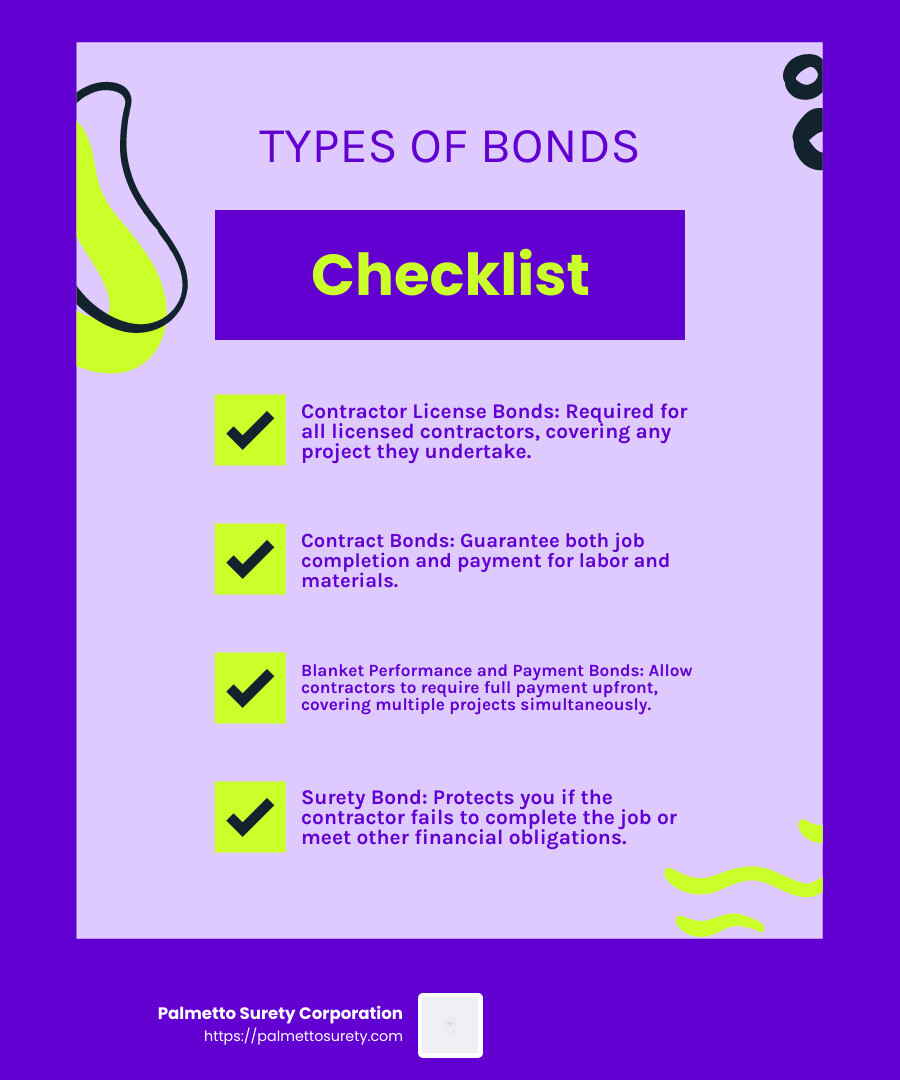
- Contractor License Bonds: Required for all licensed contractors, covering any project they undertake.
- Contract Bonds: Guarantee both job completion and payment for labor and materials.
- Blanket Performance and Payment Bonds: Allow contractors to require full payment upfront, covering multiple projects simultaneously.
Next up: Let’s explore how to verify if a contractor is licensed and bonded, step-by-step.
How to Check if a Contractor is Licensed and Bonded
Step 1: Obtain the Contractor’s License Number
The first step in verifying a contractor’s credentials is to get their license number. You can usually find this on the contractor’s website or business card. If it’s not readily available, ask the contractor directly. A reputable contractor will provide this information without hesitation.
Red Flags: If a contractor is unwilling or unable to provide their license number, consider it a red flag. This could indicate they are not licensed or are hiding something.
Step 2: Verify the License Online
Once you have the license number, the next step is to verify it online. In California, this can be done through the CSLB License Check Page.
Steps to Verify:
1. Go to the CSLB License Check Page.
2. Enter the contractor’s license number or their name and other identifying information.
3. Verify that their license is active and in good standing.
It’s important to ensure that the license is not only valid but also appropriate for the type of work they will be performing. Different types of work may require different licenses. For example, a contractor licensed for electrical work may not be licensed for plumbing.
Step 3: Verify Insurance Coverage
Insurance is a critical component of a contractor’s credentials. There are two main types of insurance you need to check:
General Liability Insurance: This covers any damage the contractor might cause to your property. Ask for proof of insurance and contact the insurance company to verify coverage.
Workers’ Compensation Insurance: This covers medical expenses and lost wages if a worker is injured on the job. Again, ask for proof and verify with the insurance provider.
Beware of Fraudulent Insurance: There have been cases of contractors presenting fake insurance documents. Always follow up directly with the insurance company to confirm the coverage is real and current.
Step 4: Check Contractor Bonds
A bond is a type of insurance that provides financial protection if the contractor fails to complete the job or meet other obligations. In California, contractors must hold a $25,000 surety bond to be licensed.
Types of Bonds:
- Contractor License Bonds: These are required for all licensed contractors and ensure they comply with state laws and regulations.
- Contract Bonds: These bonds guarantee both job completion and payment for labor and materials.
- Blanket Performance and Payment Bonds: These allow contractors to cover multiple projects simultaneously and require full payment upfront.
To verify a contractor’s bond, ask for their bond information and contact the bond company to ensure it is valid and in good standing.
“While no contractor can obtain a CSLB license without proof of a $25,000 surety bond, it is still possible for a contractor to cancel their bond after getting their license.”
By following these steps, you can ensure that your contractor is both licensed and bonded, providing you with the legal recourse, insurance coverage, and financial protection you need.
Next up: Let’s explore additional tips for hiring a reliable contractor.
Additional Tips for Hiring a Reliable Contractor
Shop Around and Compare Bids
When starting on a home improvement project, it’s crucial to get at least three written bids. This helps you understand the market rate and ensures you’re getting a fair deal.
- Identical Plans: Make sure all contractors are bidding on the same scope of work. This means the plans and specifications should be identical for each bid. This allows for an apples-to-apples comparison.
- Beware of Low Bids: A significantly lower bid might seem like a bargain, but it can be a red flag. It might indicate that the contractor made a mistake, is planning to cut corners, or might not include all necessary work. This could lead to disputes or substandard work.
Tip: Always ask contractors to break down their bids into labor, materials, and other costs. This helps you understand where the money is going and spot any discrepancies.
Ask for Personal Recommendations
Personal recommendations can be invaluable when selecting a contractor. Friends and family who have had similar projects completed can provide honest feedback.
- Local References: Besides friends and family, ask the contractor for local references. Contact these references to ask about their experience.
- Better Business Bureau: Check the contractor’s rating and reviews on the Better Business Bureau. This can provide insight into their reliability and quality of work.
Quote: “If they are satisfied with the results, chances are you will be, too.”
Verify Business Location and Contact Information
A reliable contractor should have a permanent business address and a telephone number.
- Current Address: Make sure the contractor has a current business address. This information can usually be found on their business card, website, or when you look up their license status.
- Telephone Number: Verify that they have a landline or a permanent phone number.
Red Flag: Be cautious of contractors who operate solely from a mobile phone or the back of a pickup truck. They might be difficult to find if issues arise after the project is completed.
By following these steps, you can significantly reduce the risk of hiring an unreliable contractor. Always remember, due diligence is key to a successful home improvement project.
Next up: Let’s explore frequently asked questions about contractor licensing and bonding.
Frequently Asked Questions about Contractor Licensing and Bonding
How to Check if a Contractor is Licensed and Bonded in California?
Step 1: Obtain the Contractor’s License Number
First, ask the contractor for their CSLB (California Contractors State License Board) license number. Any reputable contractor should readily provide this information.
Step 2: Verify the License Online
Visit the CSLB License Check Page. Enter the contractor’s license number to verify their status. This tool will show if the license is active and in good standing, as well as any disciplinary actions.
Step 3: Verify Insurance Coverage
Ensure the contractor has general liability insurance and workers’ compensation insurance. This protects you from potential liabilities. Ask for proof of insurance and verify it with the insurance provider.
Step 4: Check Contractor Bonds
California requires contractors to have a $25,000 surety bond. On the CSLB License Check Page, you can also see if the contractor’s bond is active. For added assurance, request the bond information directly from the contractor and cross-check it with the bond company.
How to Check if a Contractor is Licensed and Bonded in Texas?
Step 1: Use the Uhire Professional License Search Tool
Texas provides the Uhire Professional License Search tool. You can search by the contractor’s name, license number, or location to verify their licensing status.
Step 2: Verify Insurance Coverage
Ask the contractor for proof of general liability and workers’ compensation insurance. Verify these documents with the insurance company to ensure they are current and valid.
Step 3: Check Contractor Bonds
In Texas, some contractors might be required to have specific bonds. Ask the contractor for their bond details and confirm with the bond issuer to ensure it’s active and valid.
How to Check if a Contractor is Licensed and Bonded in New York?
Step 1: Contact the Secretary of State’s Office
In New York, contractor licensing is often managed at the local level. Start by contacting the New York Secretary of State’s office or your local licensing authority to verify the contractor’s license.
Step 2: Use the State License Board
Some areas may have a state license board where you can perform a business search. Provide the contractor’s name or license number to verify their licensing status.
Step 3: Verify Insurance Coverage
Request proof of general liability and workers’ compensation insurance from the contractor. Confirm the insurance details with the provider to ensure they are up-to-date.
Step 4: Check Contractor Bonds
Ask the contractor for information on any required bonds. Verify these bonds with the issuing company to ensure they are current and valid.
By following these steps, you can confidently verify a contractor’s licensing and bonding status, ensuring they are qualified and trustworthy for your project.
Next up: Let’s explore frequently asked questions about contractor licensing and bonding in more detail.
Conclusion
Doing your due diligence when hiring a contractor is crucial. Ensuring they are licensed and bonded not only protects you but also guarantees that the contractor meets professional and legal standards.
At Palmetto Surety Corporation, we understand the importance of quick and efficient service. We specialize in providing surety bonds for various industries, including construction, manufacturing, transportation, and healthcare. Our expertise allows us to approve most applications within hours, helping you get your projects started on time.
Why is due diligence important?
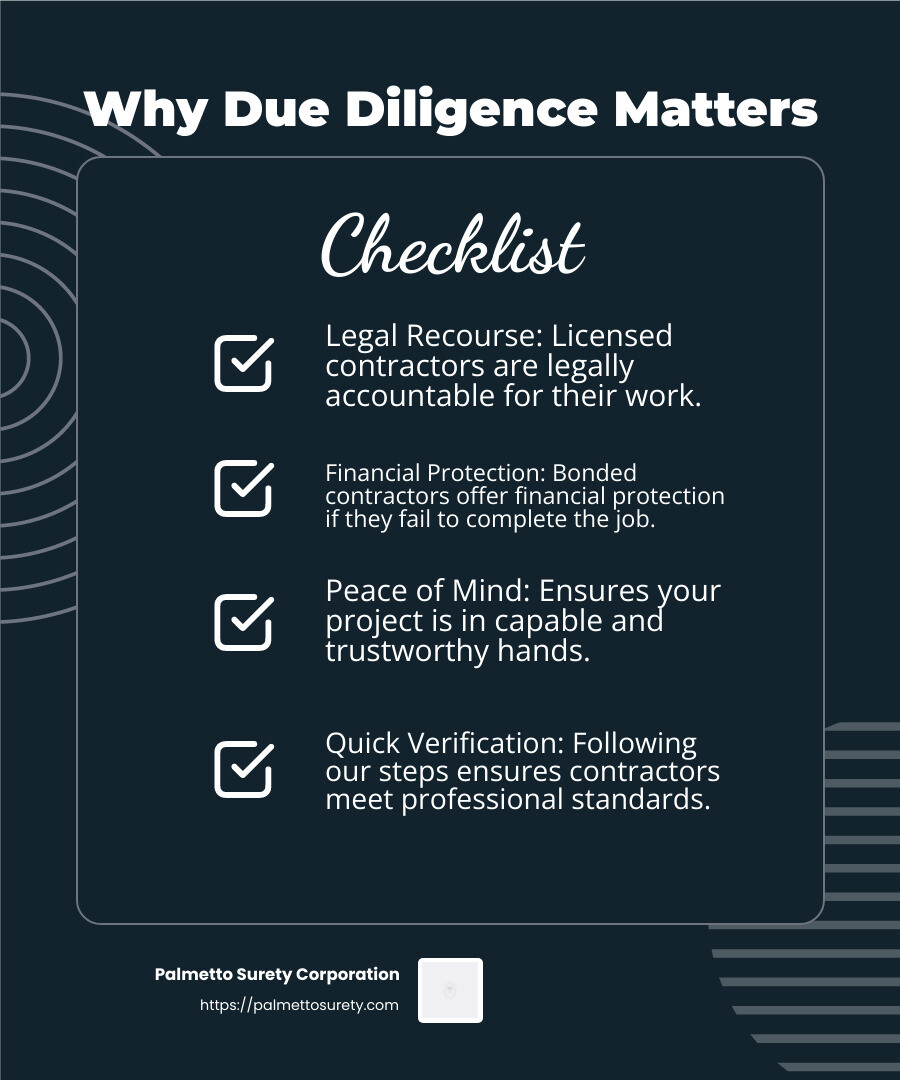
- Legal Recourse: A licensed contractor is legally accountable for their work. If something goes wrong, you have legal avenues to pursue.
- Financial Protection: A bonded contractor provides financial protection. If the contractor fails to complete the job or meet their obligations, the bond ensures you receive compensation.
- Peace of Mind: Knowing your contractor is both licensed and bonded gives you peace of mind, ensuring your project is in capable and trustworthy hands.
By following the steps outlined in this guide, you can confidently verify if a contractor is licensed and bonded, safeguarding your investments and ensuring your projects are completed to the highest standards.
For more information on how Palmetto Surety Corporation can assist you with your surety bond needs, visit our Surety Bond Service Page. We’re here to make the process seamless and efficient, so you can focus on what matters most—getting your project done right.