


License and Permit Bond Example: Top 4 Crucial Insights 2024
The Role of License and Permit Bonds in Business and Construction
If you’re looking for a clear license and permit bond example, here’s a quick answer:
- Contractor License Bond: Ensures construction companies meet legal standards and fulfill contractual obligations.
- Auto Dealer Bond: Protects customers from fraudulent dealerships.
- Mortgage Broker Bond: Guarantees financial compliance and protects clients.
- Freight Broker Bond: Ensures brokers operate ethically and in compliance with regulations.
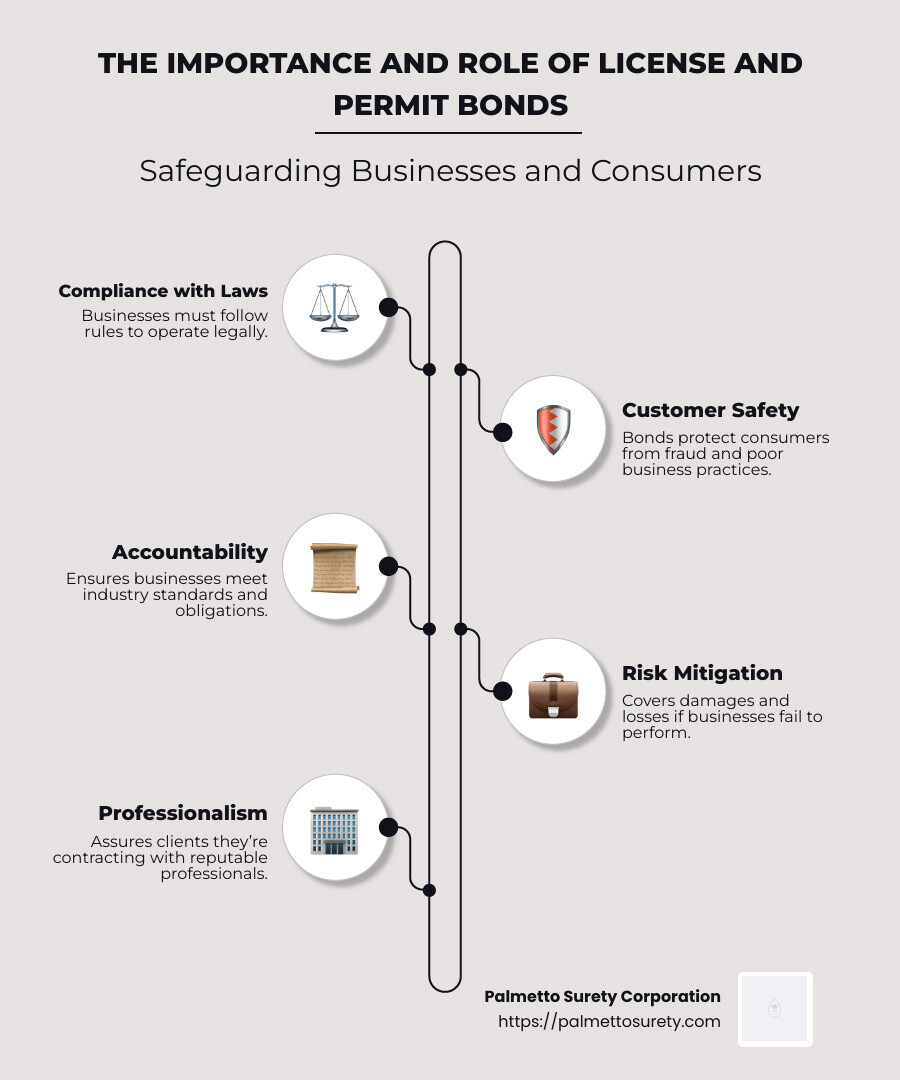
License and permit bonds are essential in many industries, from construction to auto sales. These bonds serve as financial guarantees ensuring businesses adhere to laws and regulations, protecting consumers and fostering trust. They help keep companies accountable and assure clients that they’re contracting with reputable professionals.
Here’s why they matter:
- Compliance with Laws: Businesses must follow rules to operate legally.
- Customer Safety: Bonds protect consumers from fraud and poor business practices.
- Accountability: Ensures businesses meet industry standards and obligations.
- Risk Mitigation: Covers damages and losses if businesses fail to perform.
My name is Haiko de Poel Jr, and I’ve spent years helping businesses understand and obtain license and permit bonds. My work at Palmetto Surety Corporation involves guiding companies through the complexities of surety bonds, ensuring they comply with legal standards and protect their clients.
A license and permit bond is a type of surety bond that provides a financial guarantee that a business will comply with local, state, and federal regulations. These bonds are often required before a business can obtain a license or permit to operate legally.
Purpose of License and Permit Bonds
The primary purpose of these bonds is to protect the public and government entities from financial loss due to a business’s failure to adhere to laws and regulations. They serve as a safeguard, ensuring that businesses operate ethically and responsibly.
Protection Offered by License and Permit Bonds
License and permit bonds protect various parties:

- Consumers: If a business fails to meet legal standards, consumers can make a claim against the bond to recover losses.
- Government Entities: Bonds ensure that businesses comply with regulations, reducing the risk of financial loss to public bodies.
For example, if a roofing contractor does subpar work that doesn’t meet local building codes, a client can file a claim on the contractor’s bond to cover the cost of repairs.
Ensuring Compliance
Businesses in many industries need these bonds to legally operate. Here’s how they ensure compliance:
- Legal Adherence: Bonds require businesses to follow all applicable laws and regulations.
- Professional Standards: They encourage businesses to meet industry standards, ensuring quality and reliability.
- Financial Accountability: If a business fails to comply, the bond provides a financial recourse for affected parties.

Real-World Example: Contractor License Bond
In the construction industry, a Contractor License Bond is a must-have. It ensures that contractors adhere to building codes and contractual obligations. If a contractor fails to complete a project or violates regulations, the bond compensates the client, covering financial losses.
Real-World Example: Auto Dealer Bond
An Auto Dealer Bond is crucial in the auto industry. It protects consumers from fraudulent activities by dealerships. If a dealer sells a defective car or engages in unethical practices, the bond provides financial protection to the affected customers.
Real-World Example: Mortgage Broker Bond
In the financial sector, a Mortgage Broker Bond guarantees that brokers comply with state regulations and protect clients’ interests. If a broker engages in fraudulent or unethical behavior, the bond compensates the affected clients, ensuring their financial safety.
Real-World Example: Freight Broker Bond
For the logistics industry, a Freight Broker Bond ensures brokers operate ethically and comply with federal regulations. This bond protects shippers and carriers from financial losses due to a broker’s misconduct or failure to pay.

By requiring these bonds, regulatory bodies ensure that businesses are accountable, reliable, and trustworthy, fostering a safer and more stable market environment.
Next, let’s dive into the different types of license and permit bonds and how they apply to various industries.
Types of License and Permit Bonds
License and permit bonds come in many forms, each custom to specific industries and activities. Here’s a closer look at some common types:
Contractor License Bonds
Contractor License Bonds are essential in the construction industry. They ensure that contractors comply with building codes, regulations, and contractual obligations. For example, if a contractor doesn’t complete a project or violates building codes, the bond compensates clients for financial losses.
Example: A general contractor fails to pay subcontractors due to financial difficulties. A subcontractor can file a claim against the contractor’s bond to recover unpaid services.
Auto Dealer Bonds
Auto Dealer Bonds are required for automobile dealerships. They protect consumers from fraudulent activities and ensure compliance with state laws. If a dealer sells a defective car or engages in unethical practices, the bond provides financial protection to affected customers.
Example: A car buyer finds that the vehicle they purchased has undisclosed defects. They can file a claim against the auto dealer’s bond to seek compensation.
Mortgage Broker Bonds
Mortgage Broker Bonds are necessary for mortgage brokers to operate legally. They protect clients from financial losses due to unethical behavior or non-compliance with licensing requirements. If a broker engages in fraud, the bond compensates affected clients.
Example: A broker misuses client funds. The client can file a claim against the broker’s bond to recover their lost money.
Freight Broker Bonds
Freight Broker Bonds are mandatory for freight brokers. They ensure brokers comply with federal regulations and operate ethically. This bond protects shippers and carriers from financial losses due to a broker’s misconduct.
Example: A freight broker fails to pay a carrier. The carrier can file a claim against the broker’s bond to recoup their payment.
Professional License Bonds
Professional License Bonds are required for various professionals, including real estate agents, notaries, and insurance agents. These bonds protect clients and the public from misconduct or negligence.
Example: A notary public fails to perform their duties correctly, causing financial harm to a client. The client can file a claim against the notary’s bond for compensation.
Health Club Bonds
Health Club Bonds protect members of health clubs and fitness centers. If a club breaks contractual obligations or closes down, the bond ensures members are compensated for financial losses.
Example: A fitness center suddenly shuts down, leaving members without access to services they paid for. Members can file claims against the club’s bond to recover their money.
Liquor License Bonds
Liquor License Bonds are required for businesses selling alcohol. They ensure compliance with state laws and protect the public from harmful products. If a business sells contaminated or fake liquor, the bond provides financial recourse to affected consumers.
Example: A bar sells fake liquor, causing health issues for patrons. Affected patrons can file claims against the bar’s bond for medical costs and other damages.
By understanding these types of bonds, businesses can ensure they operate legally and ethically, protecting consumers and maintaining trust in their industries.
Next, let’s explore real-world examples to see how these bonds work in practice.
Real-World Examples of License and Permit Bonds
Contractor License Bond Example
In the construction industry, contractor license bonds are crucial. They ensure contractors comply with building codes, regulations, and contractual obligations.
Example:
A general contractor needs a license to operate legally. They get a contractor license bond for $50,000. This bond guarantees that the contractor will follow all state regulations and fulfill their contractual duties. However, the contractor faces financial issues and can’t pay their subcontractors. The subcontractors file a claim against the contractor’s bond. The bond company investigates and, if the claim is valid, pays the subcontractors up to the bond’s limit. The contractor then owes the bond company for the payout.
Auto Dealer Bond Example
In the auto industry, auto dealer bonds are vital for protecting consumers from fraud and ensuring dealers follow state laws.
Example:
A car buyer finds that the vehicle they bought has hidden defects and the dealer won’t address the issue. The buyer files a claim against the dealer’s auto dealer bond. The bond company investigates and, if the claim is valid, compensates the buyer for their losses. This bond prevents fraudulent practices and protects consumers.
Mortgage Broker Bond Example
In the financial industry, mortgage broker bonds are necessary for brokers to operate legally. These bonds protect clients from unethical behavior and ensure brokers meet licensing requirements.
Example:
A mortgage broker misuses client funds, leading to financial losses for the client. The client files a claim against the broker’s mortgage broker bond. After an investigation, the bond company compensates the client for their losses. This bond ensures that brokers act ethically and clients are protected.
Freight Broker Bond Example
In the logistics industry, freight broker bonds are required to ensure brokers comply with federal regulations and protect shippers and carriers from financial losses.
Example:
A freight broker fails to pay a carrier for their services. The carrier files a claim against the broker’s freight broker bond. The bond company investigates and, if the claim is valid, compensates the carrier. This bond ensures that brokers operate within the law and provide financial security to those they work with.
These real-world examples show how license and permit bonds protect consumers, ensure compliance, and provide financial guarantees across various industries.
Next, we’ll explore how to obtain a license and permit bond and what the process entails.
How to Obtain a License and Permit Bond
Application Process
Getting a license and permit bond starts with an application. You’ll need to provide:
- Your legal name and DBA (if applicable)
- Address and phone number
- Years in business
- Contact details
- Owner(s) name, address, and social security number (if subject to underwriting)
Once you submit these details, the surety company will review your application.
Underwriting
Underwriting is the process where the surety company assesses the risk of issuing the bond. They will look at various factors, including:
- Your credit score
- Business experience
- Financial stability
A strong credit score and solid business experience can lead to better rates and easier approval.
Credit Check
Your credit score plays a significant role in the underwriting process. Here’s a quick reference for the approximate cost of a $50,000 license and permit bond based on credit score:
| Credit Score | Bond Cost (1 Year) | Bond Cost (1 Month) |
|---|---|---|
| 720+ | $375 | $38 |
| 625 – 719 | $500 | $50 |
| 600 – 624 | $1,250 | $125 |
| 575 – 599 | $1,500 | $150 |
| 550 – 574 | $2,500 | $250 |
| 500 – 549 | $3,500 | $350 |
Note: Other factors like years of experience and underlying credit factors can influence the premium.
Bond Cost
The cost of a license and permit bond is a percentage of the total bond amount. This percentage is known as the premium. For most bonds, premiums range from 0.5% to 15% of the total bond amount. Factors influencing the cost include:
- Type of bond
- Credit history
- Financial stability
- Bond claims history
For example, if you need a $50,000 bond and have a high credit score, you might pay around $375 annually.
Monthly Payment Options
Some companies, like BondExchange, offer monthly payment options. This can be a flexible choice for businesses, allowing them to pay-as-they-go and cancel anytime.
Filing the Bond
Once approved, the surety company will provide the completed bond. You’ll need to file it with the obligee (the entity requiring the bond) either online or by mail. The bond form will include:
- Legal name and address of the bondholder
- Surety company’s details
- Bond amount
- Effective date and signatures
- Corporate seal and Power of Attorney
By following these steps, you can secure a license and permit bond efficiently, ensuring compliance and financial protection for your business.
Next, we’ll address frequently asked questions about license and permit bonds.
Frequently Asked Questions about License and Permit Bonds
What does a license and permit bond cover?
A license and permit bond covers several key areas to ensure compliance and protect all parties involved. Here’s what it typically includes:
- Compliance with Laws: Ensures the bonded party follows relevant local, state, or federal laws and regulations.
- Financial Responsibilities: Covers any financial obligations or liabilities arising from the bonded party’s business activities.
- Compensation for Damages: Provides compensation for any damages or losses due to the bonded party’s non-compliance or misconduct.
For example, if a contractor fails to meet building codes, the bond can be used to cover the costs of bringing the work up to standard.
How much does a license and permit bond cost?
The cost of a license and permit bond varies based on several factors:
- Bond Amount: The total amount of the bond required by the obligee.
- Risk Assessment: The surety company assesses the risk of issuing the bond based on the applicant’s credit score, financial stability, and industry experience.
- Premiums: Typically, the premium is a percentage of the bond amount, ranging from 0.5% to 15%.
For instance, if you need a $30,000 bond, you might pay as little as $300 annually if you have excellent credit. On the other hand, poor credit could increase the cost to $3,000 annually.
What happens if a claim is made against a license and permit bond?
When a claim is made against a license and permit bond, the process generally involves the following steps:
- Claim Investigation: The surety company investigates the claim to determine its validity. They assess whether the bonded party indeed violated any terms of the bond.
- Compensation: If the claim is valid, the surety company compensates the claimant up to the bond’s coverage limit. This protects the injured party financially.
- Reimbursement: The bonded party is then responsible for repaying the surety company for the amount disbursed, including any fees and expenses incurred during the investigation.
For example, if a client files a claim because a bonded auto dealer engaged in fraudulent practices, the surety company would investigate. If the claim is found to be legitimate, the surety would pay the client the amount claimed, up to the bond limit. The auto dealer would then need to reimburse the surety company.
This process ensures that consumers and obligees are protected, while also holding businesses accountable for their actions.
Conclusion
At Palmetto Surety Corporation, we understand the critical role that license and permit bonds play in ensuring compliance, financial security, and consumer protection across various industries. With over 20 years of experience, we specialize in providing a wide range of surety bonds custom to meet the unique needs of businesses in construction, manufacturing, transportation, healthcare, and more.
Our quick approval process sets us apart. We know that time is of the essence for our clients, and that’s why we strive to approve most bond applications within hours. This rapid turnaround allows businesses to get up and running without unnecessary delays.
Efficient service is at the heart of what we do. Our dedicated support team is available 24/7 to assist with any questions or concerns, ensuring a smooth and hassle-free experience from start to finish. We simplify the process of obtaining surety bonds, so you can focus on what matters most—your business operations.
We also pride ourselves on our industry specialization. Our deep understanding of the specific requirements and regulations in various sectors allows us to provide custom solutions that meet the exact needs of our clients. Whether you need a contractor license bond, an auto dealer bond, or any other type of license and permit bond, we have the expertise to guide you through the process.
Ready to secure your business with a license and permit bond? Contact Palmetto Surety Corporation today to get started. We’re here to help you steer the complexities of surety bonds with confidence and ease.


