


Motorcycle Title: Your Essential 2025 Guide
Why Your Motorcycle Title is Your Ticket to Legal Riding
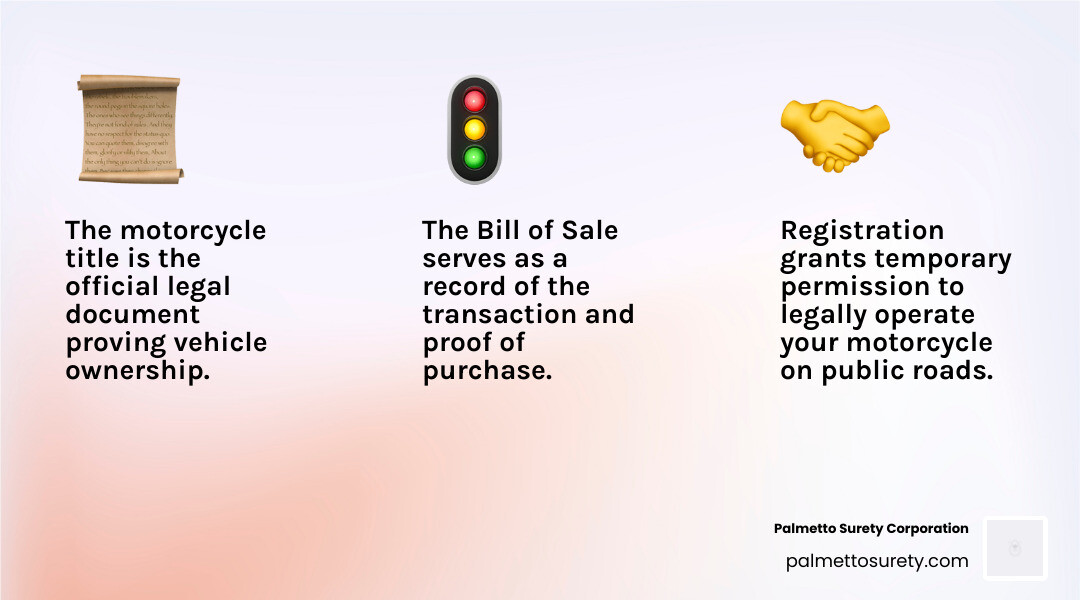
A motorcycle title is the legal document proving you own your bike. Think of it as the deed to your house—without it, you can’t legally register, insure, or sell your motorcycle. This document is essential for every purchase, sale, or transfer of ownership.
Key Facts About Motorcycle Titles:
- Purpose: Official proof of ownership.
- Required for: Registration, insurance, and sales.
- Contains: Vehicle Identification Number (VIN), owner details, and any liens.
- Cost: Varies by state, typically $50-$125 plus taxes.
Understanding how motorcycle titles work is crucial, whether you’re buying from a dealer or a private seller. While standard transfers are often simple, situations involving a missing title, a lien, or a salvage vehicle can be complex. This guide will walk you through everything from standard DMV procedures to challenging scenarios that may require a bonded title, helping you avoid common pitfalls.
I’m Haiko de Poel Jr. of Palmetto Surety Corporation. I’ve helped countless motorcycle owners steer complex title situations, especially those needing surety bonds for bonded titles. My experience covers everything from simple transfers to difficult cases with missing documents and ownership disputes.
Understanding Your Motorcycle Title: The Basics

A motorcycle title, sometimes called a “pink slip,” is the official document proving legal ownership of your bike. Issued by your state’s Department of Motor Vehicles (DMV), it contains your name, the bike’s Vehicle Identification Number (VIN), and information on any lienholders (lenders). This document is the foundation of your right to own, insure, and control your motorcycle.
What is a Motorcycle Title and Why is it Crucial?
A motorcycle title is essential for several key reasons:

- Proves Ownership: It is the definitive legal proof that the motorcycle belongs to you.
- Prevents Theft: A legitimate title is required to sell or register a bike, making it difficult for thieves to profit from stolen vehicles. You can use the VIN on the title to check if a bike has been reported stolen before you buy.
- Enables Sale: You cannot legally transfer ownership to a new buyer without a properly signed title.
- Required for Registration: You need a valid title to register your motorcycle, get a license plate, and legally ride on public roads.
- Secures Financing: Lenders require a title to secure their loan, and they are listed as a lienholder until the debt is paid.
Simply put, your title is your legal passport to motorcycle ownership. Riding without one can lead to fines or impoundment.
Title vs. Registration: What’s the Difference?
It’s easy to confuse a title and registration, but they serve different functions. Think of it this way:
- Title = Proof of Ownership: A permanent document issued once that only changes with a new owner or lien status.
- Registration = Permission to Ride: A temporary permit that must be renewed periodically (usually annually or biennially). It confirms your bike meets state requirements, is insured, and allows you to get a license plate to ride on public roads.
Even with a clean motorcycle title, you cannot legally ride without a current registration. Always check with your local DMV for specific state rules.
Navigating the Standard Motorcycle Title Process

When you buy a motorcycle, getting the motorcycle title in your name is the next critical step. For most standard purchases, the process is straightforward. You’ll visit your local Department of Motor Vehicles (DMV) with the required documents, fill out an application, and pay the necessary fees to officially transfer ownership.
Documents Needed to Title a Motorcycle
To ensure a smooth process at the DMV, gather the following documents:
- Proof of Ownership: For a new bike, this is the Manufacturer’s Certificate of Origin (MCO). For a used bike, it’s the previous title, signed over to you by the seller.
- Bill of Sale: A document detailing the sale, including buyer and seller names, motorcycle details (VIN, make, model), price, and date. A notarized bill of sale is recommended for private sales.
- Proof of Identity: A valid, government-issued photo ID, such as a driver’s license.
- Proof of Insurance: Most states require proof of active motorcycle insurance to issue a title and registration.
- Payment for Fees and Taxes: Be prepared to pay the title fee, sales tax, and any other applicable charges.
State requirements can vary, so check your local DMV’s website for specific rules. You can also find more details in our guide on motorcycle title requirements.
How to Transfer a Motorcycle Title to a New Owner
A proper title transfer is crucial for both the seller and the buyer.
Seller’s Responsibilities:
- Complete the Title: Accurately fill out the transfer section on the back of the motorcycle title, including the buyer’s name, address, sale date, and odometer reading.
- Sign the Title: Your signature is required to make the transfer official.
- Satisfy Liens: If there’s a loan on the bike, you must pay it off and obtain a lien release from the lender before the sale.
- Remove Plates: Take your license plates and registration stickers off the bike before the buyer takes possession.
Buyer’s Responsibilities:
- Verify Information: Confirm the VIN on the title matches the VIN on the motorcycle. Ensure the seller’s name is the one on the title.
- Check for Signatures and Liens: Make sure the seller has signed the title correctly. If a lien is listed, demand a lien release document.
- Submit Paperwork to DMV: Take the signed title, bill of sale, and other required documents to the DMV. You will need to complete an application and pay all title fees and taxes.
Some states may require the seller’s signature to be notarized. For a detailed walkthrough, see our guide on How to Transfer a Motorcycle Title.
What If There’s No Title? Navigating Complex Scenarios

Finding a great motorcycle without a motorcycle title presents a unique challenge. Whether it’s a barn find or a private sale with lost documents, you must perform due diligence to avoid scams and legal issues. In these cases, solutions like a bonded title are invaluable.
Buying a Motorcycle Without a Title
While possible, buying a motorcycle without a title is risky. The main challenge is proving you are the rightful owner. Protect yourself by watching for these red flags:
- Verifying the VIN: Always check the Vehicle Identification Number (VIN) to ensure it’s legible and hasn’t been tampered with. Use the VIN to check for liens or to see if the bike has been reported stolen through online services or local police.
- Floating Titles: Be cautious if the seller’s name is not on the title (if one is presented but not properly transferred). This indicates a broken chain of ownership that can complicate registration.
- Bill of Sale: Always get a detailed and notarized bill of sale. This document is your primary proof of purchase.
For more tips, you can check reliable resources on verifying a bike’s history.
How to Get a Title for a Motorcycle Without One
If you have a motorcycle without a motorcycle title, there are several paths to legal ownership, though processes vary by state:
- Contact the Prior Owner: The simplest solution is to ask the last registered owner to apply for a duplicate title and sign it over to you.
- Bonded Title: If the owner can’t be found, many states offer a bonded title process. This involves securing a surety bond to guarantee your ownership claim.
- Court-Ordered Title: As a last resort, you can petition a court to declare you the legal owner. This is often a lengthy and expensive process.
- Transferable Registration: For older vehicles (often 15+ years), some states like Vermont offer a transferable registration that can be used as proof of ownership to obtain a title in your home state.
For more information on dealing with a lost title, see our guide on What to Do When You Lose Your Motorcycle Title.
The Bonded Title Solution
A bonded title is a powerful tool when the original motorcycle title is missing or defective. It provides the same legal rights as a standard title, allowing you to register, insure, and sell the motorcycle.
The title is backed by a surety bond, which acts as a financial guarantee. If a previous owner or lienholder with a valid claim appears, the bond covers their financial loss, protecting you and the state.
The process generally involves these steps:
- Apply at the DMV: Start by applying for a bonded title. You may need to show you’ve made a good-faith effort to find the original title.
- Get a Vehicle Appraisal: The state will determine your motorcycle’s value, and the bond amount is typically set at 1.5 to 2 times this value.
- Purchase a Surety Bond: This is where Palmetto Surety Corporation can help. We provide the required surety bond, often with approvals in just a few hours. The cost is a small fraction of the bond amount (e.g., around $100 for bonds up to $6,000).
- Submit and Wait: Submit the bond and other paperwork to the DMV. After a waiting period (e.g., 3-5 years), if no claims are made, the “bonded” brand is removed, and you receive a standard, clear motorcycle title.
A bonded title offers peace of mind by securing your legal ownership. For a state-specific example, you can learn about the Texas bonded title process.
Decoding Special Title Types and State Rules
Not all motorcycle titles are the same. Some have “brands” indicating a troubled history, while others are affected by liens. Understanding these special types and state-specific rules is crucial.
Implications of a Salvage or Branded Title
A “branded” motorcycle title signals a significant issue in the vehicle’s past. The most common is a salvage title, issued when an insurer declares a bike a “total loss” due to damage from an accident, flood, or fire.
- Rebuilt Title: After a salvage motorcycle is repaired and passes a strict state safety inspection, it can be issued a rebuilt title, which allows it to be registered and ridden legally.
- Key Considerations: Motorcycles with branded titles often face challenges with getting insurance, have a lower resale value, and require a thorough professional inspection before purchase.
Despite the drawbacks, a salvage bike can be a viable project for a skilled enthusiast. For more details, read our article on Buying a Motorcycle with a Salvage Title.
How a Lien Affects Your Title
When you finance a motorcycle, the lender places a lien on the motorcycle title, giving them a legal interest in the bike until the loan is paid off. The lender’s name is listed on the title, and they typically hold the physical document.
- Lien Release: Once the loan is fully paid, the lender provides a lien release document.
- Getting a Clear Title: You must submit this release to the DMV to get a new, clear title issued in your name with no lienholder listed.
- Selling with a Lien: To sell a bike with a lien, you must pay off the loan before or during the sale to transfer a clear title to the buyer.
Titling a Custom-Built or Modified Motorcycle
Titling a custom or “special construction” motorcycle requires a different process, as it lacks a standard Manufacturer’s Certificate of Origin (MCO).
- Assembled Vehicle Title: You’ll need to apply for an assembled vehicle title. This involves proving ownership of all major components (frame, engine) with receipts.
- VIN Assignment and Inspection: The state will inspect the bike to ensure it’s roadworthy and not built with stolen parts before assigning a new, unique VIN.
Using a VIN from another motorcycle is illegal. Always follow the legal path of obtaining a state-assigned VIN for a custom build to ensure your bike is properly and legally titled.
Frequently Asked Questions about Motorcycle Titles
How do I get a duplicate title if mine is lost or stolen?
If your motorcycle title is lost or stolen, you can apply for a duplicate from your state’s DMV. The process typically involves submitting an application form (like the Texas VTR-34 Form), providing proof of identity, and paying a small fee. Many states now offer online applications for convenience. Once a duplicate title is issued, the original becomes legally invalid.
What are the typical fees for titling a motorcycle?
Titling costs vary by state but generally include several components. Expect to pay a title application fee (often $50-$125), sales tax on the purchase price, and possibly a lien recording fee if the bike is financed. Since titling and registration are often done together, you should also budget for registration fees. Always check your local DMV’s official fee schedule for exact costs.
Can I legally ride a motorcycle without a title?
No. You cannot legally ride a motorcycle on public roads without a valid motorcycle title. The title is required to register the vehicle, and registration is what grants you the legal permission (and the license plate) to ride. Operating an unregistered motorcycle can result in significant fines, impoundment of your bike, and other legal penalties. Always ensure your title is properly transferred and your registration is current before riding.
Conclusion
Your motorcycle title is more than just paper; it’s your proof of ownership and your ticket to the open road. It’s essential for registering, insuring, and selling your bike. Keeping it safe ensures your peace of mind.
Navigating the titling process is manageable if you know the steps. This table summarizes the path forward for common situations:
| Situation | Key Steps |
|---|---|
| Standard Purchase | Get signed title/MCO and bill of sale from seller. Visit DMV with ID and proof of insurance, complete forms, and pay fees/taxes. |
| Lost/Stolen Title | Apply for a duplicate title at your state’s DMV with proper ID and fee. |
| No Title (Acquired) | Try to contact the prior owner for a duplicate. If not possible, pursue a Bonded Title by purchasing a surety bond and applying at the DMV. |
When the path to a clear motorcycle title is blocked by missing documents, a surety bond for a bonded title is often the best solution. This is where Palmetto Surety Corporation excels.

For over 20 years, Palmetto Surety Corporation has specialized in helping people secure the surety bonds needed for a motorcycle title. We understand you want to ride, not get stuck in paperwork. Our unique advantage is our speed—we approve most applications within hours.
Don’t let a title issue keep your bike in the garage. If you need a bonded title, we are here to provide a fast, efficient solution to get your ownership secured.
Learn more about how surety bonds provide security by reading our guide on the types of surety bonds.


