


what is a bid bond in construction 2025 Top Essential Guide
Understanding Bid Bonds in Construction Projects
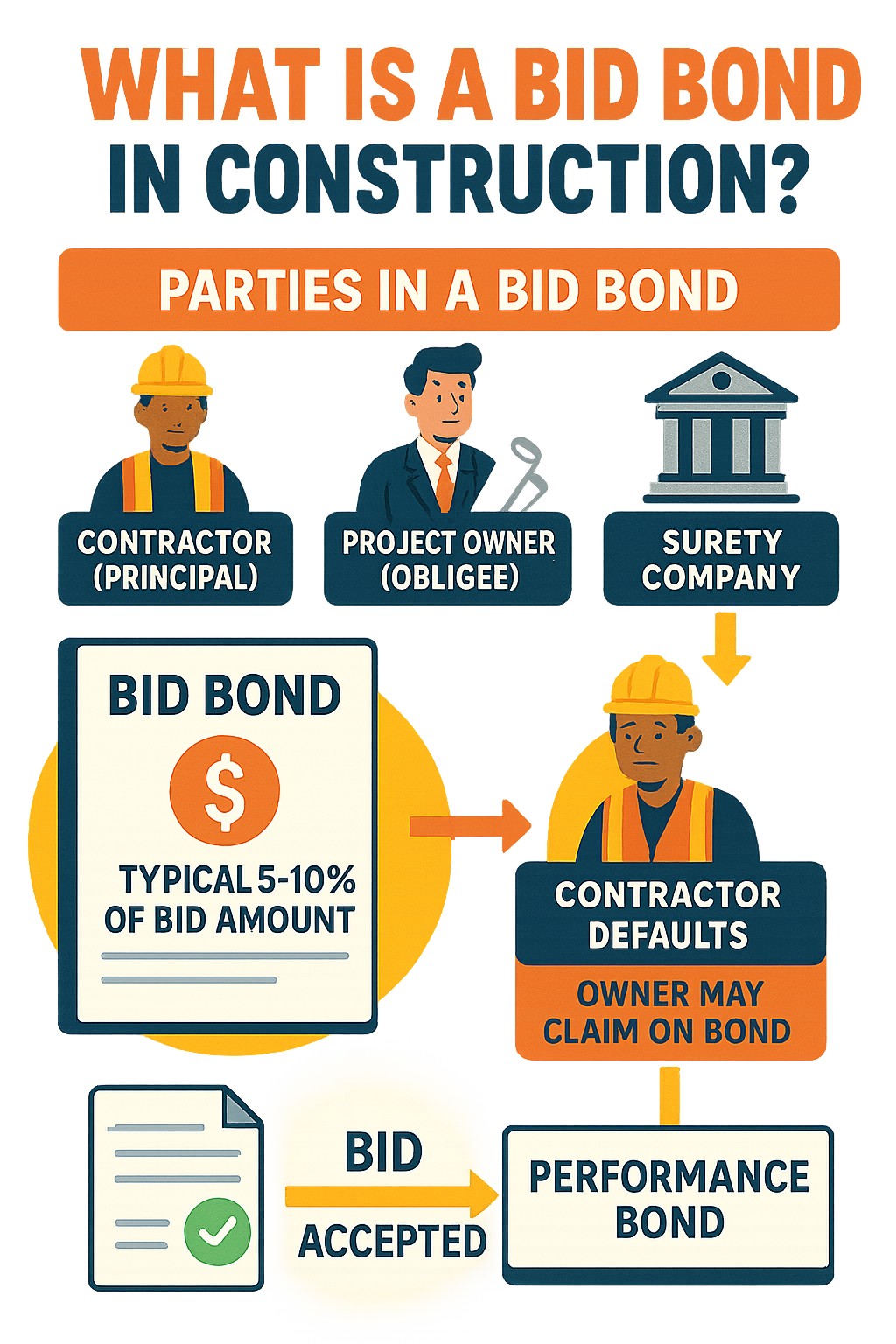
What is a bid bond in construction? A bid bond is a type of surety bond that guarantees a contractor will honor their bid, sign the contract if awarded, and provide required performance bonds before work begins. It protects project owners from contractors who might withdraw their bids after winning.
Here’s what you need to know about bid bonds:
| Bid Bond Basics | Details |
|---|---|
| Typical Amount | 5-10% of bid amount (20% for federal projects) |
| Required For | Most public projects and many private construction projects |
| Parties Involved | Principal (contractor), Obligee (project owner), Surety (bond issuer) |
| Primary Purpose | Ensures serious bids and compensates owners if contractors back out |
| Cost | Often a flat fee (~$100) or sometimes free with qualified contractors |
A bid bond serves as the first step in the construction bonding process. When you submit a bid with a bond, you’re telling the project owner: “I’m serious about this bid, and I have the financial backing to prove it.”
These bonds create a more level playing field in construction bidding. They prevent contractors from submitting frivolous low bids, then either backing out or demanding higher payments later.
Why are bid bonds important? They protect project owners from:
- The cost of rebidding if a contractor withdraws
- Price increases between the original low bid and the next lowest bid
- Delays in project timelines due to contractor withdrawal
- Unqualified contractors who can’t secure performance bonds
I’m Haiko de Poel Jr, and as a fractional CMO working with Palmetto Surety Corporation, I’ve guided countless contractors through the intricacies of what is a bid bond in construction to ensure they can successfully secure projects while protecting their financial interests.
Essential what is a bid bond in construction terms:
– performance and payment bonds
– how do construction bonds work
– types of construction bonds

What is a Bid Bond in Construction?
A bid bond in construction is more than just paperwork—it’s your word backed by financial security. When you submit a bid with this bond, you’re making a promise: “I stand by this bid price, and I’m serious about taking on this project if selected.”
Think of it as a handshake agreement with real teeth. This three-way relationship connects:
- You, the contractor (the principal)
- The project owner (the obligee)
- A surety company like Palmetto Surety (the guarantor)
The bond typically covers between 5% and 10% of your total bid amount—though federal projects often require a higher 20% guarantee. This is called the “penal sum” and represents the maximum amount the surety might pay if you back out.
“Bid bonds serve as the entry ticket to the serious construction bidding table,” as experienced contractors often say. They separate the committed professionals from casual bidders who might otherwise waste everyone’s time.
But these bonds do more than just guarantee your bid. They signal to project owners that you’ve been financially vetted by a surety company that believes in your ability to complete the work. In a competitive industry, that vote of confidence can make all the difference.
Key Elements of a Bid Bond in Construction
To truly understand what is a bid bond in construction, let’s break down its essential components:
The principal is you, the contractor. You’re the one making promises about your bid and your ability to do the work if selected.
The obligee is the project owner—often a government agency for public works, but could be a private developer too. They’re the ones requiring protection through the bond.
The surety is the company (like us at Palmetto Surety Corporation) that issues the bond after evaluating your qualifications. We’re essentially vouching for your commitment and capabilities.
The indemnity agreement might sound intimidating, but it’s simply your personal guarantee to repay the surety if they have to cover a claim. This creates real accountability—it’s not just the company on the hook, but you personally.
Your bonding capacity reflects how much total work you can be bonded for at once. It’s like a credit limit based on your financial strength, experience, and track record.
“The indemnity agreement transforms a bid bond from a simple piece of paper into a serious business commitment,” as one of our long-time contractors puts it. “It ensures everyone approaches the bidding process with the right intentions.”
Why Owners Require Bid Bonds
Project owners aren’t just creating extra paperwork when they require bid bonds—they’re protecting critical interests:
Owner protection is the primary benefit. If you win the bid but then back out, the owner can claim your bond to cover the difference between your bid and the next lowest bidder. This saves them from absorbing unexpected costs.
For public projects, taxpayer funds deserve special protection. Bid bonds ensure that public money isn’t wasted on rebidding processes or inflated costs caused by non-serious bidders.
The bond serves as a valuable prequalification tool. When you secure a bid bond, you’ve essentially passed a financial background check. The surety has reviewed your finances and determined you’re capable of handling the project.
Fair market competition thrives when all bidders are serious. Bonds prevent contractors from submitting unrealistically low “lowball” bids with no intention of honoring that price, which helps maintain a level playing field for everyone.
As one project manager told me recently: “Bid bonds save us countless headaches. Without them, we’d waste months dealing with contractors who make promises they can’t keep. These bonds ensure everyone at the table is playing by the same rules.”

The Bid Bond Lifecycle: Submission, Requirements & Underwriting
Getting a bid bond isn’t just paperwork – it’s an essential step that starts well before you submit your bid. Understanding this process can make all the difference between winning projects and missing opportunities.
Bid Preparation and Percentage Requirements
When preparing for a construction bid, you’ll need to understand what bond amount is required. Most projects follow standard percentage guidelines:
“The percentage requirements caught me off guard on my first federal project,” admits Mike, a contractor from Columbia. “I was used to 10% bonds for local work, and suddenly needed double that amount.”
For a typical $500,000 project with a 10% requirement, you’d need a $50,000 bid bond. But don’t worry – this doesn’t mean writing a check for $50,000. It’s simply the amount the surety guarantees if you win the bid but don’t follow through.
Most private projects require 5-10% of your bid amount, while federal projects typically demand 20% under the Miller Act. These percentages reflect the project owner’s need for protection against contractors who might walk away.
Federal and State Requirements
The Miller Act has been the backbone of federal construction bonding since 1935. For federal projects, it requires:
- Bid bonds for most construction contracts
- A minimum bond amount of 20% (capped at $3 million)
Almost every state has enacted “Little Miller Acts” with similar requirements for state-funded projects. The specifics vary, but they generally follow the federal model with some local adjustments.
“These regulations aren’t just red tape,” explains our bonding specialist at Palmetto Surety. “They protect taxpayer dollars while creating a level playing field for honest contractors.”
The Underwriting Process
When you apply for a bid bond in construction, we don’t just rubber-stamp your application. Our underwriting team evaluates several key factors to determine if you qualify:
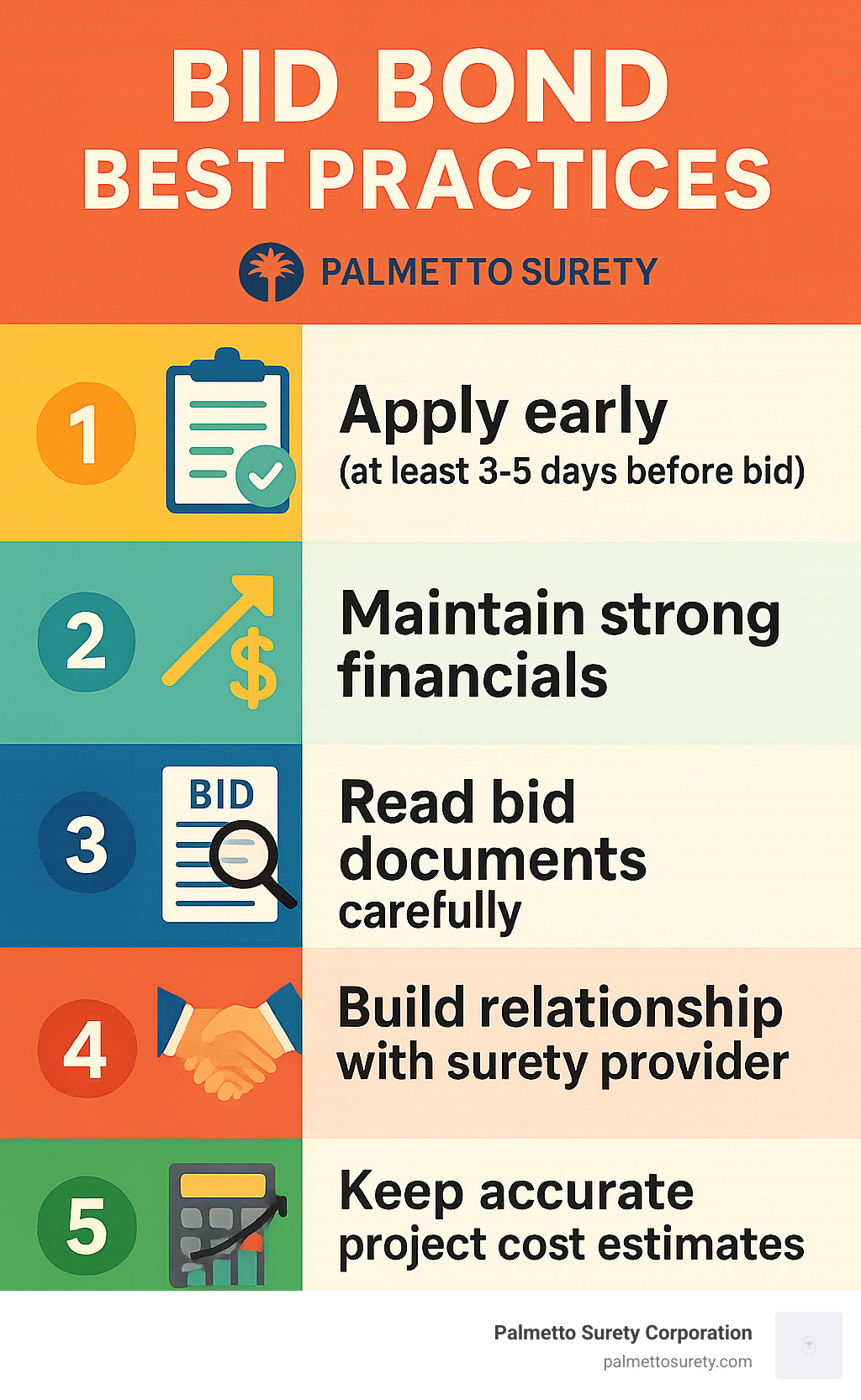
Financial strength tops the list – we’ll look at your balance sheet, working capital, and net worth. But numbers aren’t everything. Your experience with similar projects matters tremendously, as does your current workload and ability to take on new projects.
For smaller projects (typically under $350,000), the process is often streamlined. You might only need a simple application form and a quick review of your finances. Larger projects usually require more comprehensive documentation.
Poor credit isn’t always a deal-breaker. At Palmetto Surety Corporation, we consider your whole picture. Many contractors with less-than-perfect credit still qualify, especially those with strong experience and solid project management skills.
Step-by-Step: Securing Your Bid Bond
We’ve simplified getting your bid bond down to these essential steps:
First, choose a surety provider who understands your industry. At Palmetto Surety, we specialize in construction bonds throughout the Southeast and understand the unique challenges contractors face in our region.
Next, complete an application with details about your company and the specific project. For smaller jobs, this might be a simple one-page form. Then provide documentation – depending on project size, this could include financial statements, work-in-progress schedules, and project specifications.
After a quick credit check to assess your financial stability, you’ll receive approval – often within hours at Palmetto Surety. We understand that bidding opportunities don’t wait, so we’ve designed our process to be remarkably efficient.
“We received our bid bond approval in just three hours,” shares a Charleston contractor. “That quick turnaround helped us secure a major municipal project when our competitor couldn’t get bonded in time.”
Documentation & Timing Essentials
Timing can make or break your bid. Here’s what you need to know:
Request your bond early – ideally 3-5 days before the deadline. Last-minute applications create unnecessary stress and risk.
For federal projects, you’ll need to submit Standard Form 24 (SF 24). Private projects might use AIA forms or custom bond forms specified by the owner. The invitation to bid (ITB) spells out exactly what’s required.
Meeting submission deadlines is non-negotiable. Late submissions typically result in automatic bid rejection, no matter how competitive your price.
Many agencies now accept electronic bonding, which can save valuable time. Ask about this option when working with Palmetto Surety – we’re fully equipped to provide electronic bid bonds for projects that accept them.

Risk Management: Costs, Claims & Legal Considerations
Let’s talk money and risk – the parts of bid bonds that keep contractors up at night. Don’t worry, we’ll make this crystal clear!
Typical Costs & Percentages
Contrary to what many contractors believe, bid bonds don’t have to break the bank. In fact, they’re often quite affordable:
Most sureties (including us at Palmetto Surety) charge a simple flat fee of around $100 per bid bond, regardless of whether you’re bidding on a $50,000 or $5 million project. That’s less than dinner for two at a nice restaurant!
Even better news? If you’ve established a solid relationship with your surety provider, you might qualify for zero premium bid bonds – yes, that means free! We love offering this to our regular customers with strong track records.
For larger or riskier projects, you might encounter percentage-based pricing ranging from 1% to 5% of the bond amount (not your total bid). And remember, federal projects with their higher 20% requirements might have different pricing structures altogether.
“We believe bid bonds should open doors, not close them,” says our lead underwriter at Palmetto Surety. “That’s why we work to keep costs reasonable for qualified contractors.”
Claim Triggers & Contractor Payback
Understanding what triggers a bid bond claim helps you avoid costly mistakes. Here’s when claims typically happen:
You win the bid but decide not to sign the contract. Maybe you found a better opportunity or realized you underbid – either way, this will trigger a claim. Similarly, if you can’t provide the required performance and payment bonds after winning, the project owner will make a claim.
Another common scenario? Withdrawing your bid after the opening but before contract award. This leaves the owner in a tough spot, especially if your bid was significantly lower than others.
Let’s see how this plays out financially:
You bid $500,000 with a 10% bid bond ($50,000). After winning, you realize you made a huge estimation error and back out. The next lowest bid is $525,000. The owner claims $25,000 against your bond – the difference between your bid and the next lowest one.
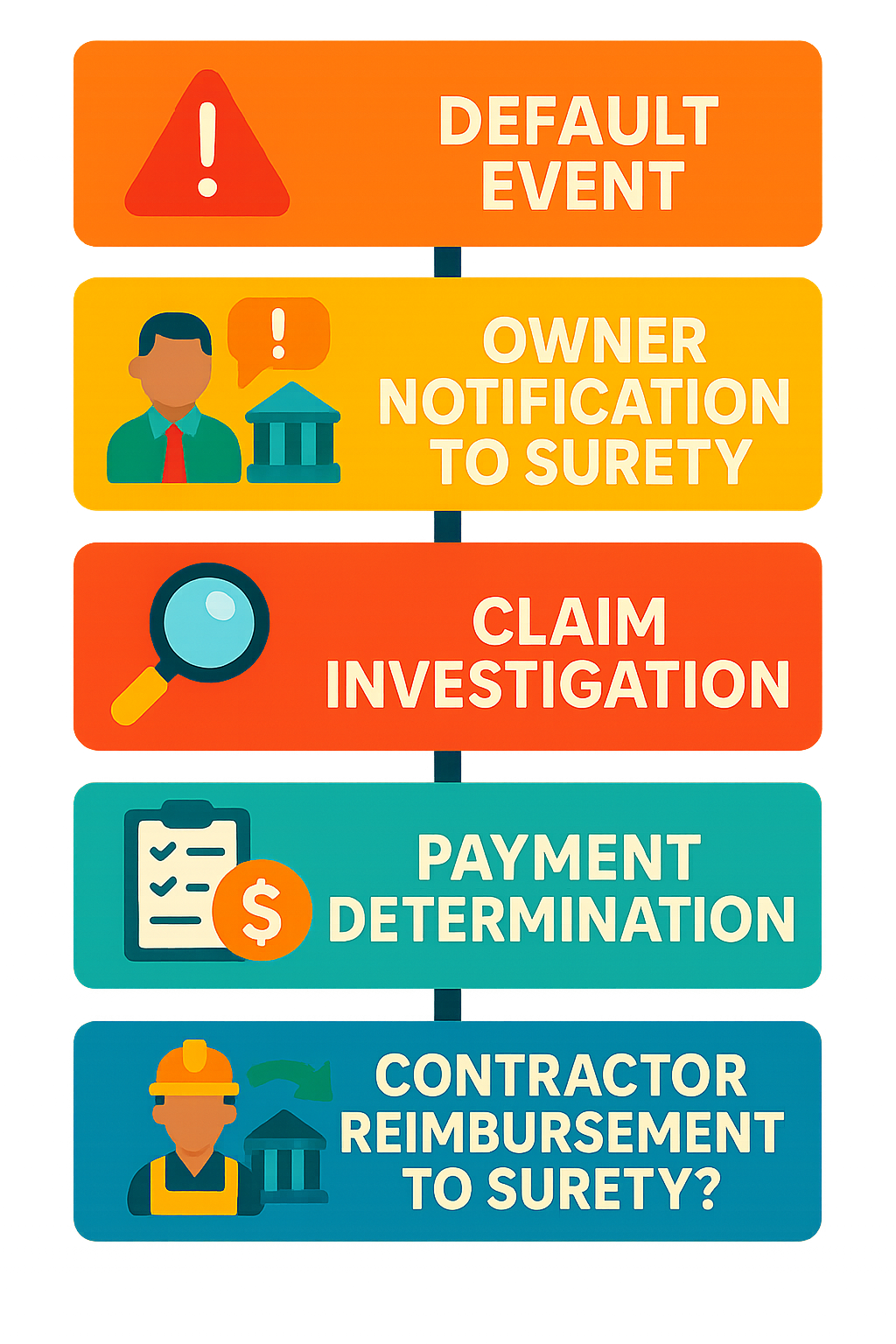
Here’s the crucial part many contractors miss: if the surety pays a claim, you’ll need to pay them back. This isn’t insurance – it’s more like a loan that becomes due if you default.
“I always tell contractors to triple-check their bids,” shares a veteran construction manager. “The few hours spent verifying numbers can save you thousands in potential bond claims.”
Legal Framework and Owner Claim Process
Bid bonds operate within a well-established legal framework:
For federal projects over $150,000, the Miller Act sets the requirements. Most states have enacted their own versions (affectionately called “Little Miller Acts“) for state-funded projects. Beyond these regulations, bid bonds are enforceable contracts under state law.
When an owner needs to make a claim, they’ll follow a standard process:
First comes the written notice to both you and your surety company. They’ll include documentation proving you failed to meet bid requirements. The owner will calculate the claim amount (typically the difference between your bid and the next lowest bid). Finally, your surety investigates and either pays, denies, or negotiates a settlement.
The Federal Acquisition Regulation provides detailed guidance on this process. Contractors working on federal projects should familiarize themselves with these regulations – you can find more information in the FAQs on Federal Policies.
At Palmetto Surety Corporation, we’re committed to helping contractors understand these processes before they become problems. Our team is always available to walk you through what is a bid bond in construction and how to manage the associated risks. After all, the best claim is the one that never happens!
Beyond Bid Bonds – Performance Bonds, Payment Bonds, Alternatives & FAQs
While bid bonds get you through the door of the bidding process, they’re just the first chapter in your construction bonding story. Let’s explore the full picture of what happens after you win that bid.
The Construction Bond Hierarchy
Think of construction bonds as a family where each member plays a vital role at different stages of your project:
Bid Bonds kick things off by guaranteeing you’ll honor your bid and follow through if selected. They’re like your promise to show up for the first date.
Performance Bonds take over once you’ve won the contract, guaranteeing you’ll complete the project according to specifications. This is your commitment to the full relationship.
Payment Bonds work alongside performance bonds, ensuring you’ll pay your subcontractors, laborers, and material suppliers. Think of this as your promise to treat everyone fairly along the way.
“I tell my clients to think of bid bonds as the entry ticket, performance bonds as the promise to finish the race, and payment bonds as the guarantee to pay everyone who helped you run,” explains one of our bonding specialists at Palmetto Surety.
These bonds create a safety net that protects everyone involved. For contractors, they demonstrate your reliability. For project owners, they provide peace of mind that their project won’t be left half-finished with unpaid workers.
Comparing Different Bond Types
| Bond Type | Purpose | Typical Amount | When Required | Primary Beneficiary |
|---|---|---|---|---|
| Bid Bond | Guarantees bid honesty | 5-20% of bid | During bidding | Project owner |
| Performance Bond | Guarantees project completion | 100% of contract | After award, before work begins | Project owner |
| Payment Bond | Guarantees payment to subs/suppliers | 100% of contract | After award, before work begins | Subcontractors & suppliers |
Alternatives to Traditional Bid Bonds
Not everyone goes the traditional bid bond route. Here are some alternatives that might work in certain situations:
Irrevocable Letters of Credit (ILOC) are issued by your bank and allow the project owner to draw funds if you default. Unlike a bond, these tie up your credit line, which can limit your financial flexibility.
Cashier’s Checks or Certified Checks are sometimes accepted for smaller projects. The downside? They lock up your cash resources that could be working for you elsewhere.
Escrow Agreements involve funds held by a third party that can be released to the owner under specific conditions. These provide security but still tie up your capital.
Cash Deposits paid directly to the project owner are the most straightforward alternative but also the most restrictive for your cash flow.
“I had a client who thought using a certified check would be simpler than getting a bid bond in construction,” shares a Palmetto Surety agent. “Six months later, he called to switch to bonds because he realized he could have bid on three more projects with that cash working for him instead of sitting in someone else’s account.”

Frequently Asked Questions about Bid Bonds
Who sets the bond amount?
The project owner determines the required bond amount, typically spelling it out in the invitation to bid. For federal projects, the Miller Act sets the minimum at 20% of the bid price (not to exceed $3 million). Private projects usually require between 5-10% of the bid amount.
Can contractors with poor credit qualify for bid bonds?
Yes! At Palmetto Surety Corporation, we look beyond just credit scores. We consider your experience, project history, and overall financial picture. While contractors with credit challenges might face higher premiums or collateral requirements, don’t count yourself out before talking with us.
Are bid bonds returned after the bidding process?
If you don’t win the bid, your bond obligation ends when the contract goes to another contractor. If you do win, your bid bond remains active until you provide the required performance and payment bonds and sign the contract. Nothing physical is “returned” since the bond is a guarantee, not a deposit.
What happens if a contractor finds an error in their bid?
Timing is everything here. If you find a significant error before the bid opening, you may be able to withdraw without penalty. After opening, withdrawal typically means forfeiting your bid bond unless the error meets specific legal criteria for relief. This is why double-checking your numbers is so crucial!
Can a contractor bid on multiple projects simultaneously with the same bonding capacity?
Absolutely! This is one of the major advantages of what is a bid bond in construction compared to cash alternatives. At Palmetto Surety Corporation, we help contractors manage their bonding capacity across multiple bidding opportunities, which allows you to pursue several projects at once without tying up capital.
How quickly can a contractor obtain a bid bond?
At Palmetto Surety Corporation, we understand that bidding opportunities often arise with tight deadlines. Our streamlined process allows us to issue bid bonds within hours for qualified contractors. We pride ourselves on being responsive to the nature of construction bidding in the Southeast.
For more information about what is a bid bond in construction and other surety solutions, check out our article on Bid Bonds Are Like Insurance or contact our team today.
Conclusion
What is a bid bond in construction? As we’ve explored throughout this guide, it’s far more than paperwork—it’s the foundation of trust in the construction bidding process. These bonds protect project owners, create fair competition, and give qualified contractors a chance to showcase their commitment and capabilities.
For contractors trying to steer the often choppy waters of construction bidding, understanding bid bonds isn’t just helpful—it’s essential. Think of them as your ticket to the show, especially for those lucrative public sector projects that can transform your business.
Here at Palmetto Surety Corporation, we’ve spent over two decades helping contractors throughout the Southeast secure the bonds they need to compete and win. Our deep roots in the construction industry, combined with our ability to approve most applications within hours (not days or weeks), has made us the go-to partner for contractors across Georgia, Florida, Louisiana, Mississippi, South Carolina, Tennessee, and Texas.
Maybe you’re bidding on your first bonded project and feeling a bit overwhelmed. Or perhaps you’re looking to expand your bonding capacity to take on bigger opportunities. Either way, our team understands what you’re facing. We’ve worked with thousands of contractors just like you, and we know the unique challenges that come with operating in the Southeast.
A bid bond in construction is just the beginning of your journey. Once you win that project (and with our help, we believe you will), you’ll need performance and payment bonds to satisfy contract requirements. Building a strong relationship with us now makes that transition as smooth as possible when the time comes.
For more information about our surety services that can help you grow your construction business, visit Palmetto Surety Corporation or reach out to one of our offices in Atlanta, Augusta, Columbus, Savannah, or other locations throughout the Southeast. We’re ready when you are.
By mastering the ins and outs of bid bonds, contractors open new doors while project owners gain reliable, committed partners. It’s truly a win-win relationship that has become the cornerstone of modern construction contracting—and with Palmetto Surety in your corner, you’ll never have to steer it alone.


