


Types of Construction Bonds: Top 4 Essential Guide 2025
Types of construction bonds are essential financial instruments that provide assurance to project owners, ensuring that contractors meet their contractual commitments. These bonds are crucial in protecting against financial losses that may arise if a contractor fails to complete a project or adhere to specific contract terms. Here’s a concise overview of the primary types:
- Bid Bonds: Ensure contractors honor their bids and enter into contracts at the bid price.
- Performance Bonds: Guarantee the completion of a project according to the contract specifications.
- Payment Bonds: Ensure payment to subcontractors, suppliers, and laborers.
- Maintenance Bonds: Cover defects that may arise after project completion for a specified period.
In the ever-evolving construction industry, these bonds offer peace of mind and protect investments for both public and private projects.
My name is Haiko de Poel Jr., and I specialize in resolving complexities like the types of construction bonds to ensure your projects run smoothly. With over two decades of experience in branding and strategic marketing, I’ve helped companies successfully navigate financial protections and contractual guarantees.
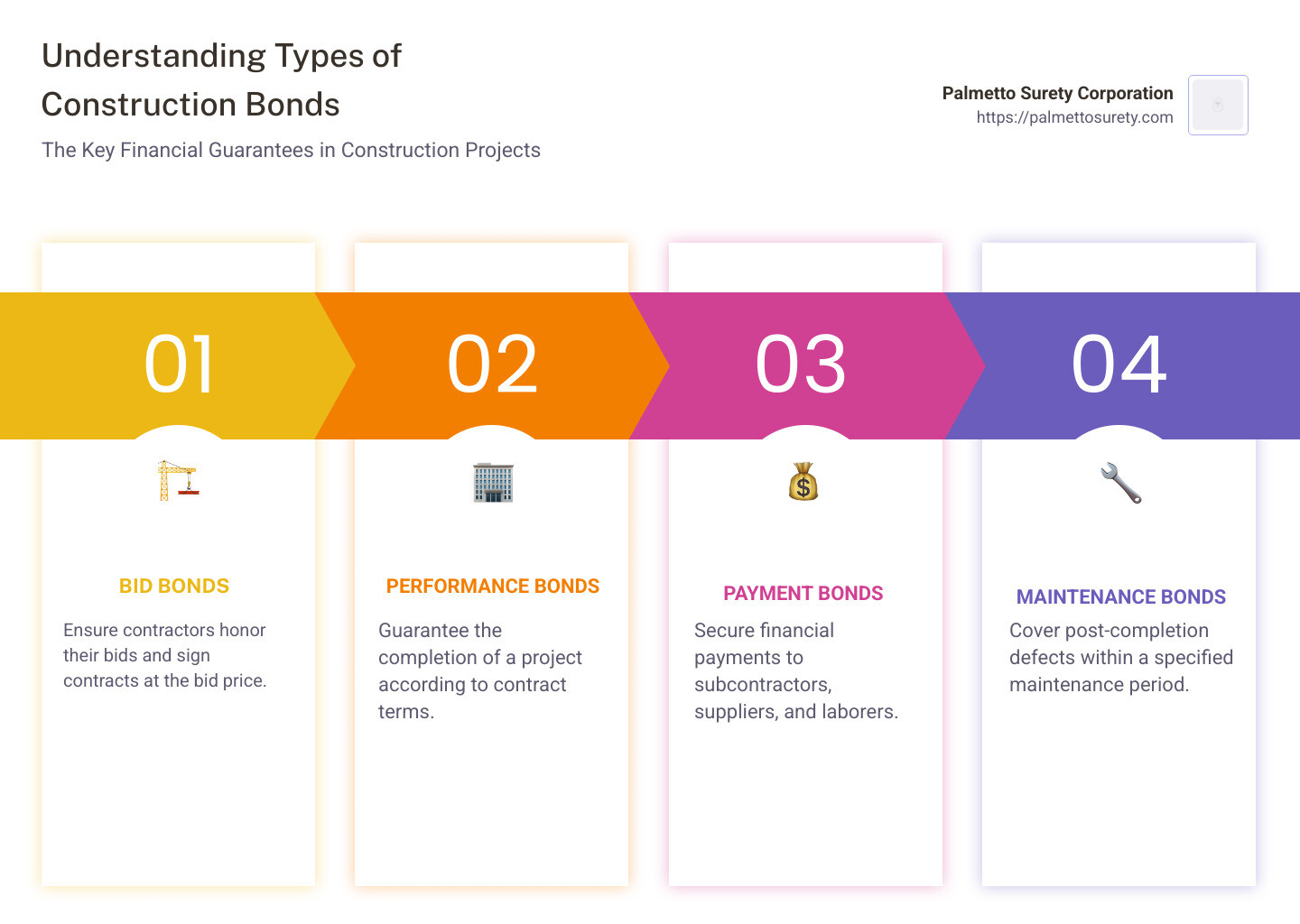
Types of construction bonds terms made easy:
– bonding construction work
– how does bonding work in construction
– how much does a construction performance bond cost
Types of Construction Bonds
Construction bonds are crucial for ensuring that projects proceed smoothly and are completed as promised. They act like safety nets, protecting project owners and stakeholders from potential financial setbacks. Let’s explore the main types of construction bonds:
Bid Bonds
Bid bonds are the starting point in the construction bidding process. They serve as a promise that contractors submit serious bids and are financially sound enough to take on the project. If a contractor backs out after winning a bid, the project owner can claim the bond to cover the cost difference between the first and second bids.
Example: Imagine you’re a contractor bidding on a new city park. Your bid includes a bid bond, assuring the city that if they choose you, you’ll sign the contract and start the work. If you decline, the city can use the bond to cover any extra costs of hiring the next bidder.
Performance Bonds
Once a project is awarded, the contractor must provide a performance bond. This bond guarantees that the project will be completed according to the contract’s terms and conditions. If the contractor fails to deliver, the bond covers the cost of hiring another contractor to finish the job.

Example: A contractor building a new school must provide a performance bond. If they run into financial trouble and can’t complete the school, the bond ensures the project owner can bring in another contractor to finish the work without incurring additional costs.
Payment Bonds
Payment bonds ensure everyone gets paid. They protect subcontractors, suppliers, and laborers by guaranteeing that the contractor will pay them for their services and materials. If the contractor fails to pay, the bond can be claimed to cover these costs.
Example: During the construction of a shopping mall, a payment bond assures that all suppliers and subcontractors will receive their due payments, even if the main contractor faces financial issues.
Maintenance Bonds
After project completion, maintenance bonds come into play. These bonds cover any defects in workmanship or materials for a specified time after the project is finished. They ensure that any necessary repairs or corrections are made without additional cost to the project owner.
Example: A maintenance bond on a newly constructed bridge covers any structural issues finded within the first year, ensuring the bridge remains safe and functional.

In the changing construction landscape, these bonds are indispensable. They offer peace of mind and financial security, ensuring projects are completed as planned and protecting against unforeseen issues. Whether you’re a contractor or project owner, understanding these bonds is key to navigating the construction industry successfully.
Bid Bonds
Bid bonds are an essential part of the construction bidding process. They serve as a guarantee that contractors are serious about their bid and have the financial backing to undertake the project if selected. This type of bond is crucial for project owners who want to ensure that the bidding process is competitive and fair.
How Bid Bonds Work
When a contractor submits a bid for a construction project, they also provide a bid bond. This bond is a promise that if their bid is accepted, they will enter into a contract and proceed with the project at the agreed-upon price.
-
Contractor Tender: The contractor includes the bid bond in their tender package. This shows the project owner that the contractor is committed and capable of completing the project.
-
Project Owner: The owner of the project benefits from the assurance that the contractor will not back out after winning the bid. If the contractor fails to honor their bid, the owner can claim the bond.
-
Bid Guarantee: The bid bond guarantees compensation to the project owner if the contractor fails to start the project. This amount usually covers the difference between the awarded bid and the next lowest bid, or the bond’s face value, whichever is less.
Why Bid Bonds Matter
Bid bonds protect project owners from frivolous or unserious bids. They ensure that only contractors who are genuinely interested and financially capable participate in the bidding process. This helps maintain the integrity and competitiveness of the construction industry.
Example: Suppose a contractor bids on a new public library project. They include a bid bond with their tender to assure the city that they will honor their bid if chosen. If they decide not to proceed after winning, the city can claim the bond to offset the cost of hiring the next lowest bidder.
In summary, bid bonds are a vital tool in the construction industry. They provide a layer of security for project owners, ensuring that the bidding process is both credible and reliable. For contractors, they demonstrate commitment and financial stability, increasing their chances of securing projects.
Performance Bonds
Performance bonds are a crucial part of construction projects. They ensure that contractors meet all their obligations and complete the project as agreed. These bonds act as a safety net for project owners, providing financial protection if things go wrong.
How Performance Bonds Work
Performance bonds kick in once a contractor is awarded a project. Here’s how they function:
-
Contract Completion: The bond guarantees that the contractor will complete the project according to the contract terms. If the contractor fails, the project owner can make a claim against the bond.
-
Contractor Obligations: The contractor is expected to adhere to the project’s timeline, budget, and quality standards. The bond holds them accountable to these obligations.
-
Surety Remedy: If the contractor defaults, the surety company steps in. They can either hire a new contractor to finish the work or compensate the project owner for any financial loss.
Why Performance Bonds Matter
Performance bonds protect project owners from potential losses due to contractor non-performance. They provide peace of mind, knowing there’s a financial backup if the project doesn’t go as planned.
Example: Imagine a city hires a contractor to build a new bridge. The contractor provides a performance bond to assure the city of their commitment. Halfway through, the contractor faces financial issues and cannot continue. The city claims the bond, and the surety company hires another contractor to complete the bridge.
Performance bonds are essential in maintaining trust and reliability in the construction industry. They ensure projects are completed as promised, safeguarding both the project owner’s investment and the contractor’s reputation.
Payment Bonds
Payment bonds are vital for the smooth functioning of construction projects. They ensure that subcontractors and suppliers receive payment for their work and materials, even if the main contractor runs into financial trouble. These bonds provide a financial guarantee that helps keep the project moving forward without delays.
How Payment Bonds Work
Payment bonds are issued alongside performance bonds and serve a different purpose. Here’s how they operate:
-
Subcontractor Payment: Payment bonds guarantee that subcontractors will be paid for their work. If the main contractor fails to pay, subcontractors can claim against the bond to receive their dues.
-
Supplier Protection: Suppliers are also covered under payment bonds. If they provide materials or equipment and are not paid, they can make a claim to recover their costs.
-
Financial Guarantee: These bonds act as a financial safety net, ensuring that everyone involved in the project gets paid, which helps prevent work stoppages and legal disputes.
Why Payment Bonds Matter
Payment bonds are crucial for maintaining trust and cooperation among all parties involved in a construction project. They ensure that subcontractors and suppliers have the financial security they need to continue their work without fear of non-payment.
Example: Consider a scenario where a contractor is building a large office complex. They hire several subcontractors and order materials from various suppliers. If the contractor experiences cash flow problems and can’t pay them, the subcontractors and suppliers can claim against the payment bond to secure their payments. This ensures that the project continues smoothly, without financial disruptions.
Payment bonds are essential in the construction industry, providing a layer of financial protection that helps keep projects on track and relationships intact.
Maintenance Bonds
Maintenance bonds are a crucial part of the construction process. They provide a workmanship guarantee for a specified period after a project’s completion, covering any post-completion defects that may arise.
What Do Maintenance Bonds Cover?
-
Post-Completion Defects: These bonds protect project owners from defects that become apparent after the work is completed. If any issues arise due to poor workmanship or faulty materials, the bond can be used to cover repair costs.
-
Workmanship Guarantee: Maintenance bonds assure that the contractor will address any defects or issues related to the quality of work. This guarantee builds trust between the contractor and the project owner, as it provides a safety net for unexpected problems.
-
Limited Time Coverage: Maintenance bonds are only active for a specific period, usually ranging from one to two years after project completion. During this time, the bond acts like an insurance policy, ensuring that the project meets the agreed-upon standards.
Why Maintenance Bonds Matter
Maintenance bonds are essential for protecting the investment of project owners. They ensure that any defects are promptly addressed, maintaining the quality and safety of the construction.
Example: Imagine a new shopping center that opens to the public. A few months later, a portion of the roof begins to leak due to subpar materials used during construction. The maintenance bond allows the shopping center owner to claim the cost of repairs, ensuring the issue is resolved without additional financial strain.
In summary, maintenance bonds offer peace of mind by guaranteeing the quality of construction work and providing a financial buffer against unforeseen defects. This helps maintain the integrity and value of the completed project.
Additional Construction Bonds
While the main types of construction bonds—bid, performance, payment, and maintenance bonds—are well-known, there are also other important types of construction bonds that serve specific needs. Let’s explore three additional bonds: supply bonds, site improvement bonds, and subdivision bonds.
Supply Bonds
Supply bonds are critical in projects requiring large quantities of materials. They ensure that suppliers deliver the necessary materials and equipment as specified in the purchase order. These bonds protect project owners and general contractors from financial loss if a supplier fails to fulfill their contractual obligations.
Why Are Supply Bonds Important?
- Supplier Accountability: They hold suppliers accountable for delivering on time and according to the contract specifications.
- Financial Protection: If a supplier defaults, the bond can compensate the project owner or contractor for the cost of sourcing materials elsewhere.
Site Improvement Bonds
Site improvement bonds are typically used for renovation projects. They guarantee the completion of improvements or modifications to existing structures. These bonds ensure that the contracted renovations are completed as agreed upon.
Key Features of Site Improvement Bonds:
- Renovation Assurance: They assure project owners that renovations will be completed to specification.
- Financial Security: If the contractor fails to complete the improvements, the bond provides funds to hire another contractor to finish the work.
Subdivision Bonds
Subdivision bonds are essential for projects involving the development of new subdivisions. They require contractors to build public infrastructure, such as sidewalks or roads, according to local government standards.
Benefits of Subdivision Bonds:
- Compliance with Local Standards: They ensure that public structures are built to meet local specifications.
- Community Protection: If a contractor fails to meet these requirements, the bond covers the cost of completing the necessary infrastructure.
Incorporating these additional bonds into a construction project plan can provide further security and peace of mind for project owners and contractors alike. By understanding the specific roles each bond plays, stakeholders can better manage risks and ensure successful project completion.
Frequently Asked Questions about Construction Bonds
What are the four types of bonds in construction?
In the construction industry, four primary types of bonds are commonly used to manage risk and ensure project completion:
-
Bid Bonds: These bonds are submitted with a contractor’s tender and guarantee that the contractor will enter into a contract if they win the bid. If they back out, the project owner can claim the bond to cover the cost difference between their bid and the next lowest bid.
-
Performance Bonds: Once a contract is awarded, a performance bond guarantees that the contractor will complete the project according to the agreed terms. If they fail, the bond compensates the project owner for the cost of hiring another contractor to finish the work.
-
Payment Bonds: These bonds ensure that subcontractors, suppliers, and workers get paid for their services and materials. They protect against non-payment, especially if the contractor faces financial difficulties.
-
Maintenance Bonds: After project completion, maintenance bonds cover repairs for defects in workmanship or materials for a specified period. They provide peace of mind that any flaws will be addressed without additional cost to the project owner.
How do construction bonds differ from insurance?
Construction bonds and insurance both provide financial protection, but they serve different purposes:
-
Risk Management: Construction bonds are a form of risk management that guarantees specific contractual obligations. They are job-specific and protect the obligee (usually the project owner) by ensuring the principal (the contractor) fulfills their duties.
-
Job-Specific Coverage: Bonds are tied to a particular project, covering specific risks like non-completion or non-payment. In contrast, insurance provides broader protection against potential losses, such as property damage or liability, not tied to a specific contract.
-
Financial Protection: While both offer financial protection, bonds protect the project owner, while insurance often protects the contractor or business from unforeseen events.
Which bond is most commonly used in construction?
Among the various types of construction bonds, bid bonds, performance bonds, and payment bonds are the most commonly used. Each serves a crucial role at different stages of a project:
-
Bid Bonds are pivotal during the bidding process, ensuring that contractors are serious and financially capable of undertaking the project.
-
Performance Bonds are essential once a contract is awarded, guaranteeing that the project will be completed to the required standards.
-
Payment Bonds ensure that everyone who contributes to the project gets paid, safeguarding against financial disputes.
Together, these bonds provide comprehensive protection throughout a construction project, making them indispensable tools for managing construction risks.
Conclusion
At Palmetto Surety Corporation, we understand that navigating construction bonds can be daunting. That’s why we pride ourselves on offering quick approval and efficient service. With over 20 years of experience in the industry, our team is equipped to handle your surety bond needs swiftly and effectively.
Our expertise spans various industries, including construction, manufacturing, transportation, and healthcare. This broad knowledge allows us to tailor our services to meet your specific requirements, ensuring you have the right bond for your project.
We believe in simplifying the bond acquisition process. Our streamlined approach means that most applications are approved within hours, allowing you to focus on what you do best—completing your projects on time and to the highest standards.
Whether you’re looking for a bid bond to secure a new project or a performance bond to guarantee contract completion, Palmetto Surety Corporation is here to support you every step of the way.
Learn more about how we can assist with your construction bond needs by visiting our service page. Let us help you build with confidence and peace of mind.


