


general contractor license lookup california: 7 Powerful Fraud Warnings 2025
Protecting Your Home and Wallet: The Essential Contractor License Check
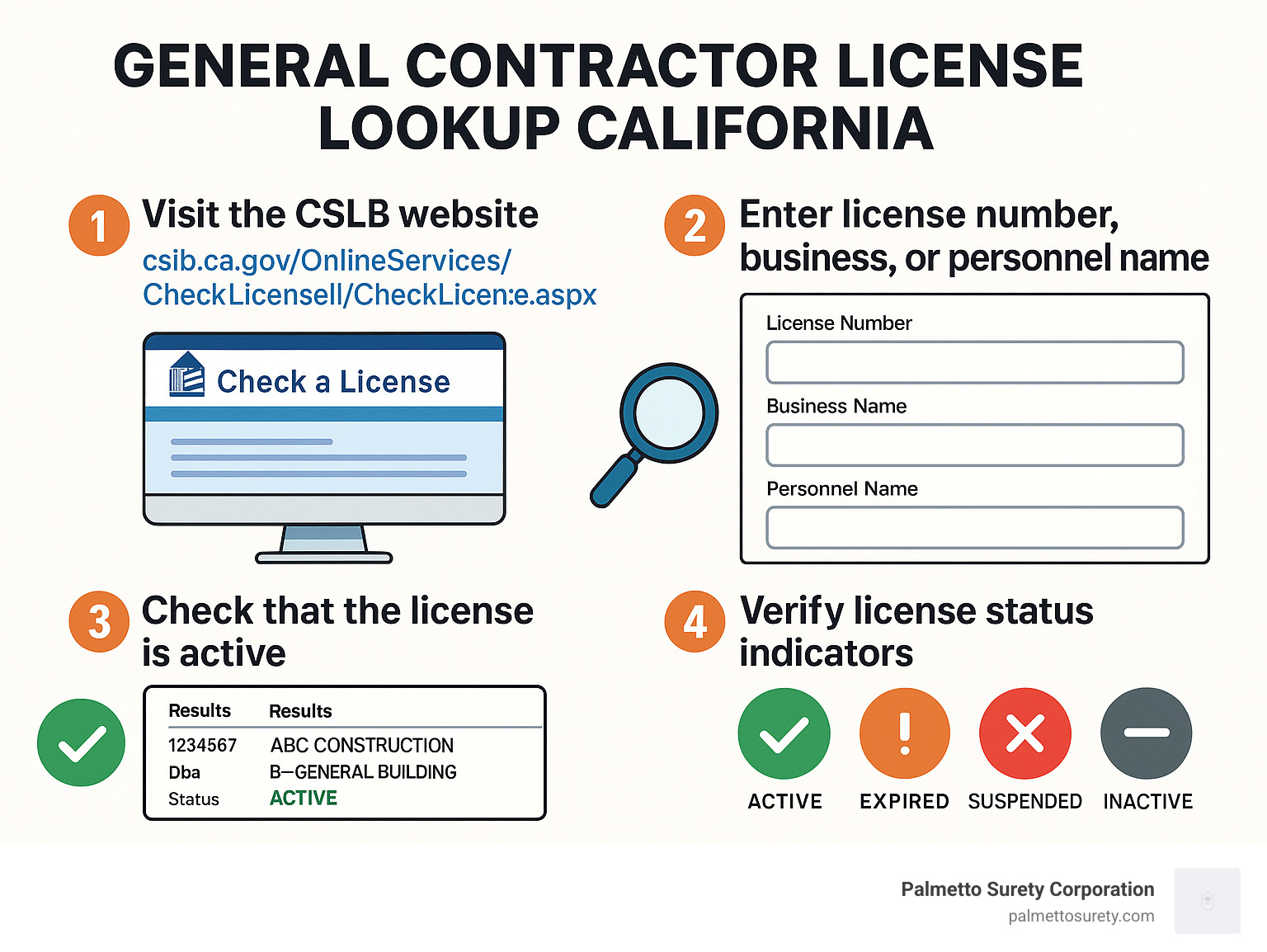
To quickly verify a California contractor’s license:
- Visit the CSLB website: cslb.ca.gov/OnlineServices/CheckLicenseII/CheckLicense.aspx
- Enter either the license number, business name, or personnel name
- Check that the license is active and not expired
- Verify the license classification matches your project needs
- Confirm they have the required $25,000 bond and proper insurance
Planning a home renovation or construction project in California? Before you sign any contract or hand over a deposit, performing a general contractor license lookup California is absolutely essential. With over 285,000 contractors licensed in the state and more than 20,500 complaints filed against contractors in 2022 alone, verifying credentials isn’t just smart—it’s your financial safety net.
The Contractors State License Board (CSLB) makes it surprisingly easy to check if your contractor is legitimate. A quick search can reveal whether they’re properly licensed, insured, and bonded—and if they’ve had complaints or disciplinary actions taken against them.
Remember: hiring an unlicensed contractor in California is risky business. Not only could you face shoddy workmanship and financial losses, but you might also be legally liable for injuries on your property. Plus, unlicensed contractors operating on projects valued at $1,000 or more face misdemeanor charges with penalties up to six months in jail and $15,000 in fines.
I’m Haiko de Poel Jr, and through my work with Palmetto Surety Corporation, I’ve helped countless contractors obtain the necessary surety bonds required for their California licenses, giving me unique insight into the general contractor license lookup California process and its importance for both contractors and homeowners.
Why Verifying a Contractor’s License Matters
That little plastic license card isn’t just a formality—it’s your first line of defense against construction nightmares. When a contractor holds a California license, it means they’ve proven their skills, knowledge, and financial responsibility to the state. Think of it as their professional promise to you.
The numbers tell a sobering story: about 2.7 out of every 10,000 California homeowners fall victim to home improvement scams each year. While that percentage might seem small, ask anyone who’s been through it—the financial and emotional damage can be life-altering.

“I’ve seen families lose their life savings to someone who talked a good game but disappeared after the first payment,” says a CSLB enforcement officer I spoke with. “The worst part? A five-minute license check could have prevented the whole disaster.”
Last year alone, the CSLB received over 20,500 complaints against contractors—a troubling 19% jump from the previous year. This rising trend makes general contractor license lookup California more important than ever.
Hidden Costs of Hiring Unlicensed Help
When you skip the license verification, you’re gambling with much more than money.
Your beautiful kitchen remodel could turn into a nightmare of crooked cabinets and leaking pipes because unlicensed contractors haven’t proven their technical skills through the CSLB’s rigorous testing. That bargain price suddenly doesn’t look so great when everything needs to be redone.
If your contractor vanishes mid-project (which happens more than you’d think), you’ll have no access to their $25,000 surety bond—financial protection that licensed contractors must maintain. Even worse, if they didn’t pay their suppliers or subcontractors, these folks can place mechanics’ liens directly on your property—even if you already paid the contractor in full!
Many homeowners don’t realize that manufacturers often void warranties if products aren’t installed by licensed professionals. And those building permits? Unlicensed contractors typically skip them, leading to code violations that come back to haunt you during inspections or when selling your home.
One California homeowner shared her painful experience: “The cheap quote seemed like such a blessing at the time. Six months later, I had an unusable bathroom, had paid double the original estimate, and finded none of the work was up to code. When I tried to find the guy, he’d disappeared completely.”
Jail Time & Fines for Rogue Builders
Operating without a license isn’t just risky—it’s flat-out illegal in California. The consequences can be severe:
Contractors caught working without a license face misdemeanor charges with up to six months in county jail and fines reaching $15,000. Repeat offenders automatically get at least 90 days behind bars. Even advertising construction services without proper licensing can land someone in legal trouble.
The CSLB doesn’t just wait for complaints—they actively hunt down unlicensed operators. During a recent sting operation in Southern California, investigators posed as homeowners needing work done. They invited unlicensed contractors to bid on projects, resulting in dozens of citations and several arrests.
Here’s something many homeowners don’t realize: if you knowingly hire an unlicensed contractor for work over $500, you might legally become their employer. Suddenly, you’re responsible for payroll taxes, workers’ compensation coverage, and liability if someone gets injured on your property. That bargain price doesn’t seem so appealing when you’re facing a workplace injury lawsuit, does it?
Protecting yourself is simple: take five minutes to perform a general contractor license lookup California check before signing anything or handing over a single dollar. It’s the easiest insurance policy you’ll ever buy—and it’s completely free.
How to Perform a General Contractor License Lookup California

Let’s face it—checking a contractor’s license might sound like a boring chore, but it’s actually one of the most important steps you’ll take before your renovation begins. The good news? California makes this process surprisingly simple. As someone who’s helped countless contractors secure their surety bonds, I can tell you that general contractor license lookup California is something every homeowner can master in minutes.
The Contractors State License Board (CSLB) has developed user-friendly tools that make verification almost effortless. Think of it as your first line of defense against construction nightmares.
General Contractor License Lookup California by License Number
The quickest way to verify a contractor is with their license number—think of it as their professional fingerprint:
- Head over to the CSLB License Check page
- Choose “Contractor License Number” from the search options
- Type in the license number (it’s just numbers, up to 8 digits)
- Hit “Search” and voilà!
Any legitimate California contractor should proudly display their license number everywhere—business cards, trucks, estimates, even their website. If your contractor gets shifty when you ask for this number, consider it a big red flag waving in your face.
One thing to note: the CSLB database takes a weekly nap for maintenance every Sunday night (8 p.m.) through Monday morning (6 a.m.). Plan accordingly!
No internet? No problem. Just call the CSLB hotline at 800-321-2752. For the shortest wait times (because who likes being on hold?), call Wednesday through Friday between 9:30-11:30 a.m. or 2-4 p.m.
General Contractor License Lookup California by Business or Personnel Name
Sometimes you only have a name to go on, and that’s perfectly fine too. The process is a bit different depending on whether you’re searching for a business or an individual:
When searching for a business, less is often more. Enter just the first 10-15 letters of the company name and skip words like “The” or “A” at first. If the business is named after a person (like “Johnson Construction”), try searching with the last name first. The system will show you up to 50 results.
For personnel searches, start with the last name followed by the first name. Include any apostrophes if they’re part of the name—”O’Brien” won’t show up if you type “OBrien.” For names with initials, try both versions: “A B Smith” and “AB Smith.” You’ll get up to 100 results.
“I once had a client who couldn’t find their contractor because they were searching for ‘Bob’s Builders’ when the license was actually under ‘Robert Smith DBA Bob’s Builders,'” shares a CSLB representative. “Don’t give up after one try—vary your search terms if needed.”
Building a ZIP-Code Shortlist of Licensed Pros
Still in the shopping-around phase? The CSLB offers a fantastic tool for creating a list of qualified contractors in your neighborhood:
On the CSLB website, look for the “Find My Licensed Contractor” button. Enter your city or ZIP code, select the type of contractor you need (plumber, roofer, general contractor, etc.), and the system generates a list of qualified professionals near you. This is perfect for gathering multiple bids from properly licensed contractors.
You can even save or print the results as a PDF, making it easy to keep track of who’s who as you collect estimates. This approach ensures you’re comparing apples to apples—all properly licensed professionals who specialize in your specific project type.
“Getting multiple bids isn’t just about finding the best price,” notes a seasoned building inspector. “It’s about finding the right fit for your project and your communication style. But the foundation of any good contractor relationship starts with verifying they have an active license.”
This simple general contractor license lookup California process takes just minutes but can save you thousands of dollars and countless headaches. It’s the easiest insurance policy you’ll ever invest in—and it’s completely free.
Decoding Your Results: What to Check Before You Sign
So you’ve found your contractor in the CSLB database—great first step! But don’t stop there. Think of this search result as your contractor’s digital resume, packed with crucial information that could save you thousands of dollars and countless headaches.
When reviewing your general contractor license lookup California results, pay close attention to these key details:
First and foremost, check the license status. You’re looking for the word “Active”—anything else is a red flag. An expired license means they can’t legally work, while “Suspended” or “Revoked” statuses are serious warning signs about their professional standing.
Next, glance at the expiration date. Even if the license is currently active, you don’t want it expiring halfway through your kitchen remodel. If the expiration date is coming up soon, ask your contractor about their renewal plans.
The classification might look like alphabet soup (A, B, B-2, C-something), but it’s critically important. This code tells you exactly what type of work they’re qualified to perform. A roofer trying to remodel your bathroom? That’s a recipe for disaster.
Every legitimate California contractor must maintain a $25,000 contractor license bond. This isn’t just bureaucratic red tape—it’s your financial safety net if things go south. The CSLB search will show if this bond is in place.
Don’t overlook the workers’ compensation section. If they have employees, they absolutely must have this insurance. Some solo contractors file exemptions, which is only legitimate if they truly work alone.
Finally, check for any disciplinary actions. Everyone makes mistakes, but a long history of citations or complaints suggests a pattern you don’t want to become part of.
Here’s a quick reference to understand those status codes:
| Status | What It Means | Red Flag Level |
|---|---|---|
| Active | Contractor is currently licensed and may legally perform work | ✓ Good to go |
| Inactive | License is current but contractor cannot legally perform work | 🚩 Cannot hire for contracting |
| Expired | License has lapsed and contractor cannot legally work | 🚩🚩 Serious concern |
| Suspended | License temporarily revoked, often for lack of bond or insurance | 🚩🚩 Serious concern |
| Revoked | License permanently revoked, typically for serious violations | 🚩🚩🚩 Do not hire |
Want more details about contractor bonds? The CSLB offers an excellent $25k bond guide that breaks everything down.
Insurance & Bond Verification Made Easy
The CSLB database tells you if a bond exists, but smart homeowners take verification a step further. Think of it as measure twice, cut once—but for your financial protection.
“I always tell homeowners to actually see the paperwork,” says a veteran contractor. “It takes five minutes but can save you five years of headaches.”
Ask for certificates of insurance covering both general liability and workers’ compensation. Don’t just file these away—actually call the insurance companies listed to verify the policies are active and sufficient. Insurance companies are used to these verification calls and are happy to confirm coverage.
Consider requesting to be added as an additional insured on their general liability policy during your project. This simple step gives you direct rights under their insurance if something goes wrong.
At Palmetto Surety Corporation, we help contractors obtain the bonds they need, and we often explain to homeowners the important difference between bonds and insurance:
Surety bonds are your protection if the contractor fails to follow regulations or doesn’t fulfill their contractual obligations. Think of it as a promise backed by financial muscle.
Insurance protects against physical damages and injuries during construction. If a worker falls off your roof or a pipe breaks and floods your home, insurance covers these accidents.
You need both protections in place before the first hammer swings.
Matching Scope of Work to License Class
California licenses contractors in 45 different classifications for good reason—construction specialties require specific expertise. Hiring a contractor with the wrong license is like asking a dermatologist to perform heart surgery.
Class A – General Engineering Contractors build infrastructure like bridges and highways. Unless you’re building your own private freeway, this probably isn’t who you need.
Class B – General Building Contractors construct buildings and can manage your whole home build or major renovation, coordinating with subcontractors as needed.
Class B-2 – Residential Remodeling Contractors specialize specifically in updating existing homes, making them perfect for that kitchen or bathroom remodel.
Class C – Specialty Contractors are the experts in specific trades—the plumbers, electricians, roofers, and other specialists who focus deeply on one aspect of construction.
“I had a client who hired a C-27 landscaper to build their deck,” shares a building inspector. “Six months later, I was called out to see why the deck was separating from the house. Wrong license, wrong expertise, expensive mistake.”
Always ensure your contractor’s classification aligns perfectly with your project. When they say they can “handle everything,” verify their license actually permits them to do so.
Common Red Flags, Scams, and Payment Traps

Even with a valid license in hand, not every contractor operates with your best interests at heart. As someone who’s worked with contractors for years through Palmetto Surety Corporation, I’ve seen the warning signs that should make any homeowner pause before signing on the dotted line.
That knock on your door from someone offering to fix your roof? That’s actually one of the biggest red flags in the industry. Legitimate contractors rarely solicit business door-to-door – they’re usually too busy with scheduled projects! This tactic becomes especially common after storms or natural disasters when vulnerable homeowners are desperate for repairs.
Another major warning sign is the contractor who wants a hefty cash payment upfront. Did you know California law specifically caps down payments at $1,000 or 10% of the contract price (whichever is less)? Anyone demanding more isn’t just being greedy – they’re actually breaking the law.
Be wary of the salesperson who tells you “this deal expires today” or creates a false sense of urgency. High-pressure tactics are rarely used by reputable professionals who are confident in their work and pricing. Good contractors understand you need time to make important decisions about your home.
I recently heard from a homeowner in Sacramento who nearly fell victim to a scammer: “He refused to provide a written contract, saying ‘we can just shake on it.’ When I insisted on paperwork, he suddenly had to ‘check his schedule’ and never returned my calls. That reluctance to put things in writing was the red flag that saved me thousands.”
Watch out for license number inconsistencies too. If the number on their business card doesn’t match what shows up in your general contractor license lookup California search, or if they claim to be “working under” someone else’s license, it’s time to walk away – quickly!
The contractor who seems allergic to permits is another warning sign. Pulling permits isn’t just bureaucratic red tape – it’s a crucial safety measure that ensures work meets building codes. Legitimate professionals handle permitting as a standard part of their service.
Before finalizing any hiring decision, take a moment to check the CSLB’s “Most Wanted” list of known fraudulent operators. It’s an extra step that could save you from hiring someone with a documented history of scamming homeowners.
Spot-and-Stop Techniques
Protecting yourself from contractor fraud doesn’t require specialized knowledge – just some common-sense precautions and a healthy dose of skepticism.
Always collect at least three written estimates from different licensed contractors before making your decision. This gives you a clearer picture of fair market pricing and helps you spot outliers who may be cutting corners or padding costs.
When meeting with potential contractors, take a moment to verify their identity by comparing their photo ID with the name on their license. It’s a simple step that can prevent someone from impersonating a legitimate professional.
“The best predictor of future behavior is past performance,” explains a veteran building inspector I know. That’s why you should always contact references from recent, similar projects. Ask specific questions: Was the work completed on time? Within budget? How did they handle unexpected issues?
Before making final payments, be sure to obtain lien releases from all suppliers and subcontractors. This seemingly small detail protects you from mechanics’ liens if your contractor fails to pay their bills – even if you’ve paid the contractor in full.
Insist on detailed contracts that specify materials, brands, start and completion dates, and a clear payment schedule. Vague language like “premium materials” or “to be determined” can lead to misunderstandings and disputes later.
Structure your payment schedule to coincide with completed work phases, with final payment due only when the project passes inspection. This creates accountability and ensures you’re not paying for promises – only for actual results.
A homeowner in San Diego shared her close call: “After storm damage to our roof, a ‘contractor’ offered immediate repairs at a discount if we paid cash upfront. Something felt off, so I did a quick general contractor license lookup California search with his number. Not only was his license expired, but he had multiple complaints. That five-minute check saved us thousands.”
The few minutes it takes to verify credentials through a general contractor license lookup California search could save you months of headaches and thousands in repair costs. When it comes to protecting your biggest investment – your home – a healthy dose of caution is your best defense.
Can’t Find the License? Reporting & Next Steps
So you’ve tried your general contractor license lookup California search and come up empty. Don’t panic just yet—there are several innocent explanations and clear next steps to take.
First, double-check for simple typos or misspellings in your search. You’d be surprised how often a misplaced letter or transposed digit is the culprit! Try searching with just part of the name or try different variations if you’re searching by company name.
“I couldn’t find my contractor in the system and was getting worried,” recalls San Francisco homeowner Maria Lopez. “Turns out I was searching for ‘Mike’s Construction’ when his license was under ‘Michael Construction Services.’ A quick adjustment and there he was, fully licensed and in good standing!”
If your search still comes up empty after trying variations, it’s time for a direct conversation. Ask your contractor to explain the discrepancy—they might have a legitimate reason. Perhaps they’re operating under a different business name than their licensed name, or maybe they’ve recently applied for a license that’s still processing.
California doesn’t recognize out-of-state licenses through reciprocity agreements. Even if your contractor has 30 years of experience and a spotless license in Nevada or Oregon, they still need a California-specific license to work legally in the Golden State.
How to File a CSLB Complaint in 10 Minutes
If you confirm you’re dealing with an unlicensed contractor, or you’ve already been victimized, filing a complaint with the CSLB is surprisingly quick:
- Gather all your evidence—contracts, text messages, emails, photos of the work, payment receipts, and any other documentation.
- Visit the CSLB website and complete their online complaint form, or download the printable version if you prefer paper.
- Be specific and factual when describing your situation. Include exact dates, precise amounts paid, and clearly explain how the contractor violated regulations.
- Upload or attach copies of your supporting documents (keep your originals safe).
- Note your complaint number when submitted and check back on its status periodically.
“The most effective complaints include clear before-and-after photos and copies of all written communications,” advises a CSLB enforcement officer. “The more documentation you provide, the stronger case we can build.”
The CSLB typically acknowledges complaints within 10 days and assigns serious cases to an investigator within a month. While they can’t guarantee you’ll get your money back, they have significant enforcement powers—from mediating disputes to issuing citations and even revoking licenses for serious offenders.
Beyond the CSLB, you have several other reporting options worth considering:
The California Attorney General’s office handles cases of serious fraud and can pursue criminal charges in egregious cases. Your local District Attorney’s office is another valuable resource, especially for contractors operating unlicensed within your specific county.
For disputes involving smaller amounts (under $10,000), small claims court offers a relatively straightforward process without needing an attorney. And don’t forget the Better Business Bureau—while they can’t force a resolution, filing a complaint creates a public record that warns other potential customers.
“When homeowners report unlicensed activity, they’re not just protecting themselves,” emphasizes a veteran CSLB investigator. “They’re helping shield their neighbors and community from potential fraud. These reports are absolutely essential to our enforcement efforts.”
At Palmetto Surety Corporation, we’ve seen how proper licensing and bonding protects both contractors and homeowners. While filing complaints isn’t pleasant, it’s an important part of maintaining standards in the construction industry and ensuring everyone plays by the same rules.
Contractor Licensing 101: Classes, Renewals & Local Rules
Navigating California contractor licenses can feel like learning a new language. Let me break it down for you in plain English, so you’ll understand exactly what you’re looking at during your general contractor license lookup California search.
The state organizes contractors into several major classifications, each designed for specific types of work:
Class A – General Engineering Contractors are the heavy hitters who build infrastructure projects. These folks handle bridges, dams, highways, and other engineering marvels that require specialized knowledge. If you’re building a backyard pool, this isn’t who you’d call.
Class B – General Building Contractors are your go-to professionals for structures meant for people—homes, office buildings, and commercial spaces. An interesting requirement: these contractors must either do the work themselves or hire at least two unrelated subcontractors for the job.
Class B-2 – Residential Remodeling Contractors focus specifically on making your existing home better. They’re the renovation specialists who transform outdated kitchens and expand cramped living rooms.
Specialty C Classifications cover everything else—42 different specialty areas from C-2 (Insulation) to C-61 (Limited Specialty). Think of electricians, plumbers, roofers, and landscapers. Each has their own specific license that shows their expertise in that particular trade.
When Does Your Contractor Need to Renew?
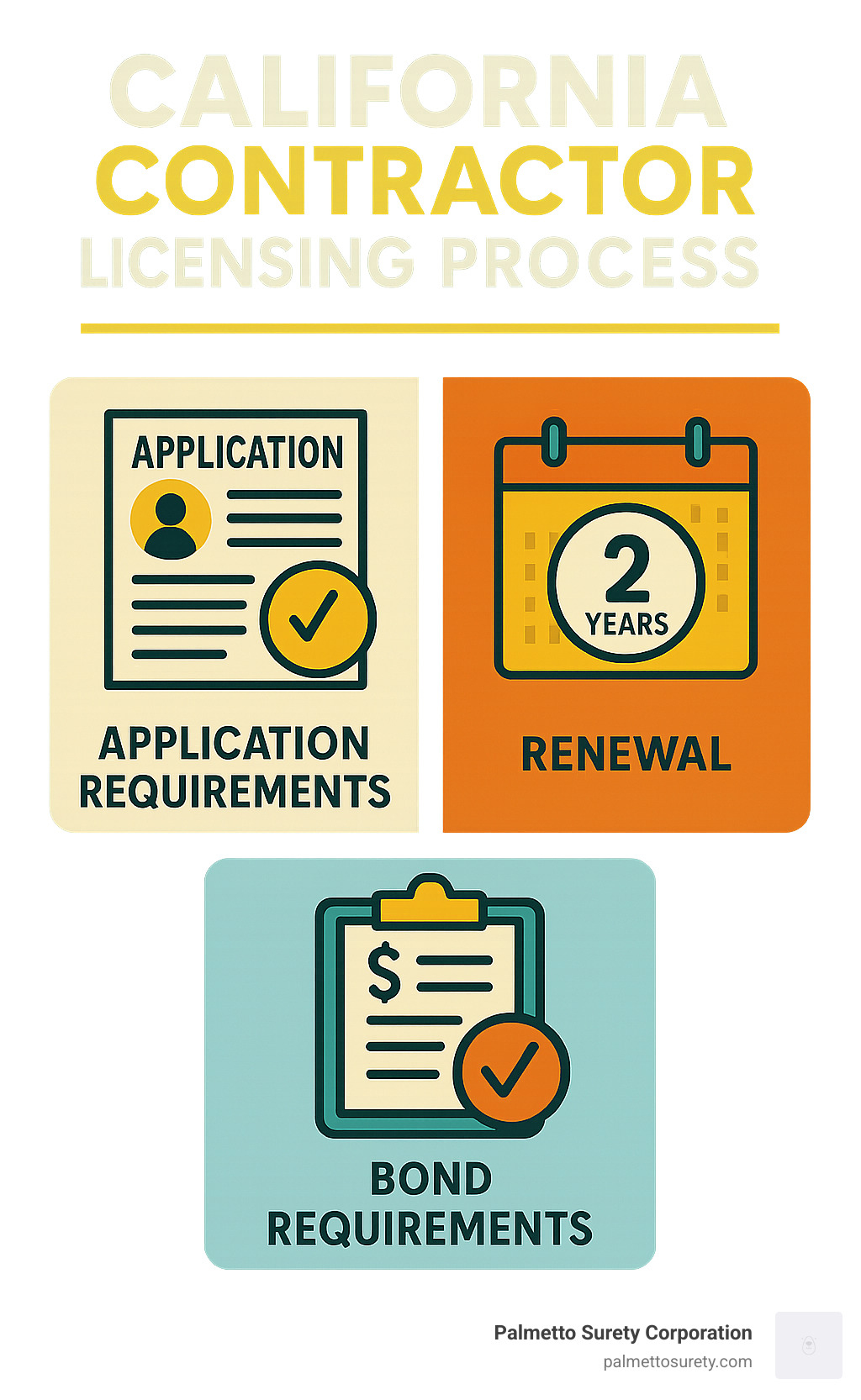
California contractors must renew their licenses every two years, and the timing is actually quite personal. For individual license holders, renewal comes due during their birth month. For companies, it’s timed to the month when the license was first issued.
“I mark my renewal date on every calendar I own,” jokes one contractor I spoke with. “Missing it is expensive and can shut down my business overnight.”
The CSLB does send courtesy notices about 60 days before expiration, but smart homeowners don’t rely on that. When hiring for a long project, take note of when your contractor’s license expires. If your kitchen remodel will stretch past that date, have a conversation about their renewal plans.
For projects spanning several months, it’s wise to occasionally re-check your contractor’s license status. I recommend setting a monthly reminder to do a quick general contractor license lookup California search—it takes just a minute and provides ongoing peace of mind.
Some savvy homeowners even include a clause in their contracts requiring the contractor to maintain an active license throughout the project. At Palmetto Surety Corporation, we’ve seen how this simple step can prevent major headaches down the road.
Local Permits vs. State License—Who Checks What?
There’s often confusion about the different roles played by state and local authorities:
The CSLB handles the big picture—they verify qualifications, issue licenses, and manage complaints about contractors statewide.
Your local building department focuses on the specifics of each project—issuing permits, conducting inspections, and ensuring everything meets building codes.
City and county offices track business registrations and make sure local taxes get paid.
As a homeowner, you need to verify all three levels. Start with the state license through the general contractor license lookup California tool, then confirm they’ll obtain necessary building permits, and finally check that they have any required local business licenses.
“I’ve seen perfectly licensed contractors who can’t pull permits in certain cities because of past violations,” a veteran building inspector told me recently. “That’s information you won’t find in the state database, but it can completely derail your project.”
Local Requirements
Beyond their state license, contractors typically need:
City business licenses in each city where they work (yes, each separate city!)
County contractor registration in some jurisdictions
Special permits for work in historic districts or environmentally sensitive areas
Additional local bonds on top of their state-required bond
A municipal building official I spoke with mentioned, “We regularly have to stop work on job sites because a contractor has their CSLB license but forgot to get their city business license. It’s an easy detail to miss, but it can shut down your project for days.”
The renewal process isn’t just a formality—contractors must pay fees ranging from $450 to $700 depending on their business type. Late renewals face stiff penalties up to $1,000, and if a license has been expired for more than five years, there’s no renewal option—they must start the application process from scratch.
Understanding these licensing basics helps you spot potential issues before they become expensive problems. A little knowledge goes a long way toward protecting your investment and ensuring your project stays on track from start to finish.
Frequently Asked Questions about California License Lookup
How often should I re-check my contractor’s license during a long project?
Home renovations and construction projects often stretch longer than expected. For projects lasting beyond six months, I recommend a quarterly check-up on your contractor’s license status. Think of it as a regular health check-up for your project’s legal protection.
Why check regularly? Things change. A once-pristine license might show new disciplinary actions. Insurance coverage might lapse. Or the license itself might expire mid-project, leaving you in a legally precarious position.
Pay special attention to that expiration date you spotted during your initial general contractor license lookup California search. Mark it on your calendar, and if your project will extend beyond it, have a straightforward conversation with your contractor about their renewal plans.
“I had a client whose kitchen remodel stretched to eight months,” shares a CSLB representative. “When they rechecked the contractor’s license at month seven, they finded it had expired two weeks earlier. This prompted an immediate conversation that prevented potential legal complications.”
What information do I need if the CSLB search returns multiple similar names?
It happens more often than you’d think – you search for “Smith Construction” and get a dozen similar results. Don’t panic! Simply ask your contractor for these four pieces of information:
Their exact license number is the golden key that open ups the exact record you need. With this number, there’s no confusion possible.
The business name as registered with the CSLB might differ slightly from their marketing materials or what they told you verbally.
The license classification(s) they hold will help narrow down the results if you’re still searching by name.
The address on file with the CSLB provides another verification point to ensure you’re looking at the right contractor.
Armed with these details, you’ll easily identify the correct listing among similar-sounding businesses.
Is bonding the same as insurance for California contractors?
This confusion trips up many homeowners, but they’re actually quite different protections that work together to safeguard your project:
Contractor License Bond is that $25,000 bond required by California law. Think of it as a promise backed by money that the contractor will follow the rules. If they violate contractor laws or abandon your project, this bond provides a limited financial remedy. At Palmetto Surety Corporation, we provide these essential bonds that contractors need to maintain their California licenses.
General Liability Insurance protects against property damage and injuries during your project. While not required by the CSLB, it’s absolutely essential. Without it, you could be financially responsible if someone gets hurt on your property or if your neighbor’s home gets damaged during construction.
Workers’ Compensation Insurance becomes mandatory the moment a contractor hires even one employee. It covers medical costs and lost wages if workers get injured on the job. Without it, guess who might be liable for injured workers? That’s right – you could be.
“Many homeowners assume the license bond covers everything,” explains a surety bond specialist. “In reality, it’s just one piece of the protection puzzle. Always verify both bonding and insurance before your project begins.”
While the CSLB requires bonds, they don’t require insurance – but you absolutely should. A properly protected contractor will happily provide certificates for both their bond and insurance coverages.
Conclusion
Performing a general contractor license lookup California takes just five minutes but could save you months of stress, thousands of dollars, and countless headaches. This simple verification step stands as your first line of defense against construction nightmares.
I’ve worked with contractors obtaining surety bonds for over two decades, and I’ve seen how proper verification protects both homeowners and honest professionals. The stories of relief from homeowners who dodged a bullet by checking credentials contrast sharply with the regret of those who skipped this crucial step.
Remember these essential takeaways:
Always verify before you sign or pay. That license number isn’t just a formality—it’s your assurance that you’re working with a professional who’s met California’s rigorous standards and maintains proper financial safeguards.
Look beyond the basics. An active license is just the starting point. Does your contractor have the right classification for your specific project? Is their bond current? Do they carry proper insurance? These details matter tremendously when things don’t go as planned.
Trust your instincts about red flags. If a contractor pressures you for a large down payment, seems reluctant to provide license information, or avoids pulling permits, your internal alarm bells are ringing for good reason.
Document everything carefully. Save all estimates, contracts, communications, and receipts. Take dated photos of your project as it progresses. This paper trail becomes invaluable if disputes arise.
Report suspicious activity when you encounter it. By alerting the CSLB to potential violations, you’re not just protecting yourself—you’re helping shield your neighbors and community from problem contractors.
At Palmetto Surety Corporation, we’ve provided the surety bonds that contractors need to maintain their California licenses for over 20 years. While we primarily serve contractors in the southeastern United States, our expertise in the surety bond industry has given us valuable perspective on best practices nationwide.
The peace of mind that comes from knowing you’ve done your homework is invaluable. After all, your home is likely your biggest investment, and you deserve the protection that comes from working with properly licensed, bonded, and insured professionals.
For more information about contractor surety bonds and their important role in the licensing process, visit Palmetto Surety Corporation.


